Category Archives: Fear of the Lord

Listen and Receive

Proverbs 2:6-9

“For the LORD giveth wisdom: out of his mouth cometh knowledge and understanding. 7 He layeth up sound wisdom for the righteous: he is a buckler to them that walk uprightly. 8 He keepeth the paths of judgment, and preserveth the way of his saints. 9 Then shalt thou understand righteousness, and judgment, and equity; yea, every good path.”

Verse six seems to be the continuation of the thought started in the first five verses.

Solomon is saying “if you listen to me and seek the wisdom of God, you will find treasure – treasure that is found in the fear and knowledge of the Lord. But the crucial connection is “incline thine ear unto wisdom, [and] apply thine heart to understanding.”

Listening

One of the hardest things for a child to do is listen to the widom of an elder. If you are a parent, or play one on T.V., then you know that teenagers are the worst offenders. Believe it or not, teens know everything. They have no desire to listen to instruction, especially if if goes against the grain of their vast experience.

But Solomon wants his son to understand that in order to grow in wisdom and understanding, especially without having to suffer needlessly, he needs to listen. And if he will listen to the Lord, wisdom and understanding will come from “out of his mouth.”

Access Granted

The Hebrew word that is translated in verse 7 as “layeth up” is tsaphan (Strong’s H6845).The idea is of something that is hidden, secret, inaccessible, and guarded. This means that true wisdom from God is not accessable by worldy or fleshly means. It can’t be mined or extracted from the soil of life. It hast to be heard.

An attentive, listening ear is all that is required to gain access to the secret treasures of the Almighty. They can’t be bought. They can’t be bargained for. They come at the expense of time and humilty.

Next Level

Much like the video games children (and too many adults with nothing better to do) play, where each level unlocked provides tools to succeed on the journey to the next, the storehouse of God’s wisdom provides what we need for the journey ahead.

Notice how that when accessed, God provides three things: a buckler (shield), divine protection, and understanding. He watches over our paths and gives us invaluable insight into the working of life. But He also give us a “buckler,” a shield, a piece of armour.

What most young people, and adults, fail to realize is that danger lurks aroung the corner. And no matter how straight God makes our path, He still wants us to bear a shield. His wisdom is a strong defense against the arrows and spears of the enemy.

The Buckler

Interestingly, though, the KJV translators used the the word buckler instead of shield. Why? Maybe it’s because a buckler is more than just a static, defensive piece of armor. A buckler was also a weapon. Bucklers were smaller shields which could be used not only to deflect the enemies blows, but could also be used as a “steel fist.”

Never forget that the same shield of faith (Ephesians 6:16) which can “quench the firey darts of the wicked” can also be used to fight back. The tools God gives those who listen to Him will not only protect us, but will enable us to advance.


(originally published 4/09/12)


Desired, Sought, and Treasured

Proverbs 2:1-5 

“My son, if thou wilt receive my words, and hide my commandments with thee; 2 So that thou incline thine ear unto wisdom, and apply thine heart to understanding; 3 Yea, if thou criest after knowledge, and liftest up thy voice for understanding; 4 If thou seekest her as silver, and searchest for her as for hid treasures; 5 Then shalt thou understand the fear of the LORD, and find the knowledge of God.”

Treasure Hunting

There are people in the UK who arm themselves with metal detectors to search ancient battlefields and settlements for long lost treasure. While a few stumble upon finds of considerable importance and value, the majority search for years without finding anything much. Most never give up the search, convinced that one day they will make an important find.

Verse 4 of Proverbs 2 suggests that we should search for wisdom as if it were treasure, hidden in some secret storehouse. Wisdom is not a discovery to be made in an instant, some sort of easy one-off find. The search for wisdom should last a lifetime, the aim of the search to gain insight, understanding and knowledge of God. Such knowledge will lead us towards completeness in our relationship with Him, but it will also teach us to fear God.

Finding Fear

How and why does fear come into the equation? Moses was a man who knew how to fear the Lord, and could help answer this question. His first real fear encounter with God occurred with the burning bush incident, when Moses began to learn an awesome respect for God. He was a man who was changed because of his experience of God, evident in the way that his face was radiant after spending time in God’s presence.

That’s the key. Spending time in God’s presence will open our minds and allow us to understand more of God.

But the wisdom that comes from such understanding should inevitably lead to fear. This fear could be defined as being overwhelmed by the realization of who God is.

That realization is surely something to be desired, something to be sought, and something to be treasured.


Told You So!

Proverbs 1:28-30

Then shall they call upon me, but I will not answer; they shall seek me early, but they shall not find me: For that they hated knowledge, and did not choose the fear of the LORD: They would none of my counsel: they despised all my reproof.

No Answer for Some

I love how God does not beat around the bush about things – He just comes out and says exactly what He wants to say. We see this in verse 28 when He is talking about fools and scoffers and how that when storms, calamity, distress & anguish come upon them (v. 27), God says that He will not answer them during this time. Those that “call upon me”, God says you are on your own because I will not answer you. God was doing to them what they had been doing to Him (v. 24)

Fear of the Lord

To me, the key verse in the book of Proverbs is centered around verse 7 in chapter 1 – “The fear of the Lord is the beginning of knowledge: but fools despise wisdom and instruction.” 

But what exactly is the “FEAR OF THE LORD”? Charles Bridges answers that questions this way:

“It is the affectionate reverence by which the child of God bends himself humbly and carefully to his Father’s law. His wrath is so bitter, and His love so sweet; that hence springs an earnest desire to please Him, and – because of the danger of coming short from his own weakness and temptations – a holy watchfulness and fear, “that he might not sign against Him.'”

When I was a small child, I had a FEAR of my father. I knew that if I did anything bad  I was going to have to face the wrath of my father. It was something that I did not look forward to at all. As I have gotten older, I still have a FEAR of my father, but more “reverential” than afraid. I have a fear that I don’t want to do anything that would disappoint him and this is the same fear we should have for God.

“I Told You So”

Have you ever said these words, by accident or intentionally (or under your breath), to anyone? This saying implies several things:

1. That there was some kind of warning given; and

2. That the warning that was given – was not heeded

April 2nd’s evening post (by Daniel Klem) shows us that there is a group of people (the simple, scorners and fools) that just did not want to listen to the warnings that were given to them (wise counsel) because they had no fear of God. Because of no fear for the Lord, they ultimately lead themselves to their own ruin. Look at it this way, the ruin of the simple, scorners and fools where brought on by their own rejection of wisdom and knowledge. They refused to listen to wise counsel or any type of reproof.

Lord, help us to seek you early and often and heed your words of wisdom. Help us to fear you in all areas of our lives. 


The Journey Begins Again!

Proverbs 1:1-7

The proverbs of Solomon the son of David, king of Israel; (2) To know wisdom and instruction; to perceive the words of understanding; (3) To receive the instruction of wisdom, justice, and judgment, and equity; (4) To give subtilty to the simple, to the young man knowledge and discretion. (5) A wise [man] will hear, and will increase learning; and a man of understanding shall attain unto wise counsels: (6) To understand a proverb, and the interpretation; the words of the wise, and their dark sayings.

Welcome!

Welcome to the first day of the third run of Proverbial Thought. Our 7th anniversary!!

Seven years ago, on this day, we started out on an ambitious project: write daily thoughts and commentary about every proverb in the Book of Proverbs. It took us almost two years to make it all the way through. We are now going to re-post updated versions of those daily thoughts, but with one major change – they will post morning AND evening every day!

Our prayer is that every day, morning and evening, you will come here and find helpful and encouraging wisdom from God’s Word.

The Introduction and Purpose

As the above verses point out, the author of Proverbs was the son of King David, Solomon. According to the Bible, Solomon was the wisest man in the world, and “men of all nations came to listen to Solomon’s wisdom, sent by all the kings of the world, who had heard of his wisdom” (1 Kings 4:34 NIV). Of all the teachers in the world, we could learn from no better. Not even the lonely, grey-bearded gurus secluded on snowy, hard-to-reach mountain tops are wiser.

In verses 2-4 Solomon outlines the purpose of the book: know wisdom. Solomon knew that all the knowledge in the world was worth very little without wisdom. What is wisdom? Wisdom is the ability to take something learned and be able to apply that knowledge in a useful, profitable, and healthy way. It’s the ability to make sound judgments and right choices. It is what is needed in order to not act like a fool, even though one seems to know everything.

Don’t be a Fool

It is no coincidence that the official first day of this blog was planned for April 1st, April Fools Day. Fools despise wisdom and instruction. Fools deny there is a God (Psalm 14:1). However, Solomon believed. As a matter of fact, it was from God that Solomon received his wisdom (1 Kings 3:12). He should have known better than anyone, then, that the fear of the LORD is the beginning of knowledge. But the ultimate wisdom is not found in the words of men, nor in the Proverbs, alone. Wisdom is found in a Person.

Many men and women will try to seek God through earthly, man-centered wisdom, but to no avail. The Wisdom that leads to God, the Wisdom that “stretches out [His] hand” (Prov. 1:24), is none other than Jesus Christ. 1 Corinthians 1:30 says that God made Jesus “wisdom, and righteousness, and sanctification, and redemption” for us. He took what was “foolishness” in the world’s eyes (Christ crucified) and turned it into the only Way (1 Cor. 1:23-24). All the wisdom of the Proverbs can be found in Him.

Jews demand miraculous signs and Greeks look for wisdom, but we preach Christ crucified: a stumbling block to Jews and foolishness to Gentiles, but to those whom God has called, both Jews and Greeks, Christ the power of God and the wisdom of God. … It is because of him that you are in Christ Jesus, who has become for us wisdom from God–that is, our righteousness, holiness and redemption. Therefore, as it is written: “Let him who boasts boast in the Lord.” – 1Cr 1:22-24, 30-31 NIV

On this first day of April – the first day of this devotional (the third time through) – seek Wisdom – seek Jesus.

Don’t be a fool; be wise!


Celebrating His Coming: Thoughts for the 2nd Week of Advent – Day 5

Wherefore the Lord said, Forasmuch as this people draw near me with their mouth, and with their lips do honour me, but have removed their heart far from me, and their fear toward me is taught by the precept of men: -Isaiah 29:13, KJV

close up of paper against black background

Photo by John-Mark Smith on Pexels.com

We must be careful how we handle the Word of God. I mean both senses of the term:

  • How do we handle Scripture? Do we read into it what we think it says? Do we read passages out of context or claim promises never meant for anyone but to whom they were made? Do we use Scripture to condemn everyone who disagrees with us or to keep people “in line”? All the while we say, “God is great. I love God.” But we are keeping God in a nice, tidy box that we can control.
  • How do we handle Jesus? Do we treat Him like a monster? Do we treat Him as if He is aloof? Do we treat Him like a genie or vending machine, expecting Him to grant all of our wishes and desires, especially when we ask/demand them? Do we treat Him like a doting grandmother, thankful for the gifts He gives, but ignoring Him most of the time? All the while we say, “Jesus is great. I love Jesus.” But we are using Jesus to control others or only get what we want.

John lived in the wilderness, ate bugs and honey, and only had one outfit. He did not tolerate using God and His Word incorrectly, but he did point us back to the wonder of God’s works, as Isaiah did:

Therefore, behold, I will proceed to do a marvellous work among this people, even a marvellous work and a wonder: for the wisdom of their wise men shall perish, and the understanding of their prudent men shall be hid. -Isaiah 29:14

We cannot forget that though we rebel against God in many ways, even as we call on His name, He does marvelous things: Most importantly, He came to save us from our rebellion and make us more like Himself. We can try and reason Him away, twist His words and actions, but He is come and has made Himself known. And we cannot stand against Him.

And when Jesus returns, we shall be made like Him – holy, blameless, and glorified, able to give Him all glory for eternity.

Lord, help us to come to Your Word humbly and correctly, to align our thoughts and emotions with Yours, to follow Your will and not our own.


Celebrating His Coming: Thoughts for the 2nd Week of Advent – Day 3

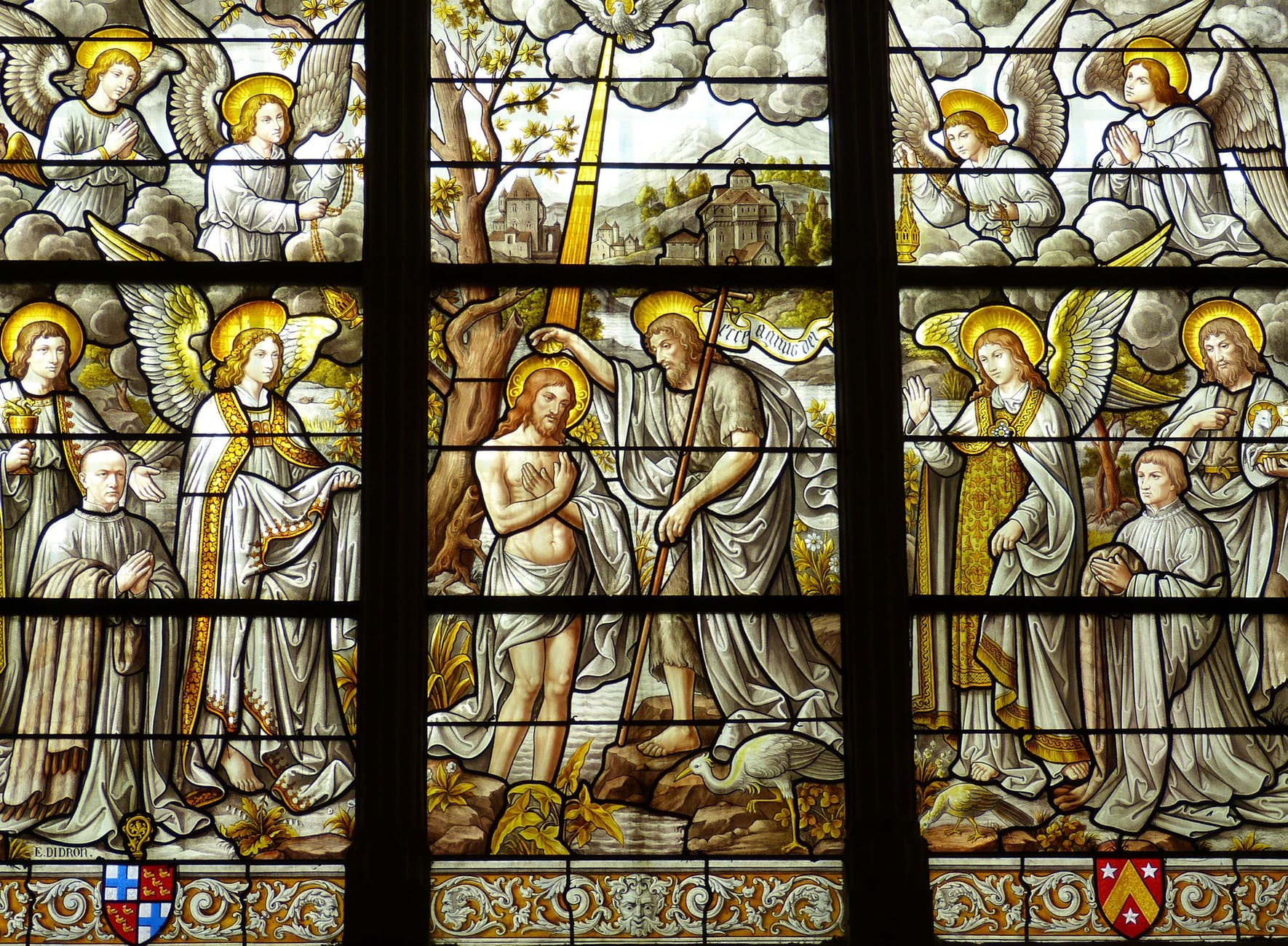
Then Jerusalem and all Judea and all the region about the Jordan were going out to him, and they were baptized by him in the river Jordan, confessing their sins. -Matthew 3:5-6

angelic architecture art baptism

Photo by Pixabay on Pexels.com

With repentance comes confession. Even in the time of Advent, when we look forward to the coming Messiah, we must remember the importance of confession:

That if thou shalt confess with thy mouth the Lord Jesus, and shalt believe in thine heart that God hath raised him from the dead, thou shalt be saved. -Romans 10:9

Confess your faults one to another, and pray one for another, that ye may be healed. The effectual fervent prayer of a righteous man availeth much. -James 5:16, KJV

As we prepare for the Messiah, it has to include the preparation of our hearts, as we confess our sins to God and to others and are baptized.

God in Heaven, we have sinned against You. As we confess, we thank You that You are faithful to forgive.


Those Walking in Darkness and Death

For the living know that they will die, but the dead know nothing, and they have no more reward, for the memory of them is forgotten. –Ecclesiastes 9:5, ESV

Today is Reformation Day, the anniversary of Martin Luther igniting the Reformation movement away from the Roman Catholic Church.

This means it is also Halloween.

And you know what? Halloween can be fun.

Yes. There is a lot of paganism in the history of this day.

Yes. This is a high holiday for many Wiccans and other pagans, attempting to connect with spirits and even demons.

Most people today do NOT participate in that.

While over the next few days many cultures either worry about or celebrate deceased loved ones visiting this world, Ecclesiastes 9:5 reminds us that the dead have no real concern for this world.

Either they are headed for destruction and railing at God, or they are with Christ and worshiping Him.

We try to show we are not afraid of death by dressing up as (un)dead things and people, and we sometimes claim we are remembering the dead. At best we are remembering a shadow, only the best or the worst of someone. In truth, the memory is just that: a shadow.

And most people – if they are honest – are afraid of death. Some want to be reunited with lost loved ones, but they rarely know what they are wishing for.

This is starting to get long, so let us remember:

  • the fear of death is misplaced,
  • the memories of the dead are never perfect,
  • and the afterlife will be nothing like any of fully expect (if it all correct).

Instead, it is:

  • the fear of the Lord that gives us hope for the afterlife;
  • and the dead may not remember much of this life, but the Lord forgets our sins if we are found in Christ and brought into everlasting life.

And instead of getting caught up in the where and why of the history of Halloween, may we focus on sharing the truth of Life with those in this world who are still walking in darkness and death.


Not About Politics, But There Are Sides

An unjust man is an abomination to the just: and he that is upright in the way is abomination to the wicked. –Proverbs 29:27 KJV

I was ready to write about politics, and angry partisanship. And this verse certainly can speak to partisan politics.

However, I just want to speak the truth:

There are only two sides in this historical and eternal battle: with God or against Him (Matthew 12:30).

There are no other ways or sides, and this leads to many people seeing Christians, and by extension God, as narrow-minded (which is true, to a point – Matthew 7:14), even evil, for saying not everyone is good or can get to God their own way.

But, if Jesus truly is the Way, the Truth, and the Life, then there is no other path to God (John 14:6).

If you do what God calls evil, you are a wicked sinner. But if you repent of your evil ways (change the way you think and act – Romans 12:1-2) and believe Jesus died for your punishment to cover your wickedness and rose again to life, then you are on His side (Acts 2:38-39).

To refuse the leading of the Holy Spirit to believe in Christ is choose to be against God (Matthew 12:31, John 8:44).


Trying Not To Be Fools With His Words

Many readers of Proverbial Thought may enjoy the thoughts we share each day.

Maybe you do not understand some our thought process.

I for one do enjoy writing out these devotional thoughts for others to enjoy, but it weighs heavy on my heart.

For starters, read Proverbs 26. It will only take a few minutes. What really strikes me is the number of verses about the wastefulness, follies, and even dangers of fools speaking proverbs.

We are basically putting it put there that we are responsible for affecting the way people think!

In fact, when I was a new believer of Jesus Christ, I knew I should “do my part” and read at least something in the Bible. I chose James, for “not being too long and possibly boring me, nor too short and making me look lazy.”

Ouch. This was the first thing that stood out to me (in my NIV Bible at the time):

Not many of you should become teachers, my fellow believers, because you know that we who teach will be judged more strictly.
James 3:1

I understood that to teach others means I would be scrutinized myself, both by other people and by God.

That terrified little 16-year-old me! (Even at six feet tall at that time …)

Honestly, it should be intimidating to all of us.

Do your best to present yourself to God as one approved, a worker who does not need to be ashamed and who correctly handles the word of truth.
2 Timothy 2:15

God has an expectation. If you teach others about the Word of God – which all believers should in some way – you are expected to know what it says and how to explain it adequately.

This is the struggle we deal with every day for Proverbial Thought, and for many of us, who are pastors and ministry leaders, as a daily concern.

Therefore, we write to help others (you, dear reader!) to be better equipped to share your faith, even if mostly about the Proverbs.

If you are a follower of the Lord, you should be able to share the reason for your faith. Use any tool available to you to grow, starting with regular Bible study, researching what others have said, and meeting with fellow believers (by going to church, attending Bible studies, meeting together just to talk, and serving togwther).

Hopefully, we have played a role in your growth and not written foolishly.


Beware of Crying out for Change

Yesterday, Anthony talked about the craziness of politics as of late.

Consider this a sequel! (Just like other sequels, a lot of people may be upset!)

My son, fear thou the Lord and the king: and meddle not with them that are given to change: For their calamity shall rise suddenly; and who knoweth the ruin of them both? -Proverbs 24:21‭-‬22, KJV

What I mean is that we have been seeing a decade of change. Leaders throughout the Western world have been calling for change based on who has been in power.

This was most clearly seen with both Barack Obama and then Donald Trump. (Did you notice that both talked about making America respectable to some group, only in different ways?)

As Anthony demonstrated, the different sides have made a habit of vilifying each other, and whoever’s side is not in power looks for any reason to change that status, especially by removal of the the big leader (in our case, the president).

Scripture shows us, though, that we should strive to help our leaders be and do the best (within God’s moral decrees, of course.)

If all you do is cry out for change and rarely if ever actually do anything, you are not helping. This is similar to what Paul said in 1 Corinthians 13:1: you are like a clanging cymbal (like the neighbor who practices his drums at 3:00 AM.)

You can disagree with them. You can do things to help the situation.

But if all you do is complain about who is (or was) in power and cause further division, you are part of the problem and dishonoring God. (This a great time on the true meaning of using the Lord’s name in vain.)

Remember: Let every soul be subject unto the higher powers. For there is no power but of God: the powers that be are ordained of God. Whosoever therefore resisteth the power, resisteth the ordinance of God: and they that resist shall receive to themselves damnation. (Romans 13:1‭-‬2)

But we are also reminded to fear God. He is the unchanging One who has established what is right and true, and He is always in control.