Category Archives: Uncategorized

Proverbs 12:28

“In the way of righteousness is life; and in the pathway thereof there is no death.”

Generalities

As a genre, many of the Proverbs are spoken in general terms, such as with Proverbs 22:6, which reads, “Train up a child in the way he should go: and when he is old, he will not depart from it.” The principle is trustworthy, obviously, but we all know that there are going to be children who go astray and never come back.

Similarly, when we read this verse we see the statement that “the way of righteousness is life; and in the pathway thereof there is no death.” Well, what does this mean? Is the writer trying to say that if one lives a righteous life he will never die? What about Christian martyrs? Did they not die?

Specifics

The general idea is that the way of righteousness, and the ones who travel down its path, will fare better. It is much like a verse I commented on a while back, “The righteousness of the blameless clears his path, but the wicked person will fall because of his wickedness” (Proverbs 11:5 HCSB).

But there is a truth that is very specific to the follower of Christ. It can be found in another verse.

“But is now made manifest by the appearing of our Saviour Jesus Christ, who hath abolished death, and hath brought life and immortality to light through the gospel:” – 2Timothy 1:10

Generally speaking, it is more likely that you will experience life, not death, when you travel a righteous path. But when it comes to the end of life, which will eventually come, eternity awaits.

Specifically speaking, the person who puts his faith in Jesus Christ and believes His gospel will have immortality.

That’s the path I want to be on. What about you?


PROVERBS 12:23

A prudent man concealeth knowledge: but the heart of fools proclaimeth foolishness.
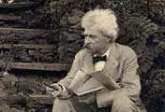
 

My wife has an expression for the person whose mouth opens and gushes forth streams of idiocy which should have remained locked away in the reservoir of the heart.  She calls it, “a case of diarrhea of the mouth.”   Mark Twain must have had the same idea in mind when he famously quipped, “It is better to have people to think you a fool, than to open your mouth and remove all doubt.”

WHAT IS IT ABOUT US? 

What is it about us, that we think we have to speak even when we have nothing of value to say?  Is it that hearing the sound of our own voice makes us feel important?  Is it that we want to be perceived as intelligent, wise and knowledgeable, able to speak authoritatively concerning any and every subject?  Or is it that we are threatened by silence, as if we must fill the space between us and the others around us with words, lest a moment’s silence should become an awkward void?

A PERSONAL ISSUE FOR PREACHER-TYPES

I submit that the issue of Proverbs 12:23 is of tremendous significance for myself and my fellow “preacher-types.”  We are absolutely the worst when it comes to feeling obligated to fill the air with words.  I have just come away from a Sunday afternoon, pastoral visit with a senior citizen, a widow in my congregation.  She, like many women of her age and station in life, is lonely and doesn’t have company in her home very often.  Therefore when I visit, she enjoys the chance simply to chat away about loved ones, some of whom I know, most of whom I do not.  As she reminisced this afternoon, there was a moment in which I could hear my own voice, rising above hers, commenting on something she had just said.  Maybe I was simply trying to let her know that I was listening, that I was engaged in what she had to say.  But probably not.  It’s more likely that I just couldn’t stand being out-talked for even a few minutes.  I thought to myself, “If I were listening in on this conversation, I would conclude that guy (me!) is quite a jerk.”

IN THE PULPIT

Oh, and how about in the pulpit?!  I once had a seminary professor who warned my class that the greatest danger for preachers in the pulpit is that we’ll be tempted to say things that simply aren’t true—treating biblical principles as promises, projecting guaranteed outcomes, and so forth.  Is that anything other than “proclaiming foolishness”?  I had another seminary prof who often remarked, “Anyone who makes his living from his religion will eventually lose one or the other.”  How many “hireling” preachers have absolutely prostituted their faith in the pulpit, proclaiming foolishness, just to earn a paycheck?

ZIP IT UP

The proverb above tells us quite bluntly:  zip it up!  You don’t have to say everything you think. You don’t have to teach everything you know.  You don’t have to win every argument.  You don’t have to express every opinion.  You don’t have to weigh in on every debate.  If someone asks you for the time, you don’t have to lecture them in the craft of building a grandfather clock. It is far more prudent to keep a reservoir, a storehouse, of wisdom inside, from which you pull out treasures only when necessary (Matthew 13:52).  Knowing our propensity for gabbing when wisdom calls for silence, the great Peter Marshall prayed, “Great questions stand unanswered before us, and defy our best wisdom.  Though our ignorance is great, at least we know we do not know.  When we don’t know what to say, keep us quiet.”

WHAT A WISE MAN!

Twenty years ago I recall an elderly Presbyterian gentleman giving some tidbits of wisdom to me and several other young aspiring pastors.  He said, “Men, for your first year in ministry, at each meeting of Presbytery simply sit and do not say a word.  No matter how important the issue, no matter how heated the debate, no matter how much insight you might have about the subject, for your first year you are to say absolutely nothing on the floor of Presbytery.  After you have completed one year of silence, then you may make your first motion on the floor.  Your first motion should be, ‘I move that we break for coffee and doughnuts.’  Then the entire Presbytery will think of you, ‘What a wise man!’”


A wise old owl sat in an oak

The more he saw, the less he spoke

The less he spoke, the more he heard

Why aren’t we like that wise old bird?


  Father God:  Give us the grace of silence.  Through Christ our Lord:  Amen. 


Proverbs 12:22

Lying lips are abomination to the Lord: but they that deal truly are his delight.

Strong Words

God is very clear about how He feels about lying lips. Proverbs 6:16-19 gives us a list of seven things that God hates:

  • A proud look
  • A lying tongue
  • Hands that shed innocent blood
  • An heart that deviseth wicked imaginations
  • Feet that be swift in running to mischief
  • A false witness that speaketh lies
  • And he that soweth discord among brethren

If this list of things God hates is not bad enough for you, let me share with you another list. This list comes from Revelations 21:8 which says, “But the fearful, and unbelieving, and the abominable, and murderers, and whoremongers, and sorcerers, and idolaters, AND ALL LIARS, shall have their part in the lake which burneth with fire and brimstone: which is the second death.”

These are some strong words coming from God! So then why do we not take lying more serious? Why do we (christians) dismiss the little “white lies” and “half-truths” as something that is ok? 99% of the truth is a lie and God hates it!

Singing Our Lies

Since 1999, I have been the worship leader at my church. Many times I have stood on the stage and watched people sing lies. Yes, you heard me! I have watch people “sing” lies. For the record, I have been guilty of singing quite a few lies myself.

We all stand together in a church service and sing the beautiful song “I Surrender All”, with the words, “All to Jesus, I surrender; all to Him I freely give; I will ever love and trust Him, in His presents daily live”. Then as soon as we get up out of our seat (or maybe even before the service is over) we begin to worry about how we are going to handle things. Or we go on living the lives that we want to have instead of the life that God wants for us!

We sing the song “You Are My King (Amazing Love)” knowing full well that we are the one calling most of the shots in our life.

A. W. Tozer once said, “Christians don’t tell lies they just go to church and sing them”.

These are lies and God hates them!

“Ratsown”

In the last part of this verse we see the word “delight”. The Greek word for delight is “ratsown”, which means “acceptance, pleasure, favor”. God is telling us that He takes pleasure, or finds favor in those who tell the truth. The New Living Translation of this verses puts it this way, “The Lord detests lying lips, but He delights in those who tell the truth.

Tell the truth and tell it right,
A lie will never do;
The Bible says that God is truth—
He wants the truth from you. —Branon

Lord, help us to be truthful with our words. Help us to understand just how much you despise lies! I pray that each and everyone of us would find favor in your sight by speaking the truth!


Proverbs 12:19

“The lip of truth shall be established for ever: but a lying tongue is but for a moment.”

No Legs

There is evidently a saying that has been around for a while – a saying that I have never, ever used – “A lie has no legs.

I don’t usually talk about legs. I have two, but I rarely think about them. As a matter of fact, the only time I even consider my legs is when they don’t work. My left knee hurts, now that I’m thinking about it.

But this saying, “A lie has no legs,” is one that is worth thinking about. What exactly does it mean? Some say it means, “you can’t get away with a lie, because the truth will always come out.” Could that be what this verse is saying?

No Foundation

If we look at the first part of 12:19, what we see is truth being “established for ever.” The idea here is that truth is a firm, solid foundation; something that is stable. Truth is something on which other things can be built, because it’s not going anywhere.

On the other hand, a lying tongue is like a puff of air, or a cloud. It is there for a moment, but then vanishes. There’s nothing solid about it.

Floating Table

If anything, a lying tongue is a table suspended in mid-air. It is a table on which many people place their finest china and their prettiest flowers. It is where many invite guests for wonderfully elegant meals and social functions. It is where futures are planned and deals are made.

But it has no legs. It’s going to fall. And along with this floating table of lies will come crashing down all that was built upon it.

It may seem like time is standing still, but it isn’t. It may seem like those floating tables will never fall, but they will.

Build on the truth – it has legs.


Proverbs 12:18

There is that speaketh like the piercings of a sword: but the tongue of the wise is health.

Cut Open

I have never been pierced with a sword but I have been cut open during surgery. While under anesthetic the surgeons made a twelve-inch incision from my chest bone downwards so that they could gain access to my abdomen to remove a large section of diseased colon. Thirty-five metal staples were used to close the wound. When I came round after the surgery the pain was indescribable. Of the several tubes I found attached to my body one was set up to allow me to self administer measured doses of morphine. This dulled but did not remove the pain. It was ten days before the staples were removed and I was discharged from hospital. Although the pain had reduced it took a while for it to fade completely. For three months the discomfort meant that I slept sitting up, while the scar remained sensitive for years.

Pain or Healing?

This proverb is a warning of the pain that words can cause. “Reckless words piece like a sword” says the NIV, “but the tongue of the wise brings healing.” The truth is that words can hurt just like the cutting of a sword, or a surgeon’s scalpel. Pain of this nature does not go immediately. It lingers. It may fade, and time may indeed be a healer, but words can cause lasting damage. It may be years before the scars left by hurtful words cease to be sensitive.

Where words of healing are required then the challenge is to select such words with the utmost of care, and preferably under the guidance and instruction of the Holy Spirit. It is often the case that we mean to bring healing, but the words that we use merely intensify the pain. Be careful. Sometimes it is wiser not to speak at all.


Proverbs 12:17

17 He that speaketh truth sheweth forth righteousness: but a false witness deceit.

Pretty Clear

This is one of those passages that does not need much explanation. To sum it up even more:

Truth is good. Lies are bad.

I think there is definitely more to this, however.

Bad Christian!

First is the negative message: Good people occasionally lie.

I will now rewrite the second half of the verse: “a false witness shows deceit.”

This is why even “little, white lies” fall under “not good” or even “bad” with some people. It is still bearing false witness. It is still deceitful.

It does not necessarily mean a person is full of deceit. In fact, “little, white lies” are often told to spare someone pain, to not hurt the feelings of someone else. Sadly, something is still covered up, hidden, which should be made known.

Good heathen!

As much as some Christians can not or struggle to admit, there is some good in all people. I am fairly certain that carries over from Creation, seeing as “God created man in his own image, in the image of God created he him; male and female created he them” (Genesis 1:27). All of humanity carries at least a little bit of God in them.

Therefore, it is possible for non-God-fearers to show forth righteousness. They may not be righteous, but they can still tell the truth (and do other good deeds).

Go and do likewise

Since we now know that speaking truth is showing righteousness, let us get out and spread some righteousness!

People are only made righteous through the work of God, and He desires for all people to cry out to Him.

But like it says in Matthew 5:

16 Let your light so shine before men, that they may see your good works, and glorify your Father which is in heaven.

And as Romans 10 says:

13 For whosoever shall call upon the name of the Lord shall be saved.
14 How then shall they call on him in whom they have not believed? and how shall they believe in him of whom they have not heard? and how shall they hear without a preacher?

Father God, rid us of deceit and lies. Let us only speak what is true. May You embolden us ever more to speak the truth of Your Son, Jesus Christ, that others may hear and glorify Your Name!


Proverbs 12:16

“A fool shows his annoyance at once, but a prudent man overlooks an insult.”

The Wisdom of Fools

For a book of wisdom, Proverbs, and indeed the Bible, contains an awful lot of “fool observation.” Which is good, because I (and I am vainly assuming you) fall into the “fool” category more often than not. Today we look at the fool and vanity.

Defence Mechanisms

The Bible urges us not to think too highly of ourselves, but this is something most of us fall prey to. I’ll be honest I don’t just want you to like this post – I want you to love it. Because if you do I can gain some sense of validation from that, I will feel good. But just as we seek validation from the things we produce we also become extremely defensive when under attack. If something we have done or produced is received in the wrong way, a way we never intended then we feel that urge to defend ourselves, to point out the folly of the other person, and achieve our validation once again.

A Multi Headed Beast

We see this played out in a variety of ways, be it the straight up insult, the person who disagrees with our beliefs, the more subtle manipulator, what ever it is we cry out for God for justice, and God’s advice – wind your neck in. How much time do we waste over arguments that can never be won? Defending our ultimately indefensible self? Oh we freely admit that we are up there will Paul as a “chief of sinners” but when it comes down to it our judgments prove this a fallacy.

The Wisdom of Job

Job had a lot to be annoyed about…unfairly treated by God, hung out to dry by his “friends”… but when God comes to question Job we find an echo of this proverb in his reply:

Job 40:4-5 – ‘“I am unworthy—how can I reply to you? I put my hand over my mouth. I spoke once, but I have no answer twice, but I will say no more.”

Next time you have been undermined, insulted, misunderstood, next time you have a burning desire to correct misunderstanding of your words, to defend you motives, to get annoyed at how wronged you have been – why not try being prudent for a change? It can’t hurt that much – can it?


Proverbs 12:15

The way of a fool is right in his own eyes: but he that hearkeneth unto counsel is wise.

Let’s be honest, this is not a hard verse to understand, but extremely hard to follow. If a person thinks that they know it all, and that they have all the right answers, and that their way is better than everyone else’s, then they are pretty much a fool. Plain and simple! But before you get angry at me for saying this, don’t forget that these words are coming from the wisest man who ever walked on the earth.

The Fool

Many times as a teenager, my father would give me advice on how to handle situations that were coming up in my life. And as a very stupid kid, most of the time I did not listen to his wise counsel. Why? Because I thought that I knew how to handle the situation more than he did. I thought my way was right. I was too proud and thought that I knew what was best.

My father had every right to hand me the Bible and ask me to read about myself in Proverbs 12:15. I was a fool for not listening to his advice that he was willing to give to me to help me in tough times.

Oh, how I wish I had listen to my father!

A Lesson from Legos

Back in January of this year, we celebrated my daughter’s 7th birthday. We had been asking her what she wanted for her birthday and she kept telling us legos (a girl after my own heart!). A few months before, Legos came out with a new line of products just for girls called Lego Friends.

Well, her birthday came and we purchased her a part of the Lego Friends collection. We celebrated her birthday and the first thing she wanted to do was to open her new legos and put them together.

I explained to her that it was very important that we read the instructions and follow each and every step. She promptly told me that she did not need my help and that she knew how to put everything together. I explained it to her again, but I got the same response.

I walked across the room from where she was gathering all of her pieces to put together and I sat there, watching her try to figure out where to start and what to do next. She got her instructions out and began to follow them step by step, until…

I had moved on to other things because she seemed to have everything under control. That was until I heard her scream for help. When I came into the room, she was trying to force a lego into a section where it just did not want to go. She kept telling me, “This piece fits here, I just know it does”.

As I began to search out the problem, I realized that she had skipped several pages in the instruction manual and had just started to put pieces where she thought they needed to go. After a while, it caught up with her and caused problems.

Why did she have problems? Because she did not follow the instructions (advice or counsel) that were given to her. She thought her way was better!

Some of the best advice that I, or anyone else can give you is this, get advice! Get people in your life that are godly people and seek their counsel. Proverbs 24:6 says, “For by wise guidance you can wage your war, and in abundance of counselors there is victory.”

Don’t be a fool, seek wise counsel!


Proverbs 12:7

The wicked die and disappear, but the family of the godly stands firm

The Wicked

The person that coined the phrase, “All good things must come to an end” must have never read Proverbs 12:7. According to this verse, it will be the wicked that come to an end. Or should I say, die and disappear. The ESV says our verse this way, “The wicked are overthrown and are no more, but the house of the righteous will stand.”

The Greek word for overthrown is “haphak” which means “to turn around or turn over; to overturn”. This is the same terminology that was used in Genesis 19:21,25,29, when God displayed His judgement on Sodom and Gomorrah.

God overthrew or overturned Sodom and Gomorrah because of the wickedness of the people and He has promised that same ending for the wicked today!

The Godly

There are two things here that I want to point out:

One, the godly have a firm foundation. There is a chorus entitled “Firm Foundation” that goes like this:

Jesus, you’re my firm foundation
I know I can stand secure
Jesus, you’re my firm foundation
I put my hope in your holy word

Many of us have heard the great old hymn “How Firm a Foundation”. Two of the verses say these words:

When through fiery trials thy pathways shall lie,
My grace, all sufficient, shall be thy supply;
The flame shall not hurt thee; I only design
Thy dross to consume, and thy gold to refine.

The soul that on Jesus has leaned for repose,
I will not, I will not desert to its foes;
That soul, though all hell should endeavor to shake,
I’ll never, no never, no never forsake.

Jesus is our firm foundation and the godly can take comfort in knowing that even when storms come our way, our foundation is secure! Matthew 16:18 says, “And I tell you, you are Peter, and on this rock I will build my church, and the gates of hell shall not prevail against it.”

Second, the way we live our lives affects not only us but also our family. We saw in Proverbs 12:3 how the righteous man can not be uprooted, but in our verse today we see how the actions of one man can affect his entire family.

I believe that it is important to point out here that this is one reason why Solomon continued to hammer home the idea of “My son, listen and obey my words and commandments”. Solomon knew the promise of the Lord in this verse.

When we live godly and right, we will reap the blessings of God.

Lord, my prayer is that each and every one of us would live a godly life. That we would make You our solid foundation. Help us to heed the words of wisdom from Solomon to listen and obey your commands.

Reference:

1. “Firm Foundation” – words and music by Jamie Harvill & Nancy Gordon

2. “How Firm A Foundation” – words by John Rippon / music by Joseph Funk


Proverbs 12:3

“A man shall not be established by wickedness: but the root of the righteous shall not be moved.”
Uprooted

Over the last several years there have been a lot of storms come through where I live. Many of those storms produced very strong winds, even tornadoes.

I hate tornadoes.

But when I look at this proverb, there comes to mind mental images of trees uprooted and blown over, smashing houses, cars, etc. And when I think of those trees, I can remember what they looked like lying on the ground. Huge trees with roots that spread out in every direction – except down.

Trees

When we think of trees, we think of strong, healthy plants that grow tall and impressive. They are symbols of stability. They almost always win when challenged by automobiles, woodpeckers, or lovers with initials to carve.

The wicked and the righteous are both trees. Both have leaves, and both have roots. But only one has roots that run deeper than the surface. Only one can stand in a storm.

Roots

The roots of a tree primarily do two things: they bring nourishment from the ground and tie it to the ground. Without roots a tree would die. Without deep roots, a tree could fall over in a strong wind.

But strong winds aren’t the only danger trees face. Drought can kill a tree with shallow roots. Yet, if a tree has deep roots, it can find the water it needs to survive.  Maybe you will remember the following verse…

And he shall be like a tree planted by the rivers of water, that bringeth forth his fruit in his season; his leaf also shall not wither; and whatsoever he doeth shall prosper.” – Psa. 1:3 KJV

Established

But we are not trees, are we? We are people. We don’t have roots; we have faith.

The deeper our root system, the less likely we are to fall over when the storms of life come our way, or when there seems to be little rain of hope.

Wickedness will not produce roots that will hold. Wickedness produces roots that grow outward and just below the surface. They bring in everything needed to grow a beautiful, leafy tree, just not one that can hold on in a gale. Nor can they soak up water from the dry soil when the blessings of God seem to be withheld.

On the other hand, righteousness goes deep and anchors the believer to the solid ground. The roots of faith find refreshment from hidden sources of hope.

Blessed is the man who trusts in the LORD, And whose hope is the LORD. For he shall be like a tree planted by the waters, Which spreads out its roots by the river, And will not fear when heat comes; But its leaf will be green, And will not be anxious in the year of drought, Nor will cease from yielding fruit.” – Jer. 17:7-8 NKJV