
Tag Archives: Christianity

Nauseous Hosts

Proverbs 23:6-8

Eat thou not the bread of [him that hath] an evil eye, neither desire thou his dainty meats: For as he thinketh in his heart, so [is] he: Eat and drink, saith he to thee; but his heart [is] not with thee. The morsel [which] thou hast eaten shalt thou vomit up, and lose thy sweet words.

Don’t eat with people who are stingy; don’t desire their delicacies. They are always thinking about how much it costs. “Eat and drink,” they say, but they don’t mean it. You will throw up what little you’ve eaten, and your compliments will be wasted. – NLT

Puzzling 

I have been struggling with this proverb. You must admit, it’s a little odd. I mean, what’s the deal with “dainty meats” and throwing up?

The best I can figure, the meaning of this proverbs is pretty simple once you get past the language. For one thing, don’t eat with a hypocrite. Secondly, if you do, you’ll regret anything nice you ever said.

It does seem a little strange, though. Why would someone feed you and say, “Go ahead, dear, eat all you want,” while at the same time regret you ever came to dinner?

Better to Eat Herbs

Solomon must have had an experience or two with people who wanted to entertain him with a meal. But evidently there were people who offered the best on the menu while wincing every time he took a nibble. Have you ever known anyone like that?

What makes a person sick after eating all the nice, expensive food is the guilt one is made to feel. There are some people who want to make you think they care, but then they make you feel guilty for taking advantage of their hospitality. The great Matthew Henry said,

Do not sponge upon those that are bountiful, nor make thyself burdensome to any; but especially scorn to be beholden to those that are paltry and not sincere. Better have a dinner of herbs, and true welcome, than dainty meats without it.*

Gag Reflex

Here’s the point that must be taken: don’t desire the things that belong to the wealthy, nor ask them for a free meal. Sure, there are kindly millionaires who love to give. The problem it that there are many others who love money more than people, but don’t want to seem greedy on the surface. That is why they will say, “Eat and drink,” but gag you in the end.

One commentary says that “Cultivating the friendship of the wealthy is a waste of effort,” and then goes on to say…

“For like a hair in the throat, so he is.” Just as getting a hair in the throat while eating causes a gag reflex and sometimes vomiting (v. 8), even so the wealthy man’s hospitality will leave one feeling disgusted.**

I sure hope the next rich person that takes me to dinner keeps his hair off my food.

Sources:

*Matthew Henry, Matthew Henry’s Commentary on the Whole Bible: Complete and Unabridged in One Volume (Peabody: Hendrickson, 1994), Pr 23:6–8.

**Duane A. Garrett, Proverbs, Ecclesiastes, Song of Songs, vol. 14, The New American Commentary (Nashville: Broadman & Holman Publishers, 1993), 195-196.

A Good Name

Proverbs 22:1.

“A good name is rather to be chosen than great riches, and loving favour rather than silver and gold.” (KJV).

Choose Your Own Adventure:

When I was a child growing up in the 80’s, one of my favourite series of books was the Choose Your Own Adventure Books by Bantam. This series contained stories that were written from a second-person point of view, where the reader took on the role of the protagonist and made choices that determined the main character’s actions and the plot’s outcome. It was a very interesting concept, and depending on what choices you made, you either had a good ending, or a bad ending (often resulting in your character’s death).

When I was in junior high school, Choose Your Own Adventure put out a writing contest for teenagers, and I entered it. Although I didn’t win the writing contest, I was pleasantly surprised by a personal letter from editors Edward Packard and R.A. Montgomery, telling me how much they personally enjoyed my story, and encouraging me to continue writing.

You Choose:

As I was reflecting upon today’s Proverb, I thought about how the Bible is like a Choose Your Own Adventure Book. Especially in the Book of Proverbs, God’s Word gives us wisdom for daily living, and encourages us to choose often between two different options. In today’s Scripture, Solomon gives us two sets of options: The first one is to have a good name and loving favour (or high esteem), and the other is to have great riches such as silver and gold.

It is interesting to notice that the Bible’s contrasts of two different options are not always opposites. For example, the Proverb doesn’t say, “A good name is better than a bad name.” Rather, it says, “A good name is rather to be chosen than great riches.” When you read something like that, it’s good to ask yourself, “Why does God contrast those two things?” Could it be because oftentimes people who pursue great riches do so to the exclusion of having a good name? How many people strike it rich, but do so at the expense of others, or by giving up their reputation, honesty or integrity?

The Choice:

In the New Living Translation of the above Scripture, Solomon plainly says, “Choose a good reputation over great riches, for being held in high esteem is better than having silver or gold.” As you’re setting a goal for your life, choose to do what is right and good, and have a good reputation that brings honour and glory to the Lord. Amen!


Hear the Poor

Proverbs 21:13.

“Whoso stoppeth his ears at the cry of the poor, he also shall cry himself, but shall not be heard.”

Youth Serve at Union Gospel Mission:

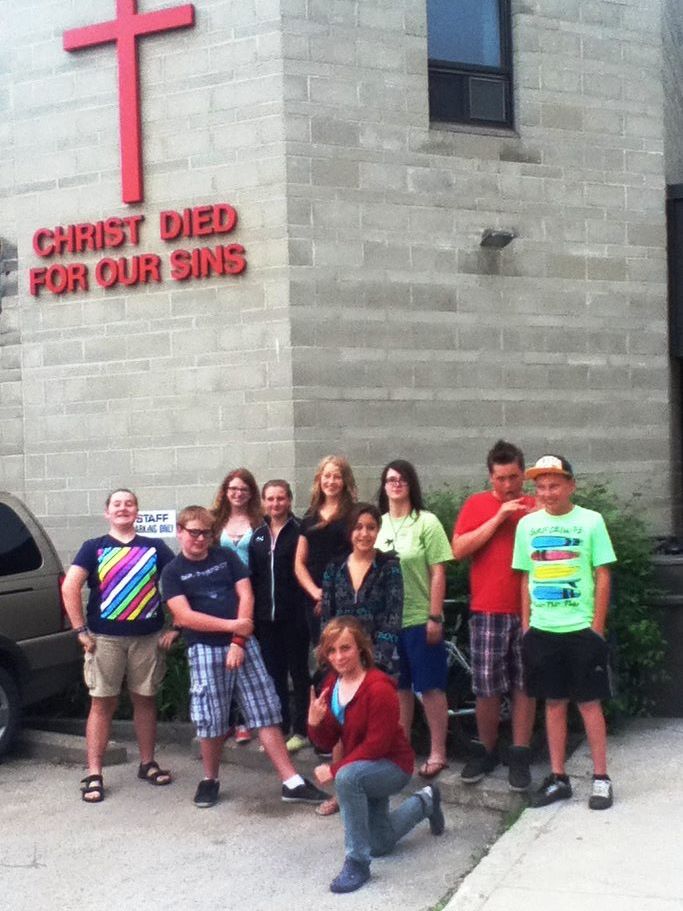
One of the privileges that I have as a pastor is being able to work with the youth group in our church. I have always loved working with teenagers, and love their passion for life. A couple of weeks ago, we took a team of youth from our small town of Beausejour, to serve at Union Gospel Mission, a street outreach in Winnipeg.

It was Matthew 25:40 in action: Jesus said: “Assuredly, I say to you, inasmuch as you did it to one of the least of these My brethren, you did it to Me.” I was so blessed to see a group of teenagers taking their Saturday night and – instead of staying home and playing video games or watching TV – they came to serve. And serve they did! They washed chairs in their chapel in preparation for their evening service, cleaned windows, worked in the kitchen, mopped floors, and greeted street people at the door as they came in for their meal. I was so proud of our amazing team!

Our youth at Union Gospel Mission in Winnipeg, MB

Our youth at Union Gospel Mission in Winnipeg, MB

God Loves the Poor:

Many people wonder why our young people would give up their Saturday night to go and serve the homeless, and the answer is simple: God loves the poor! There are so many Scriptures that reveal to us God’s heart for the poor, the lonely, the orphans and widows, and the strangers:

  • Leviticus 19:10: “And you shall not glean your vineyard, nor shall you gather every grape of your vineyard; you shall leave them for the poor and the stranger.”
  • Deut. 15:7: “If there is among you a poor man of your brethren… you shall not harden your heart nor shut your hand from your poor brother.”
  • Psalm 41:1: “Blessed is he who considers the poor; The Lord will deliver him in time of trouble.”
  • Psalm 82:4: “Deliver the poor and needy; Free them from the hand of the wicked.”
  • Gal. 2:10: “They desired only that we should remember the poor, the very thing which I also was eager to do.”

Don’t Ignore the Poor:

In today’s Scripture, Solomon says, “Those who shut their ears to the cries of the poor will be ignored in their own time of need.” (NLT). This is echoed in another Proverb: “He who has pity on the poor lends to the Lord, And He will pay back what he has given.” (19:17).

God loves the poor. But some would say, “Aha! If there is a God, and He is all-powerful and all-loving, then why are there so many needy people in the world?” The answer to that is simple. As Christians, we are called to be God’s hands and feet in the world. If the poor aren’t being helped, it’s because we aren’t doing our part in reaching them with the love of God. Let’s hear the poor!


More Pleased

Proverbs 21:3.

“To do justice and judgment is more acceptable to the LORD than sacrifice.” (KJV). 

Justice and Judgment:

What does the Lord want us to do? To do justice and judgment. Or, as it says in the New Living Translation: “The LORD is more pleased when we do what is just and right than when we give him sacrifices.” That tells us that – contrary to popular belief in the world today – there are certain things that are right and certain things that are wrong. And God wants us to do those things that are right. He wants us to be loving, forgiving and gracious people.

But – what does Solomon mean when he says that doing justice and judgment is more acceptable to the Lord than sacrifice? What kind of sacrifice is he talking about here?

The Sacrifices:

Under the Old Covenant, when the people would sin, they would have to make a sacrifice to atone for their sin. Under the New Covenant, when we sin, we confess our sins to God and tell Him we’re sorry for what we’ve done, and when we do, He forgives us.

However, some people have taken the grace of God and used it as a license to sin. They think that because God is good and forgiving, they can go out and sin all they want, as long as they make a sacrifice / confess their sins to Him. Some people try to make up for their sin by trying to balance it out with good deeds. Because they feel guilty, they go out and do something good like go to church, worship, fast or pray.

But God is more pleased when we do what is just and right in the first place, rather than going out and doing bad things then having to offer sacrifices to try to make up for our wrongdoings. Yes it’s true that God is gracious and will forgive us when we sin, but we cannot let that be an excuse to be a Sunday Christian, doing our religious duty at church, then forgetting about doing what is just and right the rest of the week.

A Story from Spurgeon:

I think this story by Charles Spurgeon best illustrates our motivation for doing what is just and right, even though God forgives us when we sin:

Spurgeon“There is the story of half-a-dozen boys who had severe fathers, accustomed to beat them within an inch of their lives. Another boy was with them who was well beloved by his parents, and known to do so. These young boys met together to hold a council of war about robbing an orchard. They were all anxious to get about it except the favoured youth, who did not enjoy the proposal. One of them cried out, “You need not be afraid: if our fathers catch us at this work, we shall be half-killed, but your father won’t lay a hand upon you.” The little boy answered, “And do you think because my father is kind to me, that therefore I will do wrong and grieve him? I will do nothing of the sort to my dear father. He is so good to me that I cannot vex him.”


Leadership Advice

Proverbs 20:28.

“Mercy and truth preserve the king: and his throne is upholden by mercy.” (KJV).
“Unfailing love and faithfulness protect the king; his throne is made secure through love.” (NLT).

Advice for Leaders:

In this Proverb, Solomon teaches us two things. First, he commends to us two virtues of a good king: mercy and truth. Secondly, he shows how the ruler who walks in mercy will ensure he is successful in his rule. And although this proverb specifically deals with a king, I believe that the universal principle behind it can be applied to anyone in a leadership position – be they a government leader, teacher, parent, employer, or pastor.

Two Leadership Virtues:

In the world today, we are experiencing a crisis of leadership. There are so many leaders that don’t lead well. How many leaders – both prominent political leaders and religious leaders – have lost their position and influence because of a lack of integrity? Too many to count. If a leader wants to lead long, finish well, and have a lasting influence, he must be a person with a virtuous character. And two of the most important virtues, Solomon tells us, are mercy and truth. In fact, in another Proverb, Solomon tells all people, not just leaders, to aspire to be people of mercy and truth: “Let not mercy and truth forsake you; Bind them around your neck, Write them on the tablet of your heart.” (3:3).

What does it mean for a leader to be merciful? It means that you don’t rule with harshness, cruelty or legalism. It means you are tender and gracious, and willing to forgive the mistakes of those you lead. It means you choose to lead with love, acceptance and forgiveness. And what does it mean to be truthful? It means you are faithful to your word, you keep your promises, and do what’s right. When you make mistakes (and you will make mistakes, and that’s okay), you are quick to admit it and ask for forgiveness where necessary.

Successful Leadership:

When a leader walks in truth and especially mercy (which is mentioned twice in our text), it is said that his throne will be upholden, or made secure, by mercy. In other words, his leadership will last. His character and integrity will be preserved, and his influence will outlive his life.

I know of a leader in a church once who got hurt and offended, and rather than being merciful and choosing to forgive the other leader who had hurt him, he got bitter and started lying and gossiping about that other leader. As a consequence, many people were hurt and affected by his actions. It was such a sad and terrible situation that resulted in many people walking away from the church as a result of it. It totally broke my heart. This story serves as a warning to all who would neglect the proverbial admonition to walk in mercy and truth, which is designed to protect a leader – and the people he leads.


Think Before You Promise

Proverbs 20:25

“It is a snare to the man who devoureth that which is holy, and after vows to make enquiry.”
“It is a trap to dedicate something rashly and only later to consider one’s vows.” – NIV

Bad Deals

Have you ever made a bad deal? For instance, have you ever committed to an agreement thinking you were going to make a profit, only to find out later that you lost money? If you have been in that position, when did you figure out you were on the losing end of the deal?

Some people sign contracts and then once the job has begun try to renegotiate every little detail. Others will agree to do a project of some sort, agree on a price, but in the end haggle over the agreed amount. One person I know was promised a certain amount for a job, but then when it was completed, the person for which he worked decided to pay him less. He was told, “I have been thinking about what I promised, but now I don’t think the job was worth that much.”

Bad Vows

There are people who treat God the same way. The make promises, but then, when the real cost is figured, try to renegotiate.

For example, a businessman might say, “God, if you bless my investment, I will give you fifty percent of the profit.” He may even call a meeting with his staff and proclaim, “I am dedicating fifty percent of my business to the Lord!” But then, later that evening, he sits down and starts planning for the future and realizes he could have used that extra money. The next day he goes into the office and says, “You know, I think I promised God too much.”

Solomon says that we fall into a “trap” when we make rash vows or promises unto God. It is our responsibility to think about these things beforehand, not afterwards. Once we make a vow to God, we are wise to keep it.

“A man who makes a vow to the LORD or makes a pledge under oath must never break it. He must do exactly what he said he would do.” – Numbers 30:2 NLT


The Gossip

Proverbs 20:19.

“He that goeth about as a talebearer revealeth secrets: therefore meddle not with him that flattereth with his lips.” (KJV). 

Gossip Described:

The Book of Proverbs has a lot to say about the dangers of gossip:

  • “A gossip goes around revealing secrets, but those who are trustworthy can keep a confidence.” (11:13, NLT).
  • “A troublemaker plants seeds of strife; gossip separates the best of friends.” (16:28, NLT).
  • “A gossip tells secrets, so don’t hang around with someone who talks too much.” (20:19, NLT).

To sum up, a gossip tells secrets, stirs up strife and separates friends. And how does the Bible tell us to deal with gossips? Don’t hang around with them! It should go without saying, but if someone will gossip to you, they will also gossip about you.

Gossip Illustrated:

I read this poem once that best illustrates the destructive nature of gossip:

My Name Is Gossip. I have no respect for justice.
I maim without killing. I break hearts and ruin lives.
I am cunning and malicious and gather strength with age.
The more I am quoted the more I am believed.
 
I flourish at every level of society. My victims are helpless.
They cannot protect themselves against me because I have no name and no face.
I am nobody’s friend. Once I tarnish a reputation, it is never the same.
I topple governments and ruin marriages.
 
I ruin careers and cause sleepless nights, heartache and indigestion.
I spawn suspicion and generate grief.
I make innocent people cry in their pillows.

Even my name hisses. I AM CALLED GOSSIP.

Gossip Experienced:

I hate gossip. I have seen firsthand how it can destroy friendships, break hearts, and ruin lives. I know of someone who gossiped about their pastor, and how it caused other people to leave that church as a result of their malicious lies and slander. It caused the pastor no small amount of sleepless nights, heartache, many tears and overwhelming stress. It was so hurtful that it almost caused him to want to give up and quit the ministry! Thankfully, the pastor leaned on the Lord for strength and he is still in the ministry today.

Elsewhere in Proverbs, Solomon tells us: “Fire goes out for lack of fuel, and quarrels disappear when gossip stops.” (26:20). If we want to guard against strife, we need to take a stand against gossip. Make a commitment to never speak a negative word about someone else – whether what you are saying is true or not. The power of life and death is in your tongue: speak life only!


Beer is Good? (20:1)

Proverbs 20:1.

“Wine is a mocker, strong drink is raging: and whosoever is deceived thereby is not wise.” (KJV). 

God is Great and Beer is Good…

Ahhh… family weddings. The pattern of these events is always the same: ceremony, reception, and then dancing! And with the dancing comes an abundance of country music songs. One of the popular songs that always makes it out onto the dance floor is a song by Billy Currington called People are Crazy. In this story song, he tells the tale about meeting an old man in a bar who tells him, “God is great, beer is good, and people are crazy.”

Now while it is true that God is great (and few would argue with the fact that people are crazy!) is it true that beer is good? What does the Bible have to say about drinking alcohol? This has been a controversial topic among Christians for many years. The Bible does not have a black and white standard that says, “thou shalt not drink alcohol” but it does say a lot on the topic. Our Scripture teaches us that people who drink become mockers and fighters, and if you are led astray by alcohol, you are not wise. Still though it doesn’t say you cannot drink. Eugene Peterson’s paraphrase of the following Scripture gives a real clear picture into some of the dangers of drinking alcohol:

Warnings Against Drunkenness

“Who are the people who are always crying the blues? Who do you know who reeks of self-pity? Who keeps getting beat up for no reason at all? Whose eyes are bleary and bloodshot? It’s those who spend the night with a bottle, for whom drinking is serious business. Don’t judge wine by its label, or its bouquet, or its full-bodied flavor. Judge it rather by the hangover it leaves you with – the splitting headache, the queasy stomach. Do you really prefer seeing double, with your speech all slurred, Reeling and seasick, drunk as a sailor? “They hit me,” you’ll say, “but it didn’t hurt; they beat on me, but I didn’t feel a thing. When I’m sober enough to manage it, bring me another drink!” (Prov. 23:29-35).

So the Bible doesn’t say that you can’t drink alcohol, it just makes it abundantly clear that if you do, you can ruin your life! How many people have destroyed their lives or the lives of their families through the use of alcohol? My dad was an alcoholic who abandoned our family, so I know firsthand the negative effects of alcohol.

Finally, although the Bible doesn’t forbid the use of alcohol, it does state that drunkenness is a sin: “And do not be drunk with wine, in which is dissipation.” (Eph. 5:18). (Note – just because it says don’t be drunk with wine doesn’t mean it’s okay to get drunk on beer or rum or another form of alcohol!). Drunkenness leads to dissipation (excess in the KJV), a word that means an abandoned, dissolute, wasted life.

So – is beer good? You be the judge!


For Our Good

Proverbs 19:27

“Cease, my son, to hear the instruction that causeth to err from the words of knowledge.” (KJV).
“If you stop listening to instruction, my child, you have turned your back on knowledge.” (NLT).  

Mandatory Bike Helmets:

In the province of Manitoba where I reside, our government recently made a change in the laws regarding cycling. Effective the beginning of this month, all cyclists under the age of 18 must wear a bike helmet. If you’re caught biking without a helmet, you have to pay a $50 fine. (However, first-time offenders can have the $50 fine waived if they complete an online bicycle helmet safety course).

I have four children – Caleb (16), Tori (15), Austin (13) and Hannah (10), and all of our family enjoys going bike-riding. However, when this new law was announced, our children – especially my oldest son Caleb – weren’t too excited about it. Wear a bike helmet? No way – that’s not cool! Not to mention the fact that it messes up your hair! However, as parents, we have told our children that our expectation is that if they want to ride a bike, they must wear a helmet.

Out biking with my daughter Hannah

Out biking with my daughter Hannah – with helmet on!

The Reason for the Rules:

I think one of the biggest objections children have to following rules is this: They want to know why. “Why can’t I ride a bike without a helmet? I’ll pay the fine myself if I get caught!” Such objections are missing the point. The purpose of the bike helmet law isn’t just to get people to pay a fine – it’s to keep people safe!

Our province says each year about 160 cyclists end up in hospital from cycling injuries, and many collisions result in serious injury or death. About 40% of those injuries involve children. Wearing a helmet reduces the chance of serious head and brain injury by more than 85% in the event of a crash. That’s the reason for the rules.

For Our Good:

Today’s Proverb tells us that if we stop listening to instruction, we are turning our back on knowledge. And we’re turning our back on God’s wisdom, too – and the benefits of obeying the Bible. “And now, Israel, what does the Lord your God require of you, but to fear the Lord your God, to walk in all His ways and to love Him, to serve the Lord your God with all your heart and with all your soul, and to keep the commandments of the Lord and His statutes which I command you today for your good?” (Deut. 10:12-13). In other words, God’s commandments are for our own good – to protect us from harm, or provide blessings for us.

Heavenly Father, I thank you that you are a good God, and that when you give us rules, it is not to keep us from having fun, but rather to protect us and provide for the best life possible. Help us to listen to your wise instruction, and never turn our backs on knowledge. In Jesus’ precious name, amen.


Head vs Heart

Proverbs 19:2

‘Desire without knowledge is not good –
how much more will hasty feet miss the way!’

Desirable

It’s good to be passionate, to have strong desires to be love and to care. Without it life would be very boring, but as this Proverb hints at heart without a bit of head can lead us to miss the real path.

Unbalanced

A lot of people these days are driven purely by emotion. They go after things they want with reckless abandon. When we are totally driven by emotion we often end up making bad decisions and hurting people in the process. People driven by emotion will throw away relationships on a whim because they have seen the next best thing, they will chase promotions at the expense of colleagues, they will attempt to satisfy every whim and fancy in any way possible, and worst of all usually be blind to the trail of destruction in their wake. Our emotions need to submit to our common sense, and both need to submit to Jesus.

Counting the Cost

We need both desire and knowledge to make our decisions as we do not want to miss the way. Consider the words of Jesus:

Luke 14:28-33 ‘Suppose one of you wants to build a tower. Won’t you first sit down and estimate the cost to see if you have enough money to complete it? For if you lay the foundation and are not able to finish it, everyone who sees it will ridicule you, saying, “This person began to build and wasn’t able to finish.” ‘Or suppose a king is about to go to war against another king. Won’t he first sit down and consider whether he is able with ten thousand men to oppose the one coming against him with twenty thousand? If he is not able, he will send a delegation while the other is still a long way off and will ask for terms of peace. In the same way, those of you who do not give up everything you have cannot be my disciples.’

May we learn the power of passion and desire guided by wisdom and knowledge.