
Proverbs 19:28
“An ungodly witness scorneth judgment: and the mouth of the wicked devoureth iniquity.”
“A corrupt witness makes a mockery of justice; the mouth of the wicked gulps down evil.” – NLT
Near the Cross
As I sit here preparing to type this entry, “Near the Cross” (Fanny Crosby) is playing in the background on my computer. Tears are beginning to well up in my eyes. Jesus, keep me near the Cross.
The words to the second verse: “Near the cross, a trembling soul, love and mercy found me; there the bright and morning star sheds its beams around me.” Then the chorus goes: “In the cross, in the cross, be my glory ever; till my raptured soul shall find rest beyond the river.”
How can anyone who has ever heard of the love of Christ, of what He did on Calvary’s cross for you and me, ever be like the people in today’s proverb? I just don’t get it. Yet, there are some people who simply love evil; they love the taste of sin.
Oh, dear Jesus, keep me near the Cross!
Just Don’t Care
You have probably seen witnesses take the stand in a courtroom of law and laugh, make fun, and show utter contempt for the legal system. They “make a mockery of justice,” of what is right. They don’t care what happens, for they love iniquity and they mock the potential consequences. In many cases even the threat of death makes no difference.

Click to see Prov. 19:28 in action.
In a recent case a teen, T.J. Lane, was convicted of murder. But before he was sentenced for killing three other teens in an Ohio school, he brandished a t-shirt with “Killer” hand-written on the front, “flipped off” the courtroom, and cursed the families of the victims. The rebellious child in a man’s body “scorned judgement” and showed nothing but a taste for evil.
He definitely had an attitude.
But Attitudes Change
There was a time when I loved sin. There was a time when I had a taste for evil. But when I came near the old, rugged Cross on which the Lamb of God was slain, my tastes changed. I found a new love.
Unfortunately, some scorn even the judgement of the cross. They are like the wicked described in the book of Job who enjoy “the sweet taste of wickedness, letting it melt under their tongue (20:12 NLT),” and are too enraptured with their evil to comprehend the true terrors that await.
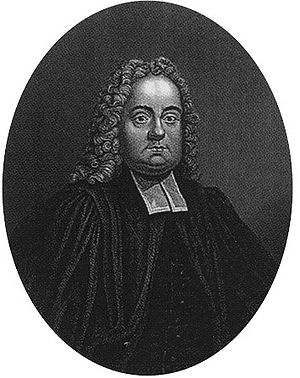
Matthew Henry said that you can tell a fool “that the scriptures and an oath are sacred things, and not to be jested with, that there will come a reckoning day; [yet] he laughs at it all, and scorns to heed it.” [1]
But…one day attitudes will change. There will be no mocking, no t-shirts, only a fearful dread. At that moment what had been so sweet to the taste will become “poisonous venom in their stomach” (Job 20:14 NLT).
[1] Matthew Henry, Matthew Henry’s Commentary on the Whole Bible: Complete and Unabridged in One Volume (Peabody: Hendrickson, 1994), Pr 19:28.
Related articles
- Chasten Thy Son (proverbialthought.com)
 Caitlin Klem
 Chris Jordan
 Daniel M. Klem
 dawnlizjones
 David
David Grady Davidson
 Jason Sneed
 M. Wiley Wilson
 Nick
Nick Anthony Baker
 Katie Marie
 Wally Fry
 Proverbial Thought
Proverbs 12:20
“Deceit is in the heart of them that imagine evil: but to the counselors of peace is joy.”
The Evil Psychiatrist
Try to imaging an evil psychiatrist. Can you? Picture in your mind a tall, slick-haired, skinny man in a long, white lab coat. In one eye is a spectacle, the other a creepy glare.
Now, just imagine this guy asking you to come into his office. He offers you a quasi-comfortable couch on which to recline, then pulls out a yellow pad and pencil to take notes – notes of your deepest, darkest secrets.
When your hour is up, you have talked about your parents, your dead dog, a lost love interest, and your lack of self worth. What do you get in return? The Doctor says,
The Caring Counselor
Now, think of someone who wants nothing in return for simple, good advice. This person is caring, can see the end of the road you’re traveling, and wants what is best for you.
You go to this person, pour out your soul, problems and all, and in return you get both sympathy and solid guidance. You are not made to feel like an idiot, but your own words are used to point towards better choices to be made.
Hopefully, you can see the difference between the two, no?
“Imagine Evil” vs “Joy”
One point of today’s proverb is that there are some who would offer counsel for their own selfish desires, while there are others who do it for the joy of bringing about peace. The operative word in the verse is “counselors.”
As a pastor, I have to counsel people all the time. Unlike a psychiatrist, however, I don’t get paid lots of money for my advice.
Now, don’t get me wrong, there is a place for the advice of both, but if the intent of either is selfish, then the advice is evil – free or not.
What Goes Around…
But there is even more to this verse. The idea is that the reason for the advice one gives will ultimately come back upon him. The great Matthew Henry wrote:
If you want to experience joy, then give “peaceful” counsel. If you want to be fooled, then seek to fool others.
*Matthew Henry, Matthew Henry’s Commentary on the Whole Bible: Complete and Unabridged in One Volume (Peabody: Hendrickson, 1994), Pr 12:20.
Leave a comment | tags: Bible, Christianity, Commentaries, Good counsel, Matthew Henry, Religion and Spirituality | posted in counsel, Paths of Life, Peace, Reward, The Wicked