
Proverbs 4:8-9
“Exalt her, and she shall promote thee: she shall bring thee to honour, when thou dost embrace her. She shall give to thine head an ornament of grace: a crown of glory shall she deliver to thee.”
Building Wisdom
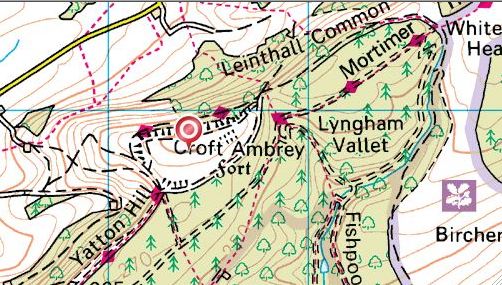 The defense of many iron-age villages in the UK relied on huge mounds of soil being piled up to encircle a settlement and create a primitive fort. There is one of these ancient earthworks close to where I live. It is situated on the highest point for several miles and must have taken a herculean effort to build. The scale of the earthworks is not immediately evident when walking on its remains, and much is left to the imagination. What is not in doubt is that the earthworks were essential to the safety of those who lived inside. Why else would a group of Ancient Britons have invested so much in the construction of such a formidable barrier?
 The word ‘exalt’ at the beginning of verse eight could be applied to the construction of an iron-age fort. Wisdom needs to be built up, and constructed into a formidable barrier to defend against everything that life and Satan have to throw at us. It is useful to remember that iron age forts were not built overnight. Solomon may have been blessed with a gift of wisdom by God, but the process of building wisdom began with the early example and teaching of his parents (Proverbial Thought – Proverbs 4:1-2 and Proverbs 4 3-4).
Embracing Wisdom
It is not enough to embark on a building project alone. The builders of the earthworks could not spend their entire lives inside never facing the dangers outside. And how good a defense would the earthworks have been if lookouts were never posted to provide warning of possible intruders?
The reason that Solomon tells us we need to embrace wisdom is because he knew that there would be times when however good and strong the earthworks of wisdom around us may be, we still have to venture out, sometimes into the unknown. Solomon is also reminding us in these verses that we need to remain alert. Why? Because danger is all around. Stand on top of the earthworks and take a good look outside:
Be of sober spirit, be on the alert. Your adversary, the devil, prowls around like a roaring lion, seeking someone to devour. (1 Peter 5:8 NASB)
The journey is not over yet, but look out from the ramparts and you will see that the reward for exercising wisdom is in view.


 Caitlin Klem
 Chris Jordan
 Daniel M. Klem
 dawnlizjones
 David
David Grady Davidson
 Jason Sneed
 M. Wiley Wilson
 Nick
Nick Anthony Baker
 Katie Marie
 Wally Fry

 Proverbial Thought
A Difficult Thought
Proverbs 26:10
This proverb is a challenging one because of how many different ways it could be translated. As a matter of fact, practically every scholarly commentary admits the Hebrew in this proverb is difficult to interpret. That is why I am going to quote several of them before I leave my final thought for you.
Spence-Jones (The Pulpit Commentary)
Few passages have given greater difficulty than this verse; almost every word has been differently explained. The Authorized Version is, The great God that formed all things both rewardeth the fool, and rewardeth transgressors; Revised Version, As an archer (Job 16:13) that woundeth all, so is he that hireth the fool and he that hireth them that pass by. At first sight one would hardly suppose that these could be versions of the same passage. [1]
Garrett (The New American Commentary)
The Hebrew of v. 10 is almost unintelligible and thus subject to numerous interpretations, all of which are hypothetical. As the NIV has it, the verse reaffirms that one should not commit important tasks to fools (as in v. 6). Notwithstanding all the difficulties of the text, that does seem to be the main point.[2]
Friedrich and Delitzsch (Commentary on the Old Testament)
All that we have hitherto read is surpassed in obscurity by this proverb, which is here connected because of the resemblance of ושכר to שכור. We translate it thus, vocalizing differently only one word:
Much bringeth forth from itself all; But the reward and the hirer of the fool pass away.[3]
Matthew Henry
Our translation [KJV] gives this verse a different reading in the text and in the margin; and accordingly it expresses either, 1. The equity of a good God. The Master, or Lord (so Rab signifies), or, as we read it, The great God that formed all things at first, and still governs them in infinite wisdom, renders to every man according to his work. … Or, 2. The iniquity of a bad prince (so the margin reads it): A great man grieves all, and he hires the fool; he hires also the transgressors. When a wicked man gets power in his hand, by himself, and by the fools and knaves whom he employs under him, whom he hires and chooses to make use of, he grieves all who are under him and is vexatious to them. We should therefore pray for kings and all in authority, that, under them, our lives may be quiet and peaceable.[4]
Anthony Baker (Proverbial Thought)
So, here is what I think. Feel free to quote me 200 years from now.
A man is a fool when he employs a fool to complete a task. However, the biggest fool is one who thinks God, the Almighty Archer, will miss the target when He holds the wicked accountable.
We are always under His watchful eye, but the fool is never out of His “sights.”
[1] H. D. M. Spence-Jones, ed., Proverbs, The Pulpit Commentary (London; New York: Funk & Wagnalls Company, 1909), 500.
[2] Duane A. Garrett, Proverbs, Ecclesiastes, Song of Songs, vol. 14, The New American Commentary (Nashville: Broadman & Holman Publishers, 1993), 213.
[3] Carl Friedrich Keil and Franz Delitzsch, Commentary on the Old Testament, vol. 6 (Peabody, MA: Hendrickson, 1996), 387.
[4] Matthew Henry, Matthew Henry’s Commentary on the Whole Bible: Complete and Unabridged in One Volume (Peabody: Hendrickson, 1994).
Leave a comment | tags: B&H Publishing Group, commentary, devotionals, Franz Delitzsch, Matthew Henry, proverbs, The New American Commentary, Warnings | posted in advice, Armour and Weaponry, Fear of the Lord, Fools, Reward, The Wicked, Warnings