
Tag Archives: faith

Don’t Try to Hide

Proverbs 15:11

“Hell and destruction are before the LORD: how much more then the hearts of the children of men?”

“Full-Body Scanners”

Not long ago airports around the world introduced the use of “full-body scanners.” These machines have the ability to expose what is beneath a person’s clothing, with expose being the operative word.

Airline passengers used to be subject, in extreme cases, to strip searches. When deemed necessary  a security person might ask a potential passenger to undress in order to prove no form of weaponry was present, such as a knife or hand gun. Now, with the use of this new technology, all people boarding aircraft are forced to walk through a scanner that shows a naked picture (in black and white) to security personnel.
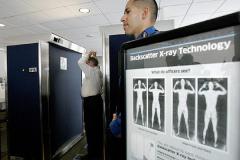
1117-AIMAGING-TSA-screenings-airports-Patdowns_full_600Many men and women object to the use of the “full-body scanner,” and for good reason. Ordinary, law-abiding folk are being forced into virtual strip searches and they don’t like it. In some cases security personnel have actually kept the nude images, which adds to the degrading sleaziness of the whole matter. Even though “full-body scanners” may prove useful, normal people enjoy their privacy and don’t like getting naked in front of strangers.

God Sees All

Privacy is the last thing we should expect with God. As a matter of fact, even the deepest, darkest secrets we keep are fully exposed to His ever-watchful, all-seeing eye.

Anyone can avoid being exposed by a “full-body scanner” by staying away from airports. But when it comes to God, there is nowhere anyone can hide, not even hell.

Today’s proverb states that the “hell and destruction” (sheol and abaddon), the place of the dead and hell itself, are in full view of the Lord. Not even the most advanced microwave scanner can peer beyond this realm into the world of the dead, but God can see every corner of the abyss. Solomon says, “If hell is fully exposed before God, what make you think you can keep anything from Him?”

Don’t Lie to God

Sometimes people walking into airports may forget they brought a little item like a pocket knife. They try to hide it and deny they are carrying anything prohibited, but then the scanner shows the truth. What follows is not pleasant. How much more should we be honest with our Creator?

Romans 3:23 tells us that “all have sinned,” yet so many want to deny it. They think they can hide the lust, hatred, greed, and envy. They think a thick coat can cover their bitterness and betrayal. What they fail to realize is that God can see beneath the human shell and straight into the heart.

My advice? Before you take that final flight into the great beyond, admit what you are carrying, hand it over, and accept the free ticket to eternal life. “If we confess our sins, he is faithful and just to forgive us our sins, and to cleanse us from all unrighteousness” (1 John 1:9).

Otherwise, the place where violators go is far worse than anything airport security can dish out.


Sacri-nice

Proverbs 15:8

“The Lord detests the sacrifice of the wicked,
    but the prayer of the upright pleases him.”

What God Wants…

God hates the sacrifice of the wicked, but he isn’t to keen on the sacrifice of the righteous either, especially when it becomes the be all and end all. Countless times in the Bible God makes the point that He isn’t interested in sacrifices, the idea of coming and making a payment for your transgressions. No, what He is interested in is your behavior, how you will respond to His grace and forgiveness in your own life, and how that will inspire you to treat others.

Inspired by?

In Matthew 18 we see the story of a servant who owes his master a huge amount of money. He’s panicking, how will he pay this back? What will happen to his family? He goes before the master and begs for more time, and incredibly the master let’s him off. Scot free. Let’s not miss the huge significance of this – this is truly incredible and as counter cultural now as it was then.

I sometimes watch Undercover Boss, now I am not naive I know it’s probably scripted, but I can’t help but be moved when some big CEO enters the life of a low level employee, sees their struggles and their debt, and does something about it. What we never see is how this affects the person in question. They seem very grateful in the moment, but we never see the lasting change.

Not so with this servant. The Bible tells us that straight away he went looking for another servant who owed him a considerably smaller amount. We’d be entitled to think that he had in mind to set this servant free from his debt, to share the grace he had experienced. But in fact all he wants is the money owed to him. How sad that this servant was even more enslaved to money than he originally thought.

Washing feet

At the opposite end of the spectrum we find Jesus. Jesus the entirety of God squeezed into man form, denying His deity to inspire humanity, relying fully on the Father to further the future of the broken. We all know Jesus washed His disciples’ feet, we all know this should blow our tiny minds, but I’ll be honest it was just one of those things I accepted, until I reread the account and came to these verses in John 13:3-5 ‘Jesus knew that the Father had put all things under his power, and that he had come from God and was returning to God; so he got up from the meal, took off his outer clothing, and wrapped a towel around his waist. After that, he poured water into a basin and began to wash his disciples’ feet, drying them with the towel that was wrapped around him.’ 

Why did Jesus do this? BECAUSE He knew who he was. Because He wanted to show the world a powerful image of what happens when we take the lowest place.

Prayer

All very good and well you may say but how’s this connected to the proverb? Prayer changes everything. If you want to be a person who shares grace rather than shrugs grace then you need to start on your knees.


Fire Words

Proverbs 15:1

“A soft answer turns away wrath, But a harsh word stirs up anger.” (KJV).
“A gentle response defuses anger, but a sharp tongue kindles a temper-fire” (The Message).

Have you ever thought about how powerful your words are? Solomon tells us that “Death and life are in the power of the tongue.” (Prov. 18:21). Think about that for a minute. Every word you speak to someone can bring life or death to them. In the above passage of Scripture, we learn that our words can diffuse the most difficult fights or arguments. If we speak gentle words, we can turn away wrath. But if we respond with harsh words, we will only stir up that other person’s anger. We also learn here that gentle words can bring life and health to someone, and negative words can crush someone’s spirit.

James gives us a great word picture to help us see the power in our words when he writes: “The tongue is a small thing, but what enormous damage it can do. A tiny spark can set a great forest on fire. And the tongue is a flame of fire. It is full of wickedness that can ruin your whole life. It can turn the entire course of your life into a blazing flame of destruction, for it is set on fire by hell itself.” (James 3:5-6).

I think it’s interesting that James uses fire to represent the power of the tongue. Fire is a tool, and it can be used for either good or evil purposes. The same fire that can be used to cook your food or warm your house can also be used to burn down a building. Likewise, our words can be used to bring encouragement or comfort, or to bring death and destruction.

In his book, The Power of Your Words, Robert Morris gives three suggestions for how we can begin the process of taming our tongue.

  • Pause: Hold on there just a minute. Before you open your mouth, pause for a minute. James exhorts us to “be quick to listen, slow to speak, and slow to get angry.” (James 1:19). God gave us two ears and one mouth, so we should listen twice as much as we talk!
  • Ponder: Let’s give that some thought. The Bible says, “Don’t use foul or abusive language. Let everything you say be good and helpful, so that your words will be an encouragement to those who hear them.” (Eph. 4:29). If your words don’t fit into that category, then don’t say them!
  • Pray: Appeal to a higher power. If words are so powerful, then we should pray that God would give us the ability to tame our tongues. Let’s pray that God would set a guard over our mouths.

Just Reward

Proverbs 14:14.

“The backslider in heart shall be filled with his own ways: and a good man shall be satisfied from himself.”

Christian Karma?

There are many religions in the world who believe in karma. Hindus, Buddhists and Sikhs for example all believe in the concept of “action” or “deed”, that which causes the entire cycle of cause and effect. In other words, if you are a good person, good things will happen to you, and if you are a bad person, bad things will happen to you. You might be surprised to learn that this idea actually has its origins in the Bible. King Solomon wrote: “Backsliders get what they deserve; good people receive their reward.” (Prov. 14:14, NLT).

Now lest some of you begin calling me a heretic for suggesting that karma is a Christian concept, let me clarify. Karma is a twisted and imperfect understanding of the Scriptural principle of reaping and sowing which the Apostle Paul describes here: “Don’t be misled. Remember that you can’t ignore God and get away with it. You will always reap what you sow! Those who live only to satisfy their own sinful desires will harvest the consequences of decay and death. But those who live to please the Spirit will harvest everlasting life from the Spirit.” (Galatians 6:7-8, NLT).

Consequences for our Actions:

Today’s Proverb teaches us that there are consequences for our actions. If you are a backslider, you will get what you deserve. If you live a life of sin and rebellion against God and His Word, don’t be surprised when life doesn’t work for you! But if you are a good person, and live to please the Spirit, you will receive a blessing from the Lord.

Let me illustrate. My dad was an alcoholic womanizer. He slept with many women in his life, and as a consequence, I have two sisters, two half-sisters, and at least three half-brothers that I know about (maybe more). My dad died about five years ago from a cancer that was caused from his excessive drinking and cigarette smoking. Sadly, this is an example of reaping what you sow.

Sometimes we live a sinful life and then experience the consequences for that sin, and we get mad at God and say, “How could you let this happen to me?” But it wasn’t God punishing us for our wrong decisions, but rather leaving us to the just reward of our own choices.

A Harvest of Blessing:

The good news today is that God is a merciful, gracious God. All of us have sinned, rebelled, and disobeyed His commandments, but we can confess our sins to Him and receive His free forgiveness. In Paul’s letter to the Galatians, he added an action plan for all of us. In light of the fact that there are consequences for our choices, he says, “So don’t get tired of doing what is good. Don’t get discouraged and give up, for we will reap a harvest of blessing at the appropriate time.” (6:9, NLT).


I’d Rather Live In a Tent

Proverbs 14:11

“The house of the wicked shall be overthrown: but the tabernacle of the upright shall flourish.”

House vs. Tent

There is a huge difference between a house and a tent. At one point in our marriage, my wife and I actually contemplated buying a nicer tent (one with rooms) and living in it during the summer. We briefly wondered if doing that could help us save money, as opposed to renting a house. The only problem with that was air-conditioning and running water – a tent has neither.

Another thing or two that a tent does not have are solid walls, doors, outlets for electricity, and appliances for washing clothes and cooking food. A tent is not the kind of dwelling you want to hang pictures inside, either. Tents are not meant for long-term, settled living; they’re only good for temporary stays, like at the lake, or in one’s back yard while on a dinosaur-hunting safari.

Houses are solid buildings meant to last. They are meant to be left for an inheritance  They are meant to be places where roots are dug deep and social identities are made. They are ideally meant to become permanent homes. Tents are for pilgrims.

Conventional Wisdom

Conventional wisdom leads one to believe that the more sturdy a house is, the better the investment. Conventional wisdom says that a tent is not the kind of dwelling in which to raise a family and secure a future. But when we are talking about the wicked and the upright, conventional wisdom is worthless.

Conventional wisdom teaches that in order to have longevity and a solid future, one which will insure one’s name is passed on from generation to generation, one must be tied down to the world. It makes no sense, therefore, to rest at peace in a temporary dwelling, like a tent, which is what the word translated “tabernacle” means. But godly wisdom is anything but conventional.

Godly Wisdom

In this proverb the writer wants us to understand that in order to “flourish” and grow we must be pilgrims in this world, not “house builders.” The “house” of the wicked will never be as secure as the temporary “tabernacle” of the righteous.

The Apostle Paul said, “If ye then be risen with Christ, seek those things which are above, where Christ sitteth on the right hand of God. Set your affection on things above, not on things on the earth” (Colossians 3:1-2). Followers of Christ are “strangers and pilgrims” on this earth (Hebrews 11:13). The upright knows this world is not his final home, therefore he is always ready to pull up stakes and move.

Storm Shelters

If you have every been in a severe storm, you understand the value of a storm shelter. Storm shelters are meant to be ultra-strong and immovable. But when it comes to the teaching of this proverb, the opposite is true. When it comes to the storms of life, the one that will be overthrown is the one who is tied down to the world. The pilgrim living in a tabernacle (tent) will not be swept away, but “flourish.”

When the worst weather of life comes, it is better to dwell in the flimsiest, most temporary structure built by God, than in the strongest, most secure castle built by man.


Bittersweet Testimony

Proverbs 14:10

“Each heart knows its own bitterness,
    and no one else can share its joy.”

Know Thy Self

The only person who knows your heart better than God is you. You know how it feels to be you. You know what what it feels like to hurt like you hurt. You and God are the only ones who know the depth of the bitterness contained in your own heart. Other people might have been through similar things, they might have some level of understanding but the only other person to know the full picture is God.

All by Myself

So is this proverb suggesting we should shut up shop, keeping our bitterness and joy to ourselves? I would like to suggest not. This proverb isn’t saying no one should share it’s joy, it is just making the observation that the natural state of play is that no one knows what is truly going on in someone’s heart (except God) unless we learn to share our hearts with others.

Grieving and Rejoicing Together

Romans 12:15 tells us to “Rejoice with those who rejoice; mourn with those who mourn.” This is only possible if we open our hearts to others. Now I am not saying we should share our intimate secrets with all and sundry but it is healthy to have a few trusted confidants to open our hearts to.

Extended Family

When we first found out that I had a low sperm count we had to decide whether to keep this news to ourselves or share it with our church family. When I got up and told our church I said something like this: “I tell you this now not for your pity, but so that as you grieve with us presently you will rejoice with us when we have our children.”


Two Roads

Proverbs 14:2

“He who walks in his uprightness fears the Lord, But he who is perverse in his ways despises Him.” (KJV).
“Those who follow the right path fear the LORD; those who take the wrong path despise him.” (NLT).

The Road Not Taken by Robert Frost:

  • I shall be telling this with a sigh,
  • Somewhere ages and ages hence:
  • Two roads diverged in a wood and I –
  • I took the one less traveled by
  • And that has made all the difference 

Often, the references to roads in poetry are metaphors to make us think of our lives and how we live them. Even Jesus used this metaphorical sense in talking about roads when He said, “Enter by the narrow gate, for wide is the gate and broad is the way that leads to destruction, and there are many who go in by it. Because narrow is the gate and difficult is the way which leads to life, and there are few who find it.”  (Matthew 7:13-14).

Everyone wonders: how do we find the road to the blessed life?  Jesus said that this road is the road less traveled by – that there are few who find it – and that it will make all the difference, for this is the road that leads to life. I believe this is what Solomon was talking about in the above Proverb:

The First Road – The Wrong Path:

The first road that Jesus talks about is the wide road that leads to destruction. He says there are many people who walk on that road. Proverbs 14:2 says that those who are perverse in their ways – those who take the wrong path – show that they despise God by walking on this road. It’s like God put up a big sign that said, “Abandon hope all ye who enter here” and yet foolish people still choose that road. The road of sin, rebellion, and ultimately death. But there is another road…

The Second Road – The Right Path:

The second road that Jesus talks about is the narrow and difficult way that leads to life. He says that – sadly – there are few who find this road. Proverbs 14:2 says that those who walk in their uprightness – those who follow the right path – fear the Lord. And here is the key to walking on the right path. It starts with a fear of the Lord.

To fear the Lord doesn’t mean that we are afraid of Him. However, it does mean that we respect Him, and when He says, “This is the way, walk in it,” we obey. Because we trust Him. And we know that the commands that He gives to us are for our own good.

Today, you are standing at a crossroads. Two roads diverge in a wood. The highway to hell is broad, and its gate is wide for those who choose the easy way. But the road to life is small, and the road is narrow, and only a few find it. Take the narrow road – the road less traveled by. It will make all the difference in your life!


Dream Big!

Proverbs 13:12

“Hope deferred maketh the heart sick: but when the desire cometh, it is a tree of life.” (KJV).
“Hope deferred makes the heart sick, but when dreams come true, there is life and joy.” (NLT).

When Hope is Deferred

Have you ever wanted something really bad or prayed about something for a very long time, but it never happened? Everyone has stories that they could share about disappointment and grief over things that they hoped for that never happened. When hope is deferred – when something you want doesn’t happen, or it doesn’t happen as quickly as you want it to – your heart gets sick. Hope deferred can cause you to stop hoping, stop dreaming, and even stop praying.

About ten years ago, my step-father lost his battle with cancer and he died. When that happened, my mom stopped praying. For many years, she refused to pray for circumstances to change, because she feared that they would only get worse. I am thankful that things have changed, and that she’s praying again today. Too many Christians allow themselves to get heart sick and then they lose courage, give up, and eventually they die.

“But”

The key to understanding God’s purpose in this Proverb is found in the small but important little word “But.” When I was an adjunct professor at Pacific Life Bible College in Surrey, BC, I always taught my Bible Research students to look for those key connective words. There is an example of this in Ephesians chapter two where the Apostle Paul talks about how we “were by nature children of wrath… But God, who is rich in mercy, because of His great love with which He loved us (has) made us alive together with Christ.” (v. 3-5).

So, although it is true that hope deferred can make our hearts sick – But God – His desire is that we would dream, and dream big. For when those dreams are finally realized, there is life and joy. Thank God for the big “buts” in the Bible!

When Dreams Come True

Also in Ephesians, Paul tells us that God “is able to do exceeding abundantly above all that we ask or think, according to the power that works in us.” (Ephesians 3:20). Our God is a good God, and He loves His children very much. He longs to bless us, to care for us, and meet all of our needs. But so often, we never ask. I wish we as Christians would believe the Bible more than we do!

Jesus Christ Himself taught, “Therefore I say to you, whatever things you ask when you pray, believe that you receive them, and you will have them” (Mark 11:24). Do you believe the promise? If you do, then pray! If you are in trouble, call upon the name of the Lord, for He is mighty to save! And when the Lord answers your prayers, make sure you praise Him. “to Him be glory in the church by Christ Jesus to all generations, forever and ever. Amen.” (Eph. 3:21).


Vision or Fantasy?

Proverbs 12:11

“He that tilleth his land shall be satisfied with bread: but he that followeth vain persons is void of understanding.”
Uh Oh

Hmmm. This is a proverb I usually avoid. Why? Because I have been labelled as a bit of a dreamer. Some have called me a visionary. That might sound great, but visionaries are often the one’s with ideas who never seen them through to completion! Who wants that?

Vision vs Fantasies

I guess there has to be a distinction between vision and fantasy. The Bible tells us that without vision the people perish. But how do we know that we have the right vision? Vision will give you food, and abundant food, it will also involve work – work for you to do.

But what if you are chasing the wrong vision? A man-made fantasy? Then there will be no pay of any real value. It will provide no sustenance. You will spend your days chasing one fantasy after another to try and find your fill, to make your million, and all to no avail.

Leaning on Webs

What about the times when we are pretty sure we have a God given vision and yet seem to be making no progress? Does that mean we are chasing fantasy? Don’t ask me! Go back to the source – ask God.

Have you stopped trusting in Him? Have you moved the goal posts? Cherish the vision He has given you. Work at it and never stop trusting.

“Such is the destiny of all who forget God;
    so perishes the hope of the godless.
What he trusts in is fragile;
    what he relies on is a spider’s web.
 He leans on his web, but it gives way;
    he clings to it, but it does not hold.” – Job 8:13-15 (NIV, edited)

Lean on God.


An Honest Salesman?

Proverbs 12:5

“The thoughts of the righteous [are] right: [but] the counsels of the wicked [are] deceit.”

It is not often that I choose to quote another author, but I found the following words instructive.

The plans of the righteous are right.” His designs are well-intentioned and morally sound because the mind of the righteous man is disciplined by wisdom. On the other hand, “the counsels of the wicked are deceit.” Their warped minds invent crooked methods for reaching their goals. To them the end always justifies the means.”*

The Ends

Do you ever stop to think about the “ends?” In other words, do you ever stop to think about the results of your actions, or your thoughts? Do you plan ahead? Do you think about consequences?

The “thoughts of the righteous are right” because the righteous have right hearts. And because of their righteous thoughts, the means to an end matter just as much as the result. They want to do what is right, because it is right.

On the other hand, the wicked think only of self-gratifying goals. As the above quote says, “To them the end always justifies the means.” Because of an unwise, wicked heart, what is right does not matter, only the desired result.

The Means

I have known many salesmen over the years. As a matter of fact, I was a pretty successful one, myself. And if there was anything that characterized a salesman, it was the desire to make a sale, to “close the deal,” even if his “counsel” was a little deceitful.

The problem with many salespeople is that they will tell you whatever you want to hear, even things you don’t, in order to sell a product or service. What the customer needs or can afford is rarely a consideration when sales bonuses and large paychecks are at stake. As long as a dollar can be made, it is thought “the end justifies the means.”

So how do you know when you have met a “righteous” salesman? When he won’t sell you something, even when you think you want it. Happily, I can say that there were times I did just that, even when the rent was due. Taking advantage of customer was wrong, and even though I might have needed the money, the end didn’t justify the means.

A Prayer

Dear Lord, give us a righteous heart that thinks right things. Keep us from wicked and deceitful thoughts. Give us a heart for others over the needs of self. Reprove us, Jesus, when we are tempted to deceive, for what waits in the end is anything but gain.


*James E. Smith, The Wisdom Literature and Psalms, Old Testament Survey Series (Joplin, MO: College Press Pub. Co., 1996), Pr 12:2–7.