
Tag Archives: Wisdom

Foaming Angry

Proverbs 25:23

“The north wind driveth away rain: so doth an angry countenance a backbiting tongue.”

Which Is It?

This is one of those verses in the Bible that cause interpreters and writers of commentaries to scratch their heads. One puts it this way: “This little proverb is extraordinarily beset with problems.”* According to the scholars and biblical language experts, it is hard to determine what Solomon means, exactly.

You see, there are issues with the “north wind”: does the verb “driveth” really mean to “drive away” or to “bring?” The verb actually means to “bring forth, as with labor pains.” Either way makes the second part hard to interpret: does an angry look come because of a “backbiting tongue,” or does the indignant tongue make the “angry countenance” go away?

If the north wind drives a cold rain away, then the parallel is that an angry look should hush up a slandering tongue. However, if the north wind brings the rain, then a slandering, backbiting tongue causes angry looks. Which one is it?

My Interpretation

One day, a long time ago, I tried to help someone. With a humble, servant-like attitude I bent over backwards to accommodate this individual, even though I knew it was going to be difficult for me. Then, that very evening, I was informed of slander being spread about me – stories that I had done the complete opposite and actually refused to help the person in need.

The word in this verse translated “angry” means “to foam at the mouth, speaking of a camel…”** Dear reader, I am not super spiritual – I am still human – so when I heard of what was being said of me, well…let’s just say I’m glad the walls of my house are made of brick. You could say I was foaming-at-the-mouth angry.

However you choose to interpret Proverbs 25:23, backbiting and slander can cause serious problems. Talking about people behind their backs simultaneously drives away showers of blessing and brings in cold rains of sorrow.

Watch your tongue and the weather will be fine.

“Keep your tongue from evil and your lips from speaking deceit. Turn away from evil and do good; seek peace and pursue it.” – Psalms 34:13-14 ESV

Sources:

*Duane A. Garrett, Proverbs, Ecclesiastes, Song of Songs, vol. 14, The New American Commentary (Nashville: Broadman & Holman Publishers, 1993), 209.

**Wilhelm Gesenius and Samuel Prideaux Tregelles, Gesenius’ Hebrew and Chaldee Lexicon to the Old Testament Scriptures (Bellingham, WA: Logos Bible Software, 2003), 250.

Sticks and Stones

Proverbs 25:18.

“A man that beareth false witness against his neighbour is a maul, and a sword, and a sharp arrow.” (KJV).

Playground Lies:

Calvin & Hobbes - sticks and stones

Do you remember that old adage you used to repeat on the playground when someone called you names? “Sticks and stones may break my bones, but words will never hurt me.” Or there was the oh-so-smart, “I’m rubber, you’re glue. Whatever you say bounces off me and sticks to you.” As clever as those phrases may be, unfortunately, neither of them is true. Words hurt!

In today’s Proverb, Solomon teaches us about the power of words. In the New Living Translation of this Scripture, he says, “Telling lies about others is as harmful as hitting them with an ax, wounding them with a sword, or shooting them with a sharp arrow.” Words hurt!

Deep Wounds:

I’ll be honest. I would rather have someone punch me in the face than lie about me, gossip about me, or slander my name. If you punch me or kick me, I’ll get a bruise that will go away quickly. But words are wounds that go deep and have lasting repercussions.

I had a situation once where a person started telling all sorts of lies about me. He began gossiping about me to anyone who would listen. One of the first responses was that several people believed his lies, and they left the church. That was one of the external effects of his words. But internally, the words began to affect my heart as well.

I have always been a very positive and optimistic person. The glass is always half full, and I always believe the best about people. But as this person’s lies about me began to spread, I found myself getting overwhelmed emotionally by what he said. He was trashing my reputation, and ruining friendships that I had with people.

I started losing my joy, and his words started taking a physical toll on my body as well. I started having restless, sleepless nights. I started experiencing many migraine headaches, stomach problems, nausea, dizziness, fatigue and more. I started losing weight; I had little appetite, and had a hard time keeping anything down. I even had to take some stress leave from work – something I have never had to do before or since.

The point of today’s Scripture is simply this: Words are powerful! Think very carefully before you speak a negative word about someone else – whether it is true or false. Words hurt!

Check out this great 30 second ad that shows the power of words…


I’ll Make You Famous!

Proverbs 25:8-10.

“Go not forth hastily to strive, lest thou know not what to do in the end thereof, when thy neighbour hath put thee to shame. Debate thy cause with thy neighbour himself; and discover not a secret to another: Lest he that heareth it put thee to shame, and thine infamy turn not away.” (KJV).
“Don’t be in a hurry to go to court. You might go down before your neighbors in shameful defeat.  So discuss the matter with them privately. Don’t tell anyone else, or others may accuse you of gossip. Then you will never regain your good reputation.” (NLT). 

I’ll Make You Famous!

billy the kid

The fall after I graduated from high school (in 1990), I went to Calgary for two weeks to spend some time with my biological dad. Because he and my mom were divorced before I was five years old, his involvement in my life was minimal, and I never really knew him well. However, during this trip, I spent two weeks living with my dad, getting to know him for the first time.

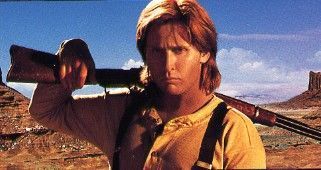
One of the things I remember about my visit with my dad was that we saw the western movie Young Guns II together. The movie tells the story of the infamous Billy the Kid, and the movie ends with this main character, played by Emelio Estevez, saying, “I’ll make you famous!” However, there’s a big difference between being famous and infamous.

Dealing with Offenses:

In the days of cowboys and cattle drives in the Wild West (so Hollywood would have us believe) all disagreements were quickly dispatched with a six-gun. But the Bible gives us better ways to deal with our hurts and offenses!

In today’s Scripture, Solomon tells us to be careful about running to court to sue someone who hurts or offends you. Instead, he says we should go and talk to that person first and try to work it out with them. Jesus taught the same thing in Matt. 18:15: “If your brother sins against you, go and tell him his fault between you and him alone. If he hears you, you have gained your brother.”

It’s unfortunate that nowadays, when someone does something wrong to somebody, they turn around and gossip, slander them, lie about them, or blog about them. God’s Word has a lot of strong warnings against those who would gossip! “A gossip goes around revealing secrets, but those who are trustworthy can keep a confidence” (Proverbs 11:13). In today’s Proverb, Solomon says that if we start gossiping, our “infamy” will not turn away.

Do you want to be Infamous?

That word infamy means extremely bad reputation, public reproach, or strong condemnation as the result of a shameful, criminal, or outrageous act. If you are a gossip who stirs up strife, be careful, because you may never again regain your good reputation. Gossip says, “I’ll make you famous!” Or is that… infamous?


I Will Arise!

Proverbs 24:15-16.

“Lay not wait , O wicked man, against the dwelling of the righteous; spoil not his resting place: For a just man falleth seven times, and riseth up again: but the wicked shall fall into mischief.” (KJV). 

There is a false teaching going around the church today that says, “Once you believe in Jesus and become a Christian, you won’t have any more problems in your life.” However, as much as I wish that was true, there is no Biblical basis for this belief. In fact, Jesus Himself said, “These things I have spoken to you, that in Me you may have peace. In the world you will have tribulation; but be of good cheer, I have overcome the world.” (John 16:33).

Just because you believe in Jesus doesn’t mean that you won’t have any more troubles. Walking in obedience to God’s Word is no guarantee that you will never have a problem in your life. However, when Jesus is your Lord and Saviour, He will always be there to help to overcome those trials and challenges. There is a story in the life of Jesus that illustrates this truth for us:

“As evening came, Jesus said to his disciples, “Let’s cross to the other side of the lake.” He was already in the boat, so they started out, leaving the crowds behind (although other boats followed). But soon a fierce storm arose. High waves began to break into the boat until it was nearly full of water. Jesus was sleeping at the back of the boat with his head on a cushion. Frantically they woke him up, shouting, “Teacher, don’t you even care that we are going to drown?” When he woke up, he rebuked the wind and said to the water, “Quiet down!” Suddenly the wind stopped, and there was a great calm.” (Mark 4:35-39).

Sometimes we think that bad things only happen when we disobey God. But Scripture tells us otherwise. Jesus’ disciples found themselves in a storm immediately after being obedient to Jesus’ command to “cross over to the other side of the lake.” You can be walking in faith and obedience, doing your best to live by the principles of wisdom in the Bible, and yet troubles will still come. However, you don’t have to let those troubles overcome you. When a storm comes, remind yourself that Jesus is in your boat. And Jesus can bring peace into the most dark and difficult storms in our lives!

The next time you fall down, don’t sit there and have a pity party and say, “I’ve fallen but I can’t get up!” No! Instead, do what the prophet Micah said to do: “Therefore I will look to the Lord; I will wait for the God of my salvation; My God will hear me. Do not rejoice over me, my enemy; When I fall, I will arise; When I sit in darkness, The Lord will be a light to me.” (Micah 7:7-8). When you get knocked down, ARISE!


Small Strength

Proverbs 24:10.

“If thou faint in the day of adversity, thy strength is small.” (KJV).

The Crisis:

It was the fall of 1994 in Surrey, BC, and I was 22 years old. I was involved in full-time ministry as the assistant youth pastor at Victory Christian Centre. And I had just gotten engaged to Liza. Everything was going my way. We were going to get married, have lots of children, and serve the Lord together.

And that’s when it happened.

I got called into the pastor’s office and he told me that because of the financial difficulties that the church was having, they were going to have to lay me off. I was still welcome to work with the youth on a volunteer basis if I wanted to, they just didn’t have the money to pay me anymore.

And that’s when I started freaking out. How was I going to get married in less than six months? I couldn’t start a family without a job! And so I made the decision to call off the wedding.

The Challenge:

But thank God for fellow believers in the church, amen? One of my friends shared the above Bible verse with me. He said, “If you faint in the day of adversity, your strength is small.” Ouch! That was a Scripture spanking for sure! He was saying that if I was to give up just because of a difficult challenge, then my strength was small.

You see, it’s easy to appear strong and look like you have it all together when everything is going good in your life. But when a crisis comes up, then you find out what’s really in your heart. And so I made a decision to step out in faith, go ahead with the wedding, and trust God to provide for my needs.

Chris and Liza - March 25, 1995

Chris and Liza – March 25, 1995

The Conquest:

I’m happy to report that even before two weeks had passed and I was finished at the church, I had another job already lined up working as a prayer minister for an international television ministry. While I was working there, I learned a lot about prayer and had many great experiences that I wouldn’t have had otherwise.

I still worked with the youth in our church until the Lord called me to the youth ministry at another church down the road – Bible Fellowship Church. We have four wonderful children, and have been married for over 18 years now. God is good!

What kind of adversity, crisis or challenge are you facing today?

Life is hard, but I want to challenge you to look to the Lord today to help you with whatever you’re going through! “I will lift up my eyes to the hills– From whence comes my help? My help comes from the Lord, Who made heaven and earth. He will not allow your foot to be moved; He who keeps you will not slumber.” (Psalm 121:1-3).


Out of Context

Proverbs 24:7

Wisdom is too high for a fool: he openeth not his mouth in the gate.
Wisdom is too high for fools; in the assembly at the gate they must not open their mouths. (NIV)

Not Where It Belongs

I work in a classroom for children with autism. One of the more exasperating, yet somewhat funny, things about this job is how many times we have to stop the children from doing something gross.

One of their favorite pastimes, it would seem, is picking up something from the floor and immediately sticking it into their mouths.

We exclaim “That is not where it belongs! Spit it out!” We frequently have to “help” them with following that command.

We cannot get them to understand that what they are doing is wrong.

Not Where They Belong

In ancient times, the leaders and older men of a town would meet at the main gate for the town to discuss matters. People throughout the town knew they could go to these men for advice or to resolve disagreements.

These men were respected for their wisdom in matters, because they could usually teach from experience and the Torah (the Five books of Moses, or Genesis through Deuteronomy).

A person who refused to learn from his experiences and continue to make stupid mistakes therefore would have no place to give advice. His wisdom is not wisdom.

Bad Teachers

Others who should not give advice are some Christians.

These are the people who teach about Jesus and the Bible, but either they have not read the Bible or they do not understand what they are saying.

It is like Tevye from Fiddler on the Roof quoting scripture that does not exist, only instead of being endearing it can lead others to heresy or drive non-Christians from the truth. They take things out of context or make up information. When confronted, they only get defensive and refuse to look at or change themselves.

Wise God, help us overcome our foolishness, and through Your Holy Spirit guide us in all wisdom. Remind us when it is better to hold our tongues than share what we do not understand.


Built, Established, and Filled

Pro 24:3-4

Through wisdom is an house builded; and by understanding it is established: And by knowledge shall the chambers be filled with all precious and pleasant riches.

In the News

As of this writing, there are stories in the news of murders committed by teenage boys. One story is of three teens who decided to shoot a jogger in the back, “just for fun.” Another story is of a couple of teens who robbed and beat a decorated WWII veteran to death. These are the stories that have made the news, but I am sure there are more that haven’t.

As usual, the anti-gun lobby has come out and decried the availability of handguns, but the teens that shot the jogger did not acquire the .22 caliber pistol legally. For that matter, it was with fists that the second pair of teens killed the old veteran. It doesn’t even matter too much what race the killers were, even though the killings may have been racially motivated.

No, the real story here is children who are growing up as animals with no moral compass, no leadership, no mentors (other than gangsta rap artists), and especially no parents, especially fathers.

Many young people are running the streets attempting to build their own “houses.” They desire rooms filled with “precious and pleasant riches.” But what is missing in their attempts to build lives of their own is wisdom, understanding, and knowledge. Who would be better to pass those characteristics along than wise parents?

Built and Established

Solomon makes the distinction between a built house, an established house, and a house with filled rooms. It takes wisdom to build a house, understanding to keep it standing for a long time, and knowledge to make living in it a pleasant experience.

What happens to a house that is built without wisdom and understanding? It falls apart. What is it like to live in a house where everything is pawned or sold to pay for mistakes? Well, ask the kids who are going around stealing to have the things they desire.

One of the greatest desires the people of Solomon’s day had was to leave a legacy, to have one’s family name live on for generation after generation. Today we have people who don’t even know their own name, much less have a desire to establish it.

Dear God, create in us a desire not only to seek wisdom for ourselves, but to share wisdom and understanding with others lacking knowledge. If we don’t, Lord, it won’t be just our own homes falling, but our national house as well.


Evil Dead

Proverbs 24:1-2.

“Be not thou envious against evil men, neither desire to be with them. For their heart studieth destruction, and their lips talk of mischief.” (KJV). 

Worse Than a Horror Movie:

No, today’s devotional isn’t a commentary or review of the latest terrible Hollywood horror film. The title is based on a combination of today’s Scripture, which talks about evil men, and a New Testament Bible verse that says that before we come to Christ, we are “dead in our trespasses and sins” (Eph. 2:1). The evil dead. What a terrible state to be in!

What is evil? A simple dictionary definition tells us that evil is anything morally wrong or bad; immoral; wicked. It doesn’t take a rocket scientist to figure out that the world we’re living in is full of evil people. Turn on the TV, read the newspaper, or watch the movies, and you will see story after story filled with lying, stealing, cheating, murder, rape, terrorism and war.

In today’s Proverb, Solomon teaches us two things about evil. In the first verse, he tells us how we should respond to evil people, and in the second verse, he tells us what evil people do. I’m going to start with the second verse.

The Nature of the Evil Dead:

In Proverbs 24:2, Solomon teaches us two things about evil people: Their heart studies destruction, or plots violence. They are always looking for ways to destroy or harm others. Eugene Peterson paraphrases this verse thusly, “All they think about is causing a disturbance” (The Message).

In addition to their evil schemes, their lips talk of mischief – making trouble. Not only do they do bad things themselves, but they are always trying to get others to sin as well. Lying, gossiping, and stirring up strife; cursing, name calling and more. Do you know anyone like that? How should we deal with these kinds of people? Verse one gives us the answer:

Our Response to the Evil Dead:

The first thing the Bible tells us to do is to not envy evildoers. There’s something about our society that – especially in the secular media – likes to glamourize evil and sin. People say, “Ooh, he’s such a bad boy,” like that’s a good thing. However, God tells us that we shouldn’t envy evil people. No matter how cool or fun the world makes evil look!

Secondly, God warns us against wanting to be with them. First Corinthians 15:33 says, “Do not be deceived: Evil company corrupts good habits.” If you hang around with evil people, they will negatively influence your behaviour, and impact your relationship with God. Does this mean we can’t build relationships with non-Christians for the sake of leading them to Christ? Of course not. But look at your closest circle of friends, because whatever they are like – good, bad or ugly; living or dead – you will become!


The Meaning of Life

Proverbs 23:17-18.

“Let not thine heart envy sinners: but be thou in the fear of the LORD all the day long. For surely there is an end; and thine expectation shall not be cut off.” (KJV). 

I often say that Proverbs is God’s wisdom for daily living. But lest we think that the book is limited only to the here and now, Solomon reminds us to look towards the future as well. The NKJV version of that verse says, “For surely there is a hereafter, and your hope will not be cut off.” Translation = this life is not all there is! There is life after death, and after we live our lives on planet Earth, we have the hope of everlasting life in Heaven.

I’ll never forget the fall after I graduated from high school. I was at an all-nighter drive-in with some friends and sat down with one of them and said, “You know, there’s got to be more to life than just partying, getting drunk, and dating girls.” Less than a month later, I had a life-changing encounter with the Lord Jesus that was the beginning of my Christian walk.

Another book that Solomon wrote is Ecclesiastes, where he takes his readers on a search to find the meaning of life. He writes:

“I said to myself, “Come now, let’s give pleasure a try. Let’s look for the ‘good things’ in life.” But I found that this, too, was meaningless… After much thought, I decided to cheer myself with wine. While still seeking wisdom, I clutched at foolishness. In this way, I hoped to experience the only happiness most people find during their brief life in this world. I also tried to find meaning by building huge homes for myself and by planting beautiful vineyards. I made gardens and parks, filling them with all kinds of fruit trees. I built reservoirs to collect the water to irrigate my many flourishing groves… I collected great sums of silver and gold, the treasure of many kings and provinces. I hired wonderful singers, both men and women, and had many beautiful concubines. I had everything a man could desire! So I became greater than any of the kings who ruled in Jerusalem before me. And with it all, I remained clear-eyed so that I could evaluate all these things… I did not restrain myself from any joy. I even found great pleasure in hard work, an additional reward for all my labors. But as I looked at everything I had worked so hard to accomplish, it was all so meaningless. It was like chasing the wind. There was nothing really worthwhile anywhere.” (Ecclesiastes 2:1-11).

Solomon looked for meaning and satisfaction in pleasure, drinking, possessions, money and hard work, but didn’t find it there. After twelve chapters searching for the meaning of life, he writes: “Here is my final conclusion: Fear God and obey his commands, for this is the duty of every person. God will judge us for everything we do, including every secret thing, whether good or bad.” (Ecclesiastes 12:13-14).


Get Ready to Learn

Proverbs 23:12

“Apply thine heart unto instruction, and thine ears to the words of knowledge.”

Pause to Prepare

This proverb echos 22:17-21 and asks us to get ready for what we are about to read/hear. In other words, what is about to be said is very important, so we should prepare our hearts and tune our ears.

I can almost imagine Solomon looking at his son the way I sometimes look at my daughters. I call their name, get eye contact, and then ask, “Are you listening to what I am about to say?” Sometimes I even take two of my fingers, point at their eyes, then mine, just to make sure I have their attention.

Solomon is trying to get our attention, but he is warning us that what we are about to hear might not be pleasant.

“Apply”

It is interesting to note that the majority of Bible translations use the same word in this proverb: “apply.” This should tell us that there is something special about this word – something worth examining.

The Hebrew word for “apply” is an expression that simply means to go in and come out. But when we use it in connection with one’s heart, the idea is that we must decide where the heart goes – it can’t be allowed to go where it wants.

Obviously, the heart is our seat of emotions, but too often the heart is in the seat driving. Solomon wants us to prepare our hearts for something that might not be pleasant, something that might cause our emotions to take over.

“Instruction”

What is it that Solomon asks us to apply our hearts to? He says, “Apply thine heart unto instruction.” But here again, should be mindful of words. “Instruction” is a word we typically associate with being told what to do. However, the Hebrew word muwcar (mü·sär’) lends itself more to the idea of discipline and chastisement.

So what is the point?

Solomon is about to instruct us with knowledge that may be hard to handle, so he is telling us in advance to do what is necessary, even if it is difficult.

You see, we need to make our heart go to a place from where it would normally run. We need to force our ears to hear what we don’t want to hear. We need to take our emotions by the hand and willfully walk them through disciplined paces. Otherwise, what we are about to read next will cause us to flee with our emotions leading the way.