
Author Archives: David

About David

Unknown's avatar
David: Half Scot, grew up in Guernsey and the UK. Lives in one of the most rural counties of the UK not far from the Welsh border. Former Merchant Navy officer and hydrographic surveyor. Self-employed risk management consultant from 1992 travelling globally to carry out risk and security audits, plus some loss adjusting. Now retired. Father of Nick who encouraged David to start blogging. Married to Marilyn for 47 years. Four other children in addition to Nick. Eleven grandchildren.

Drunk or Stupid?

Proverbs 26:9 

As a thorn goeth up into the hand of a drunkard, so is a parable in the mouths of fools.
A proverb in the mouth of a fool is like a thorny branch brandished by a drunk. (NLT)

It is interesting that Solomon compares drunkards brandishing strange weapons with fools attempting to speak parables of wisdom. The church I belong to has plenty of experience of drunks. In recent years several nearby commercial properties have been converted into pubs or nightclubs, and the area changes at night, particularly on Friday and Saturday. For the last ten years or so we have opened our church foyer from midnight every Saturday until 03:00 hours on Sunday to serve hot and cold (non-alcoholic) drinks to the clubbers and provide a place of safety where they can sit a while, sober up, wait for a taxi, find a listening ear, etc. This ministry is called Nightshift.

The listening ear bit can be painful at times, particularly when attempting to listen to the inebriated. We often get asked questions about God, the church, the Universe, and anything else someone who has had too much to drink decides that they want to discuss. Sometimes our guests try to impose their wisdom on us, the problem being that wisdom is usually absent in the early hours of Sunday morning when they have been drinking for several hours and Nightshift team members are stone cold sober.

Unfortunately a foolish person attempting to dispense words of wisdom sounds no better than a drunk stumbling over his words and drooling down his chin. There is a word of warning here for us all. We may never have experienced burbling like a drunk, but if we speak too soon, too quickly, or without thought, we run the risk of being no better than a drunk, and possibly worse. It wasn’t a proverb of Solomon, but the best advice I ever heard was “to put your brain in gear before putting your mouth into motion.”


No More the Fool

Proverbs 26:5

Answer a fool according to his folly, lest he be wise in his own conceit.
Be sure to answer the foolish arguments of fools, or they will become wise in their own estimation. (NLT)

Back in 1978 when I was second mate on a 100,000 ton bulk carrier we had a first-trip engineering cadet who quickly gained the nickname ‘village idiot’. The problem was that while everyone on the ship recognized that this lad wasn’t blessed with significant brainpower, he thought he that was. The other problem is that idiots are not easily tolerated on ships.

To be fair, most first trippers begin their careers as idiots. I did. There is so much to learn. The key is being willing to learn. A superiority complex never goes down well on a ship, but a first trip cadet with a superiority complex is quite intolerable. Inevitably life becomes intolerable for the intolerable one as he or she is brought down to size. It would be foolish to allow a foolish seafarer to become wise in his own eyes, but also potentially dangerous given the working environment on board ship.

Solomon was spot on with his advice. It is important to let a fool know that he is a fool. Fail to do so and the fool will believe that he knows better than everyone else. Lack of experience combined with lack of wisdom might then have disastrous effects.

Challenging as it may seem this proverb speaks to everyone. It is important to know and understand our limitations and focus our energies on what we do best. This is particularly important in church where sometimes we place or find the wrong people in ministries where they simply do not belong. The out-of-tune choir member might make an excellent Sunday School teacher, but someone needs to identify this and gently guide the croaky crooner to the place where God can really use him. And that does call for wisdom.


Dealing with Enemies

Proverbs 25:21-22

If thine enemy be hungry, give him bread to eat; and if he be thirsty, give him water to drink: For thou shalt heap coals of fire upon his head, and the Lord shall reward thee.

There is a famous story from the First World War in which British and German soldiers left their trenches on Christmas Day 1914 and exchanged handshakes, Christmas greetings and presents, and even took part in games of soccer. Wikipedia records that this so-called ‘Christmas Truce’ took place in several locations across the Western Front, although fighting did continue elsewhere.

There must have been spirit-filled followers of Jesus in both armies. One could speculate that an awareness of the teaching of this passage of Scripture, which is repeated by Paul in the New Testament, may have prompted the Christmas Truce on the battlefields of Northern France. But perhaps it took place because warfare at that time retained an element of chivalry, that was subsequently lost as the war described as ‘the war to end all wars’ dragged on all the way to 1918 resulting in at least ten million deaths. Whatever the reason, the teaching of Scripture is clear: We are to love our enemies, even if it is not reciprocated. Although that may seem difficult, even impossible in a war footing, we cannot argue with the words of Jesus who said:

 “You have heard that it was said, ‘Love your neighbor and hate your enemy.’ But I tell you, love your enemies and pray for those who persecute you, that you may be children of your Father in heaven.” (Matthew 5:43-45 NIV)

If you are serving in the military then it is important to follow orders, but that does not remove the possibility of loving the enemy and proving that love through prayer. It is not an option, it is a requirement. The same requirement exists for all of us in the daily relationships we encounter as part of life. At school, at college, at work, in church, and in our neighborhoods, we are to be known as people who love others, whatever the cost. That’s what Jesus did, all the way to the cross.


Patience

Proverbs 25:15 

By long forbearing is a prince persuaded, and a soft tongue breaketh the bone.
Patience can persuade a prince, and soft speech can break bones. (NLT) 

Patience is a virtue, or so they say. The problem is that patience is a difficult virtue to acquire. Patience cannot be purchased, but has to be learned, perhaps over a lifetime. Children are especially known for their impatience, but are adults any better? Consider the behavior of motorists where impatience creates danger when drivers fail to wait, give way, or take their turn. Running red lights seems to be a sport in my small town, where for the sake of about ninety seconds drivers risk putting their foot down to squeeze through when the lights have gone amber, or even red. Every now again there is a collision, but my fear is that one day an impatient driver may kill a pedestrian.

There are examples of impatient men in the Bible. King Saul waited seven days for the prophet Samuel to arrive at Gilgal (1 Samuel 13:8-14). Boredom eventually got the better of Saul and he took it upon himself to make a burnt offering. Samuel arrived soon after and told Saul that because of his impatience he would lose his position as king. Eventually Saul did lose his kingdom to David, but David was patient and wise in his dealings with Saul, waiting for the moment ordained by God and not aggravating Saul during the waiting.

The challenge that many of us face is waiting for the moment ordained by God. Our timing is not his timing. Rushing ahead and trying to do what we think God wants is crazy when we know what we know about God. The phrase ‘all in good time’ should perhaps read ‘all in God’s time.’

I remain confident of this: I will see the goodness of the Lord in the land of the living. Wait for the Lord; be strong and take heart and wait for the Lord. (Psalm 27:13-14 NIV)


In the Presence of the King

Proverbs 25:1-7

1 These are also proverbs of Solomon, which the men of Hezekiah king of Judah copied out.
2 It is the glory of God to conceal a thing: but the honor of kings is to search out a matter.
3 The heaven for height, and the earth for depth, and the heart of kings is unsearchable.
4 Take away the dross from the silver, and there shall come forth a vessel for the finer.
5 Take away the wicked from before the king, and his throne shall be established in righteousness.
6 Put not forth thyself in the presence of the king, and stand not in the place of great men:
7 For better it is that it be said unto thee, Come up hither; than that thou shouldest be put lower in the presence of the prince whom thine eyes have seen.

Hezekiah was the son of King Ahaz. King Ahaz did not cover himself in glory. (The story of Ahaz is told in 2 Kings 16:10-18 and 2 Chronicles 28:16-25.) Because Ahaz was a foolish man the people he ruled suffered as foreign armies invaded the land of Judah. A key verse is 2 Chronicles 28:19 (NLT):

The Lord was humbling Judah because of King Ahaz of Judah, for he had encouraged his people to sin and had been utterly unfaithful to the Lord.

King Hezekiah did not follow his father’s example. He did not get everything right, but as a young man of twenty-five he quickly set about putting right the wrongs of his father. Idols were removed and destroyed, and the Temple that had been boarded up by Ahaz was reopened for worship. It seems that Hezekiah took note of the wisdom of Solomon to the extent that he had the Proverbs of Solomon reproduced as part of his commitment to following God (Proverbs 25:1). Scripture records that:

Hezekiah trusted in the Lord, the God of Israel. There was no one like him among all the kings of Judah, either before him or after him. He held fast to the Lord and did not stop following him; he kept the commands the Lord had given Moses. And the Lord was with him; he was successful in whatever he undertook. (2 Kings 18:5-7 NLT)

As a King, Hezekiah was well placed to understand the importance of not indulging in an attitude of over-importance. Jesus drew on verses six and seven when he was at a feast and observed people fighting for the best place at the head of the table (Luke 14:7-14). Jesus suggested that the best place to be is the foot of the table. But that was before He died. Today the best place to be is at the foot of the cross. If we dare to look up we will see that the cross is empty. The King of kings is no longer nailed to that cross, but reaching out to take our hand. It is only when we humble ourselves before Him that He reaches down to us in this way. As it says in verse 7 above:

For better it is that it be said unto thee, Come up hither; than that thou shouldest be put lower in the presence of the prince whom thine eyes have seen. 


Prior Planning and Preparation

Proverbs 24:27 

Prepare thy work without, and make it fit for thyself in the field; and afterwards build thine house.
Put your outdoor work in order and get your fields ready; after that, build your house. (NIV)

photoA very good friend of mine is building his retirement home at the moment. I have to admit that Frank has certain advantages as a trained carpenter who has worked in construction all his life. He also has experience, having built his first house forty years ago. Frank sold that house when his father died and moved into his dad’s bungalow. Directly behind his father’s home there was an orchard. Frank cleared the orchard and some old outbuildings, and got planning permission to build a large garage with an adjoining workshop. This was designed and constructed so that it would comply with the rules for a residential building, with the aim of one day converting the garage/workshop. That work is currently underway. A new smaller garage has been completed and the former garage/workshop extended and altered internally. The roof is now complete, windows were being fitted last week, and under-floor heating has been installed.

A great deal of planning has gone into Frank’s new home over a number of years. There has been wise financial planning, and much forethought on many levels, including the need to comply with past and present building regulations. Without this level of planning Frank would not have been able to build his new house.

Thinking about this proverb and the way that Frank has planned reminds me of another carpenter, and the amount of prior planning and preparation that preceded His arrival in the world 2,000 years ago. God didn’t just have a bright idea one day in Heaven. He planned for His Son to visit our planet in human form before He created the Universe. Furthermore, God’s attention to even the smallest detail meant that He planned the writing of this Proverbial Thought and He knew who would read it. I find that absolutely mind blowing. Having planned and prepared God then built His house. Jesus told us that it has many rooms; and that there is a room in His Father’s house for each of us. It gets better. Jesus paid the rent up front, in full.

“Do not let your hearts be troubled. You believe in God; believe also in me. My Father’s house has many rooms; if that were not so, would I have told you that I am going there to prepare a place for you? And if I go and prepare a place for you, I will come back and take you to be with me that you also may be where I am. You know the way to the place where I am going.” (John 14:1-4 NIV)

Honey and Health

Proverbs 24:13-14 

My son, eat thou honey, because it is good; and the honeycomb, which is sweet to thy taste: So shall the knowledge of wisdom be unto thy soul: when thou hast found it, then there shall be a reward, and thy expectation shall not be cut off.
My child, eat honey, for it is good, and the honeycomb is sweet to the taste. In the same way, wisdom is sweet to your soul. If you find it, you will have a bright future, and your hopes will not be cut short. (NIV)

honeyThere is something special about honey. My father has honey every day as part of his breakfast. Dad spreads it on Weetabix instead of eating his Weetabix with milk like the rest of us. A friend of mine uses honey as a sweetener in his coffee. We use honey for medicinal purposes as an ingredient of the ‘hot toddies’ we make to fight off winter colds. My soon to be daughter-in-law uses a special honey from New Zealand for her throat when illness threatens her ability to sing. A search on Google throws up many other potential uses for honey, some of which are stranger than spreading it on Weetabix.

Interestingly, honey was first mentioned in the book of Genesis when there was famine in the land and Jacob needed to buy grain from Egypt (Genesis 43). In this instance honey was part of a gift, inferring that there was value attached to a pot of honey (something Winnie the Pooh was well aware of). Then in Exodus God refers to the land He has promised to the Israelites as a land ‘flowing with milk and honey’ (Exodus 3:8). Scripture leaves no doubt concerning the importance of honey, so it is interesting that first David (Psalm 19:10 and Psalm 119:103), and then Solomon compare the preciousness of honey to the words, judgments, and wisdom of God. If honey is good for your health, then wisdom is good for your spiritual welfare. Honey is good for the body, and it is also good for the soul when it serves as a reminder of the wisdom of God that we need to seek and apply to our lives throughout each waking day.


Good Advice or God Advice?

Proverbs 24:5-6 

A wise man is strong; yea, a man of knowledge increaseth strength. For by wise counsel thou shalt make thy war: and in multitude of counselors there is safety.
The wise are mightier than the strong, and those with knowledge grow stronger and stronger. So don’t go to war without wise guidance; victory depends on having many advisers. (NLT)

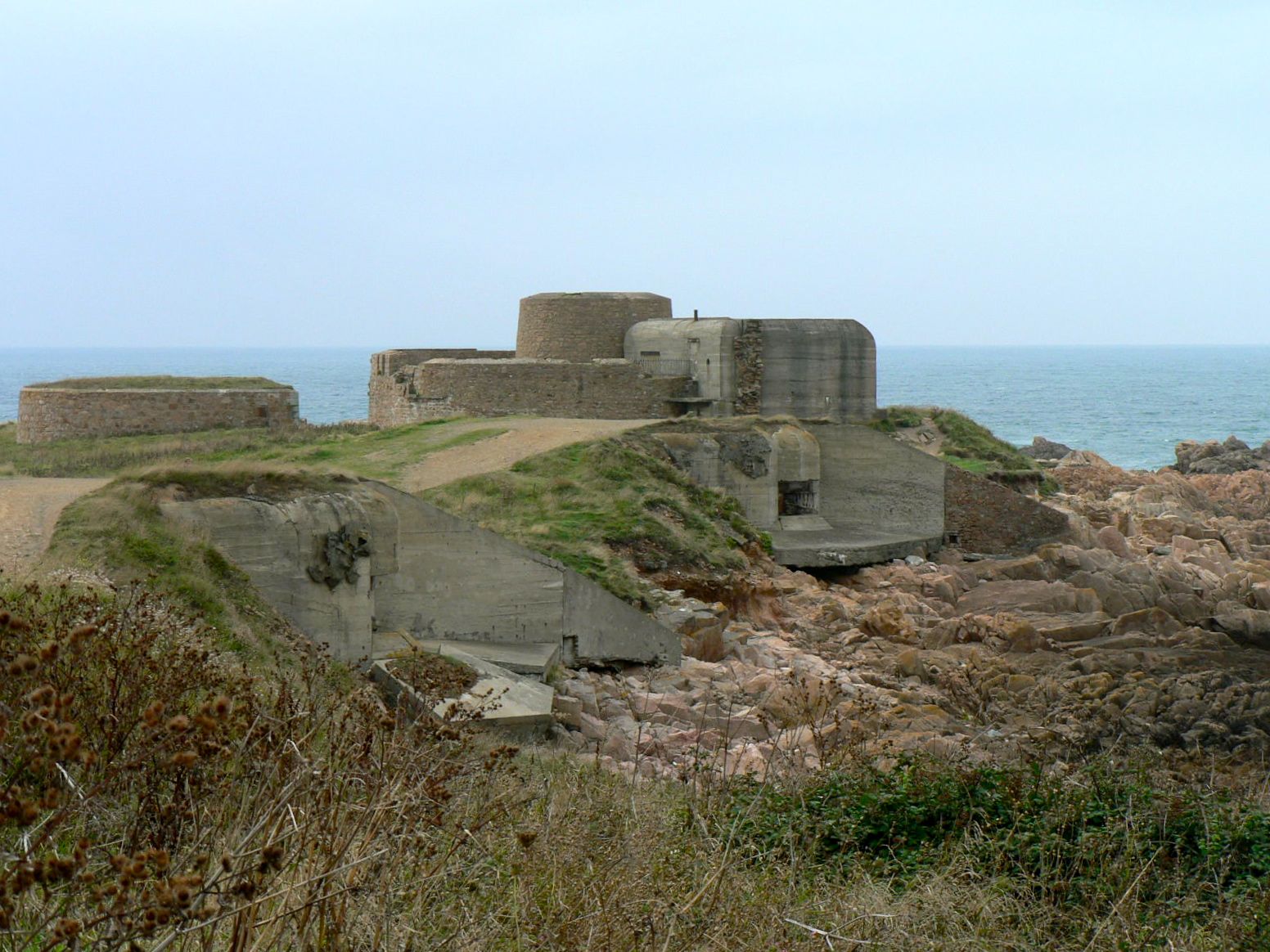
P1080021I was born twelve years after the cessation of hostilities in Europe when World War 2 finally came to an end. My parents lived through things I have never experienced. Evacuation, bombing raids, nights spent in bomb shelters clutching gas masks, watching dog fights in the skies above, and food rationing all became part of their daily lives as they grew up. In contrast I grew up with the evidence of war around me, living as I did in the one part of the British Isles to suffer German occupation during the war (the Channel Islands). The coastal bunkers and forts with their gun emplacements were part of our playground as children, but we had no real understanding of the horrors of the war, or the suffering of the islanders during the Occupation.

P1080017Modern communications and media leave no excuse for this generation not to understand the effects of war on a population. Despite such widespread knowledge there seems to be no end to conflict, with soldiers and civilians continuing to suffer injury, torture and death in various parts of the world. Solomon gave sound advice when he said, “don’t go to war without wise guidance” (Proverbs 24:6 NLT). Sadly, it seems that Solomon’s advice is often ignored by presidents and prime ministers, perhaps because ulterior motives are the driving force.

On a personal level it is also good to challenge motives, and consider the effects of actions we might be considering. But where can we find wise guidance? And is it good to have many advisors, or might we receive conflicting advice, making a decision even harder. The answer, as ever, is in scripture. When the Israelites entered the Promised Land they were successful in the battles they fought when they sought guidance from God. On the occasions that they dived in without asking God they suffered defeat (Joshua 7 & 8). King David who was one of the greatest military tacticians also sought guidance from God. He probably had numerous human military advisors, but he rarely took action without coming first on his knees to ask God (1 Samuel 30:8). It is not a sign of weakness to ask for advice. In fact it is foolish not to. It is even more foolish to rely on human advice alone.


What Shall We Do With the Drunken Sailor?

Proverbs 23:29-35 

Who hath woe? who hath sorrow? who hath contentions? who hath babbling? who hath wounds without cause? who hath redness of eyes? They that tarry long at the wine; they that go to seek mixed wine. Look not thou upon the wine when it is red, when it giveth his color in the cup, when it moveth itself aright. At the last it biteth like a serpent, and stingeth like an adder. Thine eyes shall behold strange women, and thine heart shall utter perverse things. Yea, thou shalt be as he that lieth down in the midst of the sea, or as he that lieth upon the top of a mast. They have stricken me, shalt thou say, and I was not sick; they have beaten me, and I felt it not: when shall I awake? I will seek it yet again.
Who has anguish? Who has sorrow? Who is always fighting? Who is always complaining? Who has unnecessary bruises? Who has bloodshot eyes? It is the one who spends long hours in the taverns, trying out new drinks. Don’t gaze at the wine, seeing how red it is, how it sparkles in the cup, how smoothly it goes down. For in the end it bites like a poisonous snake; it stings like a viper. You will see hallucinations, and you will say crazy things. You will stagger like a sailor tossed at sea, clinging to a swaying mast. And you will say, “They hit me, but I didn’t feel it. I didn’t even know it when they beat me up. When will I wake up so I can look for another drink?” (NLT)

I love the clarity in the NLT translation of this passage. The reference to a sailor tossed at sea does not infer that sailors are always drunk, although the word ‘jolly’ in the nickname ‘Jolly Jack Tar’ could suggest that seafarers may take a drink or two more than they should. It is unfortunate that while alcohol can provide a temporary lift and induce happy feelings in the short term, it can often produce other less desirable effects.

Using Jack Tar as an example I can recall several unpleasant fights from my seafaring days in which alcohol played a part, some of which resulted in the hospitalization of at least one of the individuals involved. I can remember drinking games in the ships’ bars and ashore. On my first ship we sailed from Mobile, Alabama without any of the three watch-keeping engineers, all of whom were in police custody ashore after drinking too much. On my fifth trip as cadet the chief officer had such a problem with alcohol that the captain insisted he always had a cadet on watch with him. When sailing with a pilot through the Norwegian fjords the pilot asked me to call the captain as we came to a difficult area. As I went to pick up the telephone the pilot looked across at the chief officer and said to me; “hadn’t you better wake that up first?” One again the chief officer was drunk and had fallen asleep – in the pilot’s chair!

The message in this passage is not ‘don’t have a beer with a friend or a glass of wine with a meal’, but don’t drink to excess. The very clear warnings about the results of alcohol abuse shout louder than a swaying drunk as he staggers from one bar to the next. Once again the message is one of wisdom. If you can’t be a wise drinker then do not drink at all.


The Truth, the Whole Truth, and Nothing but the Truth

Proverbs 23:23 

Buy the truth, and sell it not; also wisdom, and instruction, and understanding.
Buy the truth and do not sell it – wisdom, instruction and insight as well. (NIV)

Have you ever seen truth for sale in a supermarket? It is sometimes a fact that product labeling hides the truth that something may be bad for our health, or that our bargain is the result of a supplier taking a loss so that the supermarket can make even larger profits. Who do you think funds the ‘buy one get one free’ promotions? Not the supermarket, that’s for sure.

Perhaps selling the truth might be a good sales tactic. Potential customers might flock to a store with a reputation for truthfulness. In a 1970s UK sitcom a certain Reginald Perrin set up a shop called ‘Grot’ with sales slogans such as; ‘every single thing in this shop is guaranteed absolutely useless,’ and ‘plenty of gifts for people with no taste.’ The fact that the shop was a runaway success was an indication perhaps of the value that Reggie Perrin’s customers placed on the truth. Within two years Grot expanded to a chain of forty-four shops.

Solomon knew the value in truth. He measured its worth on an equal basis with wisdom, instruction, and understanding. If we value the truth too, then we have a responsibility to ensure that we are as truthful with others as we expect others to be with us. Honesty is so important that it was included among the Ten Commandments (do not testify falsely against your neighbor – Exodus 20:16). Jesus taught that we will all be required to give an account on judgment day of every idle word we speak (Matthew 12:36). An idle word could be an untruth, a word spoken without thought, or an opinion expressed without understanding. A wise person takes the greatest of care with items of great value. How careful are you with the truth?