
Author Archives: David

About David

Unknown's avatar
David: Half Scot, grew up in Guernsey and the UK. Lives in one of the most rural counties of the UK not far from the Welsh border. Former Merchant Navy officer and hydrographic surveyor. Self-employed risk management consultant from 1992 travelling globally to carry out risk and security audits, plus some loss adjusting. Now retired. Father of Nick who encouraged David to start blogging. Married to Marilyn for 47 years. Four other children in addition to Nick. Eleven grandchildren.

Navigate Wisely

Proverbs 13:6

“Righteousness keepeth [him that is] upright in the way: but wickedness overthroweth the sinner.”

Choices
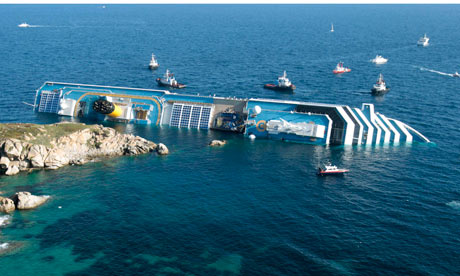
On the night of 13 January 2012 the captain of the cruise ship Costa Concordia chose to deviate from the agreed course for his ship to bring the ship close to the island of Isola del Giglio. He should have known better. The ship hit a reef. The hull was breached and the ship began to take on water, eventually listing to starboard and running completely aground. If the captain had chosen instead to remain on the right course the ship would have remained upright and lives would not have been lost.

Life presents us with many choices. From an early age we learn that some choices are better than others. Some choices make life easier, some make life more difficult. Some choices bring us praise, while other choices bring us trouble. The captain of the Costa Concordia may have thought that giving his passengers a treat by sailing close to shore would bring him praise. Instead it brought him trouble, and continues to do so.

Righteousness or Wickedness?

Righteousness is a word that is commonly associated with religion. It is defined by Merriam-Webster as ‘acting in accord with divine or moral law: free from guilt or sin.’ Deliberately seeking to be righteous in the way that we think, speak and live out our lives provides a level of protection against bad choices, defined in Proverbs 13:6 as ‘wickedness.’ The attraction of sin is sometimes overpowering and we need to be able to defend ourselves against the bad choices that mislead us and misdirect us. Make the wrong choice and it will eventually, if not immediately, cause us harm.

Which Way?

The Hebrew word for way used in this verse may be translated as a road, or a course as in the case of a ship. We are all on a journey. We are free to choose which road or course we follow, but to maintain the right course requires effort and commitment. For a ship’s officer it is necessary to make regular course adjustments to counter the effects of currents and wind. Course alterations may be required to avoid dangerous reefs and shallow water. It is essential to make frequent checks on the ship’s position to ensure that it is still on course.

A good navigator is always alert to dangers and will not sail too close to them. A good navigator aims to bring the ship safely home to harbor, not end up aground on some foreign reef.

Photo/news story: http://www.guardian.co.uk/commentisfree/2012/jan/15/costa-concordia-disaster-transport-titanic


Shepherd’s Pie

Proverbs 13:2

“A man shall eat good by the fruit of [his] mouth: but the soul of the transgressors [shall eat] violence.”

The Fruit of the Mouth

As part of our church anniversary on we enjoyed lunch together. A team of mostly young women spent several hours preparing the food on both the Saturday and the Sunday, and then they served the meal to those who stayed after the morning service. The same ladies cleared away and washed up. They left church mid-afternoon knowing that they had done a good job, but their mood was lifted collectively by the many words of thanks and encouragement they received from so many people who benefited from their work. Interestingly, our guest speaker when talking about discipleship during the evening service said; “encouragement is important and powerful.” You could say that our church ate well yesterday, before the fruit of our mouths provided huge and well deserved portions of encouragement to those responsible for what we ate.

A Different Meal

The main course for our anniversary meal was shepherd’s pie. When Jesus described Himself as the Good Shepherd He warned about the voices of strangers, thieves and robbers who come to steal and destroy. The suggestion is that theft and destruction are not limited to physical acts of violence, but may also be initiated by words. There is no doubt that words can change lives, which is why the book of Proverbs contains so many warnings about how we speak, how we choose our words, and what finally comes out of our mouths. The warning in this verse is that bad words bring a different meal to those who speak them.

We ate good food yesterday at church and thankfully we responded well with words of thanks and appreciation. We’re human. We need to be encouraged. We need to lift other people with our words, and we need to be lifted by the words of others. What we receive will surely be governed by what we give.

Therefore Jesus said again, “Very truly I tell you, I am the gate for the sheep. All who have come before me are thieves and robbers, but the sheep have not listened to them. I am the gate; whoever enters through me will be saved. They will come in and go out, and find pasture. The thief comes only to steal and kill and destroy; I have come that they may have life, and have it to the full.

“I am the good shepherd. The good shepherd lays down his life for the sheep. The hired hand is not the shepherd and does not own the sheep. So when he sees the wolf coming, he abandons the sheep and runs away. Then the wolf attacks the flock and scatters it. The man runs away because he is a hired hand and cares nothing for the sheep. (John 10:7-13)


All Hands On Deck!

Proverbs 12:24

“The hand of the diligent shall bear rule: but the slothful shall be under tribute.”

Hard Work Never Hurt Anyone!

Ever had a lazy day? Did you feel better afterwards? Perhaps you did. Perhaps you followed one lazy day with another. We are told that there are people in society who live like this. Certain elements of the media in the UK regularly feature stories of large lazy families who spend their lives doing nothing, apparently encouraged and supported by the welfare state. It is wrong to condemn those who may have to rely on welfare in difficult economic times, but it is hard to understand those individuals who just don’t want to work.

Working for God

Scripture tells us to do everything as if we were doing it for God (Colossians 3:23). This instruction should apply equally to every aspect of our daily lives whether we are at work, at home, at church, or socializing with friends, etc. Nowhere in Scripture are we told that laziness is acceptable. So why are there so many passengers in church?

All Hands on Deck

Think of church as a working ship. If the church is the body of Christ then there can be no passengers. We are called to work together for the advancement of God’s kingdom. If all we do is occupy a seat every Sunday morning then the warning about slothfulness contained in this proverb needs to be heeded. In a working ship there is no room for the slothful. Every person has a job. Every job is important. While the captain is ultimately in command he cannot sail without a crew. A ship needs watch-keeping officers and engineers, deckhands and catering staff. It is vital that the right skills are exercised in the correct places, and it is important that all members of the crew are diligent in their work. Is your church a working ship or a passenger liner where half the people on board are on permanent vacation?


Wound or Incision?

Proverbs 12:18

“There is that speaketh like the piercings of a sword: but the tongue of the wise is health.”

Cut Open

I have never been pierced with a sword but I have been cut open during surgery. While under anesthetic the surgeons made a twelve-inch incision from my chest bone downwards so that they could gain access to my abdomen to remove a large section of diseased colon. Thirty-five metal staples were used to close the wound. When I came round after the surgery the pain was indescribable.

Of the several tubes I found attached to my body, one was set up to allow me to self administer measured doses of morphine. This dulled but did not remove the pain. It was ten days before the staples were removed and I was discharged from hospital. Although the pain had reduced it took a while for it to fade completely. For three months the discomfort meant that I slept sitting up, while the scar remained sensitive for years.

Pain or Healing?

This proverb is a warning of the pain that words can cause. “Reckless words piece like a sword” says the NIV, “but the tongue of the wise brings healing.” The truth is that words can hurt just like the cutting of a sword, or a surgeon’s scalpel. Pain of this nature does not go immediately; it lingers. It may fade, and time may indeed be a healer, but words can cause lasting damage. It may be years before the scars left by hurtful words cease to be sensitive.

Where words of healing are required then the challenge is to select such words with the utmost of care, and preferably under the guidance and instruction of the Holy Spirit. It is often the case that we mean to bring healing, but the words that we use merely intensify the pain. Be careful. Sometimes it is wiser not to speak at all.


Powerful Words

Proverbs 12:6

“The words of the wicked [are] to lie in wait for blood: but the mouth of the upright shall deliver them.”
“The words of the wicked are like a murderous ambush, but the words of the godly save lives.” (NLT)

The Power of Words

Words have great power. Words can build up, and words can tear down. Words can point in the right direction, but words can also lead astray. Words can encourage, and words can cripple. Words can heal, and words can hurt. There can be no doubt that words spoken thoughtlessly or without wisdom can cause untold damage. The statement in this proverb that words can be like a murderous ambush provides a serious warning about how we choose to speak, and the words that leave our lips.

Be Careful What You Say

As a teenager I can remember being told to put my brain in gear before opening my mouth! This was good advice. Before we open our mouths we have to consider how our words will be received. What is their purpose? Every word is important. Every word has the potential to be good or to be evil. Be careful what you say!

Say What You Need To Say

Then there are the words that we find difficult to say. These are the words that should restore relationships, or ‘save lives’ as the NLT translates this proverb. We all know what these words are, and we have all struggled to say them with heartfelt meaning. These are words for our families, and for our friends:

“I’m sorry.”

“I forgive you.”

Remember that it is not only the words we speak, but also how we say them. I know when my children are sorry, and I know when they are not. They know when I have forgiven them, and they know when I haven’t.

Then there is God and the things we say to Him. God knows our hearts completely. He knows when we are sorry, and He knows when we are not. He knows when we are hungry for Him, and He knows when we have no space for Him in our busy lives. Here are three words we need to say to Him with meaning.

“I love You.”

Say what you need to say.

Listen

Say what you need to say (Say – John Mayer).

Be careful little lips what you say. For empty words and promises lead broken hearts astray (Casting Crowns – Slow Fade).


Do Me a Favour

Proverbs 12:2

“A good man obtaineth favour of the LORD: but a man of wicked devices will he condemn.”

Obtain or Deserve?

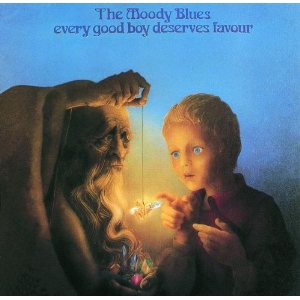
‘Every Good Boy Deserves Favor’ was the title of a 1971 Moody Blues album. The cover shows a young child and a wizened old man, the child apparently in awe of the old man, perhaps receiving instruction. But why should a good person deserve favor? Didn’t the Moody Blues know about grace? In terms of the human relationship with God His favor is not something that is deserved. It is only possible through grace.

Grace Not Works

But if salvation is possible through grace rather than works, why does Solomon state that a good man obtains favor from the Lord? The answer is simple. Because when salvation occurs Jesus Christ moves in and lives inside us. This may sound weird, but when you think about it we cannot become good, or do good works, unless we are equipped. Having Christ in us provides the enabling for us to obtain the favor of the Lord as we move forwards in obedience to His instruction and guided by His knowledge (Proverbs 12:1).

Another Way

As always in life we have a choice. There is another way. A way condemned by the Lord. A broad road that leads to destruction, but which is favored by many because of its apparent pleasures. Take a look around. Are you standing in Broad Street? If you are then perhaps it is time to move on. Time to search for the grace that brings eternal favor, rather than temporary pleasure. You have a choice. You always have a choice.

For it is by grace you have been saved, through faith—and this is not from yourselves, it is the gift of God – not by works, so that no one can boast. For we are God’s handiwork, created in Christ Jesus to do good works, which God prepared in advance for us to do. Ephesians 2:8-10 (NIV)

“Enter through the narrow gate. For wide is the gate and broad is the road that leads to destruction, and many enter through it. But small is the gate and narrow the road that leads to life, and only a few find it. Matthew 7:13-14 (NIV)


It’s All In God’s Hands

Proverbs 11:28

He that trusteth in his riches shall fall: but the righteous shall flourish as a branch.

It Isn’t Ours

I have been self-employed for the last twenty years. Income in 1992 when I started out was modest, but I believe that over the years God has blessed the business and blessed my family. In turn I have tried to bless others. I have not amassed cash to any extent, other than making provision to eventually pay off the mortgage on the family home through endowment policies and savings. I would not say I have trusted in my financial assets, but I believe that I may have become increasingly complacent, and forgotten one small detail: None of it belongs to me.

A Reminder

Whatever we have on earth we have because God allows us to have it. Over the last three years my income has fallen and it has become increasingly difficult to get paid. While prayers have been answered I have had to dip deeply into savings as it takes longer and longer to receive payment for invoices. I have also had to review my giving. While that has been difficult I have been reminded that it was never mine in the first place. God has challenged me about becoming proud about what I have given.

Temporary Benefit

We cannot and must not rely on or trust in the temporary benefits associated with worldly wealth. We leave the world in the same way that we arrive. Empty handed. Even if we are blessed with monetary riches, nothing can be considered permanent, as many a person who has fallen on hard times can testify. The challenge we face as human beings is to be wise in our choices, and wise in our use of everything God has placed into our hands. It doesn’t matter if the world considers us rich or poor in terms of possessions. What matters most is what God sees in us.

How to Flourish?

So how can we flourish? Jesus spoke about branches that flourish and those that do not. He said:

“I am the true vine, and my Father is the gardener. He cuts off every branch in me that bears no fruit, while every branch that does bear fruit he prunes so that it will be even more fruitful. You are already clean because of the word I have spoken to you. Remain in me, as I also remain in you. No branch can bear fruit by itself; it must remain in the vine. Neither can you bear fruit unless you remain in me.

“I am the vine; you are the branches. If you remain in me and I in you, you will bear much fruit; apart from me you can do nothing. If you do not remain in me, you are like a branch that is thrown away and withers; such branches are picked up, thrown into the fire and burned. If you remain in me and my words remain in you, ask whatever you wish, and it will be done for you. This is to my Father’s glory, that you bear much fruit, showing yourselves to be my disciples. (John 15:1-8 NIV)


Counselors

Proverbs 11:14

“Where no counsel is, the people fall: but in the multitude of counselors there is safety.”

Poor Counsel

This is a bit of a strange one. The first part is easy to understand: Without good advice there are going to be problems. This applies on an individual level, but also to churches, companies, local and national government. Newspaper and television reporters from around the world have no shortage of subject matter when it comes to the failure of businesses and governments where there is no counsel or poor counsel.

One or Many?

The second part of the Proverb suggests that having many counselors is good. That doesn’t fit with a more modern proverb: ‘Too many cooks spoil the broth.’ I can relate to that. As a young second officer in the Merchant Navy my experience was gained mostly on cargo ships. Then in 1978 I joined a tanker. The only cargo equipment on this vessel was a couple of derricks for handling hoses and the gangway. Our Hong Kong deck crew had gained most of their experience on tankers, as had the other deck officers. Nobody had a clue how to use the cargo gear.

The first time I watched the crew trying to position the gangway between the ship and the jetty they came close to demolishing a shore installation. I did not need to speak Cantonese to ascertain the problem. One man, the bosun, should have been giving instructions. The problem was that every man in the deck crew thought he was the bosun, meaning that opinions and advice were flowing from all quarters. At the next port I took charge, issuing one set of instructions and positioning men and ropes where they needed to be. The crew were stunned at the ease with which we positioned the gangway. In this case only one counselor was needed to ensure safety.

One Counselor

I’m sure you can see where this is going. Sometimes we get swamped with opinions and instructions and supposedly good advice. It also comes from all quarters, especially in church. Every person is a bosun. Or so they think. Jesus knew what would happen when He left Earth to sit at the right hand of the Father. He knew that every person would have an opinion and want to give counsel. He knew that everyone would want to be the bosun. So He took action.

“And I will ask the Father, and he will give you another counselor to be with you forever – the Spirit of truth. The world cannot accept him, because it neither sees him nor knows him. But you know him, for he lives with you and will be in you.” John 14:16-17 (NIV)

There may be times when it is right to take earthly counsel, but too often we forget that there is another Counselor. Who are you listening to?


Passing Us By

Proverbs 11:9

“An hypocrite with his mouth destroyeth his neighbor: but through knowledge shall the just be delivered.”

“Evil words destroy one’s friends; wise discernment rescues the godly.” – NLT 1996

Polluted

The word hypocrite has its origin in the Greek word for stage actor. In Greek drama actors apparently used masks to portray different characters. While we understand that a hypocrite is a two-faced person who pretends to be what he is not, the Hebrew word used in Proverbs is ‘chaneph’ which may be translated as polluted, corrupt, profane or godless. Polluted aptly describes the condition of all humanity at birth. Although we cannot change the way we were born, God provided a way through Jesus Christ in which He can change the way that we live, if we let Him. This includes what comes out of our mouths.

Words

It isn’t difficult to see how a hypocrite might destroy his neighbor with his mouth. It all comes back to words. The NLT Life Application Study Bible note for Proverbs 11:9 states: ‘The mouth can be used as a weapon, or a tool, hurting relationships or building them up.’ We need to choose our words carefully. But we also need to remember who lives in us. In John 20:22 Jesus breathes on the disciples and instructs them to receive Holy Spirit. If the Holy Spirit lives in us then how we say anything hurtful to another human being? If the same power that raised Jesus Christ from the dead is present in us, then how we be anything other than relationship builders, who use words wisely to encourage. Are we speaking words of life to those around us? Do our words point others to the One who speaks words of eternal life?

Simon Peter answered him, “Lord, to whom shall we go? You have the words of eternal life.” John 6:68 (NIV)

Reflections for Ragamuffins. Brennan Manning


Overboard With Everything (11:4)

Proverbs 11:4

“Riches profit not in the day of wrath: but righteousness delivereth from death.”

Extending Life

According to Wikipedia approximately 250 people are believed to have invested in cryopreservation as a means of maintaining their bodies in a suspended state after death. They hope that science will one day find a solution to whatever it was that killed them so that they may live again! Considerable wealth is necessary to fund cryopreservation, but the fact remains that even the wealthy die. No amount of money can change the fact that our days on earth are numbered.

Death Approaches Silently

Years ago while anchored in the Shatt-al-Arab River we hosted some officers from another British ship in our bar one night. I spent a long time listening to one of them telling me about his perfect his life. He had bought a new flat (apartment) back home, and a new car. He had a wonderful girlfriend and a great job. He showed me the expensive Seiko watch he had purchased in Japan earlier in the trip. I can remember being envious. I was only a cadet at the time, and the lowest paid person on the ship.

Later that night our officer of the watch got a VHF call from the other ship asking if we could put our boats down and help them search for a missing officer. The very person who had spent the evening telling me about his absolute satisfaction with life had fallen out of the boat when trying to board his ship. It was three weeks before his body washed up further downstream. He died with everything he ever wanted, but without the only thing he ever needed: Salvation by grace through faith in Jesus Christ.

Rich Fools

Jesus told a parable about a rich fool who had his best year ever on the farm. The harvest was so good that he decided to demolish his barns and build bigger better barns so that he could store away plenty for years to come. That night the farmer died. The NIV version is shown below:

Someone in the crowd said to him, “Teacher, tell my brother to divide the inheritance with me.” Jesus replied, “Man, who appointed me a judge or an arbiter between you?” Then he said to them, “Watch out! Be on your guard against all kinds of greed; life does not consist in an abundance of possessions.”

And he told them this parable: “The ground of a certain rich man yielded an abundant harvest. He thought to himself, ‘What shall I do? I have no place to store my crops.’ “Then he said, ‘This is what I’ll do. I will tear down my barns and build bigger ones, and there I will store my surplus grain. And I’ll say to myself, “You have plenty of grain laid up for many years. Take life easy; eat, drink and be merry.”’

“But God said to him, ‘You fool! This very night your life will be demanded from you. Then who will get what you have prepared for yourself?’ “This is how it will be with whoever stores up things for themselves but is not rich toward God.” Luke 12:13-21

The writer of Proverbs captures this parable in a single line, ably demonstrating the simplicity of the message. You cannot buy salvation. Eternal life is a gift that may be claimed only by surrendering your earthly life to God.