Author Archives: Anthony Baker

About Anthony Baker

Unknown's avatar
Husband, dad, pastor, artist, and musician. Time Magazine's Person of the Year in 2006 (no joke!). Loves coffee (big time), good movies, and sarcastic humor. Holds a Doctorate in Ministry. Most importantly, a servant of the Lord Jesus Christ. All glory belongs to Him! Matthew 5:16

Zee Doctor Vill See You

Proverbs 12:20

“Deceit [is] in the heart of them that imagine evil: but to the counselors of peace [is] joy.”

The Evil Psychiatrist

Try to imaging an evil psychiatrist. Can you? Picture in your mind a tall, slick-haired, skinny man in a long, white lab coat. In one eye is a spectacle, the other a creepy glare.

Now, just imagine this guy asking you to come into his office. He offers you a quasi-comfortable couch on which to recline, then pulls out a yellow pad and pencil to take notes – notes of your deepest, darkest secrets.

When your hour is up, you have talked about your parents, your dead dog, a lost love interest, and your lack of self worth. What do you get in return? The Doctor says,

“I zink vee hav made much progress, but vee hav much fartha to go, yes? You take dis book I vrote, ‘It’s Not My Fault,’ and pay de receptionist on the vay out, yes? Today vill be $120 – the book vill be $30.”

The Caring Counselor

Now, think of someone who wants nothing in return for simple, good advice. This person is caring, can see the end of the road you’re traveling, and wants what is best for you.

You go to this person, pour out your soul, problems and all, and in return you get both sympathy and solid guidance. You are not made to feel like an idiot, but your own words are used to point towards better choices to be made. Hopefully, you can see the difference between the two, yes? No? Vhat iz vrong vid you?

“Imagine Evil” vs “Joy”

One point of today’s proverb is that there are some who would offer counsel for their own selfish desires, while there are others who do it for the joy of bringing about peace. The operative word in the verse is “counselors.”

As a pastor, I have to counsel people all the time. Unlike a psychiatrist, however, I don’t get paid lots of money for my advice.

Now, don’t get me wrong, there is a place for the advice of both, but if the intent of either is selfish, then the advice is evil – free or not.

What Goes Around…

But there is even more to this verse. The idea is that the reason for the advice one gives will ultimately come back upon him. The great Matthew Henry wrote:

Those that devise mischief contrive, for the accomplishing of it, how to impose upon others; but it will prove, in the end, that they deceive themselves.*

If you want to experience joy, then give “peaceful” counsel. If you want to be fooled, then seek to fool others.

*Matthew Henry, Matthew Henry’s Commentary on the Whole Bible: Complete and Unabridged in One Volume (Peabody: Hendrickson, 1994), Pr 12:20.


A Lie With No Legs

Proverbs 12:19

“The lip of truth shall be established for ever: but a lying tongue is but for a moment.”

No Legs

There is evidently a saying that has been around for a while – a saying that I have never, ever used – “A lie has no legs.

I don’t usually talk about legs. I have two, but I rarely think about them. As a matter of fact, the only time I even consider my legs is when they don’t work. My left knee hurts, now that I’m thinking about it.

But this saying, “A lie has no legs,” is one that is worth thinking about. What exactly does it mean? Some say it means, “you can’t get away with a lie, because the truth will always come out.” Could that be what this verse is saying?

No Foundation

If we look at the first part of 12:19, what we see is truth being “established for ever.” The idea here is that truth is a firm, solid foundation; something that is stable. Truth is something on which other things can be built, because it’s not going anywhere.

On the other hand, a lying tongue is like a puff of air, or a cloud. It is there for a moment, but then vanishes. There’s nothing solid about it.

Floating Table

If anything, a lying tongue is a table suspended in mid-air. It is a table on which many people place their finest china and their prettiest flowers. It is where many invite guests for wonderfully elegant meals and social functions. It is where futures are planned and deals are made.

But it has no legs. It’s going to fall. And along with this floating table of lies will come crashing down all that was built upon it.

It may seem like time is standing still, but it isn’t. It may seem like those floating tables will never fall, but they will.

Build on the truth – it has legs.


I’m a Word Farmer

Proverbs 12:14

“A man shall be satisfied with good by the fruit of his mouth: and the recompense of a man’s hands shall be rendered unto him.”

Word Farming

It should come as no shock to anyone that I use words on a daily basis. I talk, write, sing, preach, teach, and even counsel second-graders on my school bus regarding their poor dating choices (but that’s a different story).

I am a word farmer, and my mouth could be compared to one of those big machine-thingys (non-farmer terminology) that spreads seed across a field. From morning till evening I am like a John Deere pulling a seed drill (farmer terminology), planting row after row of something that should grow.

The hope is that whatever I am planting will produce a good harvest. And if I am planting good seed, then I will be satisfied with the “good fruit.”

Don’t Work, Don’t Eat

But it is important that we pay attention to the negative side of this, not just  the “fruitful” positive. The New Living Translation of Proverbs 12:14 reads, “Wise words bring many benefits, and hard work brings rewards.

What happens when we don’t plant? What happens when we don’t work? What happens when the farmer parks his tractor, sleeps late, and watches television all day? Plants don’t grow, no one is satisfied, and grown men end up watching the Lifetime Channel.

Rewards are the result of effort; harvests are the result of planting. To be satisfied with good from the fruit of your mouth, you’ve got to plant seed. If you don’t work, you don’t eat.

Just be careful of the seed you plant, “for whatsoever a man soweth, that shall he also reap” (Gal. 6:7).

Tell the righteous that it shall be well with them, for they shall eat the fruit of their deeds. Woe to the wicked! It shall be ill with him, for what his hands have dealt out shall be done to him.” – Isaiah 3:10-11 ESV


The Word that Makes a Difference

Proverbs 12:12

“The wicked desireth the net of evil men: but the root of the righteous yieldeth fruit.”

Which Word?

In the version of Scripture written above (KJV), the Hebrew word מָצוֹד (mä·tsōde’) is translated net. In other versions it is rendered as stronghold, booty, catch, loot, and “what evil men have” (HCSB). So which is the correct word? Simple! The correct word is מָצוֹד; the rest are translations.

Seriously, there are still many in Christendom who would argue over this, but I’m not going to. You see, the idea is the same: the wicked desire what evil men have, along with whatever it takes to get and keep it.

Sometimes it’s just not that easy to put all that into one English word.

The Contrast

There is a stark contrast between the “wicked” and the “righteous.” Can you distinguish it? One wants what another has, while the other wants nothing more than to produce for others.

We see in this proverb the difference between one man who envies the successful criminal, and another man who cares not for what others have; he just wants to be a productive citizen.

The wicked, however resourceful, however brilliant, is selfish. In his heart he longs to be more like his more evil counterparts, his heroes who live in bigger houses, drive nicer cars, and exert more influence and power. He cares nothing about who he has to walk on to get there, even his heroes.

The righteous is content with where he is planted and only wants to do the best with what he has been given. He doesn’t necessarily aspire for a greater station in life, only to be useful, helpful, and an encouragement to future generations. He is known for giving of himself.

The Hard Truth

But do you want to know something really sad? Do you want to hear something horrible? So many of us have allowed ourselves to be the “wicked” man in this proverb and don’t even realize it!

James chapter four deals a lot with the envious nature of man and his tendency to fight and war when he doesn’t get what he wants. We war with each other because we want what the other has. We lust; we envy; we even consider killing.

You cry out in defense of your character, “Oh, but that’s not me!” Really? I’d bet you a dollar to a movie ticket you’ve had thoughts like the “wicked” man in Proverbs 12:12. Ever wished you could be the bad guy in a movie? Ever wished you could have the power that came with being a vampire? Ever wished you could strike fear into a person’s heart like a mob boss can?

See, the hard truth is that none of us are righteous, “no not one.” Our wicked flesh is more desperate and sneaky than we give it credit. But how do we change? As the Apostle Paul once asked (Rom. 7:24), “O wretched man that I am! who shall deliver me from the body of this death?”

Jesus, that’s who…the Word that really makes a difference.


Kindness to Animals

Proverbs 12:10

“A righteous man regardeth the life of his beast: but the tender mercies of the wicked are cruel.”

Wicked and Cruel

I will never forget a particular video I saw posted on YouTube. The owner of a large python purchased a fluffy, brown rabbit and brought it home. There, in his living room, he let this peaceful, tame rabbit meant to be a pet hop around while his sorry snake got closer and closer.

Snickering with anticipation, the owner of the snake filmed the unwary rabbit as it got accustomed to its new environment. Then, it happened – the python struck, coiled around the rabbit, and began its death squeeze. But what made me sick, as I am sure it did God, was when the snake’s owner got up close to the rabbit and laughed. He laughed because the rabbit cried.

There is a Difference

It is one thing to kill an animal for food, or even in self-defense. It is even understandable to kill animals when their populations get out of hand. But it is something totally different when a human is intentionally cruel to something helpless and trusting.

This proverb says that “a righteous man regardeth (knows, cares about) the life” of his animal. In contrast, the wicked are cruel. But some may wonder, “What does it matter?” It matters to the one who values life.

“His Eye Is On the Sparrow…”

It might surprise people to know that God cares about the lives of animals. When Jonah was upset because God did not destroy Nineveh, God said unto him,

And should not I spare Nineveh, that great city, wherein are more than sixscore thousand persons that cannot discern between their right hand and their left hand; and also much cattle?” – Jonah 4:11

Literally, the last words of God in the story of Jonah concerned the cattle of a pagan city. If God cared about these cattle, does it not stand to reason that He might disapprove of torturing pets? Remember, not a sparrow falls without Him knowing (Matt. 10:29).

This is the thing: let there be no mistake, if a human can find enjoyment in the suffering of helpless animals, then what is to keep him from harming helpless humans? Wickedness breeds wickedness.

A Prayer

Father God, help us to treat all life with respect, for it is You who created life. You made Man in the image of Yourself, but you also made all creation for your pleasure. Help us to be mindful and caring, not wicked and cruel. And thank you, Lord, for if you care about the beasts of the field, then how much more do you care for your children?


An Honest Salesman?

Proverbs 12:5

“The thoughts of the righteous [are] right: [but] the counsels of the wicked [are] deceit.”

It is not often that I choose to quote another author, but I found the following words instructive.

The plans of the righteous are right.” His designs are well-intentioned and morally sound because the mind of the righteous man is disciplined by wisdom. On the other hand, “the counsels of the wicked are deceit.” Their warped minds invent crooked methods for reaching their goals. To them the end always justifies the means.”*

The Ends

Do you ever stop to think about the “ends?” In other words, do you ever stop to think about the results of your actions, or your thoughts? Do you plan ahead? Do you think about consequences?

The “thoughts of the righteous are right” because the righteous have right hearts. And because of their righteous thoughts, the means to an end matter just as much as the result. They want to do what is right, because it is right.

On the other hand, the wicked think only of self-gratifying goals. As the above quote says, “To them the end always justifies the means.” Because of an unwise, wicked heart, what is right does not matter, only the desired result.

The Means

I have known many salesmen over the years. As a matter of fact, I was actually a pretty successful salesman at one time. But if there was anything that characterized the average salesman, it was the desire to make a sale, to “close the deal,” even if his “counsel” was a little deceitful.

The problem with many salespeople is that they will tell you whatever you want to hear, even things you don’t, in order to sell a product or service. What the customer needs or can afford is rarely a consideration when sales bonuses and large paychecks are at stake. As long as a dollar can be made, it is thought “the end justifies the means.”

So how do you know when you have met a “righteous” salesman? You will know him when he won’t sell you something, even when you think you want it. Happily, I can say that there were times I did just that, even when the rent was due. Taking advantage of customer was wrong, and even though I might have needed the money, the end didn’t justify the means.

Believe it or not, there are some honest salespeople out there. However, there are also a lot of deceitful customers, too. Just saying.

A Prayer

Dear Lord, give us a righteous heart that thinks right things. Keep us from wicked and deceitful thoughts. Give us a heart for others over the needs of self. Reprove us, Jesus, when we are tempted to deceive, for what waits in the end is anything but gain.


*James E. Smith, The Wisdom Literature and Psalms, Old Testament Survey Series (Joplin, MO: College Press Pub. Co., 1996), Pr 12:2–7.


Roots of Faith

Proverbs 12:3 

“A man shall not be established by wickedness: but the root of the righteous shall not be moved.”
Uprooted

Over the last several years there have been a lot of storms come through where I live. Many of those storms produced very strong winds, even tornadoes.

I hate tornadoes.

But when I look at this proverb, there comes to mind mental images of trees uprooted and blown over, smashing houses, cars, etc. And when I think of those trees, I can remember what they looked like lying on the ground. Huge trees with roots that spread out in every direction – except down.

Trees

When we think of trees, we think of strong, healthy plants that grow tall and impressive. They are symbols of stability. They almost always win when challenged by automobiles, woodpeckers, or lovers with initials to carve.

The wicked and the righteous are both trees; both have leaves, and both have roots. But only one has roots that run deeper than the surface. Only one can stand in a storm.

Roots

The roots of a tree primarily do two things: they bring nourishment from the ground and tie it to the ground. Without roots a tree would die. Without deep roots, a tree could could be toppled by a strong wind.

But strong winds aren’t the only danger trees face; drought can kill a tree with shallow roots. Yet, if a tree has deep roots, it can find the water it needs to survive.  Maybe you will remember the following verse…

And he shall be like a tree planted by the rivers of water, that bringeth forth his fruit in his season; his leaf also shall not wither; and whatsoever he doeth shall prosper.” – Psa. 1:3

Established

But we are not trees, are we? We are people. We don’t have roots; we have faith.

The deeper our root system, the less likely we are to fall over when the storms of life come our way, or when there seems to be little rain of hope.

Wickedness will not produce roots that will hold. Wickedness produces roots that grow outward and just below the surface. They bring in everything needed to grow a beautiful, leafy tree, just not one that can hold on in a gale. Nor can they soak up water from the dry soil when the blessings of God seem to be withheld.

On the other hand, righteousness goes deep and anchors the believer to the solid ground. The roots of faith find refreshment from hidden sources of hope.

Blessed is the man who trusts in the LORD, And whose hope is the LORD. For he shall be like a tree planted by the waters, Which spreads out its roots by the river, And will not fear when heat comes; But its leaf will be green, And will not be anxious in the year of drought, Nor will cease from yielding fruit. – Jer. 17:7-8 NKJV

How are your roots?


Just Read It For Yourself

Instead of reading one of our comments this morning, how about YOU read the proverb for today – or any passage from Proverbs – and tell us what you read? 

Go ahead, do it! 

May God bless the reading of His Word! 


Inheriting the Wind

Proverbs 11:29

“He that troubleth his own house shall inherit the wind: and the fool shall be servant to the wise of heart.”

The Monkey Trial

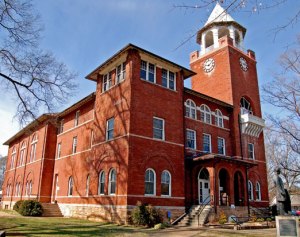
Just a few miles north of me is the town of Dayton, Tennessee. You may not be familiar with that little town, but in 1925 everyone knew about it. Dayton was the town where the Scopes “Monkey” Trial took place.

Rhea County Courthouse, Dayton, Tennessee.

In 1960 a movie came out of Hollywood called “Inherit the Wind.” It stared people like Gene Kelly, Harry Morgan, and Spencer Tracy. The movie was an adaption of a play, neither of which were meant to be historically accurate.

But this proverb is not so much about what happened at the “monkey trial” in Dayton, TN., than it is about what happens when one sacrifices peace at home for the hope of gain.

It Could Be Argued

Some have said that the only reason Dayton (Rhea County) wanted the trial in the first place was to bring in money from tourism and national attention. City officials, including the school superintendent, are rumored to have found John Scopes, a math teacher, and convinced him to allow himself to be tried for something he never even did (teach evolution). It is said they considered that the publicity gained from such a trial would be beneficial.

William Jennings Bryan, three-time presidential candidate, opposed the theory of evolution. Bryan was convinced that Darwinism was responsible for the elitism that lead to World War I and the death of millions. He wanted to protect America from a belief system that devalued humanity. Therefore, when he was brought in to be the prosecuting attorney to argue against Clarence Darrow, publicity was guaranteed.

Essentially, the creationists were baited into a trial, and it could be argued that they lost. However, the instigators will have to answer to God for their desire to “trouble their house.” If anyone “inherited the wind,” it wasn’t the ones who stood on principle, but the ones who allowed a lie to be propagated in hopes of monetary gain.

No Argument

But there is no argument with the wisdom of Proverbs 11:29. If a man brings trouble into his own house while in the pursuit of personal fortune and fame, the result is emptiness. The result is nothing more than wind.

Some pursue great causes, but neglect their families. They rationalize that the greater good is worth the sacrifice. But what they don’t understand is that in the end they will have nothing but emptiness to show for all the trouble.

Others, because of their love for the needle and the bottle, or for the thrill of what doesn’t belong to them, will trouble their own homes in the pursuit of fulfillment. But in the end, their souls will crack and dry as they weather under a wind that never stops.


What Are Your Expectations?

Proverbs 11:23

“The desire of the righteous is only good: but the expectation of the wicked is wrath.”

Righteous People

When we think of the term “righteous,” think of someone who is fair and just, for that is what the word entails. We’re not necessarily talking about a pious saint, or something, but a decent, God-fearing man or woman.

What are the characteristics of this type of person? The proverb says they “desire…only good.”

Now, some interpret this verse in such a way as to say, “The godly can look forward to a reward,” as in the New Living Translation. The ESV says that the desire of the righteous “ends only in good.” But I think it is better to interpret this verse as saying, “The object of the desire of the righteous is good.”

Righteous people are good people; they want good things to happen. And usually, because of their desires, good is the result.

Wicked People

Wicked people, on the other hand, want no such thing: they want trouble. What is good for the wicked is bad for everyone else. Wrath is what they hope for.

Again, some interpreters want to convey the idea that what the wicked will receive in the end is wrath. In other words, wrath is what they should expect in the end. That may be so, but there is something here in this verse worth noting.

Hope and Desire

The word translated “expectation” is also the Hebrew word for “cord,” as in a “line” of scarlet thread. Yes, it can mean “hope,” but interestingly it was the same word used in Joshua 2:18 that is translated “line,” as in the scarlet thread that Rehab hung from her window.

The word translated “desire” has more to do with a strong passion for something. Literally, it is the good version of lust. Lust is the wanting of something bad. In this case, desire is the longing of one’s heart for good.

It may not be a huge difference, but here are my “thoughts.” The only hope that a wicked, sinful heart has is the hope of selfish gain, even at the expense of every one else.

The desire of the righteous, however, is for good, and that selfless desire is a result of the Hope they have within.

Practically Speaking

Do you see all those people burning cars and beating people in the name of religion or anti-fascism? Do you see them calling for the destruction of others (including babies) in order to bring about or facilitate their desires? As they rejoice over the destruction of property and the death of innocents, they prove they are wicked.

Do you see those who walk into the fire to rescue the perishing? Do you see those who pray for peace? Do you see those who pray for the souls of wicked who persecute and mock them? They are the righteous.

So the question is: what are your expectations?