
Tag Archives: Book of Proverbs

Poor Friends

Proverbs 14:21

21 He that despiseth his neighbour sinneth: but he that hath mercy on the poor, happy is he.

This verse goes with yesterday’s, and David did a great job with the lead.

Here are the ways the verses work together:

Hating the Poor Neighbor

The poor is hated even of his own neighbour“. A poor man is hated by his neighbor, because many people immediately think about those who borrow money or things with promises of returning them but never do. In other words, they see the poor, even friends of theirs at times, as moochers and robbers.

Is it fair? Sometimes, in the case of those who really are moochers and robbers. However …

He that despiseth his neighbor sinneth“. As mentioned previously, when asked by an expert of the law about loving your neighbor, Jesus’ answer essentially was that all people are our neighbors. Regardless of how people live their lives or their level of prosperity (or lack thereof), we are to love them.

Friends to All

… but the rich hath many friends.” Many rich people seem to give money to make friends, buy their friends, if you will. I posit that this is not the intent of that verse.

… but he that hath mercy on the poor, happy is he.” This verse explains why the rich have many friends. It is the person who looks on that friend down on his luck and helps. It is the person who looks on the person in need and is there.

Jesus is the Answer

Anyone is capable of doing merciful things for others. Jesus basically said so in Matthew 7 and Luke 11.

The difference for the Christian should be love. Not just any love, but the love of God as expressed through Jesus Christ. We must be willing to sacrifice for others. 1 Corinthians 13:3 (NIV) says “If I give all I possess to the poor and surrender my body to the flames, but have not love, I gain nothing.

We can all make friends, but, to use a phrase that has been over-used in recent times, the best friend to make is Jesus. Most people come to meet Him through our mercy and generosity.

Merciful Lord, thank You for loving us through Your richness of grace, mercy, and love. Though we were poor in these, You reached out for us. Through Your Holy Spirit, increase Your grace, mercy, and love in us, that we may reach our world for Your glory.

Cross and Conniving

Proverbs 14:17

17 He that is soon angry dealeth foolishly: and a man of wicked devices is hated.

Customer Crossing

I have over ten years experience in retail customer service. There are always those customers who can find something to complain about no matter where they go (can I get an “Amen!” from my compatriots?!).

Firstly, it can be rather frustrating for all of the employees. When those employees get upset and angry, sometimes they do things not very nice. Some examples include giving faulty merchandise, doing something disgusting to their food, or giving bad advice. Sometimes, because these employees acted out their frustrations, they end up losing their jobs.

Secondly, these customers who are so easily angered do not realize the hidden punishment they could receive from those irate employees. If they could have just calmly stated the problem and waited for response, most problems between employees and customers could easily be avoided.

In both cases, someone is acting foolishly. Unfortunately, it is almost always the customer. (Is everyone out there listening?)

Conniving Customers

What is truly telling of the nature of our world is that some (maybe even many) of these customers get so angry on purpose. People have come to learn that if they throw a big enough fit, complain to just the right person, they can get so many things discounted or even free.

What some of those fail to realize or fully appreciate is how much others come to hate them. These people are not just “abusing the system,” but they are using people to get what they want. Nobody likes being used.

Churchianity

How often do we as Christians do this to each other?

There are complaints about what color the carpeting/walls/flowers/hymnals (if there are any, anymore!) are.

There are fights over how to reach out to people in the community (which is a big turn-off to people in the community).

There are floaters who never find a church-home, because they do not like something or are not getting something at every church they attend and then bad-mouth those churches.

What we are really saying is that we are better than everyone else (or most people). What we are really saying is that God needs to do everything we say and serve our every whim. What we are really saying is that God is not enough … even as we sing He is.

Gracious God, forgive us for always stabbing each other in the back and looking for freebies. Help us to live out Your command in John 13 to love each other, to sacrifice ourselves and our needs to each other for Your glory. Help us to love all people.


Just Reward

Proverbs 14:14.

“The backslider in heart shall be filled with his own ways: and a good man shall be satisfied from himself.”

Christian Karma?

There are many religions in the world who believe in karma. Hindus, Buddhists and Sikhs for example all believe in the concept of “action” or “deed”, that which causes the entire cycle of cause and effect. In other words, if you are a good person, good things will happen to you, and if you are a bad person, bad things will happen to you. You might be surprised to learn that this idea actually has its origins in the Bible. King Solomon wrote: “Backsliders get what they deserve; good people receive their reward.” (Prov. 14:14, NLT).

Now lest some of you begin calling me a heretic for suggesting that karma is a Christian concept, let me clarify. Karma is a twisted and imperfect understanding of the Scriptural principle of reaping and sowing which the Apostle Paul describes here: “Don’t be misled. Remember that you can’t ignore God and get away with it. You will always reap what you sow! Those who live only to satisfy their own sinful desires will harvest the consequences of decay and death. But those who live to please the Spirit will harvest everlasting life from the Spirit.” (Galatians 6:7-8, NLT).

Consequences for our Actions:

Today’s Proverb teaches us that there are consequences for our actions. If you are a backslider, you will get what you deserve. If you live a life of sin and rebellion against God and His Word, don’t be surprised when life doesn’t work for you! But if you are a good person, and live to please the Spirit, you will receive a blessing from the Lord.

Let me illustrate. My dad was an alcoholic womanizer. He slept with many women in his life, and as a consequence, I have two sisters, two half-sisters, and at least three half-brothers that I know about (maybe more). My dad died about five years ago from a cancer that was caused from his excessive drinking and cigarette smoking. Sadly, this is an example of reaping what you sow.

Sometimes we live a sinful life and then experience the consequences for that sin, and we get mad at God and say, “How could you let this happen to me?” But it wasn’t God punishing us for our wrong decisions, but rather leaving us to the just reward of our own choices.

A Harvest of Blessing:

The good news today is that God is a merciful, gracious God. All of us have sinned, rebelled, and disobeyed His commandments, but we can confess our sins to Him and receive His free forgiveness. In Paul’s letter to the Galatians, he added an action plan for all of us. In light of the fact that there are consequences for our choices, he says, “So don’t get tired of doing what is good. Don’t get discouraged and give up, for we will reap a harvest of blessing at the appropriate time.” (6:9, NLT).


Tears of a Clown

Proverbs 14:13

13 Even in laughter the heart is sorrowful; and the end of that mirth is heaviness.

Covered Up

In 1970, Smokey Robinson and the Miracles released the song “The Tears of a Clown“.

The Tears of a Clown” is a song about a man whose girlfriend left him. He is singing to the girl so that she knows he is utterly saddened by her leaving, so she should not be misled by the act he puts on in front of others. Like a clown, he covers his emotions and puts on an entertaining show.

How many times do we play this game in our own lives?

There are times when this is okay, such as when Jesus told us to keep ourselves looking happy and healthy when fasting (Matthew 6:16-18). However, this is to keep ourselves from seeking the attention of people rather than God.

Torn Down

On the other hand, in those times when our joy is stolen from us, we should not hide it.

Like Nick said the other day, we must be willing to share all of our joys and hurts with others. The only thing guaranteed to happen if hold in our hurts is that we will become bitter and lonely.

The authors of these devotionals have been able to help each other, because we have confided in each other our joys and our hurts. I have made it through over a decade thus far in ministry, because growing up I kept my hurts to myself. Eventually I stopped sharing my joys, as well. I learned how much pain and bitterness grows within, gradually eroding mind, body, and soul. Therefore, as a new believer I made the commitment to share my experiences with others I could trust (and sometimes anyone who would listen).

Without confiding in someone, especially God, it weighs down on you. It builds up and tears you down to nothing.

Built Up, Again

Fortunately, there is a God who cares. There is a God in the restoration and peace business. Jesus calls us to take off those masks that burden us and find rest in Him (Matthew 11:28-30); for Jesus is the only source of true peace (John 14:25-27), a peace that we may never fully understand but that brings that rest He promised (Philippians 4:6-7).

God not only restores us, He makes us more. He builds us into the likeness of Jesus. But we must be willing to share our joy and pain.

Merciful God, grant us peace in our troubles and release from our pain. Help us to confide in You and dearly loved ones. You did not create us to handle things alone, so we ask that You help us by changing our hearts and minds to be willing to remove our masks.


Enjoying Sin

Proverbs 14:9

Fools make a mock at sin: but among the righteous there is favour.

Television

Watch almost any program on television today, and it is easy to see a stark difference from the 1950’s and 1960’s.

Programs from the ’50’s and ’60’s promoted good morals, honesty, and integrity. There was rarely a dirty word uttered, married couples had separate beds (let alone hearing about people who were not married having sex), bad guys usually had some sense of decency, and a “wild-child” was considered a black sheep. Liars were corrected. Selfish people were left to their own devices. Yet, forgiveness was promoted and self-control taught.

Look at today:

  • It is getting increasingly harder to find shows without foul language, and that language is getting worse and more prevalent all the time.
  • Marriage is often portrayed as old-fashioned or as more of a chore than a blessing. Divorce is celebrated. Sleeping around is celebrated. Independence is often valued more highly than cooperation and commitment to a significant other.
  • Bad guys are not only more ruthless and vile, but many times they are also celebrated as an anti-hero.
  • Partying, promiscuity, binge-drinking, drug use, immaturity, rudeness, and all manner of nastiness to ourselves and others is promoted as a fun and viable alternative to boredom and the status quo.
  • Holding grudges and doing what you want is taught as healthy, with just a pinch of forgiveness when it suits us.

Two Paths

The Bible warned us two thousand years ago in 2 Timothy 3 that this is exactly what would happen. Society on the global scale would by and large leave God behind, all of His precepts and promises, and do and promote everything they wanted.

You must ask yourself which path you will follow: The path the world is taking that walks away from God and promotes the self, or the path few choose which is walking with God? (See Matthew 7:13-23)

The path the world takes leads straight to destruction (v. 13), and it is led by many who profess to be Christian or simply “good people” but will also be destroyed (vv. 15-23).

Only those who follow Truth, who choose the narrow path, enter eternal life (v. 14). Only those will find favor with God.

Choose life. (Deuteronomy 30:19)

Gracious God, thank You for loving us so much that You came to die on the cross to forgive us of our love of sin over You. Help us to choose You over our sinful selfishness. Help us enjoy You, and to love those who choose sin.


Seeing Your Map

Proverbs 14:9

The wisdom of the prudent is to understand his way: but the folly of fools is deceit.

Asking Directions

One of the most common jokes in the Western Culture (primarily North America and Europe) is that men are not good at asking directions. There is much truth in this.

Men feel sufficient in their ability to find their way around if they have a map … and many time they may even forgo the map! Sometimes, it is because of their pride that they can not admit to not understanding the map.

In other words, they often end up even more lost as they lie about what they do not actually know.

And men are not alone. I have known several women just as guilty of this as many men.

Only after properly consulting the map or asking for directions can someone who is lost find their destination.

Your map

The wisdom of the prudent is to understand his way …

A wise person would heed the call of the gospel message: we are all guilty of sin; we all think we are on our way to happiness (or at least that it can not get much worse than this life), but we are on our way to eternal sorrow and destruction; and God stepped down in the Person Jesus of Nazareth to save us from our sin by dying on the cross and raising back to life three days later.

A wise person would realize he or she is lost and accept the offer of directions. The map of our lives is entirely in God’s hands, but we choose our path.

The foolish person will never admit to being lost and will settle on the lie that, if there is a map, we are in complete control of our own destiny and make our own map. This person settles on the lie that we can be our own gods, or that there is no God, or that god is whatever we make of it.

We can either understand our way or live in the lie, deceiving ourselves to our doom.

Are you wise or foolish?

Heavenly Father, break through our lies and deceit. Help us to see the truth of who You are and who we are. Help us overcome our folly and our sin and understand our need for You, that You are the Way, the Truth, and the Life.


Who’s Your Daddy?

Proverbs 14:5

5 A faithful witness will not lie: but a false witness will utter lies.

I remember as a child being told not to lie. There were two reasons:

  1. “It hurts my feelings,” my mom or dad might say.
  2. “You will be in a lot of trouble!” was the usual reply.

This verse does not need much explanation in terms of what it means: Honest people tell the truth, liars lie.

Most people can tell you that in most instances a truth keeps you out of trouble, but a lie only digs you ever deeper into trouble.

It is also interesting that what story we tell becomes a habit, and it is learned from our father.

Father of Lies

Here is something many churches in the early Twenty-first Century have largely stopped telling those who enter their doors: as a sinner, you are a child of the Devil. It is understandable that lies would become a habit in your life if you take after your father.

You say that you can not believe this?

In John 8:44 (NIV), Jesus said “You belong to your father, the devil, and you want to carry out your father’s desire. He was a murderer from the beginning, not holding to the truth, for there is no truth in him. When he lies, he speaks his native language, for he is a liar and the father of lies.

If you find you are prone to lie about anything and everything, I will give you three guesses as to who your spiritual father is. That equates to much trouble.

Father of Truth

Here is something that most churches in the early Twenty-first Century tell people: good people are from God. There is generally truth in this statement.

Some people tell the truth for the simple reasons that it is safer and could very well have health benefits. But being honest is no guarantee of peace.

Jesus said, “If you hold to my teaching, you are really my disciples. Then you will know the truth, and the truth will set you free” (John 8:31-32, NIV).

Jesus knew we would be weak and tempted to lie, so He promised His followers, “When the Counselor comes, whom I will send to you from the Father, the Spirit of truth who goes out from the Father, he will testify about me” (John 15:26, NIV).

This tells us that the Trinitarian God (the Father, the Son, and the Holy Spirit) are truth, and God helps us to live in truth, to live in Him.

Through Jesus Christ, we are adopted by God. He becomes our Father and teaches us the habits of truth.

Seek out the Lord Jesus Christ to be a child of light and truth.

Dear Lord, help us to live in Your truth. Help us to turn from our lies. Help us believe in the sacrifice on the cross that welcomes us into Your family.


Two Roads

Proverbs 14:2.

“He who walks in his uprightness fears the Lord, But he who is perverse in his ways despises Him.” (KJV).
“Those who follow the right path fear the LORD; those who take the wrong path despise him.” (NLT).

The Road Not Taken by Robert Frost:

  • I shall be telling this with a sigh,
  • Somewhere ages and ages hence:
  • Two roads diverged in a wood and I –
  • I took the one less traveled by
  • And that has made all the difference 

Often, the references to roads in poetry are metaphors to make us think of our lives and how we live them. Even Jesus used this metaphorical sense in talking about roads when He said, “Enter by the narrow gate, for wide is the gate and broad is the way that leads to destruction, and there are many who go in by it. Because narrow is the gate and difficult is the way which leads to life, and there are few who find it.”  (Matthew 7:13-14).

Everyone wonders: how do we find the road to the blessed life?  Jesus said that this road is the road less traveled by – that there are few who find it – and that it will make all the difference, for this is the road that leads to life. I believe this is what Solomon was talking about in the above Proverb:

The First Road – The Wrong Path:

The first road that Jesus talks about is the wide road that leads to destruction. He says there are many people who walk on that road. Proverbs 14:2 says that those who are perverse in their ways – those who take the wrong path – show that they despise God by walking on this road. It’s like God put up a big sign that said, “Abandon hope all ye who enter here” and yet foolish people still choose that road. The road of sin, rebellion, and ultimately death. But there is another road…

The Second Road – The Right Path:

The second road that Jesus talks about is the narrow and difficult way that leads to life. He says that – sadly – there are few who find this road. Proverbs 14:2 says that those who walk in their uprightness – those who follow the right path – fear the Lord. And here is the key to walking on the right path. It starts with a fear of the Lord.

To fear the Lord doesn’t mean that we are afraid of Him. However, it does mean that we respect Him, and when He says, “This is the way, walk in it,” we obey. Because we trust Him. And we know that the commands that He gives to us are for our own good.

Today, you are standing at a crossroads. Two roads diverge in a wood. The highway to hell is broad, and its gate is wide for those who choose the easy way. But the road to life is small, and the road is narrow, and only a few find it. Take the narrow road – the road less traveled by. It will make all the difference in your life!


Turkish Delights

Proverbs 13:25

25 The righteous eateth to the satisfying of his soul: but the belly of the wicked shall want.

One of the greatest stories, children’s or otherwise, to come out of the Twentieth Century was C.S. Lewis‘s The Chronicles of Narnia.

In the first of the book written, but second in the series, The Lion, the Witch, and the Wardrobe, the third child and second boy of the family, Edmund Pevensie, is approached by the White Witch. She gives young Edmund some of one of his favorite sweets: Turkish Delights.

The thing about these Turkish Delights, and any food the White Witch gave to potential informants/slaves, is that the one consuming them never had enough. Edmund began craving these Turkish Delights beyond anything else, to the point that he was willing to give up his brother and sisters.

All Kinds of Addictions

If you think about it, there are many things in our world like Turkish Delight, depending on the person: alcohol, cigarettes, drugs, caffiene, pornography, sex, food, shopping, entertainment (of various sorts), and the list goes on and on.

Ask anyone in an addiction (and as one who has overcome an addiction to pornography, I, too, can attest to this), the more you get into your vice the more you want. I can not tell you how many hours (and even days) I have lost to my addiction. With some addictions, the end result is loss of everything and even death.

With Edmund, even he almost died for his sins.

Hearts Content

Those who are free of addiction find a great benefit: they are content.

Paul tells us in Philippians 4 that the true secret to contentment is loving God. He can face any trial, be in need or have plenty, and he is content.

Likewise, whatever we face in this life, whatever draws us away from God and people, turning to God and making Him our addiction is what shows us true contentment.

In fact, we were told that our peace only comes through Christ:

27 Peace I leave with you, my peace I give unto you: not as the world giveth, give I unto you. Let not your heart be troubled, neither let it be afraid.
John 14:27

We may be able to kick addictions, but only Jesus Christ through His Holy Spirit can give us true peace and contentment.

God of Peace, free us from our addictions and anything that draws us away from you. In the power of the Name of the Son, give us true peace in this life. Increase Your love in us before we perish. Increase Your love in us that we may know You and bring others to Your saving grace.


Little Is Much

Proverbs 13:23

“Much food is in the tillage of the poor: but there is that is destroyed for want of judgment.”
“A poor man’s field may produce abundant food, but injustice sweeps it away.” NIV

We Complain 

Many times we complain about what we don’t have rather than thank God for what we do have. Have you ever complained about how small your house is, how old your car is, or how out of style your clothes are?  Sure you have. And you know, of course, that there are plenty of people out there who don’t even have a roof to sleep under, much less a new car or stylish clothes.

It might be a shock to you, but even pastors (ministers, preachers, bishops) have times when they complain about the “field” they are called to plow. I have done it. I even did it today, right before I read Proverbs 13:23.

We Whine

Today we had a death in our church. The loss of this key member has been a blow to all of our congregation. And being that our numbers are small, the loss of any member is painful, especially when growth has been extremely slow.

At one point I began to feel anxious. I asked God, “How can we grow a church if our younger adults start dying?” I thought to myself, “If we lose many more, we won’t be able to pay our utility bills, not to mention the little I get to feed my family.” For a moment I considered this field too small for even a minimal harvest.

No Excuses

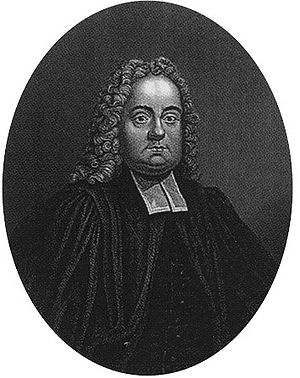
Then I read this proverb. Then I read what the wise Matthew Henry had to say. Then I felt ashamed.

See…[how] a small estate may be improved by industry, so that a man, by making the best of every thing, may live comfortably upon it: Much food is in the tillage of the poor, the poor farmers, that have but a little, but take pains with that little and husband it well. Many make it an excuse for their idleness that they have but a little to work on, a very little to be doing with; but the less compass the field is of the more let the skill and labour of the owner be employed about it, and it will turn to a very good account. Let him dig, and he needs not beg.[1]

Sounds like I need to just get back out in the field and turn the soil, doesn’t it? A small field can be full of produce if worked well and wisely. It is those who complain that let a harvest waste away.

Like the old song says, “Little is much when God is in it...”

Dear Heavenly Father, strengthen our hands and energize our hearts for the work. The fields are truly white unto harvest, so who are we kidding? We just need to work a little harder to bring it in.

[1] Matthew Henry, Matthew Henry’s Commentary on the Whole Bible: Complete and Unabridged in One Volume (Peabody: Hendrickson, 1994), Pr 13:23.