
Tag Archives: God

Listen to the Warning

Proverbs 1:24-27

Because I have called, and ye refused; I have stretched out my hand, and no man regarded; (25) But ye have set at nought all my counsel, and would none of my reproof: (26) I also will laugh at your calamity; I will mock when your fear cometh; (27) When your fear cometh as desolation, and your destruction cometh as a whirlwind; when distress and anguish cometh upon you.

Working Backwards

Let’s look at the above passage, starting from the end, then working back to the beginning. Fear, destruction, distress and anguish: all of these are the result of something. They are all consequences of unwise, foolish choices.

I deal with children, young people, and plenty of adults who complain about their circumstances. Many times they come to me weeping and asking, “Why? Why? Why?” With tears flowing, their faces red, they look for answers, but not before blaming every one and every thing besides self.

But let’s work backwards. Why are they in such distress? Why are they afraid of the future? Why has everything fallen apart? Could it be that they refused wise counsel? Could it be that they are suffering the consequences of foolishness? Could it be they would have “none of [His] reproof?”

Wisdom Calls
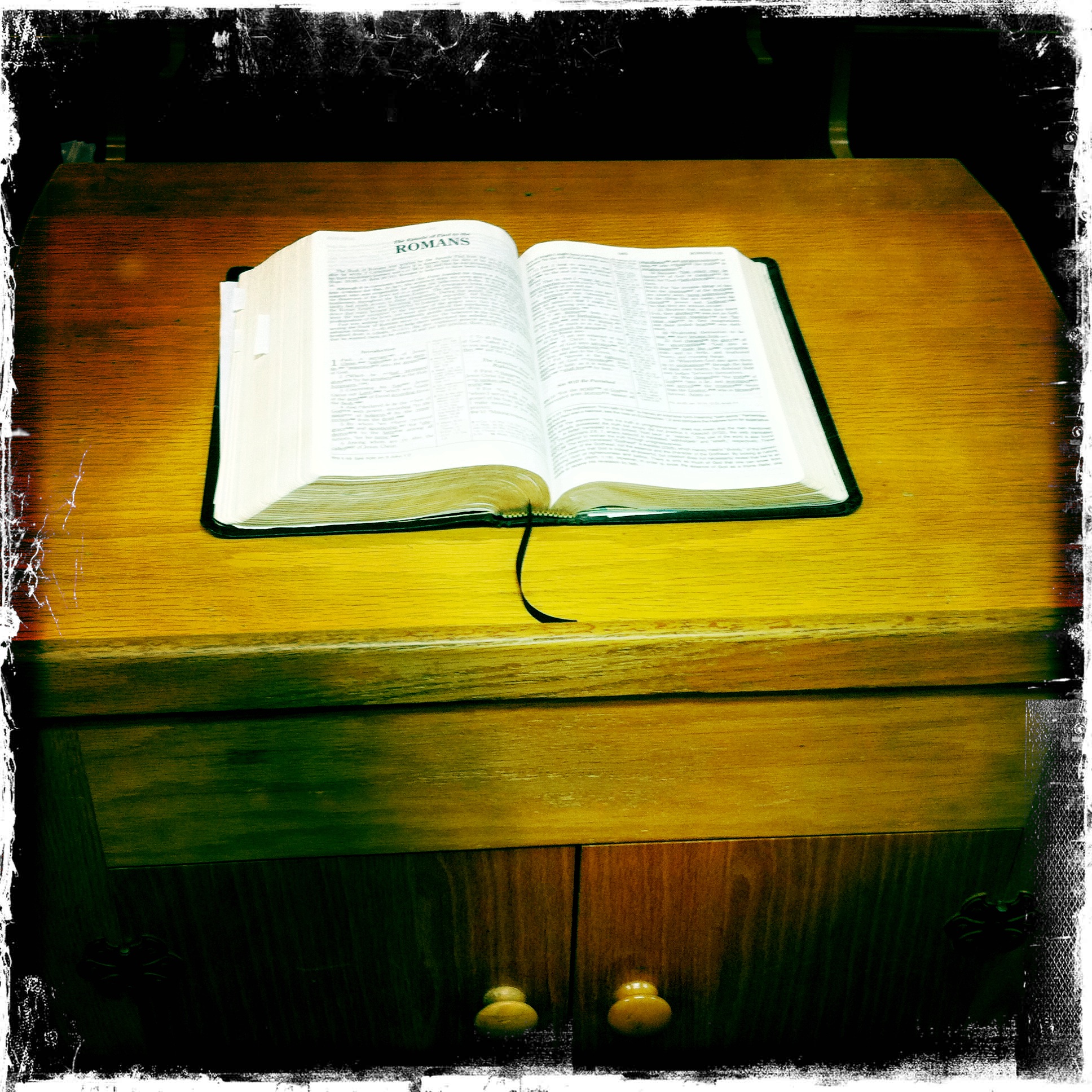
Wisdom is not silent. Wisdom calls from the mouths of parents, teachers, and ministers; especially the Word of God. Wisdom says, “There is a way that seems right to a man, but in the end it leads to death” (Pro 16:25 NIV). Wisdom says, “Don’t stay out too late…don’t have sex before marriage…work hard and don’t complain…be faithful, even when you’re tempted.”

The one who finds himself in distress and anguish should look back in time. Was there not a hand outstretched? Was there not a voice of warning? Calamity has come, and now Wisdom can’t help but laugh and say, “I told you so!”

“Trust Me”

It didn’t mean as much until I became a parent. My dad would warn me with words like, “Trust me son, you don’t want to go through what I went through.” Now I say the same thing to my children. “If you’ll listen to me, you won’t have to make the same mistakes I made, nor live with the pain.” Will they do what I say, or set at naught my counsel?

“Trust in the LORD with all thine heart; and lean not unto thine own understanding. In all thy ways acknowledge him, and he shall direct thy paths” (Pro 3:5-6).

Oh Lord, soften our hearts and help us to yield to your wisdom.


(Originally published 4/05/12)


Can You Hear?

Proverbs 1:20-23 

Wisdom crieth without; she uttereth her voice in the streets: (21) She crieth in the chief place of concourse, in the openings of the gates: in the city she uttereth her words, [saying], (22) How long, ye simple ones, will ye love simplicity? and the scorners delight in their scorning, and fools hate knowledge? (23) Turn you at my reproof: behold, I will pour out my spirit unto you, I will make known my words unto you.

Wisdom’s Call

Do you hear wisdom’s call?

God reaches out to all people in all circumstances.

Most times it is our conscience reminding us we are doing something we probably should not be doing. Sometimes it is through others offering advice. Sometimes it is through a dream or a thought. Occasionally God (or one of the angels) speaks directly.

As I said, it is usually through our conscience, which I argue definitely can mean “in the streets” and “the chief place of concourse”. These were places people were most likely to hear a proclamation. God can easily strike our conscience:

12For as many as have sinned without law shall also perish without law: and as many as have sinned in the law shall be judged by the law;

13(For not the hearers of the law are just before God, but the doers of the law shall be justified.

14For when the Gentiles, which have not the law, do by nature the things contained in the law, these, having not the law, are a law unto themselves:

15Which shew the work of the law written in their hearts, their conscience also bearing witness, and their thoughts the mean while accusing or else excusing one another;)

16In the day when God shall judge the secrets of men by Jesus Christ according to my gospel. (Rom 2:12-16)

The “Simple”

In the Creation versus Evolution debate, the pro-abortion versus pro-life/anti-abortion debate, or even the carpet color versus sign font debate within churches, both sides argue for the wisdom they have and the strength of their moral (or lack-thereof) superiority.

Many Bibles have a note listed for the word “simple”: The Hebrew word rendered simple in Proverbs generally denotes one without moral direction and inclined to evil.

No matter who is right in these debates, the verbal attacks denote someone who is “simple” in mind and/or spirit. People such as this love their way and choices more than what may be true. They “delight in their scorning” and “hate knowledge” while claiming to be tolerant and knowledgable.

When our conscience speaks up (or someone gives advice, or we have a dream, or God directly speaks), may we not only listen but turn from our own limited knowledge (repentance!). Not only can it save us from trouble, but we can receive full wisdom (not necessarily full understanding) through the Holy Spirit.

Heed the Call

Holy Spirit, guide our hearts and our minds. Help us to clearly hear and respond to Your leading. Give us Your wisdom and the strength to obey, in Jesus’ name.

(originally published 4/04/14)


Enticing Trap

Proverbs 1:10-19

My son, if sinners entice thee, consent thou not. (11) If they say, Come with us, let us lay wait for blood, let us lurk privily for the innocent without cause: (12) Let us swallow them up alive as the grave; and whole, as those that go down into the pit: (13) We shall find all precious substance, we shall fill our houses with spoil: (14) Cast in thy lot among us; let us all have one purse: (15) My son, walk not thou in the way with them; refrain thy foot from their path: (16) For their feet run to evil, and make haste to shed blood. (17) Surely in vain the net is spread in the sight of any bird. (18) And they lay wait for their [own] blood; they lurk privily for their [own] lives. (19) So [are] the ways of every one that is greedy of gain; [which] taketh away the life of the owners thereof.

We Were Sneaky

When my brother and I were children, we had this nasty tendency to take anything we wanted. My brother would put candy from the grocery store in his diaper. I would just eat the candy I grabbed (not from his diaper!). Our parents tried as hard as they could to get us to not take things that were not ours.

As I grew older, I wanted to be a spy. Therefore, I worked on ways of being extra sneaky, and this sometimes meant taking things I either wanted or thought would be difficult to get away with taking. Sometimes, my brother and I would work together. Sometimes I would entice friends to help.

Almost every time we got caught. There are consequences to all of our actions. We all must one day stand before the Judge.

Don’t Consent

There is another way to look at this passage than simply stealing things and inflicting bodily harm on others.

Whenever we allow others to tell us “Do not concern yourself with them,” even for prayer or offering a helping hand or just a shoulder to cry on, we are consenting to sinful enticement. We are commanded to love all people and help as we are able.

Whenever we do or say things to fit in with other people, we are casting in our lot with sinners.

Whenever we skip tithing or offering to avoid an inconvenience or get something we want, we are not only stealing from God, we hastily shed the blood of our Savior and lay wait for our own blood.

With God, every time we get caught. There are consequences for all of our actions. Yet, the Author of Life has made a way for us.

Choose life. Choose love. Choose God.

We all must one day stand before the Judge. May it be wholly as His redeemed.

Holy God, lead us in Your way, and give us the strength to resist temptation and hatred. Give us Your wisdom, in Jesus’ name.

(Originally posted on 4/03/12)


Ornamental Wisdom

Proverbs 1:8-9

My son, hear the instruction of thy father, and forsake not the law of thy mother: For they [shall be] an ornament of grace unto thy head, and chains about thy neck.

Parents

It is interesting that verse eight of Proverbs 1 includes reference to both a father and a mother. Not one or the other, but both. Solomon in his wisdom knew that balance was required, and that a family requires two parents to provide guidance and instruction to children. This is what God intended from the beginning (Genesis 2:24).

Going to school in the 1960s just one of my classmates did not have two parents. The reason he grew up with only a father was that his mother died giving birth to his sister. Fast forward to 2012 and many children can rely on only one parent, even in Christian circles. While many single parents do a magnificent job, it was not God’s intention for a family to consist of one parent.

Ornament of Grace

Although verse eight appears to be directed at the young, there is a significant challenge to parents in verse nine. Initially any new parent is likely to be more overwhelmed by the gift of the child, rather than by the challenge of parenting that lies ahead. The challenge and the responsibilities are clearly defined in the prose of these verses. The instruction of a father and the law of a mother are to be an ornament of grace around the head of a child and chains around his neck.

The Hebrew word used for grace also translates as kindness and beauty, something precious to be attached like an ornament or a necklace. And that is a challenge. Do we consistently parent with grace, with kindness? Can our children respect us sufficiently to learn from our instruction? It is important that they can and do.

What do your children see in you?


(originally posted on 4/2/2012)


A Proverbial Comeback!

Proverbs 1:1-7

The proverbs of Solomon the son of David, king of Israel; (2) To know wisdom and instruction; to perceive the words of understanding; (3) To receive the instruction of wisdom, justice, and judgment, and equity; (4) To give subtilty to the simple, to the young man knowledge and discretion. (5) A wise [man] will hear, and will increase learning; and a man of understanding shall attain unto wise counsels: (6) To understand a proverb, and the interpretation; the words of the wise, and their dark sayings.

Welcome!

Welcome to the first day of the second run of Proverbial Thought. Our 2nd anniversary!! Two years ago on this day, we started out on an ambitious project: write daily thoughts and commentary about every proverb in the Book of Proverbs. It took us almost two years to make it all the way through. Now, we are going to re-post the entries from the past, but with a few changes, now and then. Our prayer is that every day you will come here and find [updated] wisdom from God’s Word.

The Introduction and Purpose

As the above verses point out, the author of Proverbs was the son of King David, Solomon. According to the Bible, Solomon was the wisest man in the world, and “men of all nations came to listen to Solomon’s wisdom, sent by all the kings of the world, who had heard of his wisdom” (1 Kings 4:34 NIV). Of all the teachers in the world, we could learn from no better. Not even the lonely, grey-bearded gurus secluded on snowy, hard-to-reach mountain tops are wiser.

In verses 2-4 Solomon outlines the purpose of the book: know wisdom. Solomon knew that all the knowledge in the world was worth very little without wisdom. What is wisdom? Wisdom is the ability to take something learned and be able to apply that knowledge in a useful, profitable, and healthy way. It’s the ability to make sound judgments and right choices. It is what is needed in order to not act like a fool, even though one seems to know everything.

Don’t be a Fool

It is no coincidence that the official first day of this blog was planned for April 1st, April Fools Day. Fools despise wisdom and instruction. Fools deny there is a God (Psalm 14:1). However, Solomon believed. As a matter of fact, it was from God that Solomon received his wisdom (1 Kings 3:12). He should have known better than anyone, then, that the fear of the LORD is the beginning of knowledge. But the ultimate wisdom is not found in the words of men, nor in the Proverbs, alone. Wisdom is found in a Person.

Many men and women will try to seek God through earthly, man-centered wisdom, but to no avail. The Wisdom that leads to God, the Wisdom that “stretches out [His] hand” (Prov. 1:24), is none other than Jesus Christ. 1 Corinthians 1:30 says that God made Jesus “wisdom, and righteousness, and sanctification, and redemption” for us. He took what was “foolishness” in the world’s eyes (Christ crucified), and turned it into the only Way (1 Cor. 1:23-24). All the wisdom of the Proverbs can be found in Him.

Jews demand miraculous signs and Greeks look for wisdom, but we preach Christ crucified: a stumbling block to Jews and foolishness to Gentiles, but to those whom God has called, both Jews and Greeks, Christ the power of God and the wisdom of God. … It is because of him that you are in Christ Jesus, who has become for us wisdom from God–that is, our righteousness, holiness and redemption. Therefore, as it is written: “Let him who boasts boast in the Lord.” – 1Cr 1:22-24, 30-31 NIV

On this first day of April – the first day of this devotional (the second time through) – seek Wisdom – seek Jesus. Don’t be a fool.


The God-Fearing Woman

Proverbs 31:10,30.

“Who can find a virtuous woman? for her price is far above rubies… Favour is deceitful, and beauty is vain: but a woman that feareth the LORD, she shall be praised.” 

The Charming Woman:

There are three common descriptions given to women in today’s Proverb. The first one is favour. This comes from the Hebrew word chen which means grace, favour or charm. In other words, a graceful or charming woman. Charm, King Lemuel says, is deceitful – a lie, deception, disappointment, and a falsehood. Don’t be deceived by a charming woman!

I’m so glad that I’m done with the dating scene. This coming March, my wife and I will be celebrating our 19th wedding anniversary. I don’t miss the dating days at all! When you meet someone new and you are romantically interested in them, an unfortunate thing often happens – both of you will put your best foot forward, trying to impress the other person, and sadly, you don’t really get to know that person well. They might seem charming, but it could be an act.

This is why I think it’s so important for you to get to know a person on a friendship level for an extended period of time before you even consider dating (or courting, whatever you prefer). My wife Liza and I got to know each other in this way and had become best friends for about a year before we ever started dating. In doing so, we had a chance to observe and evaluate the other person’s character without fear of charming deception. It’s a wise thing to do.

The Beautiful Woman:

The second description that King Lemuel gives to a woman is that of beauty. But beauty, he says, is vain – vanity, a vapor, or a breath. In other words, it’s not going to last! How many men have chosen a woman to marry just because she was beautiful, and yet she lacked any sort of inner beauty or godly character? Now this is not to say that men looking for a wife need to look for someone who’s as ugly as a dog – no! But what it means is that there is something far more important and valuable than an external beauty that will one day fade away, and that is an inner beauty of character of a woman who fears the Lord.

A God-Fearing Woman:

At the beginning of his poem, King Lemuel asks the question: “Who can find a virtuous woman? for her price is far above rubies.” As we come to the end of his treatise, he declares: “A woman who fears the LORD, she shall be praised.” In other words, the ultimate character trait of a virtuous woman is someone who fears and respects the Lord. She not only calls Him Lord, but she also submits her life to Him and His Word. She shuns sin, and strives to live a pure and holy life. And this is the sort of woman who will be praised, and shine brightly!

This is my final devotional post on the Proverbial Thought blog. It has been a joy and a blessing to write alongside of such a great team of men (and one young lady) from around the world, and I wish you all the best as you continue to serve the Lord in every area of your lives. And reader – may you be richly blessed as you put God’s Word first in your life, too!


The Generous Woman

Proverbs 31:10,20.

“Who can find a virtuous woman? for her price is far above rubies… She stretcheth out her hand to the poor; yea, she reacheth forth her hands to the needy.” (KJV). 

The Virtuous Woman:

In Proverbs 31:10-31, we have a portrait of the ideal, perfect, virtuous woman. These are the qualities that a man should look for in a wife, and that a godly woman should strive to be. A woman who attains this character is called a virtuous woman, and the Bible says that she is more valuable than rubies or any precious jewels.

The Generous Woman:

In verse 20, we learn that a virtuous woman is one who is generous – one who stretches out her hand to help the poor, and reaches out her hands to the needy. This message is so timely for today’s generation! Our whole culture, it seems, promotes selfishness, a ‘me-first’ mentality, get-all-you-can-and-keep-it-for-yourself-ism. Advertising and commercialism tells us: “You deserve it! Get all you can and get it now! Buy, buy, buy! More, more, more!” However, the Bible teaches us that we should be content with what we have, and be generous with the same.

I’m so thankful that I am married to a godly woman who is generous. Sometimes people give her a hard time because she likes to shop, and she likes nice things, but there is nothing selfish about her. Her hearts beats for helping others, and extending her heart and hands to the poor and the needy. Whenever she and I are presented with an opportunity to help someone in need, and we both contemplate how much to give to that person or need, she almost always purposes a higher, more generous amount than I do – to my shame.

Do Whatever You Can!

I’m so thankful that I have a wife who believes that what we have is not our own. We are merely called to be stewards of the resources that the Lord puts into our hands. We tithe our income to the church, sponsor a child through World Vision Canada, and more often than not, have at least one or more people in our home to love and care for. We most recently took in a teenage single mom and her daughter for three months after she gave birth to her baby, to help them get on their feet. I praise the Lord that I have a wife who values generosity as much as I do!

So the challenge – to women and men alike – is for us to be generous. Whenever we have the opportunity, we should do good to everyone, especially to our Christian brothers and sisters (Gal. 6:10). We should do whatever we can to help the poor and the needy, and share what we have with others. In doing this, we will be letting our good deeds shine before men, bringing honour and glory to our Father in Heaven.


The Diligent Woman

Proverbs 31:10,15.
“Who can find a virtuous woman? for her price is far above rubies… She also rises while it is yet night, And provides food for her household, And a portion for her maidservants.” (KJV). 

The Virtuous Woman:

As we continue through Proverbs 31:10-31, we learn more and more about the ideal virtuous woman. We have already learned that this virtuous woman is valuable (v.10), she is trusted by her husband (v.11), she does good to her husband (v.12), she works hard with her hands (v.13), and she goes the distance to get what her family needs (v.14). In today’s passage, we learn another important fact about this virtuous woman: She is diligent and takes care of her family.

The Diligent Woman:

There are two things that King Lemuel teaches us about the perfect Proverbs 31 woman in this passage: She rises while it is yet night, and she provides food for her household. The fact that she rises while it is yet night tells us that she is diligent: She is not a lazy woman who lies around watching soap operas and eating bonbons (whatever bonbons are!). Rather, she gets up in the morning to take care of her duties in the household.

Secondly, we learn that she provides food for her household. In other words, she takes care of her family. Now this is not in any way to say that a woman must be a homemaker while her husband has a job outside of the house. There is nothing wrong with a woman wanting to have a career and be in the workforce making a living. However, whether she stays at home or has a job outside of the house, the point is that she contributes her part to taking care of the family – just as her husband also should.

Over and over in the Scriptures, God commends hard work and diligence, and condemns laziness and slothfulness. A good wife is diligent and does her part to build her household.


The ABC’s of a Virtuous Woman

Proverbs 31:10.
“Who can find a virtuous woman? for her price is far above rubies.”

Background to the Poem:

This final passage of Scripture in the Book of Proverbs is actually a 22 verse poem, with each verse beginning with the letters of the Hebrew alphabet in order from Alpha to Omega. So in a way, you could call this section the “ABC’s of a Virtuous Woman.” Here you will find a description of a valuable, virtuous woman – the kind of wife every woman should strive to be, and every man should strive to find. Here we are going to examine the first verse in this passage:

A Virtuous Woman:

If you compare this translation of Proverbs 31:10 with others, you will find the word virtuous translated as worthy, competent, capable, valiant, excellent, good, noble and with strong character. Here King Lemuel says, “Who can find a virtuous woman?” The question is rhetorical of course, and what he is saying is that it is very difficult to find such a woman.

It is easy to find a charming woman. It is easy to find a beautiful woman. But to find a woman of virtue, with a noble, strong character? Good luck! Later in this passage, King Lemuel writes: “Charm is deceitful and beauty is passing, But a woman who fears the Lord, she shall be praised.” (v.30). Who then is a virtuous woman? A woman who fears the Lord, and obeys His commands.

I Found One!

Before I became a Christian and started following Jesus at the age of 18, I dated many different girls, and I’m ashamed to admit that virtue wasn’t always the first thing I looked for in a girl. But after I gave my life to Jesus Christ, I started looking for a woman who loved the Lord, and had a desire to please Him with her life. I’m happy to say that I found such a woman – Liza Woods. One of the things that attracted me to her was her virtue. She was a beautiful woman on the outside, yes, but on the inside, she had an excellent character that drew me to her.

Liza was 25 years old when we got married on March 25, 1995, and because she had devoted her life to Jesus Christ, she had never been with another man sexually before me. Because she was a virgin when we got married, and she had saved herself for me, I have never had fears or doubts about her faithfulness to me after we got married. For almost 20 years now, my life has been blessed and enriched by having a faithful, righteous, god-fearing woman as my wife. As verse 11 says, “The heart of her husband safely trusts her.” She is a virtuous woman indeed!

Chris & Liza

Chris & Liza

A Valuable Woman:

The second part of this verse tells us that a virtuous woman is worth far more than rubies. Translation? She is valuable! A virtuous woman is a gift and a treasure. And so here is the application to this Proverb: If you are a woman, then strive to be this Proverbs 31 woman. Be a virtuous woman who fears the Lord! And if you are a single man looking for a woman to marry, then seek out a virtuous woman. You’ll never regret a decision like that.


The Majestic Leader

Proverbs 30:29-31.

“There be three things which go well, yea, four are comely in going: A lion which is strongest among beasts, and turneth not away for any; A greyhound; an he goat also; and a king, against whom there is no rising up.” (KJV).  
“There are three things which are majestic in pace, Yes, four which are stately in walk: A lion, which is mighty among beasts And does not turn away from any; A greyhound, A male goat also, And a king whose troops are with him.” (NKJV).

The Three Pictures from Nature:

In this Proverb, Agur uses three word pictures (something he was fond of doing) to help describe a leader for us: A lion, a greyhound, and a male goat. The lion is represented because it is the strongest and mightiest beast that doesn’t turn away or back down from anyone. The greyhound is pictured because it is a fast and able creature. And the male goat is pictures as one that takes care of its flock. All of these are great pictures to define a majestic leader.

The Majestic Leader:

Solomon says that a leader – like the lion, greyhound, and male goat – is comely (beautiful) and majestic in pace. The leader, specifically referred to here as a king, is one against whom there is no rising up. Or, as the NKJV translates it, one whose troops are with him. When a leader is a good leader – majestic, strong, fast and caring – his people will stand with him, and his foe will be unable to stand against him. This is a wise lesson for all who would be leaders!

Do you want to be a good leader? Then like a lion, develop your strength and ability as a leader. Learn leadership lessons from the Bible, and especially from the godly heroes of the faith whose lives are examples for us. Read good books on leadership, and do whatever you can to develop your craft. When I became a pastor, one of the first things I did was to read all of the leadership books I could get my hands on – Spiritual Leadership by Oswald Sanders and Spiritual Leadership by Henry Blackaby, and anything by John Maxwell.

Secondly, like a greyhound, develop your speed as a leader. But recognize that leadership is not a sprint – it is a marathon. And if we want to finish our race well, we must run with endurance. Hebrews 12:1 tells us to: “lay aside every weight, and the sin which so easily ensnares us, and let us run with endurance the race that is set before us.”

Finally, like a male goat, develop your love and concern for your flock. The people you are called to lead are more important than your leadership position. Consider this great lesson that Jesus taught about leadership: “You know that in this world kings are tyrants, and officials lord it over the people beneath them. But among you it should be quite different. Whoever wants to be a leader among you must be your servant, and whoever wants to be first must become your slave. For even I, the Son of Man, came here not to be served but to serve others, and to give my life as a ransom for many.” (Matt. 20:25-28). If you want to be a great leader, lovingly serve those entrusted to your care. If you do these things, you will be a majestic leader.