
Tag Archives: Religion and Spirituality

Evil Dead

Proverbs 24:1-2.

“Be not thou envious against evil men, neither desire to be with them. For their heart studieth destruction, and their lips talk of mischief.” (KJV). 

Worse Than a Horror Movie:

No, today’s devotional isn’t a commentary or review of the latest terrible Hollywood horror film. The title is based on a combination of today’s Scripture, which talks about evil men, and a New Testament Bible verse that says that before we come to Christ, we are “dead in our trespasses and sins” (Eph. 2:1). The evil dead. What a terrible state to be in!

What is evil? A simple dictionary definition tells us that evil is anything morally wrong or bad; immoral; wicked. It doesn’t take a rocket scientist to figure out that the world we’re living in is full of evil people. Turn on the TV, read the newspaper, or watch the movies, and you will see story after story filled with lying, stealing, cheating, murder, rape, terrorism and war.

In today’s Proverb, Solomon teaches us two things about evil. In the first verse, he tells us how we should respond to evil people, and in the second verse, he tells us what evil people do. I’m going to start with the second verse.

The Nature of the Evil Dead:

In Proverbs 24:2, Solomon teaches us two things about evil people: Their heart studies destruction, or plots violence. They are always looking for ways to destroy or harm others. Eugene Peterson paraphrases this verse thusly, “All they think about is causing a disturbance” (The Message).

In addition to their evil schemes, their lips talk of mischief – making trouble. Not only do they do bad things themselves, but they are always trying to get others to sin as well. Lying, gossiping, and stirring up strife; cursing, name calling and more. Do you know anyone like that? How should we deal with these kinds of people? Verse one gives us the answer:

Our Response to the Evil Dead:

The first thing the Bible tells us to do is to not envy evildoers. There’s something about our society that – especially in the secular media – likes to glamourize evil and sin. People say, “Ooh, he’s such a bad boy,” like that’s a good thing. However, God tells us that we shouldn’t envy evil people. No matter how cool or fun the world makes evil look!

Secondly, God warns us against wanting to be with them. First Corinthians 15:33 says, “Do not be deceived: Evil company corrupts good habits.” If you hang around with evil people, they will negatively influence your behaviour, and impact your relationship with God. Does this mean we can’t build relationships with non-Christians for the sake of leading them to Christ? Of course not. But look at your closest circle of friends, because whatever they are like – good, bad or ugly; living or dead – you will become!

Dealing with Troublemakers

Proverbs 22:10.

“Cast out the scorner, and contention shall go out; yea, strife and reproach shall cease.” (KJV). 

Building the Church:

I don’t know where it has come from, but we’ve got this idea in the church today that we need to keep everyone who walks through our doors. “We don’t want to lose anyone!” However, I would like to suggest to you today that maybe this isn’t the healthiest perspective to have when it comes to building the church.

Every church is full of good people and bad people – those who love the Lord and want to honor and obey Him, and those who don’t. However, the seeker-driven church model today is so anxious to get more and more people to join the church that they give no thought to lifestyle concerns, and will let anyone in if they would simply make a profession of faith. However, this leads to all sorts of problems!

If you let people join your church who don’t believe in your mission or vision, they’re not going to help fulfill God’s purpose for your church. In fact you might even find them fighting against what the Lord is calling you to do. (Incidentally, the word division comes from two words: di meaning two, and vision. Two visions). This is one of the many different situations that wise King Solomon is addressing in today’s Proverb.

Kick out the Troublemakers:

In the Message paraphrase of our Bible verse, Eugene Peterson writes: “Kick out the troublemakers and things will quiet down; you need a break from bickering and griping!” In other words, if you have someone in your church who is a troublemaker, then it’s probably best to ask them to leave – for the good of the church!

One of my life verses is Psalm 133 which says, “Behold, how good and how pleasant it is for brethren to dwell together in unity! It is like the precious (anointing) oil… For there the Lord commanded the blessing– Life forevermore.” In other words, when a church (or a family) lives in unity, that’s where God’s anointing (presence), blessing, and eternal life can be found. But where there is strife, there is every evil work. That’s why it’s better to remove the troublemaker, for the sake of the unity in the church.

The Pruning of the Lord:

Now – this isn’t easy! As a pastor, I am thankful that I have never had to actually do this, although there are times where we have had troublemakers in our church. Thankfully, the Lord in His graciousness did some pruning and removed them from our body before they could to any more damage than they already had. And in every circumstance where the Lord brought about a pruning and removed a troublemaker, we found that the church always grew again in a better and a healthier way. So maybe a good starting point in dealing with a troublemaker is asking the Lord to do the pruning, so you don’t have to!


Counsel God?

Proverbs 21:30

“There is no wisdom nor understanding nor counsel against the LORD.”

Intelligent

I am a half-way intelligent guy. There are degrees hanging on the wall of my study, a few awards, and a lot of books on the shelves that I’ve actually read. But don’t be too impressed; I don’t have a doctorate (yet) and I still have problems with math and spelling restuarant.

What’s worse is I’m supposed to be a “spiritual leader,” a pastor, a Reverend. Along with those degrees on my wall, there is also a piece of paper that says I’ve been “Ordained to the Gospel Ministry.” According to some, that puts me on God’s speed dial. Riiiiight.

In actuality, I am only human, and a flawed one at that. This past weekend my daughter had to take the spiritual lead and call me to the carpet. She has no degree or title, but she does walk with God and loves the Word. So, when she saw me making a mess of things she exercised spiritual wisdom, understanding, and counseled against me. “Daddy,” she said through tears, “you told me to be bold, so I’m going to do that now…we haven’t even prayed!”

Infinite

Then there’s God.

No degrees. No diplomas. Only 66 books to His credit. Never been graded. The ultimate Self-Starter.

His library is limited to some scrolls, but He invented language and the light by which to read. He even provides the Light that illuminates the mind.

He is Wisdom. He is omniscient (knows all). He is the Judge of Heaven and Earth before who’s bar only one Counselor has the right to intercede.

I can be questioned. I can be challenged. I can be corrected. No matter how wise or spiritual I become, I am still just a wisp of mist in the air; human.

Our God is the LORD; His children stand in awe.


Establish Your Way

Proverbs 21:29.

“A wicked man hardens his face, But as for the upright, he establishes his way.” (KJV).
“A wicked man displays a bold face, But as for the upright, he makes his way sure.” (NASB).

Righteousness or Wickedness:

We have seen that one of Solomon’s teaching tactics includes contrasting two opposing life choices, such as wisdom and foolishness, diligence and laziness, and humility and pride. In today’s Scripture, Solomon tells us that wicked people harden their face, or put on a bold face. In other words, they pretend to be okay when they are not. The upright, or righteous, on the other hand, establish their way, and make their way sure. They don’t have to pretend to be right, but by God’s grace, choose to do what is right.

Solomon tells us: “Treasures of wickedness profit nothing, But righteousness delivers from death.” (Prov. 10:2). And “As righteousness leads to life, So he who pursues evil pursues it to his own death.” (Prov. 11:19). To choose a righteous lifestyle leads to life and blessing, and to choose wickedness leads to death and destruction. But – what is righteousness?

Righteousness Defined:

Righteousness can be looked at from two different perspectives. One is right-standing with God, and the other is acting in an upright, virtuous, moral way. Let’s take a look at these two different aspects to righteousness:

1.         Right-standing with God – Putting Your Faith in Jesus:

The first time we see the word righteousness used in the Bible is in Genesis 15:6 where it says, “And Abraham believed in the Lord, and He accounted it to him for righteousness.” Here we see that Abraham’s right-standing with God did not come from living a perfect, holy life (because indeed no one can or ever has lived a perfect life, except for Jesus). Rather, righteousness was credited to his account as a gift when he put his faith in the Lord.

Romans 1:17 teaches us this: “This Good News tells us how God makes us right in his sight. This is accomplished from start to finish by faith. As the Scriptures say, It is through faith that a righteous person has life.” (NLT). Do you want right-standing with God? Put your faith in Jesus, and trust Him to be your Lord and Savior, and forgive you of all of your sins. Believe on the Lord Jesus Christ today!

2.         Right-living before God – Acting in an Upright Manner:

In addition to our positional righteousness, which comes from a personal relationship with Jesus, there is also a practical righteousness, where we choose to do what is right and good – that is, we obey the teachings of the Bible. “But seek first the kingdom of God and His righteousness, and all these things shall be added to you.” (Matt. 6:33).

Lord, help us as your people to walk in righteousness so that we can establish our way according to your righteousness. In Jesus’ name, amen.


Soul Trouble

Proverbs 21:23.

“Whoso keepeth his mouth and his tongue keepeth his soul from troubles.” (KJV).
“Whoever guards his mouth and tongue keeps his soul from troubles.” (NKJV). 

Powerful Words:

The Book of Proverbs has a lot to say about the words we speak – our mouth, our tongue, and our lips. I don’t think many people realize just how powerful our words are, but Proverbs 18:21 says, “Death and life are in the power of the tongue, And those who love it will eat its fruit.”

What do you think would happen if, for the next 24 hours, every word you spoke became a reality? If you said, “I wish you were dead!” to someone, and they dropped dead. If you said, “I’m so fat and ugly,” and poof! Instantly you became fat and ugly. I think if we experienced one day like that (assuming we survived it), it would radically change the way we speak.

Although what we say may not always literally or instantly come to pass, there is still a supernatural power or energy behind those words. Proverbs tells us that our words can be pleasant like a honeycomb, words of wisdom, knowledge and understanding, or words can be deceitful, wicked, perverse, or foolish. Words can bring life or death, blessing or cursing. Today’s Proverb tells us that if we guard our mouth and tongue – and speak only words of life – we will keep our soul from trouble.

Idle Words:

Jesus Himself said, “But I say to you that for every idle word men may speak, they will give account of it in the day of judgment. For by your words you will be justified, and by your words you will be condemned.” (Matt. 12:36-37). Now that’s a sobering thought, isn’t it? When we get to Heaven, we will have to give an account of every word we have ever spoken.

Lying words.              
Gossip words.
Slanderous words.     
Curse words.
Hurtful words.           
Critical or judgmental words.

Knowing that truth, shouldn’t we be motivated to guard our mouth and tongue? In doing so, we will be guarding our soul from trouble.

Graceful Words:

The Bible says, “Let no corrupt word proceed out of your mouth, but what is good for necessary edification, that it may impart grace to the hearers.” (Eph. 4:29). Not only do our words bring death and destruction, they can also bring life, peace and blessing, and even impart God’s grace to other people’s lives.

Loving words.            
Kind words.
Helpful words.           
Encouraging words.
Accepting words.       
Forgiving words.
God’s Words.

What kind of words are you speaking?


Hear the Poor

Proverbs 21:13.

“Whoso stoppeth his ears at the cry of the poor, he also shall cry himself, but shall not be heard.”

Youth Serve at Union Gospel Mission:

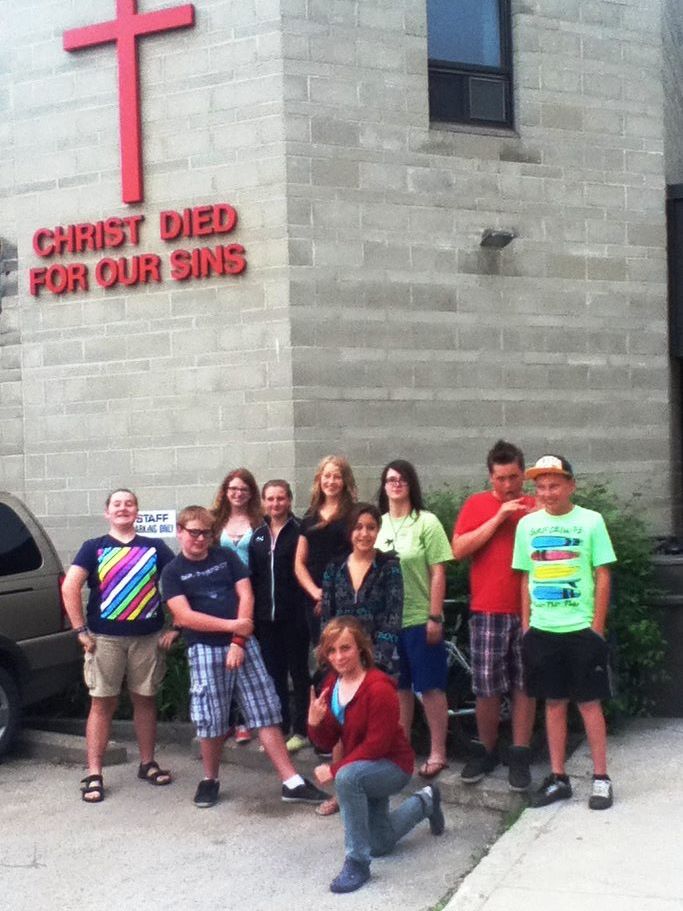
One of the privileges that I have as a pastor is being able to work with the youth group in our church. I have always loved working with teenagers, and love their passion for life. A couple of weeks ago, we took a team of youth from our small town of Beausejour, to serve at Union Gospel Mission, a street outreach in Winnipeg.

It was Matthew 25:40 in action: Jesus said: “Assuredly, I say to you, inasmuch as you did it to one of the least of these My brethren, you did it to Me.” I was so blessed to see a group of teenagers taking their Saturday night and – instead of staying home and playing video games or watching TV – they came to serve. And serve they did! They washed chairs in their chapel in preparation for their evening service, cleaned windows, worked in the kitchen, mopped floors, and greeted street people at the door as they came in for their meal. I was so proud of our amazing team!

Our youth at Union Gospel Mission in Winnipeg, MB

Our youth at Union Gospel Mission in Winnipeg, MB

God Loves the Poor:

Many people wonder why our young people would give up their Saturday night to go and serve the homeless, and the answer is simple: God loves the poor! There are so many Scriptures that reveal to us God’s heart for the poor, the lonely, the orphans and widows, and the strangers:

  • Leviticus 19:10: “And you shall not glean your vineyard, nor shall you gather every grape of your vineyard; you shall leave them for the poor and the stranger.”
  • Deut. 15:7: “If there is among you a poor man of your brethren… you shall not harden your heart nor shut your hand from your poor brother.”
  • Psalm 41:1: “Blessed is he who considers the poor; The Lord will deliver him in time of trouble.”
  • Psalm 82:4: “Deliver the poor and needy; Free them from the hand of the wicked.”
  • Gal. 2:10: “They desired only that we should remember the poor, the very thing which I also was eager to do.”

Don’t Ignore the Poor:

In today’s Scripture, Solomon says, “Those who shut their ears to the cries of the poor will be ignored in their own time of need.” (NLT). This is echoed in another Proverb: “He who has pity on the poor lends to the Lord, And He will pay back what he has given.” (19:17).

God loves the poor. But some would say, “Aha! If there is a God, and He is all-powerful and all-loving, then why are there so many needy people in the world?” The answer to that is simple. As Christians, we are called to be God’s hands and feet in the world. If the poor aren’t being helped, it’s because we aren’t doing our part in reaching them with the love of God. Let’s hear the poor!


The Here and Now

Proverbs 21:7

“The robbery of the wicked shall destroy them; because they refuse to do judgment.”

Karma

Maybe you’ve heard people say, “What goes around comes around.” The meaning is, like a big circle, life has a way of coming back around. Some people call it karma.

I don’t believe in karma, however. As a matter of fact, karma is a theological idea that is linked to the unbiblical teaching of reincarnation. Karma doesn’t deal with the hear-and-now, only the yet-to-be-known. It pushes the consequences of this life into the unknown of tomorrow, leaving one never knowing for sure what tomorrow holds.

Some may read this proverb and conclude that it is similar to the idea of karma, but it is not. The consequences this verse deal with the ones committing the wickedness, the judgement of which will be known in due time. In other words, this proverb deals with consequences that will be felt by the wicked doing the crime, not their poor, unwitting, future incarnations.

Consequences

One of the hardest things to do is convince children that their bad actions may result in painful consequences – in this life. Recently, a father I know (not me) was telling his daughter that she was being rude to others and that her selfish, hateful comments would get her in to trouble. No sooner than he warned the young girl, a cry of pain rang out. The little girl had gotten slapped by her older sister, which then resulted in the little girl getting a spanking, too.

When we refuse “to do judgement” and go about with our “robbery” like nothing in this life will ever happen, we live as fools.

“The wicked conceive evil; they are pregnant with trouble and give birth to lies. They dig a deep pit to trap others, then fall into it themselves. The trouble they make for others backfires on them. The violence they plan falls on their own heads.” – Psalm 7:14-16 NLT

It is unwise to think that we can live however we please and push the consequences down the road. The end of the road may be just around the corner, and there a toll must be paid.


Get Rich Quick

Proverbs 21:5.

“The thoughts of the diligent tend only to plenteousness; but of every one that is hasty only to want.” (KJV).
“Good planning and hard work lead to prosperity, but hasty shortcuts lead to poverty.” (NLT).

What’s Wrong With That?

It’s amazing to me how many people chase after the latest get-rich quick schemes. “Make money fast from home and become a millionaire this year! Small investment, big return!” And don’t even get me started on lottery tickets: They are aptly named an “idiot tax.”

In the small town that I live in, we have a corner convenience store just down the street from my house, and it’s amazing to me that almost every time I walk in there, someone is buying a lottery ticket or scratch-and-win ticket, hoping to be the next big winner. What’s going on here? It seems we have created an entire culture that is devoted to trying to get something for nothing, to get rich without having to do any work for it. But some might be asking – is there really anything wrong with that? Well, that depends on whether or not you believe the Bible.

Poverty or Prosperity?

In today’s Scripture, Solomon tells us that we can choose plenteousness or want, prosperity or poverty. To reach each destination, there are two very different roads that lead there.

If you want to be prosperous, the road is called good planning and hard work. No shortcuts here! You need to be diligent. Get a job and work hard. And as Matthew Henry says, “The thoughts of the diligent are as necessary as the hand of the diligent. Forecast is as good as work.” It’s good to plan ahead if you want to prosper and do well financially! Plan a budget. Honour the Lord with your tithe. Be generous and give to the poor. All of these will help you succeed.

If you want to be poor, it’s a whole lot easier to get there. Don’t be diligent. Don’t get a job. Don’t work hard. Don’t plan ahead. Spend foolishly. Waste your money on things lottery tickets and other things you don’t really need. You’ll be poor before you know it!

Lord, help us as your people to make good plans and work hard, so you can bless us financially. Not just so we can be blessed, blessed, blessed, but we know you bless us so that we can be a blessing to others. To help the poor. To build the Kingdom of God. To make a difference in the lives of others. Help us to make wise choices with our finances, and be good stewards of all of our resources. In Jesus’ name, amen.


Leadership Advice

Proverbs 20:28.

“Mercy and truth preserve the king: and his throne is upholden by mercy.” (KJV).
“Unfailing love and faithfulness protect the king; his throne is made secure through love.” (NLT).

Advice for Leaders:

In this Proverb, Solomon teaches us two things. First, he commends to us two virtues of a good king: mercy and truth. Secondly, he shows how the ruler who walks in mercy will ensure he is successful in his rule. And although this proverb specifically deals with a king, I believe that the universal principle behind it can be applied to anyone in a leadership position – be they a government leader, teacher, parent, employer, or pastor.

Two Leadership Virtues:

In the world today, we are experiencing a crisis of leadership. There are so many leaders that don’t lead well. How many leaders – both prominent political leaders and religious leaders – have lost their position and influence because of a lack of integrity? Too many to count. If a leader wants to lead long, finish well, and have a lasting influence, he must be a person with a virtuous character. And two of the most important virtues, Solomon tells us, are mercy and truth. In fact, in another Proverb, Solomon tells all people, not just leaders, to aspire to be people of mercy and truth: “Let not mercy and truth forsake you; Bind them around your neck, Write them on the tablet of your heart.” (3:3).

What does it mean for a leader to be merciful? It means that you don’t rule with harshness, cruelty or legalism. It means you are tender and gracious, and willing to forgive the mistakes of those you lead. It means you choose to lead with love, acceptance and forgiveness. And what does it mean to be truthful? It means you are faithful to your word, you keep your promises, and do what’s right. When you make mistakes (and you will make mistakes, and that’s okay), you are quick to admit it and ask for forgiveness where necessary.

Successful Leadership:

When a leader walks in truth and especially mercy (which is mentioned twice in our text), it is said that his throne will be upholden, or made secure, by mercy. In other words, his leadership will last. His character and integrity will be preserved, and his influence will outlive his life.

I know of a leader in a church once who got hurt and offended, and rather than being merciful and choosing to forgive the other leader who had hurt him, he got bitter and started lying and gossiping about that other leader. As a consequence, many people were hurt and affected by his actions. It was such a sad and terrible situation that resulted in many people walking away from the church as a result of it. It totally broke my heart. This story serves as a warning to all who would neglect the proverbial admonition to walk in mercy and truth, which is designed to protect a leader – and the people he leads.


Think Before You Promise

Proverbs 20:25

“It is a snare to the man who devoureth that which is holy, and after vows to make enquiry.”
“It is a trap to dedicate something rashly and only later to consider one’s vows.” – NIV

Bad Deals

Have you ever made a bad deal? For instance, have you ever committed to an agreement thinking you were going to make a profit, only to find out later that you lost money? If you have been in that position, when did you figure out you were on the losing end of the deal?

Some people sign contracts and then once the job has begun try to renegotiate every little detail. Others will agree to do a project of some sort, agree on a price, but in the end haggle over the agreed amount. One person I know was promised a certain amount for a job, but then when it was completed, the person for which he worked decided to pay him less. He was told, “I have been thinking about what I promised, but now I don’t think the job was worth that much.”

Bad Vows

There are people who treat God the same way. The make promises, but then, when the real cost is figured, try to renegotiate.

For example, a businessman might say, “God, if you bless my investment, I will give you fifty percent of the profit.” He may even call a meeting with his staff and proclaim, “I am dedicating fifty percent of my business to the Lord!” But then, later that evening, he sits down and starts planning for the future and realizes he could have used that extra money. The next day he goes into the office and says, “You know, I think I promised God too much.”

Solomon says that we fall into a “trap” when we make rash vows or promises unto God. It is our responsibility to think about these things beforehand, not afterwards. Once we make a vow to God, we are wise to keep it.

“A man who makes a vow to the LORD or makes a pledge under oath must never break it. He must do exactly what he said he would do.” – Numbers 30:2 NLT