
Category Archives: counsel

A Proud Dad

Proverbs 27:11 – My son, be wise, and make my heart glad, that I may answer him that reproacheth me.

Over and over again, I can remember my father introducing me to his friends. It would go something like this, “And this is Jason. He is a chip off the old block”. What my dad was saying about me was that we were (and still are) very much alike. What he liked, I liked. What he enjoyed doing in his spare time, I enjoyed doing in my spare time. What he liked to eat, I liked to eat! I was just a smaller (chip) version of him (block). My dad was proud to call me his son!

father-SonEven though I was a small version of him, there were things that I did to make him proud of me and things that I did that did not make him so proud of me. Those times that I listen to his instructions and was wise in the decisions I made, as our verse says, it made his heart glad. It brought joy to him and even the simplest “attaboy” brought joy to my heart.

We have seen this before in Proverbs 10:1 – “A wise son makes a proud father…”

There are several things we can learn from this verse:

1. There had to be instruction given to the son in order for him to learn or gain the wisdom. Fathers, we can’t expect our children to grow up in this world without giving them the instructions that God has laid out for us to pass along to them. Let’s not miss the opportunity to teach them God’s Word. It may be hard work now but when we are older and our children are following God and teaching their children His Word – I guarantee you there will be many glad hearts.

2. The son had a choice to make. The father may have given up everything to teach and direct him in the way of God, but the son had the final choice in which direction he was going to go. Each of us have to make that choice. Solomon knew his son had to make his own choice, that is why over and over and over again he is pleading with him to get understanding and wisdom.

My prayer is not only will I be willing to instruct my daughter in God’s Word but that she would also be wise and make the right decisions. Now that would make my heart very, very glad!

When we are wise and follow our heavenly Father’s instructions, I can’t help but think HE will have a happy heart as well!

Lord, please guide and direct me as I raise my daughter. Help me to be the man of God that I need to be first, so that I may teach her your Word. Lord I pray that she will hear and understand your Word and listen to your teachings. 

Kiss Me Kill Me

Proverbs 27:6

Wounds from a friend can be trusted,
    but an enemy multiplies kisses.

It Makes Sense

This is one of those proverbs we can look at and agree with. We all know it makes sense. It is much better to have friends who will be honest with us even when it hurts, then friends who will just pamper and flatter us even when we are clearly in the wrong.

The trouble is something making sense doesn’t guarantee we will follow the advice. In this case there are multiple reasons why we ignore this advice, our society is much more comfortable with flattery, even when it’s false, than truth; it can be hard to receive truth from a friend; we can find it difficult to speak truthfully to our friends in case they decide to ditch us.

First Things Firsts

To see more meaningful relationships we need to be ready to be examples. We need to be people who are good at taking criticism, and also brave enough to give it. Many people misread the plank in the eye parable. They use the excuse that as they will never be perfect, and therefore always have impaired vision, they cannot challenge other’s behaviour. I have even heard parents say that they cannot challenge their wayward ward because they were just as bad when they were children. But we only need to read to the end of the parable to see Jesus intention –

Matthew 7:5 (emphasis mine) ‘You hypocrite, first take the plank out of your own eye, and then you will see clearly to remove the speck from your brother’s eye.’ 

We are to be wounded and we are to wound. And all the better our friendships shall be for it.


Red Mist vs The Green Eye Monster

Proverbs 27:4

Anger is cruel and fury overwhelming,
    but who can stand before jealousy?

Ch Ch Ch Changes…

I was never that bothered about hitting 30. I just thought it would be a birthday like any other, the only significance being what others placed on it. I was wrong. Since hitting 30 my memory has declined, I can no longer stay up past midnight and operate the next day, sprained ankles take months to recover rather than days… you get the picture and it’s a grim one. I also noticed I was rapidly becoming a grumpy old man.

Red Mist

I decided to cheer up a bit, I couldn’t change some of the physical stuff but I could change the grumpiness, and I was doing so, and then we adopted a three year old boy! There is nothing that challenges patience greater than a child! I certainly look back on my own childhood now with a slightly different perspective! Raising a child certainly shows me the truth of the first part of this verse. For my son his anger can strike at any time with no obvious reasons and it cripples him. When I get angry it’s easier to spot the reasons but just as hard not to be overwhelmed and suddenly flip into hulk mode. Anger is overwhelming, but anger passes. Losing control is not comfortable, but it usually dissipates fairly quickly. The chemical reaction in our body does its work and then we come down. Our son certainly bounces back quickly, the events seemingly left in the past.

Green Eye Monsters

Just as we all experience anger, we all certainly recognise the pangs of envy. The writer of this proverb seems to be implying that jealousy is worse than anger. I wonder if it is because of jealousy’s lingering nature. Jealous leads us to be consumed by something we don’t yet have. At worst it can make us plot and plan devious schemes to obtain said items, at best it can lead to restless nights consumed with thoughts of our supposed ‘need’.

So What?

We may all agree with the verse in question but so what? Should we favour anger over jealousy? Anger and jealousy are both things that we are told God has experienced – so what is this verse all about? Well firstly I think there is a recognition that anger and jealousy are very much part of the human experience – there will be a day when they are gone, but for now we are stuck with them. But that doesn’t mean we have to indulge in them especially when they are both potentially destructive. This verse hints that we may not be able to control when they hit, but we can certainly limit the damage they cause.

Self Control

The problem is a lack of self control, we are encouraged to revel in our feelings as long as they make us feel better. This is world’s apart from the way of life Jesus choose, a life of self control and sacrifice benefiting others before himself. If we want to be more like Him we need to spend more time with Him drawing from His reserves of love, being strengthened to be self controlled and disciplined and getting grace when we invariably mess it up.

Philippians 2:1-11 (The Message) ‘If you’ve gotten anything at all out of following Christ, if his love has made any difference in your life, if being in a community of the Spirit means anything to you, if you have a heart, if you care— then do me a favor: Agree with each other, love each other, be deep-spirited friends. Don’t push your way to the front; don’t sweet-talk your way to the top. Put yourself aside, and help others get ahead. Don’t be obsessed with getting your own advantage. Forget yourselves long enough to lend a helping hand.

Think of yourselves the way Christ Jesus thought of himself. He had equal status with God but didn’t think so much of himself that he had to cling to the advantages of that status no matter what. Not at all. When the time came, he set aside the privileges of deity and took on the status of a slave, became human! Having become human, he stayed human. It was an incredibly humbling process. He didn’t claim special privileges. Instead, he lived a selfless, obedient life and then died a selfless, obedient death—and the worst kind of death at that—a crucifixion.

Because of that obedience, God lifted him high and honored him far beyond anyone or anything, ever, so that all created beings in heaven and on earth—even those long ago dead and buried—will bow in worship before this Jesus Christ, and call out in praise that he is the Master of all, to the glorious honor of God the Father.’


Worthless Legs

Proverbs 26:7

“The legs of the lame are not equal: so is a parable in the mouth of fools.”

This verse and verse 9 are very similar; both talk about worthlessness of wisdom given to fools. In this verse we see a parable compared to a crippled person’s legs. In verse 9 we will see a parable compared to a thorn in a drunk’s hand.

Parable

Before we go any further, let’s make sure we understand what a parable is. One dictionary defines a parable as “an extended metaphor or simile which compares a religious truth with a common experience or circumstance in life.” [1] But if that was too confusing, a parable is “a simple story used to illustrate a moral or spiritual lesson.” [2]

Jesus was famous for using parables to illustrate certain truths to His disciples. For example, you may remember the parables of the mustard seed (Matt. 13:31), the seed and the sower (Mk. 4:3), and the ten talents (Matt. 25). Each one was used to illustrate a point in such a way that the hearer could relate truth to a common experience.

Legs of the Lame

The King James version describes the legs of the crippled person as “not equal.” At first glance it may seem like Solomon is talking about one leg that is shorter than another. However, That “not equal” is another way of saying limp, worthless, or shriveled.

Imagine legs that have no strength, unable to bear the weight of the owner. They are deformed, curled under, twisted, and completely useless. Taking into account the original meaning of the Hebrew term (see Strong’s H1802), they may do nothing more than hang like string.

Parable In the Mouth of a Fool

Now, take the image of crippled legs that you have in your head and imagine them being a parable. How good is a parable that is incapable of illustrating truth? How good is a story that bears no resemblance to common experience? A parable like that can’t even stand on it’s own two feet.

How worthless, then, is the advice of a fool? What good is his counsel? Why should we listen to him?

Keep that in mind the next time you are offered emotional, spiritual, relational, and marital advice from someone who doesn’t even believe there is a God.


[1] David H. Wallace, “Interpretation of Parables,” ed. Ralph G. Turnbull, Baker’s Dictionary of Practical Theology (Grand Rapids, MI: Baker Book House, 1967), 107.

[2] Catherine Soanes and Angus Stevenson, Concise Oxford English Dictionary (Oxford: Oxford University Press, 2004).


Muddied Water

Proverbs 25:26

“A righteous man falling down before the wicked is as a troubled fountain, and a corrupt spring.”
“A righteous man falling down before the wicked is as a troubled fountain, and a corrupt spring.” – NLT

Well Water

Years ago, when I was young (many years ago), we got all of our water from a well. Instead of “purified” city water, we had an electric pump that drew water from deep down inside the ground. The water was cold and sweet – and free.

However, the only problem with our well was that when it rained really hard, especially after the weather had been dry for a while, the water from the well would turn a muddy red. Runoff from the mountains would somehow find its way into the underground stream from which our water was drawn.

Red Rice

Once, when I was single, poor, and living on my own, all I had to eat one evening was some Uncle Ben’s white rice. That day it had come a hard rain, and as usual, the water was as red as Georgia clay. Since I had no fancy bottled water, the only option I had was to boil my rice in muddy water, which, as you can imagine, also turned my rice red.

I have had red beans and rice, but red rice, especially muddy-tasting red rice, is not particularly appetizing. It’s not something I would recommend.

Dirty Water

There is nothing more naturally refreshing to one who is thirsty than cold, clean, fresh spring water. And when it comes to those who are thirsty for clean, pure truth; for hope that sustains; for counsel that refreshes; there’s nothing more helpful than a word of wisdom offered by a righteous man of God.

However, a righteous man who has given in to the influence and pressures of the world “is as useless to society and as harmful to the good cause as a spring that has been defiled by mud stirred up or extraneous matter introduced is unserviceable for drinking and prejudicial to those who use it.”[1]

Be Careful

The saddest thing is that unless one knows the source of a spring, or unless one is able to determine the water’s purity, polluted water can go undetected until it is too late. Water doesn’t have to be visibly muddy to be unhealthy, or even deadly. Therefore, unless the source of wisdom is Wisdom himself, then the well must be suspect.

How many thirsty men and women, boys and girls, have been sickened by “polluted springs?” Even worse, how many of us have allowed ourselves to be polluted by sin, only to poison others?

The only water guaranteed to “spring up into everlasting life” comes from Jesus (John 4:14), and He said: “If any man thirst, let him come unto me, and drink” (John 7:37).

Don’t muddy the Water.


[1] H. D. M. Spence-Jones, ed., Proverbs, The Pulpit Commentary (London; New York: Funk & Wagnalls Company, 1909), 485.


Dealing with Enemies

Proverbs 25:21-22

If thine enemy be hungry, give him bread to eat; and if he be thirsty, give him water to drink: For thou shalt heap coals of fire upon his head, and the Lord shall reward thee.

There is a famous story from the First World War in which British and German soldiers left their trenches on Christmas Day 1914 and exchanged handshakes, Christmas greetings and presents, and even took part in games of soccer. Wikipedia records that this so-called ‘Christmas Truce’ took place in several locations across the Western Front, although fighting did continue elsewhere.

There must have been spirit-filled followers of Jesus in both armies. One could speculate that an awareness of the teaching of this passage of Scripture, which is repeated by Paul in the New Testament, may have prompted the Christmas Truce on the battlefields of Northern France. But perhaps it took place because warfare at that time retained an element of chivalry, that was subsequently lost as the war described as ‘the war to end all wars’ dragged on all the way to 1918 resulting in at least ten million deaths. Whatever the reason, the teaching of Scripture is clear: We are to love our enemies, even if it is not reciprocated. Although that may seem difficult, even impossible in a war footing, we cannot argue with the words of Jesus who said:

 “You have heard that it was said, ‘Love your neighbor and hate your enemy.’ But I tell you, love your enemies and pray for those who persecute you, that you may be children of your Father in heaven.” (Matthew 5:43-45 NIV)

If you are serving in the military then it is important to follow orders, but that does not remove the possibility of loving the enemy and proving that love through prayer. It is not an option, it is a requirement. The same requirement exists for all of us in the daily relationships we encounter as part of life. At school, at college, at work, in church, and in our neighborhoods, we are to be known as people who love others, whatever the cost. That’s what Jesus did, all the way to the cross.


Happy Songs Not Allowed

Proverbs 25:20

“As he that taketh away a garment in cold weather, and as vinegar upon nitre, so is he that singeth songs to an heavy heart.”

Country Songs

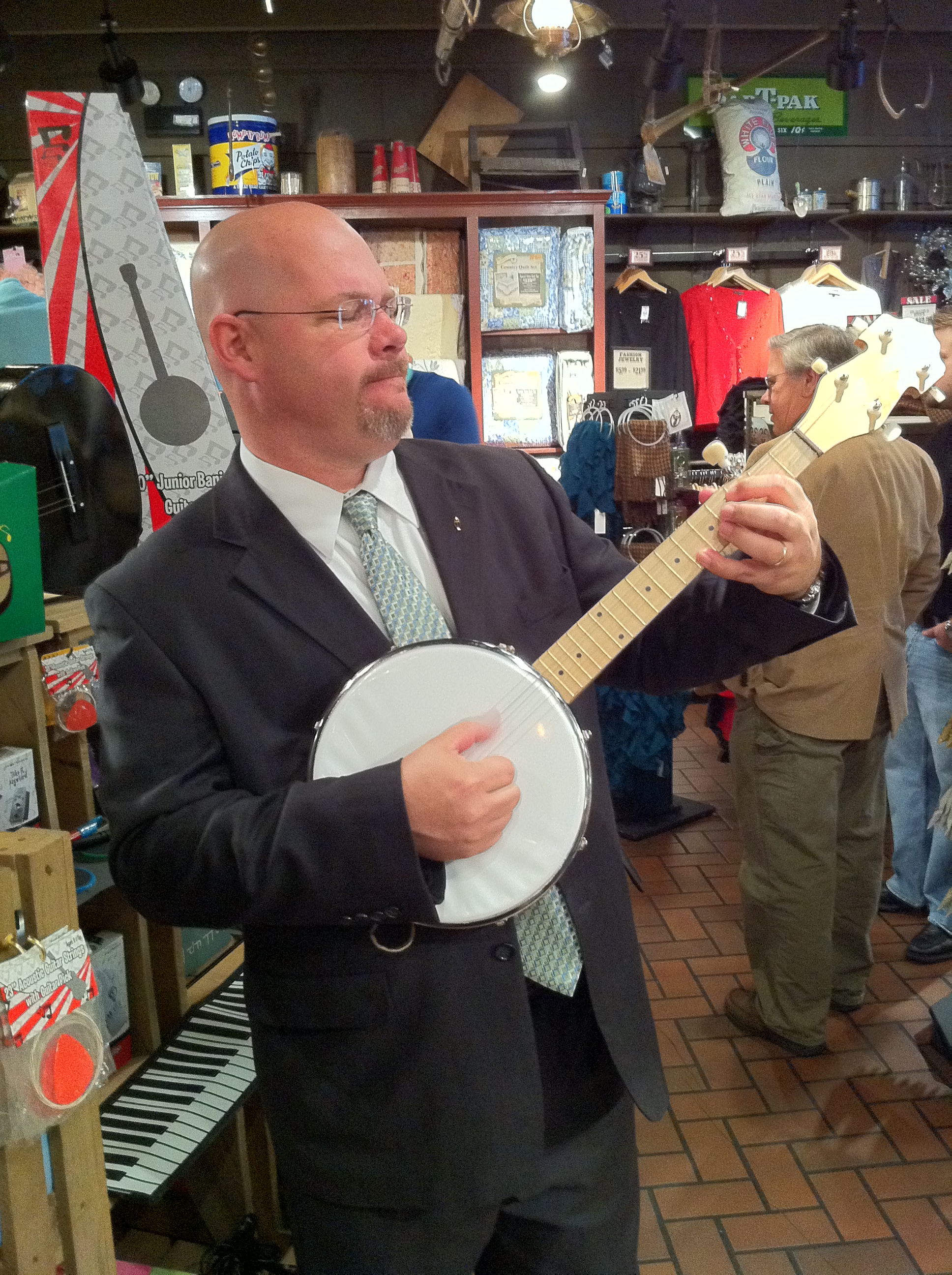
banjoConsidering how I was born and “raised” in Tennessee, I know a little about country music. Believe it or not, I have written a country song (to prove I could), played and recorded music in Nashville, and even toured Brenda Lee‘s house when I was a kid (I helped her daughters with a lemonade stand).

Country music (at least the stuff before Kid Rock) was earthy, blue-collar music that spoke of real life, or at least what was left of it after one spent too much time hunting, fishing, or drinking in a bar. The lyrics were usually sad, depressing, and great reasons to stay drunk. For example…

“Hunting Dear”

I came home late from hunting deer / My wife drank all my favorite beer / And then before the night was even done / My fishing poles were broke in two / And as she said, “I’m gone – we’re through / She took my dog, my truck, and my gun!

So I’ll walk down to the bar / I can stumble along that far / A country boy don’t need a cheetn’ girl / I’ll drink away my pain / Till my dog comes home again / Then we’ll both go out together…huntin’ dear.

– by Anthony Baker (just now)

Heavy Hearts

The reason why country music is so loved is the same reason the blues are so popular: heavy, broken hearts. Some say it’s impossible to really play the blues if you’ve never been heartbroken. I believe it.

I don’t know what version of country or blues Solomon had playing in his chariot, but he evidently understood that people with broken or heavy hearts hate to hear happy songs. He implied that playing cheerful music for a heavy heart is about as smart as taking one’s coat off in cold weather, or pouring vinegar on soda.

It’s Like This…

Imagine the feeling of already being chilled, but then having your coat taken away. It’s like going from bad to worse. When a person is down and depressed the last thing he really wants to hear at the moment is, “I am happy; you can be too!” Saying (or singing) that just makes the cold even colder.

The word nitre comes from the Hebrew word נֶתֶר (nether), which is what we would recognize, today, as carbonate of soda. Have you ever seen what happens when you pour vinegar on baking soda?  Not only does the soda become worthless for cleaning, but it will explode! That’s what can happen when a sad person hears a happy song.

Just Listen

In reality, besides listening to country music or the blues, the one with a heavy heart needs someone to listen, to nod a head, and be a friend. Singing a happy song to a hurting friend, although well-meaning, may seem like you don’t care, or worse, like you haven’t heard.

For we have not an high priest which cannot be touched with the feeling of our infirmities…” – Hebrews 4:15

Sometimes the best encouragement for a hurting friend or loved one is to cry along with them. That’s one reason why Jesus came.


In the Presence of the King

Proverbs 25:1-7

1 These are also proverbs of Solomon, which the men of Hezekiah king of Judah copied out.
2 It is the glory of God to conceal a thing: but the honor of kings is to search out a matter.
3 The heaven for height, and the earth for depth, and the heart of kings is unsearchable.
4 Take away the dross from the silver, and there shall come forth a vessel for the finer.
5 Take away the wicked from before the king, and his throne shall be established in righteousness.
6 Put not forth thyself in the presence of the king, and stand not in the place of great men:
7 For better it is that it be said unto thee, Come up hither; than that thou shouldest be put lower in the presence of the prince whom thine eyes have seen.

Hezekiah was the son of King Ahaz. King Ahaz did not cover himself in glory. (The story of Ahaz is told in 2 Kings 16:10-18 and 2 Chronicles 28:16-25.) Because Ahaz was a foolish man the people he ruled suffered as foreign armies invaded the land of Judah. A key verse is 2 Chronicles 28:19 (NLT):

The Lord was humbling Judah because of King Ahaz of Judah, for he had encouraged his people to sin and had been utterly unfaithful to the Lord.

King Hezekiah did not follow his father’s example. He did not get everything right, but as a young man of twenty-five he quickly set about putting right the wrongs of his father. Idols were removed and destroyed, and the Temple that had been boarded up by Ahaz was reopened for worship. It seems that Hezekiah took note of the wisdom of Solomon to the extent that he had the Proverbs of Solomon reproduced as part of his commitment to following God (Proverbs 25:1). Scripture records that:

Hezekiah trusted in the Lord, the God of Israel. There was no one like him among all the kings of Judah, either before him or after him. He held fast to the Lord and did not stop following him; he kept the commands the Lord had given Moses. And the Lord was with him; he was successful in whatever he undertook. (2 Kings 18:5-7 NLT)

As a King, Hezekiah was well placed to understand the importance of not indulging in an attitude of over-importance. Jesus drew on verses six and seven when he was at a feast and observed people fighting for the best place at the head of the table (Luke 14:7-14). Jesus suggested that the best place to be is the foot of the table. But that was before He died. Today the best place to be is at the foot of the cross. If we dare to look up we will see that the cross is empty. The King of kings is no longer nailed to that cross, but reaching out to take our hand. It is only when we humble ourselves before Him that He reaches down to us in this way. As it says in verse 7 above:

For better it is that it be said unto thee, Come up hither; than that thou shouldest be put lower in the presence of the prince whom thine eyes have seen. 


A Challenge to Changers

Proverbs 24:21-22

My son, fear thou the LORD and the king: and meddle not with them that are given to change: for their calamity shall rise suddenly; and who knoweth the ruin of them both? – KJV
My child, fear the LORD and the king. Don’t associate with rebels, for disaster will hit them suddenly. Who knows what punishment will come from the LORD and the king? – NLT

Authority

This may be the only place in Scripture where God and an earthly king are spoken of as peers. It shouldn’t be considered the norm, but it is done in such a way to stress the importance of not only authority, but the link between authority and earthly leadership. Not all kings are godly, but no king rules without God’s knowledge.

Let every soul be subject unto the higher powers. For there is no power but of God: the powers that be are ordained of God. – Romans 13:1 KJV

Therefore, it is important to understand that when we stand in opposition to the king, we may be standing in opposition to God. Rebellion may be an option at times, but those who enter into it should be wary of the consequences.

Change

I wonder where these verses were during the 2008 presidential election? Many Obama supporters were running around America demanding “change,” yet when asked what they wanted to change to, no reasonable answer was given. Most would simply reply, “Well, anything is better than what we have.”

Change for change’s sake is terribly dangerous. Those who want to change leadership for the sole reason of “change” run the risk of destruction. Solomon warns us to stay away from people like that, for they have obviously given no thought to the consequences of their actions.

Fear God, Honor the King

Ultimately, the wise man will keep attempt to keep things in their proper perspective. God and the earthly kings are not on the same level, and if one is to be obeyed over the other, it should be God that is obeyed first and last. 1 Peter 2:17b reminds us to give due honor to the king (those in authority), but to “fear God.”

During political engagements there is the temptation to be disrespectful of those in authority, especially when we don’t agree with them. But let this proverb remind us that all authority is from God, and unless we have clear direction to stand against it, rebellion is affront not only to the king, but the King of Kings.

Be wise and tread carefully.


Listen to Father

Proverbs 23:22

“Hearken unto thy father that begat thee, and despise not thy mother when she is old.”

Many young people never experience the comfort and security of a strong father who provides and a caring mother who doctors wounded knees. Therefore, I am thankful that God blessed me with a father and mother who loved me and took care of me. However, countless children are blessed with loving parents, but never realize it until it’s too late.

Every new generation of youth complains that parents are stuck in the past, uncool, and not with it. What makes it worse is that today’s culture promotes closing the ear to one’s father and despising one’s mother. Forget what’s own children’s cable networks, even Disney movies promote the individuality and independence of boys and girls over the wise instruction of parents. Heck, the plot lines in most Disney movies are centered around a broken family.

Culturally, parental advice is considered a joke, a hindrance, and is even treated with disdain. How sad for us all.

Why should we listen to our parents? 

Parents aren’t perfect, that is for sure. As a parent with over 20 years of experience, I know for a fact that my advice can be flawed. So, what, then, makes my advice worth “hearkening” unto? Well…

  • I have seen a lot more, done a lot more, hurt a lot more, hurt others a lot more, and regretted a lot more than my children have.
  • I have stepped in pits, taken wrong turns, been bitten by dogs that weren’t supposed to bite, and picked up a snake by the tail.
  • I know what it like to love, what it is like to be loved, and what it is like to throw love away. I can give reason why one should question the old adage, “It is better to have loved and lost than to have never loved at all.” I mean, really?
  • I have held jobs, lost jobs, created jobs, and fired people from their jobs. I know the value of work, how to get work, and what to do to keep work.
  • I know what boys are thinking.

When we don’t listen to our parents or respect their opinions it is like saying we know that there are mines in the field, but we’ll figure out where they are on our own. Sheer foolishness.

When it comes to our mothers,…

Why shouldn’t we despise them when they get old? Why shouldn’t we get tired of their health problems, their stories, their complaints, and their warnings? Well…

  • For starters, she had you. You weren’t aborted.
  • More than likely she could have told your father, “No!”
  • For all your sleepless nights studying, partying, or hurting, she spent ten times that worrying.
  • You owe her. No amount of money, no matter how nice the nursing home is, can ever repay the pain of child birth.
  • Even though you owe her, she’ll never expect you to pay it back – because you can’t.

Only fools despise wisdom which can be gained without the pain of earning it.