
Category Archives: Money and Finances

Could You Handle It?

Proverbs 10:16

“The labour of the righteous tendeth to life: the fruit of the wicked to sin.”

It’s Not About Money

There is a popular saying that has been around a long time. It goes, “Follow the money.” The idea is that if you want to know who’s behind something, or what’s at the root of something, then just follow the money trail – there you’ll find the answer.

But in reality, it’s not always just about money. Money is amoral. Money is neither good, nor evil. What people do with money has a lot to do with the heart of the person spending it.

It’s What You Do With It

Every once in a while a different translation can help to shed light on certain truths. You see, in verse sixteen it is not about the “labour” or the “fruit” as much as it is about the “righteous” and the “wicked.” Look at how the New Living Translation treats this passage…

The earnings of the godly enhance their lives, but evil people squander their money on sin. – Proverbs 10:16 NLT

The point of this proverb is to highlight the differences between the righteous and the wicked. The difference is that the same money, the same labor, can bring life, or it can be used to dig deeper into sin, but it all comes down to choice. What a person does with their money; what a person works for each week; these are outward indicators of the heart.

Ask Yourself this Question

If wealth was dropped into your lap tomorrow, how would you handle it? If you were to become a millionaire tomorrow, would it be the end of you, or the beginning? Either way, don’t blame or give credit to the money. The state of your heart, right now, is what would determine the outcome.

Are you poor? Could you handle wealth? If not, then you may have issues that are worse than an empty bank account.


Saving Words

Proverbs 10:14

“Wise men lay up knowledge: but the mouth of the foolish is near destruction.”

A Penny Saved

I am not sure where the saying “A penny saved is a penny earned” originated. For the longest I was under the impression that Benjamin Franklin coined it (coined it – now that’s funny), but evidently it originated much earlier in the 17th century. That’s OK, though. Whoever “coined” the “penny saved” idiom, if not already dead, is probably too thrifty to sue over copyright infringement.

Nevertheless, the idea of the idiom is that not spending a penny is the same as saving a penny. And when you save a penny, you grow richer in pennies by the day. Too bad pennies aren’t even worth pennies any more. But I digress.

You may be wondering what saving pennies has to do with today’s verse. Well, like pennies, or dollars, or pounds, or whatever, a wise man knows not to use up all his words. He knows there is profit in saving his wisdom for the right time.

A Penny Wasted

Even though pennies are of little value these days, they do have some value. Save enough of them and you could eventually have some money on hand. The foolish man, however, fails to recognize how things add up, so he spends his words quicker than a child’s allowance in a game room.

This sorta reminds me of what my wife tells young children when they won’t stop talking. She says, “Don’t use up all your words.” Wisdom teaches us to use our words carefully, but a fool speaks until he’s proven bankrupt.

A penny saved is a penny earned, and a watched word is wisdom stored.

A Prayer

Lord, some of us love to talk. Help us to save our words instead of spending them all in one place. 


Gather Now!

Proverbs 10:5

“He that gathereth in summer is a wise son: but he that sleepeth in harvest is a son that causeth shame.”

Of Ants and Grasshoppers and Men

Many have heard of Aesop’s fable about an ant and a grasshopper. The grasshopper spends the summer having fun and not working. (My wife and I can understand that, as we both currently work in schools with summers off!) The ant works hard all summer saving up food for the winter months. When winter comes, the grasshopper is starving while the ant is thriving. Some versions show the message of grace by having the ant share some of its food with the grasshopper. (Darker versions only have the ant rebuking the grasshopper … who dies.)

The moral is that idleness and laziness can lead to ruin, but hard work pays off for tomorrow.

One of the problems of the so-called welfare state, in which the government covers most or all of individuals’ needs, is that many people become, well, lazy and dependent. This is the main reason most political conservatives distrust government programs which support people, such as prolonged unemployment benefits.

God’s Thoughts

One of my favorite passages from the Bible, Matthew 25,  includes the parables of the Ten Virgins, the Talents, and the Sheep and the Goats. They all have the same point: do not spend your time fooling around, but be prepared.

Sure, we are commanded to not worry about tomorrow, but the best way to not worry is to be prepared!

This is a good time to remind us all that these parables, and therefore today’s proverb, tell us that we cannot rest with an understanding that we are safe, that “I am saved!”

Jesus came to seek and save the lost, sure, but it came with a call: love others. A Christian’s salvation is evidenced by showing love to others; by feeding the hungry and clothing the naked; by weeping with the broken-hearted and healing the hurt; by seeking and reaching out to the lost; by preparing our hearts by drawing near to Him.

Great Lord, we thank You for having a plan for and saving us. Help us to not only prepare for our near future, to be good stewards of what You have given us, but also help us to prepare for eternity. Grow Your love in us, that we may love as You love.


Simple Warning

Proverbs 10:4

“He becometh poor that dealeth with a slack hand: but the hand of the diligent maketh rich.”

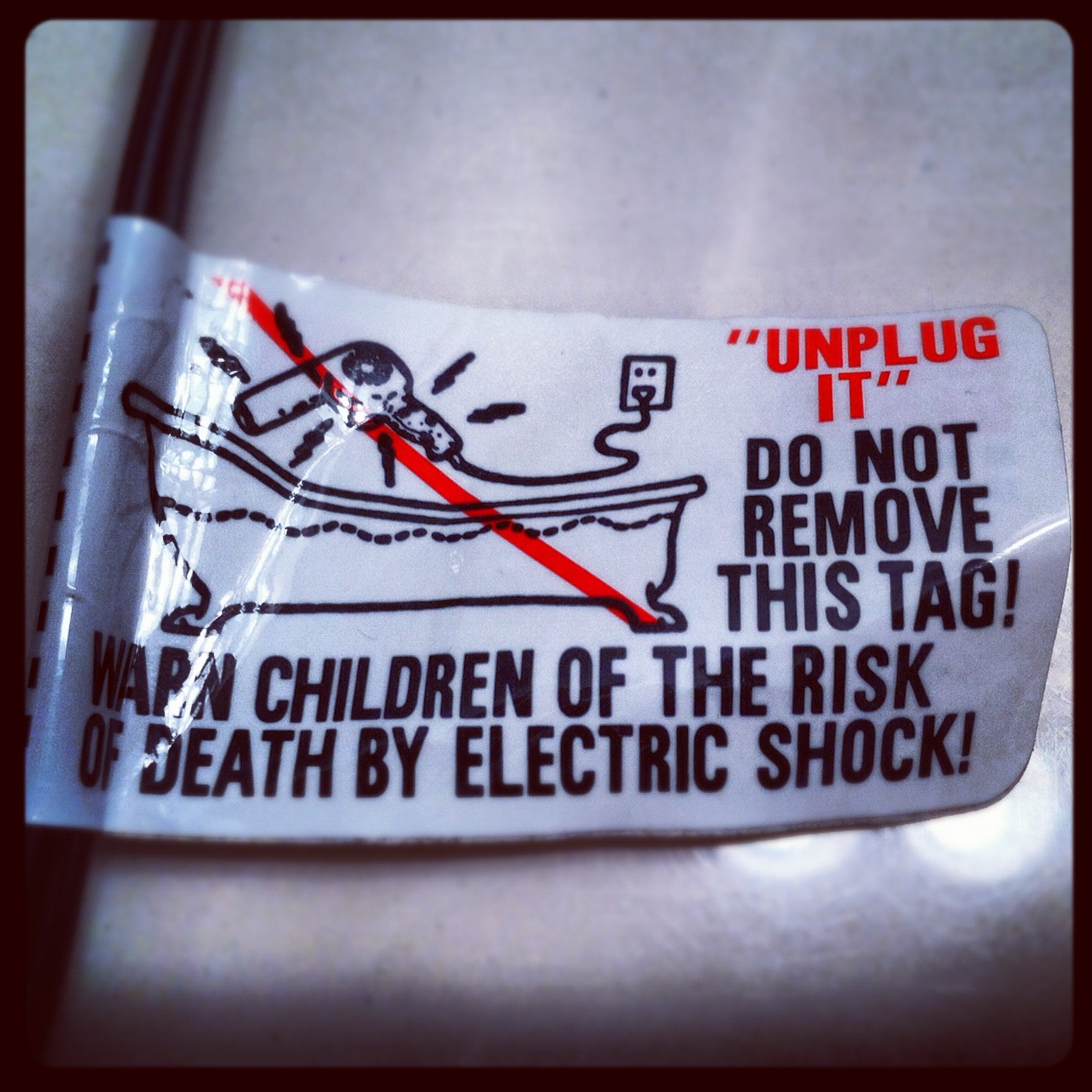
Warning Labels

They come on all kinds of things, from blow dryers to toasters, from heating pads to pillows – they are “warning labels”. They are put on these items to, well, warn us!

They are warning us to be cautious! They are warning us that we should not do something! And they are warning us that if we do something, then there will be consequences for our actions.

Solomon’s Warning

I am pretty sure that if Solomon could have, then he would have taken a small piece of scroll and taped it to this verse as a warning label for us. He is telling us that if we don’t work hard or if we are lazy, then there will be consequences for our actions! And those consequences will be that we will be poor.

It really is that simple – be diligent and have riches – be lazy and become poor.

As Christians, we should be the hardest working people that our bosses have working for them. No matter where we work, we should work at it with all our might. I Corinthians 10:31 says, “Whether therefore ye eat, or drink, or whatsoever ye do, do all to the glory of God”.

Conclusion

Poor or rich, the choice is yours! It is a choice that we must make every single day. The man who works hard at his profession or other duties will be rich, but the man who is a lazy, or sluggard, will be poor. It is up to you!

Lord, help us to make the choice every day to be diligent workers for not only our bosses, but for You! Help us in all we do, to do it for the glory of You!


Hungry for Grace

Proverbs 10:3

“The LORD will not suffer the soul of the righteous to famish: but he casteth away the substance of the wicked.”

Unlike Matthew Henry, Charles Spurgeon, Shakespeare, or David Welford, I occasionally have a hard time with words. This is one of those times.

There is so much that can be said about this verse, Proverbs 10:3, but it really all comes down to a few observations.

First. Treasures of wickedness profit nothing…” (Proverbs 10:2). In order to better understand verse three, we can’t drag it far from verse two. There the idea is that money is worthless when it comes to buying life. Only righteousness delivers from death.

Second. A hungry soul cannot be satisfied with money, nor with anything else the wicked can produce. As a matter of fact, the only soul with any hope is the righteous one. “The LORD will not let the godly go hungry, but he refuses to satisfy the craving of the wicked” (Prov. 10:3 NLT).

Third. The wicked soul will always feel hungry. Some will even try to buy food for their soul, but God will only throw out their offer.

At this point I can’t help but remember the words of a Bruce Springsteen song, Hungry Heart. Remember these words?

“Everybody’s got a hungry heart
Everybody’s got a hungry heart
Lay down your money and you play your part
Everybody’s got a hungry heart.”

Grace. More than anything, it’s all about grace. God offers peace, rest, and nourishment for the soul that depends on Him. He doesn’t sell that peace, but offers it freely. If you try to buy it, He will just turn you away.

That reminds me of the words to another song…

“Rock of Ages, cleft for me
Let me hide myself in Thee…
Nothing in my hands I bring,
Simply to Thy cross I cling…”

Better Fruit

Proverbs 8:18-19

“Riches and honour are with me; yea, durable riches and righteousness. My fruit is better than gold, yea, than fine gold; and my revenue than choice silver.”
A Tear

As I was reaching up to type these words, I wiped a tear from the table in front of me. The odd thing about it was that I had to stop and think what it was. Evidently, it had been a while since I last saw one drop.

I am sure there will be more. And really, that’s a good thing.

Tears are valuable. They teach what happiness and indulgence never can. They teach us that we are weak, that we break, and that we are incapable of fixing everything, if anything.

They tell us we’re dependent on God. And really, that’s a good thing.

A Better Fruit

To many, a fallen tear on one’s table is nothing more than a drop of water. However, to the Christian, the one who loves Wisdom, it is a glistening jewel-like seed, the fruit of which far surpasses the earnings of any other investment.

The “durable riches and righteousness” of wisdom are far better than the rarest currencies on Earth. What grows from the tears of a humble heart cannot be purchased with all the money in the world.

“Riches I heed not, nor man’s empty praise,
Thou mine Inheritance, now and always:
Thou and Thou only, first in my heart,
High King of Heaven, my Treasure Thou art.”

And God shall wipe away all tears from their eyes; and there shall be no more death, neither sorrow, nor crying, neither shall there be any more pain: for the former things are passed away. – Rev 21:4

071112


Fine Linen

Proverbs 31:24

“She maketh fine linen, and selleth it; and delivereth girdles unto the merchant.”

Here, in this description of a virtuous, priceless woman, we see further proof that a woman is not limited to domestic work. Although she takes care of her household, she is industrious and business-minded. She makes a product she’s proud of and not afraid to stake her family’s reputation.

Notice here, too, that she is not only a hard worker, but she knows how to make use of her time. Instead of working for every dollar (or whatever currency she uses), she lets her money work for her. Instead of setting up a stand beside the road to sell her wares, she makes her product available to be sold by a merchant.

Personally, I believe there is a little bit of cleverness in the last part of this verse. She makes a product and sells it, but she “delivereth girdles unto the merchant.” It could be that she is just making a delivery, but it might be possible that she is greasing the skids of business. She gives the merchant something special for selling her product.

A wise woman, good in business and full of virtue, is obviously going to be one that is concerned with quality and the way others in the market are treated. By following her example, men and women alike would earn a better reputation and further the cause of the faith (see 1 Timothy 3:7).


The Best-Dressed Family

Proverbs 31:21

“She is not afraid of the snow for her household: for all her household are clothed with scarlet.”

The Best

This proverb is about a mother, a wife, a woman who is not afraid of the weather forecast, for she has already made plans for the cold. But even more, it’s about a proud (in a good sense) and resourceful mother who cares enough to clothe her family with the highest quality garments.

Most people are unfamiliar with with how costly the colors scarlet and purple were back in biblical times. They are also typically unaware of the quality of garments treated with these dyes. Without going into too much detail, just to put things in perspective, to dye a shirt purple back in those days could cost the equivalent of $1,000 in today’s money. The rarity of true purple dye, the kind used for royalty, is hard for the modern mind to comprehend.

And what’s more, the dye that was used was known to preserve garments. It is reported that when Alexander the Great rode into Susa, he was presented with a scarlet robe found in one of the palaces. It was said to have been hundreds of years old, yet in perfect condition due to the preserving qualities of the dye.

She Cared

Maybe it would help if we considered what a Proverbs 31 woman is NOT. The anti-thesis of the woman in this proverb could care less how her family looks in public. She would buy the cheapest quality, even though she had money to do otherwise. She would let the kids dress themselves without concerning herself about rain, snow, or the looks of others. Essentially, she could care less about her own appearance, so why bother with her family.

I’ll never forget how my wife, when buying shoes for our children, would take them to a quality shoe store. She used to say, “I know they’re expensive, but good shoes are better for their feet…and better shoes last longer.” She invested in our children’s health. Or, as a certain greeting card company would say, she cared enough to give the best.

The Best You Have

Now, not everyone can afford “the best.” To be the best wife does not mean one has to be the richest or most stylish. The virtuous woman does not have to have access to the highest quality money can buy.

However, a good woman cares about her family, not only in how they are prepared, but how others see them. She understands that how her household is dressed is not only a reflection on herself, but on her husband as well. She does her best to send the message that her household is one that not only takes care of each other, but does it with style.

After all, a good wife is better than a queen, so why not dress her children like royalty?


A Spicy Ship

Proverbs 31:10, 14

“Who can find a virtuous woman? for her price is far above rubies. … She is like the merchants’ ships; she bringeth her food from afar.”

Being Careful

I must be careful, for anytime a man writes about his wife he should first consider: what he is about to say…the weather…her mood…her future mood…whether or not she will ever read what he writes…what people will tell her he wrote…and most importantly, has she taken out any new life insurance policies?

King Lemuel was a very fortunate man, much like king Solomon. Both had the luxury of living in a culture that prized such things as goats, flocks of sheep, and merchant’s ships. They thought these things were beautiful and found no difficulty in comparing their wives to them. However, I must be careful when I compare my wife to a heavily-laden wooden hull that creaks, leaks, and has to be patched with tar. I’m better off comparing her hair to a flock of goats, and her teeth to a flock of sheep (Sgs. 4:1-2)!

However, in order to keep with the program, I must find a way to relate to Proverbs 31:14, to share my “thoughts,” and to make application. Therefore, I will get to the point of what the passage is telling us, before I get into trouble.

Spiced Up

The rare and virtuous woman of Proverbs 31 is like the merchant’s ships in that she is always a source of variety. Instead of being content with the same old stuff day after day, this woman is like a merchant’s ship, one that goes out far and wide to find new spices, new colors, and new fragrances to adorn not only herself, but to spice up her home.

Most people know how plain and dreary a man’s home can be without a good woman. I was always one who liked white walls, plain dishes, and simple clothes. But when my wife came along, up went color on the walls, color on the table, and color on me (I would have never worn anything but a white or blue shirt under a suit).

Bargains

The woman of this verse is also a bargain shopper. Like the merchant’s ship, she travels far and wide to find the best deals, the ones most advantageous to her family, and always comes back with something to show for her efforts.

Anyone who really knows me could tell you that I hate – I HATE – to negotiate on prices. On the other hand, my wife almost never pays full price for anything. I have literally witnessed her negotiate on an object at a rummage sale when the asking price was only 25 cents! My response was, “Valerie! Pay the man a quarter and let’s go!”

Variety is the spice of life, so they say. If that is true, a good woman brings plenty of flavor to the table.


An Excellent Prayer

Proverbs 30:7-9 

Two things have I required of thee; deny me them not before I die: Remove far from me vanity and lies: give me neither poverty nor riches; feed me with food convenient for me: Lest I be full, and deny thee, and say, Who is the Lord? or lest I be poor, and steal, and take the name of my God in vain. 
“Two things I ask of you, Lord; do not refuse me before I die: Keep falsehood and lies far from me; give me neither poverty nor riches, but give me only my daily bread. Otherwise, I may have too much and disown you 
and say, ‘Who is the Lord?’
Or I may become poor and steal, and so dishonor the name of my God. (NIV)

Matthew Henry noted the similarity between these verses and the Lord’s Prayer in respect of ‘lead us not into temptation’ (Matthew 6:13) and ‘give us today our daily bread’ (Matthew 6:11). While it is easy to see that giving into temptation is going to damage our relationship with God (and possibly family, friends, colleagues, etc.) the problems associated with wealth are less visible, especially to the wealthy. When a rich young man wanted to follow Jesus he was instructed to sell all that he had and give what he raised through his high class garage sale to the poor. The rich young man couldn’t part with his money and lifestyle. Consequently he walked away from Jesus and the greatest opportunity he had ever been given.

The whole wealth thing troubles me. I have never aspired to be a wealthy man, and there have been times when I have struggled financially. There have also been times when I have not struggled. But if I look back on my life so far I could honestly say that without having prayed that God give me neither poverty nor riches, that is exactly what He has done. There have been exceptionally good times, and there have been exceptionally difficult times, but I have never gone hungry like many others in this world, or been in a position where I have had to consider stealing just to survive. I’m not sure how I would react if it was the only way to feed my family. One thing I do know is that this proverb is an excellent prayer, so good that Jesus included its words in the prayer He gave His followers:

“Our Father in heaven, hallowed be your name, your kingdom come, your will be done, on earth as it is in heaven. Give us today our daily bread. And forgive us our debts, as we also have forgiven our debtors. And lead us not into temptation, but deliver us from the evil one.” (Matthew 6:9-13 NIV)