Mr. Mischief

Proverbs 10:23

“It is as sport to a fool to do mischief: but a man of understanding hath wisdom.”

Sporting Excellence

My children love sport. They have all worked hard in their time to gain places on school and other teams, and one made it to county level in rugby. A certain amount of dedication is required to achieve high standards in sport. There are many training sessions to attend if players are to have a chance of making the team. There is also a significant parental contribution in terms of driving children to and from training sessions and matches. Although providing transport is part of parenting, I have always welcomed the opportunity to watch my children playing sport.

The Sport of Mischief

It is an interesting concept to consider mischief (described as evil conduct in the NIV) to be a sport, particularly given the amount of effort required to compete effectively in any sport. If mischief were a sport then would it feature at the Olympic Games? The fact that mischief did not show its face at the recent London Olympics is more than certainly due to the wisdom shown in the security measures taken prior to and during the Olympics. The threat of mischief was ever present, but the Games passed virtually without incident, because the authorities were prepared, and despite being badly let down by the security guarding contractor.

The Wisdom of Understanding

If a man or woman of understanding has wisdom then that wisdom needs to be used, especially when it comes to fools making mischief. Wisdom requires us to understand that there is a threat, and to acknowledge the risk from those who treat mischief as a sport. We will find them in our schools and colleges, in our workplaces, and in our churches. Scripture warns us to be alert.

Be alert and of sober mind. Your enemy the devil prowls around like a roaring lion looking for someone to devour. (1 Peter 5:8 NIV)

And I will keep on doing what I am doing in order to cut the ground from under those who want an opportunity to be considered equal with us in the things they boast about. For such people are false apostles, deceitful workers, masquerading as apostles of Christ. And no wonder, for Satan himself masquerades as an angel of light. It is not surprising, then, if his servants also masquerade as servants of righteousness. Their end will be what their actions deserve. (2 Corinthians 11:12-15 NIV)


Richly Blessed

Proverbs 10:22 

“The blessing of the LORD, it maketh rich, and he addeth no sorrow with it.”
Getting Rich

You can turn on the television any time of the day or night and hear things like…

  • “Call right now and I will send you a free brochure detailing how you can learn to give me money to learn how to become wealthy like me!”
  • “For a limited time only, you can receive my secret for success for only $199.95!”
  • “Sow a $1000 seed of faith into this ministry, and God promises to bless you ten-fold, show you favor, and magically replace the tires on your Buick.”

Then there are other commercials on television, along with ads of all kinds, that promote the “fun” of gambling…

  • “Somebody’s gonna win – it might as well be you!”
  • “If you love excitement and fun and joy and all that stuff, nothing beats the fun of thinking you may become a millionaire as soon as you scratch the silver stuff off a paper card!”

Everybody wants to “get rich quick.” Nobody wants to have to work for it. Everybody wants to get lucky in Vegas.

Going Broke

The sad truth is that so many people who become wealthy over night turn right around and lose it all. Many who become millionaires in an instant go bankrupt almost as fast. The result is depression, loss, rejection, desperation, and even suicide.

Jesus posed a question in Mark 8:36.  He asked, “What good is it to gain the whole world and still lose your own soul?” Even when you have it all, you can still be completely broke, even destitute.

Richly Blessed

Some of the happiest people in the world are the poorest. I have seen people in the poorest parts of eastern Europe who had more joy and peace than the richest millionaires in Hollywood or New York. The reason is that many of the poor were believers in Christ, and in Him they were blessed. They were rich in mercy and love. They had all they needed, and they were content with what God gave them.

On the other hand, I have known the rich who always wanted more and were never happy.  Their wealth added sorrow upon sorrow. They knew nothing of the “blessing of the LORD.”

Being richly blessed by God doesn’t always involve being wealthy, but it does include what money can’t buy – the ability to enjoy what one has without regret, or sorrow.

A Prayer

Jesus, thank your for your blessings. Help us to focus not on the passing wealth of this world, but the treasures laid up above. You know what is best for us, so help us to trust you. Remind us that seeking anything outside your plan will only result in added sorrow.


Balanced Diet Needed

Proverbs 10:21

“The lips of the righteous feed many: but fools die for want of wisdom.”

Food for Thought

Think back 300 years. (I know, we all remember that time so well having all been there, but humor me.)

How many times did you hear about church scandals: pastors sexually abusing children; pastors sexually abusing men; pastors sexually abusing women; pastors squandering money on houses, cars, glass buildings, prostitutes, or televisions?

Sure, there was the occasional story of abuse, over-indulgence, and prostitution, but was it as rampant as today? If it was, it was never reported. For the most part, the clergy were serious, pious, devout men, many of whom preached more about hell than having one’s “best life now.”

Today, we can barely go a full week without hearing about some pastor or Christian leader caught in some scandal.

Why?

It would seem our world is going down in morals, over all, not just within the Church. What has happened?

“For the time will come when they will not endure sound doctrine; but after their own lusts shall they heap to themselves teachers, having itching ears; And they shall turn away their ears from the truth, and shall be turned unto fables.” – 2 Timothy 4:3-4

Does this passage describe us?

Many church leaders preach a message people want to hear, not necessarily what they need to hear. But what has happened to those leaders? More and more often they are still trapped within or fall into sin, sometimes worse than many in the world.

Perhaps you have seen the rise in people leaving churches, moving between churches, or simply leaving Christianity altogether?

Why?

Like a hungry person wants some warm solid food, the spirit longs for words of truth and wisdom.

A good preacher teaches the truth of the Bible: that humans are sinful and in need of a Savior, that we need to live for God to have any real and good life (though we may receive pain and suffering for our faith).

Many teachers today preach: happiness, financial prosperity, “all people are basically good,” you can have it all, and/or all things are permissible.

A diet of only cookies will kill you before too long. A balanced diet will give you long life.

Messages preaching only goodness and cheer will lead you to destruction. Reproof and grace will lead you to everlasting life.

Father, give us ears to hear and hearts that yearn for truth. Strengthen our spirits with Your Word. Nourish us with Your guidance. Help us to endure the trials You send to strengthen, and help us hear when You correct us.


Pricey Tongue, Worthless Heart

Proverbs 10:20

“The tongue of the just is as choice silver: the heart of the wicked is little worth.”
Contrast

When we look at this verse, it is important for us to remember that there is a comparison/contrast being made. An “opposite parallelism” is being used to make a point that one thing is valuable, while another is worthless.

In this case, it is easy to notice that Solomon is contrasting “the tongue of the just” with “the heart of the wicked.” The tongue of the just person (the words that he speaks) is something beautiful and of great value, while the wicked man’s heart is just the opposite. But if we were to look a little deeper, there is more than meets the eye, or first impressions.

The Heart

What is really being contrasted are the hearts of both the wicked and the just. You see, what comes out of a person’s mouth is directly related to what’s in his heart. Proverbs 16:23 says, “The heart of the wise teacheth his mouth, and addeth learning to his lips.” In the book of James (3:11) we read, “Doth a fountain send forth at the same place sweet water and bitter?”

Essentially, you can tell what is in a person’s heart by what comes out of his mouth. Jesus said, “It’s not what goes into your mouth that defiles you; you are defiled by the words that come out of your mouth.” – Matthew 15:11 (NLT)

Do you like to tell dirty jokes? Then there must be lust in your heart. Do you always talk hateful? Then there is hatred (and maybe murder – see Matthew 5:21-22) in your heart. Do you ever talk about God? About Jesus? About your love for Him? If not, maybe He’s not in there.

On Display

Do your realize that your heart is on display? No, I don’t mean that your chest cavity is transparent, nor do I mean that everyone can see your bloody, beating heart muscle. That’s sick!

What I do mean to say is that there is no hiding what is in your heart; because your words, the words from your mouth, tell the whole story.

Maybe we should listen to ourselves. Maybe we should ask others to tell us what they hear. Maybe we should be like King David and pray this prayer…

“Let the words of my mouth, and the meditation of my heart, be acceptable in thy sight, O LORD, my strength, and my redeemer.”– Psalm 19:14


Be Quiet

Proverbs 10:19

“In the multitude of words there wanteth not sin: but he that refraineth his lips is wise.”

Shut Up!

This proverb can be summarized in just two words. “Shut up!” Or more politely, “Be quiet.” The New Living Translation puts it this way:

Too much talk leads to sin. Be sensible and keep your mouth shut.

How often do we say something to another person and wish that we hadn’t? Once spoken words are hard to take back, especially when they cause hurt. A word spoken in an angry moment can do significant and lasting damage. We need to be careful with our words. Sometimes it is wiser to say nothing.

Build up or tear down?

We can build or destroy both relationships and reputations by the way that we speak and the words that we use. But what about our own reputations? Are we known as being of few words or many? Are we prone to gossip, or are we people others can talk to in confidence? Surely it is better to excel at listening, rather than being known as a person who never stops talking?

Words of life

Jesus was an expert at knowing when to speak and when to listen. He provides an example in John 8 when the Pharisees try to trap Him into saying the wrong thing. Instead of responding immediately Jesus writes in the sand with His finger. When He does reply His words are so powerfully challenging that one by one the Pharisees turn and leave. Jesus knew that His chances of changing the way that the Pharisees thought was slim, so why waste words on them? Instead He chose His words carefully and a difficult situation was defused. The words that Jesus then used to the woman the Pharisees had accused were words of life.

We all have the same opportunity to build up or tear down. Do our words bring trouble, or can we follow the example set by Jesus and offer words of life to a hurting, damaged, and increasingly desperate world?


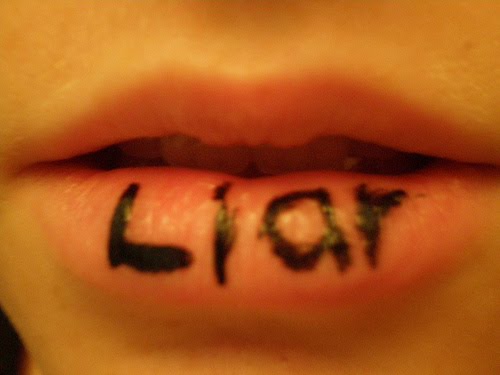
Lying Lips

Proverbs 10:18

“He that hideth hatred with lying lips, and he that uttereth a slander, is a fool.”

In this proverb of Solomon (10:1), he joins together two actions related to the tongue which at first blush appear to be opposites, and yet paradoxically, the two actions produce the same outcome!  Let’s look more closely.

A PARADOX

In the first instance, he draws to our attention the one who “hideth hatred with lying lips.”  In other words, his lips are moving, but the words pouring forth from his mouth conceal the hatred and loathing in the heart.

Perhaps you’ve caught yourself exchanging Monday-morning pleasantries with a co-worker, chatting harmlessly about the activities of the recent weekend… on the outside you present the image of the nicest guy in the office, but on the inside, you hate the co-worker’s guts!  You are speaking, but your speech is not consistent with your heart.

In the second instance, he speaks of a different sort of person entirely – one whose mouth spews venomous slander.  To return to the example of Monday morning in the office, this is the co-worker who verbally “runs down” everyone and everything, especially attacking the actions and motivations of others, casting others into a negative light.

The polite person with the hateful heart, and the hateful person gushing poisonous slander – they’re entirely different, right?  No, says Solomon, they are surprisingly similar.  Both are morally deficient – fools, in fact.

THE POINT OF THE PROVERB

Listen up, because this is key.  The “jab” of this proverb lies in the first half.  It speaks to those of us who have been trained to “be polite,” when our outer friendliness is a mask of hypocrisy.  Jesus reserves his harshest condemnation for people who pretend to be something on the outside, but have murder within (and yes, according to Jesus, hatred is the moral equivalent of murder – Matthew 5:21-22).  It is so easy to identify – and condemn – the slanderer.

As a pastor, I can say without question that slander is one of the most destructive sins that can strike a congregation.  But at least with the slanderer, you know what you’ve got. How much more deceptive, subtle, and evil is the Pharisaic hypocrisy of hiding hatred with lying lips.

SIMPLICITY OF SPEECH

The proverb calls us to simplicity of speech.  Say what you mean, and mean what you say.  As the Master said, “Let your ‘yes’ be ‘yes,’ and your ‘no,’ ‘no’; anything beyond this comes from the evil one” (Matthew 6:37).  And no, that’s not a free pass to tell people off!  As Jesus-Followers, we “speak the truth in love” to one another (Ephesians 4:15).

Father God, grant us simplicity of speech coming from hearts full of the love of Christ.  Forgive us our sins of the tongue, we ask, for the sake of Thy dear Son, Christ our Lord, in whose Name we pray:  Amen. 


Grow from Instruction

Proverbs 10:17

“He is in the way of life that keepeth instruction: but he that refuseth reproof erreth.”

Customer Service

I worked in some capacity of customer service in the retail world for nearly a decade. I am pretty good at it, because I so enjoy interacting with people.

While the height of customer service is keeping people happy, I must admit to times I did not want to live by that standard (and must confess to not always upholding that standard, but I also know the saying “the customer is always right” was stated by fools!). Yet, I mostly did stick to making customers happy.

As an employee and an employer, I have worked with people of all ages who saw no point in making others happy.

You would think, after being corrected time and again, even being required to do the most mundane (and sometimes humiliating) tasks as punishment, would convince them to change, but no.

You would think losing hours and therefore money would convince them to change, but no.

You would think the threat of losing their jobs would convince them to change, but no.

They did not seem to care about others, or for anything.

Painful Growth

Those of us who persevered and kept our jobs (usually until we moved on to something else!), as I confessed above, had our own share of mistakes and problems. There are two main differences between us and those who refused to listen:

  1. We would not complain about how unfair everything was, but more importantly,
  2. When corrected, we sought to change wrong or ignorant behavior.

Nobody likes to hear they have messed up. Nobody likes to be told they are wrong. It hurts our feelings. It hurts our pride.

But we grow from that experience and pain.

It is the same in our walk with God.

God does not call us to leave behind our desires, our wants, and our sins to hurt us, though it does hurt when we leave them. God call us because He knows that when we persevere through the pain we prove we are truly His.

“Ye have not yet resisted unto blood, striving against sin. (5) And ye have forgotten the exhortation which speaketh unto you as unto children, My son, despise not thou the chastening of the Lord, nor faint when thou art rebuked of him: (6) For whom the Lord loveth he chasteneth, and scourgeth every son whom he receiveth. … (11) Now no chastening for the present seemeth to be joyous, but grievous: nevertheless afterward it yieldeth the peaceable fruit of righteousness unto them which are exercised thereby.” – Hebrews 12:4-6, 11

Great God, thank You for Your rebukes and correction. Help us to be obedient, to love Your instruction. Keep us from the foolishness of refusing wisdom and Your will.


Could You Handle It?

Proverbs 10:16

“The labour of the righteous tendeth to life: the fruit of the wicked to sin.”

It’s Not About Money

There is a popular saying that has been around a long time. It goes, “Follow the money.” The idea is that if you want to know who’s behind something, or what’s at the root of something, then just follow the money trail – there you’ll find the answer.

But in reality, it’s not always just about money. Money is amoral. Money is neither good, nor evil. What people do with money has a lot to do with the heart of the person spending it.

It’s What You Do With It

Every once in a while a different translation can help to shed light on certain truths. You see, in verse sixteen it is not about the “labour” or the “fruit” as much as it is about the “righteous” and the “wicked.” Look at how the New Living Translation treats this passage…

The earnings of the godly enhance their lives, but evil people squander their money on sin. – Proverbs 10:16 NLT

The point of this proverb is to highlight the differences between the righteous and the wicked. The difference is that the same money, the same labor, can bring life, or it can be used to dig deeper into sin, but it all comes down to choice. What a person does with their money; what a person works for each week; these are outward indicators of the heart.

Ask Yourself this Question

If wealth was dropped into your lap tomorrow, how would you handle it? If you were to become a millionaire tomorrow, would it be the end of you, or the beginning? Either way, don’t blame or give credit to the money. The state of your heart, right now, is what would determine the outcome.

Are you poor? Could you handle wealth? If not, then you may have issues that are worse than an empty bank account.


Topsy-Turvy Teaching

Proverbs 10:15

“The rich man’s wealth is his strong city: the destruction of the poor is their poverty.”

The Rich and the Poor

It seems to me that wealth needs poverty to exist. In Western terms I am not wealthy, but I am not poor. But in the eyes of the poor, wherever they live, I am a billionaire. Why? Because they do not have what I have, and may see no way to achieve such relative wealth. Is it right that what I have is made possible because someone else has less? How much is too much? What do I need to keep and what should I give away?

Wise Investments

Whatever we have been given, we need to make sure that we invest it wisely. In the parable of the talents Jesus taught about two servants who invested wisely and one who did not. Burying what we have in the ground is not wise, and does not create a strong city! However, Jesus also watched as a poor widow put everything she had into the offertory box. Was that the sensible thing to do? Did it destroy the widow? We don’t know. The only thing we do know is that Jesus saw more in the poor widow than he saw in those with greater wealth. Immediately before Jesus pointed out the widow to his disciples He heavily criticized the richer teachers of the law. Jesus said that these people ‘devoured the houses of widows.’ In other words the wealth of the teachers of the law relied on the poverty of the widow, for whom they did absolutely nothing.

Good to be Rich?

While most of us are never going to excessively rich in monetary terms, we can be rich in wisdom, knowledge, and in our relationship with God. These three things should govern how we manage whatever wealth we have received. But the point here is that whether we consider ourselves rich or poor it really doesn’t matter. We enter this world with nothing and we leave in the same way. Far more important is what we do with what God has given us while we reside on Earth. Whether we are good or bad, rich or poor, God is watching us. He sees and hears everything. But He also looks deep inside to the riches or poverty within. Jesus said:

Blessed are the poor in spirit, for theirs is the kingdom of heaven. (Matthew 5:3 NIV)

Welcome to the topsy-turvy teaching of the Son of God. When we think we are rich, we are actually poor. But those who know they are poor have access to riches untold.


Saving Words

Proverbs 10:14

“Wise men lay up knowledge: but the mouth of the foolish is near destruction.”

A Penny Saved

I am not sure where the saying “A penny saved is a penny earned” originated. For the longest I was under the impression that Benjamin Franklin coined it (coined it – now that’s funny), but evidently it originated much earlier in the 17th century. That’s OK, though. Whoever “coined” the “penny saved” idiom, if not already dead, is probably too thrifty to sue over copyright infringement.

Nevertheless, the idea of the idiom is that not spending a penny is the same as saving a penny. And when you save a penny, you grow richer in pennies by the day. Too bad pennies aren’t even worth pennies any more. But I digress.

You may be wondering what saving pennies has to do with today’s verse. Well, like pennies, or dollars, or pounds, or whatever, a wise man knows not to use up all his words. He knows there is profit in saving his wisdom for the right time.

A Penny Wasted

Even though pennies are of little value these days, they do have some value. Save enough of them and you could eventually have some money on hand. The foolish man, however, fails to recognize how things add up, so he spends his words quicker than a child’s allowance in a game room.

This sorta reminds me of what my wife tells young children when they won’t stop talking. She says, “Don’t use up all your words.” Wisdom teaches us to use our words carefully, but a fool speaks until he’s proven bankrupt.

A penny saved is a penny earned, and a watched word is wisdom stored.

A Prayer

Lord, some of us love to talk. Help us to save our words instead of spending them all in one place.