
Muddied Water

Proverbs 25:26

“A righteous man falling down before the wicked is as a troubled fountain, and a corrupt spring.”
“A righteous man falling down before the wicked is as a troubled fountain, and a corrupt spring.” – NLT

Well Water

Years ago, when I was young (many years ago), we got all of our water from a well. Instead of “purified” city water, we had an electric pump that drew water from deep down inside the ground. The water was cold and sweet – and free.

However, the only problem with our well was that when it rained really hard, especially after the weather had been dry for a while, the water from the well would turn a muddy red. Runoff from the mountains would somehow find its way into the underground stream from which our water was drawn.

Red Rice

Once, when I was single, poor, and living on my own, all I had to eat one evening was some Uncle Ben’s white rice. That day it had come a hard rain, and as usual, the water was as red as Georgia clay. Since I had no fancy bottled water, the only option I had was to boil my rice in muddy water, which, as you can imagine, also turned my rice red.

I have had red beans and rice, but red rice, especially muddy-tasting red rice, is not particularly appetizing. It’s not something I would recommend.

Dirty Water

There is nothing more naturally refreshing to one who is thirsty than cold, clean, fresh spring water. And when it comes to those who are thirsty for clean, pure truth; for hope that sustains; for counsel that refreshes; there’s nothing more helpful than a word of wisdom offered by a righteous man of God.

However, a righteous man who has given in to the influence and pressures of the world “is as useless to society and as harmful to the good cause as a spring that has been defiled by mud stirred up or extraneous matter introduced is unserviceable for drinking and prejudicial to those who use it.”[1]

Be Careful

The saddest thing is that unless one knows the source of a spring, or unless one is able to determine the water’s purity, polluted water can go undetected until it is too late. Water doesn’t have to be visibly muddy to be unhealthy, or even deadly. Therefore, unless the source of wisdom is Wisdom himself, then the well must be suspect.

How many thirsty men and women, boys and girls, have been sickened by “polluted springs?” Even worse, how many of us have allowed ourselves to be polluted by sin, only to poison others?

The only water guaranteed to “spring up into everlasting life” comes from Jesus (John 4:14), and He said: “If any man thirst, let him come unto me, and drink” (John 7:37).

Don’t muddy the Water.


[1] H. D. M. Spence-Jones, ed., Proverbs, The Pulpit Commentary (London; New York: Funk & Wagnalls Company, 1909), 485.

Refreshing News

Proverbs 25:25

25 As cold waters to a thirsty soul, so is good news from a far country.

Tough Times

Nobody really likes war.

They are dangerous, costly in economically and physically, and it shows the violence and hatred within humanity.

As I write this, Syria has been in a major internal conflict, and chemical weapons may have played a role. Several countries have considered getting involved.

Fortunately, we heard recently that Russia is working with Syrian leaders to remove chemical weapons and perhaps ease tensions between the two sides.

While it is still playing out as of this moment, it is a relief to know we may not have to send our young men and women into danger and the Syrians may get a break from the bloodshed.

Refreshing Drink

If you have ever hiked a considerable distance in the heat, you appreciate a cold glass of water. As the verse today states, getting good news is like that, such as feeling the tension of a possible armed conflict and hearing it may have been averted. When your mind and body can relax after that much tension and adrenaline, it is so refreshing to drink in that kind of news.

May you do not need to imagine this, but imagine with me that you have lived a life full of troubles. You have had a string of bad relationship after bad relationship. You lost a loved one. Your finances never seem to meet all of your obligations and needs. You have been mistreated by loved ones. You struggle with trusting anybody.

You just want some rest and peace. You would love some water for your tired soul.

Jesus offers some good news. As He said to the Samaritan woman in John chapter 4 (NIV):

“Everyone who drinks this water will be thirsty again, 14 but whoever drinks the water I give them will never thirst. Indeed, the water I give them will become in them a spring of water welling up to eternal life.”

Drinking of the Holy Spirit, God coming into us by believing Jesus Christ is the Son of God who died for our sins, is only true refreshing we can get from the pain this world gives us.

As we trust Him, he fills our souls with Himself and releases and redeems our hurts and fears, giving us full rest. As He said elsewhere, 28 Come to me, all you who are weary and burdened, and I will give you rest. 29 Take my yoke upon you and learn from me, for I am gentle and humble in heart, and you will find rest for your souls.” (Matthew 11:28-29).

Lord Jesus, grant us Your peace and refresh our souls by Your Holy Spirit. Help us to trust You and to overcome our circumstances.


A Nagging Wife

Proverbs 25:24.

“It is better to dwell in the corner of the housetop, than with a brawling woman and in a wide house.” (KJV).

nagging wife

Which Would You Choose?

If you had a choice between living in a big house and living in the corner on a roof, which would you choose? I believe most people would choose to live in a nice big house. But as Solomon is wont to do, he puts a little twist in his Proverb and says that it’s actually better to live on the roof… if there’s a brawling woman in that house!

But – what does the word brawling mean? If you look at some of the other ways this word is translated in other versions of the Bible, it reads: quarrelsome, contentious, nagging, and bitter-tongued. In other words, Solomon is talking about a contentious wife who likes to fight, nag, and stir up strife. If that’s the case, you would be better off on the roof, out in the cold with the wind and rain. If you ask me, neither one of these options sounds like fun!

Application:

How then should we apply this Scripture verse to our lives?

To the single young men: If you plan on getting married one day, take the time to prayerfully think through the choice of a spouse. Next to giving your life to Jesus Christ, there is no more important decision you will ever make. One of the deepest, most profound thoughts on marriage is this one: “Happy wife, happy life.” It’s true! If you have a wife who is quarrelsome, contentious, nagging and bitter-tongued, you will be miserable. So take the time to get to know your prospective mate before saying “I do!”

To the married men: If you have a wife who is peaceable, then thank the good Lord above. You are blessed! Proverbs 18:22 says, “Find a good spouse, you find a good life – and even more: the favor of God!” (The Message). However, if you have a wife who tends to be contentious, then pray for her. Pray that the Lord Jesus would change her heart, and that she would have the fruit of the Spirit in her life – which includes peace, kindness and gentleness.

To the married women: If I can be so bold as to give you a piece of (Scriptural) advice: Don’t be a nag! If you criticize and complain to your husband all the time, then don’t be surprised if he wants to spend all of his time out in the garage with his tools, watching football with the guys or being anywhere but with you. It’s no fun being around a woman who fights all the time.

A Post Script: Now lest some of you conclude that the Bible is picking on the women here, know that there are many Scriptural admonitions to the husband as well: Husbands are commanded to love their wives as Christ loves the church (Eph. 5:25), to love her and never treat her harshly (Col 3:19), and to treat her with honour (1 Peter 3:7). The bottom line? If a wife will respect her husband, the husband will love his wife, and if the husband will love his wife, the wife will respect her husband (Eph. 5:33). Amen!


Foaming Angry

Proverbs 25:23

“The north wind driveth away rain: so doth an angry countenance a backbiting tongue.”

Which Is It?

This is one of those verses in the Bible that cause interpreters and writers of commentaries to scratch their heads. One puts it this way: “This little proverb is extraordinarily beset with problems.”* According to the scholars and biblical language experts, it is hard to determine what Solomon means, exactly.

You see, there are issues with the “north wind”: does the verb “driveth” really mean to “drive away” or to “bring?” The verb actually means to “bring forth, as with labor pains.” Either way makes the second part hard to interpret: does an angry look come because of a “backbiting tongue,” or does the indignant tongue make the “angry countenance” go away?

If the north wind drives a cold rain away, then the parallel is that an angry look should hush up a slandering tongue. However, if the north wind brings the rain, then a slandering, backbiting tongue causes angry looks. Which one is it?

My Interpretation

One day, a long time ago, I tried to help someone. With a humble, servant-like attitude I bent over backwards to accommodate this individual, even though I knew it was going to be difficult for me. Then, that very evening, I was informed of slander being spread about me – stories that I had done the complete opposite and actually refused to help the person in need.

The word in this verse translated “angry” means “to foam at the mouth, speaking of a camel…”** Dear reader, I am not super spiritual – I am still human – so when I heard of what was being said of me, well…let’s just say I’m glad the walls of my house are made of brick. You could say I was foaming-at-the-mouth angry.

However you choose to interpret Proverbs 25:23, backbiting and slander can cause serious problems. Talking about people behind their backs simultaneously drives away showers of blessing and brings in cold rains of sorrow.

Watch your tongue and the weather will be fine.

“Keep your tongue from evil and your lips from speaking deceit. Turn away from evil and do good; seek peace and pursue it.” – Psalms 34:13-14 ESV

Sources:

*Duane A. Garrett, Proverbs, Ecclesiastes, Song of Songs, vol. 14, The New American Commentary (Nashville: Broadman & Holman Publishers, 1993), 209.

**Wilhelm Gesenius and Samuel Prideaux Tregelles, Gesenius’ Hebrew and Chaldee Lexicon to the Old Testament Scriptures (Bellingham, WA: Logos Bible Software, 2003), 250.


Dealing with Enemies

Proverbs 25:21-22

If thine enemy be hungry, give him bread to eat; and if he be thirsty, give him water to drink: For thou shalt heap coals of fire upon his head, and the Lord shall reward thee.

There is a famous story from the First World War in which British and German soldiers left their trenches on Christmas Day 1914 and exchanged handshakes, Christmas greetings and presents, and even took part in games of soccer. Wikipedia records that this so-called ‘Christmas Truce’ took place in several locations across the Western Front, although fighting did continue elsewhere.

There must have been spirit-filled followers of Jesus in both armies. One could speculate that an awareness of the teaching of this passage of Scripture, which is repeated by Paul in the New Testament, may have prompted the Christmas Truce on the battlefields of Northern France. But perhaps it took place because warfare at that time retained an element of chivalry, that was subsequently lost as the war described as ‘the war to end all wars’ dragged on all the way to 1918 resulting in at least ten million deaths. Whatever the reason, the teaching of Scripture is clear: We are to love our enemies, even if it is not reciprocated. Although that may seem difficult, even impossible in a war footing, we cannot argue with the words of Jesus who said:

 “You have heard that it was said, ‘Love your neighbor and hate your enemy.’ But I tell you, love your enemies and pray for those who persecute you, that you may be children of your Father in heaven.” (Matthew 5:43-45 NIV)

If you are serving in the military then it is important to follow orders, but that does not remove the possibility of loving the enemy and proving that love through prayer. It is not an option, it is a requirement. The same requirement exists for all of us in the daily relationships we encounter as part of life. At school, at college, at work, in church, and in our neighborhoods, we are to be known as people who love others, whatever the cost. That’s what Jesus did, all the way to the cross.


Happy Songs Not Allowed

Proverbs 25:20

“As he that taketh away a garment in cold weather, and as vinegar upon nitre, so is he that singeth songs to an heavy heart.”

Country Songs

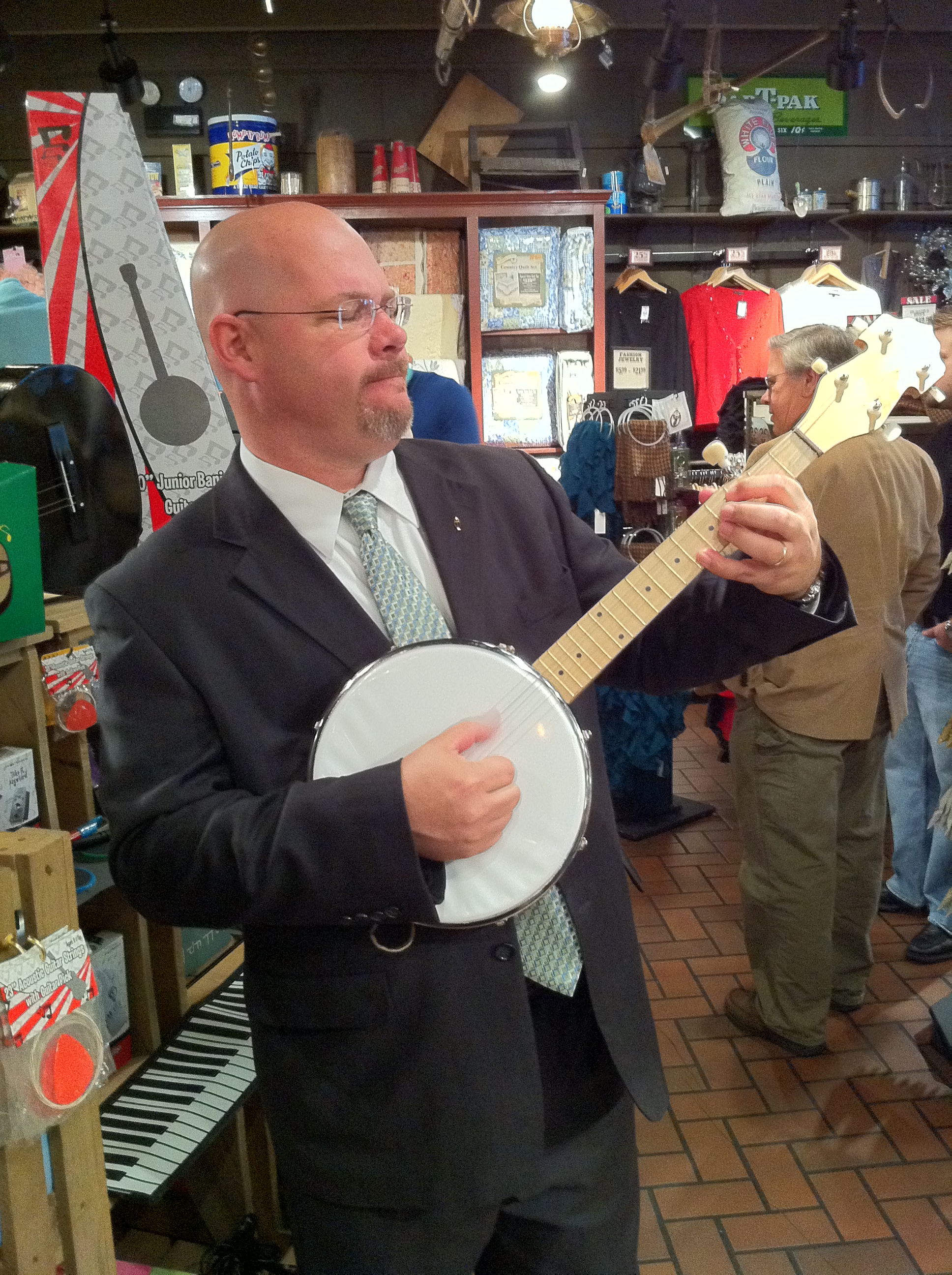
banjoConsidering how I was born and “raised” in Tennessee, I know a little about country music. Believe it or not, I have written a country song (to prove I could), played and recorded music in Nashville, and even toured Brenda Lee‘s house when I was a kid (I helped her daughters with a lemonade stand).

Country music (at least the stuff before Kid Rock) was earthy, blue-collar music that spoke of real life, or at least what was left of it after one spent too much time hunting, fishing, or drinking in a bar. The lyrics were usually sad, depressing, and great reasons to stay drunk. For example…

“Hunting Dear”

I came home late from hunting deer / My wife drank all my favorite beer / And then before the night was even done / My fishing poles were broke in two / And as she said, “I’m gone – we’re through / She took my dog, my truck, and my gun!

So I’ll walk down to the bar / I can stumble along that far / A country boy don’t need a cheetn’ girl / I’ll drink away my pain / Till my dog comes home again / Then we’ll both go out together…huntin’ dear.

– by Anthony Baker (just now)

Heavy Hearts

The reason why country music is so loved is the same reason the blues are so popular: heavy, broken hearts. Some say it’s impossible to really play the blues if you’ve never been heartbroken. I believe it.

I don’t know what version of country or blues Solomon had playing in his chariot, but he evidently understood that people with broken or heavy hearts hate to hear happy songs. He implied that playing cheerful music for a heavy heart is about as smart as taking one’s coat off in cold weather, or pouring vinegar on soda.

It’s Like This…

Imagine the feeling of already being chilled, but then having your coat taken away. It’s like going from bad to worse. When a person is down and depressed the last thing he really wants to hear at the moment is, “I am happy; you can be too!” Saying (or singing) that just makes the cold even colder.

The word nitre comes from the Hebrew word נֶתֶר (nether), which is what we would recognize, today, as carbonate of soda. Have you ever seen what happens when you pour vinegar on baking soda?  Not only does the soda become worthless for cleaning, but it will explode! That’s what can happen when a sad person hears a happy song.

Just Listen

In reality, besides listening to country music or the blues, the one with a heavy heart needs someone to listen, to nod a head, and be a friend. Singing a happy song to a hurting friend, although well-meaning, may seem like you don’t care, or worse, like you haven’t heard.

For we have not an high priest which cannot be touched with the feeling of our infirmities…” – Hebrews 4:15

Sometimes the best encouragement for a hurting friend or loved one is to cry along with them. That’s one reason why Jesus came.


Unnecessary Pain

Proverbs 25:19

19 Confidence in an unfaithful man in time of trouble is like a broken tooth, and a foot out of joint.

Hiking the Trails

I enjoy going on hiking and camping trips. I find them relaxing and refreshing.

Those long walks and getting away from it can be a relief to a weary mind and soul. Making simple meals over a fire (or out of a bag) is such a joy.

However, if I were to slip and twist my ankle, my hike would be more of a bother than a time of relaxation.

If I in my slip I fell and broke my tooth, my meals would be a time of anxiety rather than of joy.

A “friend”

On one trip into the wilderness with a college group, we had been out hiking and camping for three days. We had a great time.

On the hike out, a couple of the hikers grew quite tired and had run out water. One of our friends, who had decided at the last minute to join our group, did not even slow down to help. When all but those two were at the meeting point for almost half an hour, we got worried. The one mentioned seeing them, and then he started walking on ahead toward the exit.

He did not help us locate our friends, and he did not seem interested in helping in any other way, either. All he managed was to cause unnecessary pain through more grief and tension!

The Golden Rule

Followers of Jesus are expected to help others, for we may in fact be helping Him increase His Kingdom (Matthew 25:31-46).

What kind of friend are you?

If you see someone in need do you find out if you can help, or do you carry on your way with little thought about the matter?

Do bring relief or cause more pain?

“Which of you, if your son asks for bread, will give him a stone? 10 Or if he asks for a fish, will give him a snake? 11 If you, then, though you are evil, know how to give good gifts to your children, how much more will your Father in heaven give good gifts to those who ask him! 12 So in everything, do to others what you would have them do to you, for this sums up the Law and the Prophets. Matthew 7:9-12, NIV

Lord, help us to love as You love. Fill us with Your compassion and grace, that we may not cause unnecessary pain on others in their time of need. Help us to be Your faithful servants to this lost and hurting world.


Sticks and Stones

Proverbs 25:18.

“A man that beareth false witness against his neighbour is a maul, and a sword, and a sharp arrow.” (KJV).

Playground Lies:

Calvin & Hobbes - sticks and stones

Do you remember that old adage you used to repeat on the playground when someone called you names? “Sticks and stones may break my bones, but words will never hurt me.” Or there was the oh-so-smart, “I’m rubber, you’re glue. Whatever you say bounces off me and sticks to you.” As clever as those phrases may be, unfortunately, neither of them is true. Words hurt!

In today’s Proverb, Solomon teaches us about the power of words. In the New Living Translation of this Scripture, he says, “Telling lies about others is as harmful as hitting them with an ax, wounding them with a sword, or shooting them with a sharp arrow.” Words hurt!

Deep Wounds:

I’ll be honest. I would rather have someone punch me in the face than lie about me, gossip about me, or slander my name. If you punch me or kick me, I’ll get a bruise that will go away quickly. But words are wounds that go deep and have lasting repercussions.

I had a situation once where a person started telling all sorts of lies about me. He began gossiping about me to anyone who would listen. One of the first responses was that several people believed his lies, and they left the church. That was one of the external effects of his words. But internally, the words began to affect my heart as well.

I have always been a very positive and optimistic person. The glass is always half full, and I always believe the best about people. But as this person’s lies about me began to spread, I found myself getting overwhelmed emotionally by what he said. He was trashing my reputation, and ruining friendships that I had with people.

I started losing my joy, and his words started taking a physical toll on my body as well. I started having restless, sleepless nights. I started experiencing many migraine headaches, stomach problems, nausea, dizziness, fatigue and more. I started losing weight; I had little appetite, and had a hard time keeping anything down. I even had to take some stress leave from work – something I have never had to do before or since.

The point of today’s Scripture is simply this: Words are powerful! Think very carefully before you speak a negative word about someone else – whether it is true or false. Words hurt!

Check out this great 30 second ad that shows the power of words…


Get Out!

Proverbs 25:17

“Withdraw thy foot from thy neighbour’s house; lest he be weary of thee, and so hate thee.”

“Let’s Go to Bed…”

My mom and dad used to have some friends that we visited a lot. One time, after staying late watching television (we didn’t have one at the time), the man of the house stretched…yawned…then said to his wife:

“Honey, let’s go to bed so these people can go home.”

What a nice way to tell your friends to leave! Talk about shifting the blame, huh? It’s like saying: “These nice people feel obligated to stay here because we are awake. They must be tired of our company by now, so why not give them a way out?” In reality, it was a humorous way of telling someone “go home.”

Lingering Guests

Every once in a while people lose the ability to determine when a party is over. Some people, because of a host’s hospitality, feel they are more wanted, more part of the family, than they actually are. These people for get that the host has limited resources, both in food and patience.

Even those of us with close, intimate friends have times when we want to be alone. Good friends recognize this and are careful not to wear out their welcome. Selfish friends invite themselves over to ever family dinner, every game night, every outing, and never seem to get the message. When someone suggests going to bed so they can leave, they just say, “No problem, I’ll sleep on the couch.”

Loving others requires us to respect them, so be a good guest and a respectful friend. 


Trust Him, Honey

Proverbs 25:16

“Hast thou found honey? Eat so much as is sufficient for thee, lest thou be filled therewith, and vomit it.” 

Honey

Believe it or not, I have mixed emotions about honey. I love the flavor and everything about it, except the fact that it is made by insects. Just thinking about the legs and mouths of tiny little bugs preparing my food is creepy. But on the other hand, I try not to think about where milk comes from, either.

But wherever we get it, honey is a wonderful food. It is super sweet, yet healthy. It has anti-bacterial properties and can keep for a long time. It’s good for a quick pick-me-up, or to soothe a sore throat. It’s uses are many. Yet, even with honey, too much of a good thing can be a bad thing.

Sufficient

Western society has a problem knowing when to say, “no.” We eat far more than is sufficient for us, and our waste lines can prove it.

However, some people are starved for good things. Even simple pleasures like honey may be hard for some to get. Therefore, when they do manage to lay hold of them, they eat like there is no tomorrow. They eat until they get sick, which leads to vomiting. They eat more than what was sufficient to meet their need.

Faithless Waste

Why do we eat more than what is sufficient? Most of us overindulge because our bodies allow it. We have grown accustomed to eating more than is sufficient, so we normally have no food left before we reach the point of throwing up. But why do we do it?

Maybe fear (a lack of faith) has a lot to do with it. Like a dog starved of food will gulp down everything it is given in just a few bites, we sicken ourselves on good things like there is no tomorrow.

In Exodus sixteen we can read of how God gave the people of Israel manna in the wilderness. Yet, God told them only to collect enough for each day, and no more; the rest would spoil. There was no need to worry, for God was faithful. Could it be that we have no faith? Could it be that we have trained ourselves to take more than is sufficient because we don’t trust God to provide what is sufficient for tomorrow?

What a waste, especially since all the extra will end up on the ground.