Tag Archives: Wisdom

Proverbial Pretenders

Proverbs 13:7

“There is that maketh himself rich, yet [hath] nothing: [there is] that maketh himself poor, yet [hath] great riches.”

Pretenders

When you read this verse the first time, what did you think it meant? The first time I read it I thought it was talking about people who were rich, but had nothing of real value. I thought it was praising those who gave away everything to have riches in heaven. But that is not what this proverb is about. The word “maketh” has to do with appearances.

“One pretends to be rich, yet has nothing; another pretends to be poor, yet has great wealth.” – Proverbs 13:7 ESV

This proverb warns us about pretenders who appear to be something they are not. Some live extravagantly, yet have nothing. Others try to make everyone think they are penniless, yet they are loaded.

The Sad

Several years ago I had a relative who lived in one of the biggest houses in town, always drove a new car, wore the nicest clothes, and was responsible for the best gifts under the Christmas tree. Yet, when this person died, the truth came out: few things, if any, were not mortgaged, and credit card bills totaled in the hundreds of thousands. Nothing was what it seemed.

Not long ago there was a man named Walter Samaszko Jr. who was found in his Carson City, Nevada home a month after he actually died. Known as a recluse, he was the opposite of my relative. He didn’t try to impress; looking rich was the last thing Mr. Samaszko, 69, wanted to do. Yet, even though he left only $200 in the bank, hidden in his home were $7 million worth of gold bars. He could have used the gold to pay for a doctor.

The Sinister

This proverb is a warning to all of us who would make judgments based solely on outward appearances. It is a warning, not only because it is unwise to judge a person by his looks, but because we need to be wary of scammers and con-artists.

Some people are experts at taking advantage of others. This truth is comically portrayed in the 1988 movie Dirty Rotten Scoundrels, staring Steve Martin and Michael Caine. In this movie two con-artists, acting like men down on their luck, steal fortunes from compassionate, wealthy women. They “maketh” themselves poor (or rich, depending on the circumstance), yet take everything they want.

But real life is not funny. I have seen gypsies worth millions begging on the streets of eastern Europe. I have helped “needy” families with food and funds from our church’s stores, only to find out that the “needy” were only greedy. I have heard healthy men and women who refuse to work brag about “working the system” in order to obtain assistance meant for the poor and disabled.

Be warned, and don’t be like them.


Navigate Wisely

Proverbs 13:6

“Righteousness keepeth [him that is] upright in the way: but wickedness overthroweth the sinner.”

Choices

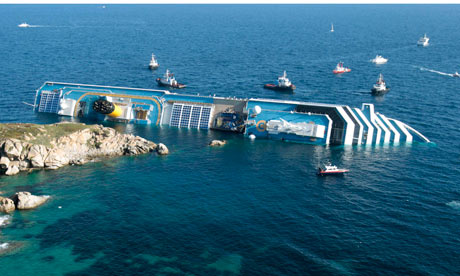
On the night of 13 January 2012 the captain of the cruise ship Costa Concordia chose to deviate from the agreed course for his ship to bring the ship close to the island of Isola del Giglio. He should have known better. The ship hit a reef. The hull was breached and the ship began to take on water, eventually listing to starboard and running completely aground. If the captain had chosen instead to remain on the right course the ship would have remained upright and lives would not have been lost.

Life presents us with many choices. From an early age we learn that some choices are better than others. Some choices make life easier, some make life more difficult. Some choices bring us praise, while other choices bring us trouble. The captain of the Costa Concordia may have thought that giving his passengers a treat by sailing close to shore would bring him praise. Instead it brought him trouble, and continues to do so.

Righteousness or Wickedness?

Righteousness is a word that is commonly associated with religion. It is defined by Merriam-Webster as ‘acting in accord with divine or moral law: free from guilt or sin.’ Deliberately seeking to be righteous in the way that we think, speak and live out our lives provides a level of protection against bad choices, defined in Proverbs 13:6 as ‘wickedness.’ The attraction of sin is sometimes overpowering and we need to be able to defend ourselves against the bad choices that mislead us and misdirect us. Make the wrong choice and it will eventually, if not immediately, cause us harm.

Which Way?

The Hebrew word for way used in this verse may be translated as a road, or a course as in the case of a ship. We are all on a journey. We are free to choose which road or course we follow, but to maintain the right course requires effort and commitment. For a ship’s officer it is necessary to make regular course adjustments to counter the effects of currents and wind. Course alterations may be required to avoid dangerous reefs and shallow water. It is essential to make frequent checks on the ship’s position to ensure that it is still on course.

A good navigator is always alert to dangers and will not sail too close to them. A good navigator aims to bring the ship safely home to harbor, not end up aground on some foreign reef.

Photo/news story: http://www.guardian.co.uk/commentisfree/2012/jan/15/costa-concordia-disaster-transport-titanic


Get a Job! Or 3 or 4!

Proverbs 13:4

“The soul of the sluggard desireth, and hath nothing: but the soul of the diligent shall be made fat.”

“I’m Gonna…”

I can’t tell you how many times I have heard people say, “I’m gonna (do this or that).” I have heard grand schemes, everything from opening a new business, to joining the military, to inventing a never-before-heard-of product that will revolutionize the world. Yet, nothing ever gets done.

The “sluggard” is a man or woman that is flat-out lazy. The word comes from the idea of calling a person a slug, or a snail. But at least a snail is usually on his way somewhere, albeit slowly. The sluggard does nothing but talk of plans in the works, but work is never seen.

Get a Job!

Just today I was talking with a mother of a grown man out of work. He constantly takes from her, then runs off until the money is gone. He abuses her property, never gives her respect, and tries to play “daddy” with a girl who is not his wife. And when it comes to work, he complains that he can’t find a job. Baloney…Hogwash…Cow feces!

I thank God for allowing my wife and I to hit rock bottom years ago. I went from making a large income to making nothing. Just to put food on the table and keep a roof over my family’s heads, I (and my wife) did everything from deliver news papers, to clean toilets in factories. I delivered pizza, worked on a dangerous assembly line, and even sold insurance. At one point I was working 3-4 jobs at one time!

You see, the lazy sluggard has big desires, but won’t take responsibility and work for it. The diligent will do whatever it takes.

Little Patience

Today’s proverb reminds me of how little patience I have for “sluggards.” In my opinion there is no excuse for someone to sit on his duff and whine about what he doesn’t have. A real man will work, even if it is not the type of work he prefers. It is his responsibility, especially if he has a family.

Some want to use the “system” as an excuse for laziness. Others want to blame the government or the “bourgeoisie.” But in reality, the only one to blame is the one who desires something, but does nothing honest to obtain it. Honest, hard work is the answer to a great deal of society’s woes.

“But, there are no good jobs!” you may say. Sorry, washing dishes is a job. Cleaning floors is a job. And, if you do both at the same time, along with getting tips from waiting tables, you can live without mooching off your mother.

But if any provide not for his own, and specially for those of his own house, he hath denied the faith, and is worse than an infidel.” – 1 Timothy 5:8

The sleep of a labouring man is sweet, whether he eat little or much: but the abundance of the rich will not suffer him to sleep.” – Ecclesiastes 5:12

Let him that stole steal no more: but rather let him labour, working with his hands the thing which is good, that he may have to give to him that needeth.” – Ephesians 4:28

Thus sayeth the Lord: “Get a job.”


Guard Your Mouth

Proverbs 13:3

“He that keepeth his mouth keepeth his life: [but] he that openeth wide his lips shall have destruction.”

Big Mouth

What can be said about this proverb that is not painfully obvious? Would it help if we read it in another translation?

The Holman (HCSB) puts it, “The one who guards his mouth protects his life; the one who opens his lips invites his own ruin.” The ESV says, “Whoever guards his mouth preserves his life; he who opens wide his lips comes to ruin.” I’d say the message is the same, wouldn’t you?

A big mouth will get you into serious trouble. It may even cost your life.

Loose Lips

There used to be a saying back in the 1940’s: “Loose lips sink ships.” During World War II enemy spies were known to make friends with the families of soldiers and sailors. Knowing the tendency for proud parents, spouses, and children to talk about letters from the front, the enemy would listen and take note.

Many times, without even knowing it, something was said that gave details of secret missions. Lives were lost when people said more than they should.

Sometimes people get into serious trouble because they can’t keep secrets. Some people say things they don’t mean to say. Some people open their big mouths without thinking, then destruction comes.

Post a Guard

If you have a tendency to say things you shouldn’t, you may need to erect some barriers, or even post a security guard in front of your mouth. You can never be too safe when you know you possess something so dangerous.

Look back at the proverb; it says, “he that keepeth..” That means “to put a guard around.” A wise man will have in place a guard – a mental guard – that checks his words before they cross his lips.

Guard:  Good evening, Mr. Word. Going out for a stroll, tonight?

Mr. Word:  Actually, Mr. Security Guard, it’s none of your business where I am going.

Guard:  Oh, most certainly it is! If you don’t provide a good reason for leaving the premises, I must ask you to return.

Mr. Word:  All right, then. I was about to tell my wife that dress looks better on the hanger than her.

Guard:  (Speaking into a radio microphone) I need backup, immediately  Get back sir! Get away from the gate! You are a danger to all of us!

A Real Danger

If you don’t think your words are worth guarding, consider what James said about the tongue…

“If you claim to be religious but don’t control your tongue, you are fooling yourself, and your religion is worthless.” – James 1:26 NLT

Now, consider the words of the Apostle Peter…

“For the Scriptures say, ‘If you want to enjoy life and see many happy days, keep your tongue from speaking evil and your lips from telling lies. Turn away from evil and do good. Search for peace, and work to maintain it.'” – 1 Peter 3:10-11 NLT

Be careful what you say.


Don’t Waste the Hunt

Proverbs 12:27 

“The slothful man roasteth not that which he took in hunting: but the substance of a diligent man is precious.”

Hunting

I am not a hunter. I am a gatherer.

Unlike some of my more outdoorsy friends and relatives, I am not much for going out and killing things, even for food. Don’t get me wrong, though, I have gone hunting in my younger years; it’s just not something I enjoy. I’d rather go to a restaurant and hunt down a steak.

The biggest gripe that I have with hunting, however, is having to dress the animals you kill in the field. If you don’t know what am talking about, that means gutting the animal that was just an hour before frolicking in the wilderness.

I do not enjoy the smell of blood in the morning, especially mixed with sweaty camouflage.

Wasted Kill

This proverb makes mention of a hunter, but the hunter is a lazy man, one so lazy that instead of preparing the slain animal for food, he just lets it spoil. What could have been food for his family and himself is allowed to rot and go to waste. That’s just wrong.

Some people kill just for sport, which I believe is unethical.

However, there are others who never kill anything, but they waste life, nevertheless. How sad is that?

Life is Precious

I believe that all life is precious, even the life of the animals used for food. It’s not that God gives deer and squirrel souls, but He is responsible for the life within them. After all, He was their Creator.

An ethical hunter knows this, and that is why the above proverb says, “but the substance of a diligent man is precious.” A lot goes into the hunt for game, including time, money, and skill. A wise man doesn’t waste what opportunity he has been given; he puts it to use.

The “Game” of Life

What is it that you have been working for all your life? What have you gone to school for, or practiced for? Was all of that for nothing? Did you hunt down time, only to let it lie there and rot in the forests of life?

Don’t waste the opportunities or talents God has given you. But more than that, don’t let go to waste the things for which you have hunted and caught. What a waste of life if you do.


All Hands On Deck!

Proverbs 12:24

“The hand of the diligent shall bear rule: but the slothful shall be under tribute.”

Hard Work Never Hurt Anyone!

Ever had a lazy day? Did you feel better afterwards? Perhaps you did. Perhaps you followed one lazy day with another. We are told that there are people in society who live like this. Certain elements of the media in the UK regularly feature stories of large lazy families who spend their lives doing nothing, apparently encouraged and supported by the welfare state. It is wrong to condemn those who may have to rely on welfare in difficult economic times, but it is hard to understand those individuals who just don’t want to work.

Working for God

Scripture tells us to do everything as if we were doing it for God (Colossians 3:23). This instruction should apply equally to every aspect of our daily lives whether we are at work, at home, at church, or socializing with friends, etc. Nowhere in Scripture are we told that laziness is acceptable. So why are there so many passengers in church?

All Hands on Deck

Think of church as a working ship. If the church is the body of Christ then there can be no passengers. We are called to work together for the advancement of God’s kingdom. If all we do is occupy a seat every Sunday morning then the warning about slothfulness contained in this proverb needs to be heeded. In a working ship there is no room for the slothful. Every person has a job. Every job is important. While the captain is ultimately in command he cannot sail without a crew. A ship needs watch-keeping officers and engineers, deckhands and catering staff. It is vital that the right skills are exercised in the correct places, and it is important that all members of the crew are diligent in their work. Is your church a working ship or a passenger liner where half the people on board are on permanent vacation?


Just Zip It

Proverbs 12:23

“A prudent man concealeth knowledge: but the heart of fools proclaimeth foolishness.”

My wife has an expression for the person whose mouth opens and gushes forth streams of idiocy which should have remained locked away in the reservoir of the heart.  She calls it, “a case of diarrhea of the mouth.”   Mark Twain must have had the same idea in mind when he famously quipped, “It is better to have people to think you a fool, than to open your mouth and remove all doubt.”

WHAT IS IT ABOUT US? 

What is it about us, that we think we have to speak even when we have nothing of value to say?  Is it that hearing the sound of our own voice makes us feel important?  Is it that we want to be perceived as intelligent, wise and knowledgeable, able to speak authoritatively concerning any and every subject?  Or is it that we are threatened by silence, as if we must fill the space between us and the others around us with words, lest a moment’s silence should become an awkward void?

A PERSONAL ISSUE FOR PREACHER-TYPES

I submit that the issue of Proverbs 12:23 is of tremendous significance for myself and my fellow “preacher-types.”  We are absolutely the worst when it comes to feeling obligated to fill the air with words.  I have just come away from a Sunday afternoon, pastoral visit with a senior citizen, a widow in my congregation.  She, like many women of her age and station in life, is lonely and doesn’t have company in her home very often.  Therefore when I visit, she enjoys the chance simply to chat away about loved ones, some of whom I know, most of whom I do not.  As she reminisced this afternoon, there was a moment in which I could hear my own voice, rising above hers, commenting on something she had just said.  Maybe I was simply trying to let her know that I was listening, that I was engaged in what she had to say.  But probably not.  It’s more likely that I just couldn’t stand being out-talked for even a few minutes.  I thought to myself, “If I were listening in on this conversation, I would conclude that guy (me!) is quite a jerk.”

IN THE PULPIT

Oh, and how about in the pulpit?!  I once had a seminary professor who warned my class that the greatest danger for preachers in the pulpit is that we’ll be tempted to say things that simply aren’t true—treating biblical principles as promises, projecting guaranteed outcomes, and so forth.  Is that anything other than “proclaiming foolishness”?  I had another seminary prof who often remarked, “Anyone who makes his living from his religion will eventually lose one or the other.”  How many “hireling” preachers have absolutely prostituted their faith in the pulpit, proclaiming foolishness, just to earn a paycheck?

ZIP IT UP

The proverb above tells us quite bluntly:  zip it up!  You don’t have to say everything you think. You don’t have to teach everything you know.  You don’t have to win every argument.  You don’t have to express every opinion.  You don’t have to weigh in on every debate.  If someone asks you for the time, you don’t have to lecture them in the craft of building a grandfather clock. It is far more prudent to keep a reservoir, a storehouse, of wisdom inside, from which you pull out treasures only when necessary (Matthew 13:52).  Knowing our propensity for gabbing when wisdom calls for silence, the great Peter Marshall prayed, “Great questions stand unanswered before us, and defy our best wisdom.  Though our ignorance is great, at least we know we do not know.  When we don’t know what to say, keep us quiet.”

WHAT A WISE MAN!

Twenty years ago I recall an elderly Presbyterian gentleman giving some tidbits of wisdom to me and several other young aspiring pastors.  He said, “Men, for your first year in ministry, at each meeting of Presbytery simply sit and do not say a word.  No matter how important the issue, no matter how heated the debate, no matter how much insight you might have about the subject, for your first year you are to say absolutely nothing on the floor of Presbytery.  After you have completed one year of silence, then you may make your first motion on the floor.  Your first motion should be, ‘I move that we break for coffee and doughnuts.’  Then the entire Presbytery will think of you, ‘What a wise man!’”


A wise old owl sat in an oak

The more he saw, the less he spoke

The less he spoke, the more he heard

Why aren’t we like that wise old bird?


  Father God:  Give us the grace of silence.  Through Christ our Lord:  Amen. 


A Lie With No Legs

Proverbs 12:19

“The lip of truth shall be established for ever: but a lying tongue is but for a moment.”

No Legs

There is evidently a saying that has been around for a while – a saying that I have never, ever used – “A lie has no legs.

I don’t usually talk about legs. I have two, but I rarely think about them. As a matter of fact, the only time I even consider my legs is when they don’t work. My left knee hurts, now that I’m thinking about it.

But this saying, “A lie has no legs,” is one that is worth thinking about. What exactly does it mean? Some say it means, “you can’t get away with a lie, because the truth will always come out.” Could that be what this verse is saying?

No Foundation

If we look at the first part of 12:19, what we see is truth being “established for ever.” The idea here is that truth is a firm, solid foundation; something that is stable. Truth is something on which other things can be built, because it’s not going anywhere.

On the other hand, a lying tongue is like a puff of air, or a cloud. It is there for a moment, but then vanishes. There’s nothing solid about it.

Floating Table

If anything, a lying tongue is a table suspended in mid-air. It is a table on which many people place their finest china and their prettiest flowers. It is where many invite guests for wonderfully elegant meals and social functions. It is where futures are planned and deals are made.

But it has no legs. It’s going to fall. And along with this floating table of lies will come crashing down all that was built upon it.

It may seem like time is standing still, but it isn’t. It may seem like those floating tables will never fall, but they will.

Build on the truth – it has legs.


Vision or Fantasy?

Proverbs 12:11

“He that tilleth his land shall be satisfied with bread: but he that followeth vain persons is void of understanding.”
Uh Oh

Hmmm. This is a proverb I usually avoid. Why? Because I have been labelled as a bit of a dreamer. Some have called me a visionary. That might sound great, but visionaries are often the one’s with ideas who never seen them through to completion! Who wants that?

Vision vs Fantasies

I guess there has to be a distinction between vision and fantasy. The Bible tells us that without vision the people perish. But how do we know that we have the right vision? Vision will give you food, and abundant food, it will also involve work – work for you to do.

But what if you are chasing the wrong vision? A man-made fantasy? Then there will be no pay of any real value. It will provide no sustenance. You will spend your days chasing one fantasy after another to try and find your fill, to make your million, and all to no avail.

Leaning on Webs

What about the times when we are pretty sure we have a God given vision and yet seem to be making no progress? Does that mean we are chasing fantasy? Don’t ask me! Go back to the source – ask God.

Have you stopped trusting in Him? Have you moved the goal posts? Cherish the vision He has given you. Work at it and never stop trusting.

“Such is the destiny of all who forget God;
    so perishes the hope of the godless.
What he trusts in is fragile;
    what he relies on is a spider’s web.
 He leans on his web, but it gives way;
    he clings to it, but it does not hold.” – Job 8:13-15 (NIV, edited)

Lean on God.


No Servant, No Problem

Proverbs 12:9

“[He that is] despised, and hath a servant, [is] better than he that honoureth himself, and lacketh bread.”

Better to be a nobody and yet have a servant
    than pretend to be somebody and have no food. – NIV

Nobody Has a Servant!

This proverb had me musing for a while. Not many people I know have servants these days, even the well known ones. But digging a bit deeper and flicking across the translations we find a few varieties. The essence remains the same, and ends up sounding a bit like “count your blessings.”

What do You Have?

When Moses first got acquainted with God it’s safe to say old Mo’ was a bit insecure. God reminds him of a few things and then asks Moses what he has in his hand. Moses looks and sees his staff. Nothing special there he thinks, after all it’s just a tool I use everyday. But maybe that’s the point?

We think so much about what we don’t have, about the ways we could be blessed, that we miss the obvious – the ways we have already been blessed.

The Pretender

And then we fall into the trap revealed in the second part of the proverb – we start to pretend. Pretend we are more than we are, we have more than we are, we like what we don’t, we value what we despise, but yet what we actually have is nothing.

Lord, help us to look not to what we don’t have, but instead to the things You have already given us, and in doing so give glory and gratitude to You.