
Author Archives: David

About David

Unknown's avatar
David: Half Scot, grew up in Guernsey and the UK. Lives in one of the most rural counties of the UK not far from the Welsh border. Former Merchant Navy officer and hydrographic surveyor. Self-employed risk management consultant from 1992 travelling globally to carry out risk and security audits, plus some loss adjusting. Now retired. Father of Nick who encouraged David to start blogging. Married to Marilyn for 47 years. Four other children in addition to Nick. Eleven grandchildren.

Do You Want a King?

Proverbs 28:16  

The prince that wanteth understanding is also a great oppressor: but he that hateth covetousness shall prolong his days.
A ruler with no understanding will oppress his people, but one who hates corruption will have a long life. (NLT)

When I typed the question ‘how many countries are there in the world?’ into Google I expected the answer to be around the 200 mark. One website provided more information than others naming dependent and disputed territories in the answer:

Since South Sudan became an independent state on 9 July 2011, there are now 195 independent sovereign states in the world (including disputed but defacto independent Taiwan), plus about 60 dependent areas, and five disputed territories, like Kosovo.

That makes 255. I grew up in the island of Guernsey, which is one of the dependent areas, being a Crown Dependency of the UK. Systems of government vary widely across the spectrum of states, dependent areas and disputed territories. One thing that seems common to all systems is the requirement for someone to be in charge. In Guernsey the Crown is represented by a Lieutenant Governor and a Bailiff. In the UK the Queen is a constitutional monarch who is represented in parliament by the Prime Minister.

The teaching in this proverb appears to be directed to monarchs, prime ministers, presidents, governors, and the like. We don’t have to look far in our world to discover that many of the leaders of the 255 nations and dependencies have either never heard this proverb, or have chosen to ignore it. In many countries, perhaps even our own, politics has become a system of power that enriches the incumbent politicians to the detriment of much of the remainder of the population. Perhaps that is why it was God’s preference for Israel not to be like other nations and be ruled by a king? When the prophet Samuel warned the people that a king would draft their sons into his army, and their daughters into his service, they ignored him. Even warnings of slavery to the king and taxation failed to change their minds (1 Samuel 8:10-20). The people’s response was; “Even so, we still want a king, we want to be like the nations around us.”

Isn’t that true for us too? We want to be like those around us? We forget that God calls us to be different. If we keep one foot in the world then we will be corrupted by it. If you think about it, what the world has to offer is a form of oppression. We don’t need a prince or a politician to oppress us, because the ways of the world will suck us in and keep us in servitude, oblivious to all that God has to offer. Do you want a king? Then you need to look beyond the world and the voices that try to drown out the gentle whisper of the true and incorruptible King.
If I Were a Rich Man

Proverbs 28:11 

The rich man is wise in his own conceit; but the poor that hath understanding searcheth him out.
Rich people may think they are wise, but a poor person with discernment can see right through them. (NLT)

Once again one of the richest men who ever lived is giving the rich a hammering. It seems likely that King Solomon would have encountered most of the richest people in his society, from home and abroad. The question is how many did he hold in high esteem? Not many it would seem if the number of proverbs criticizing the rich is taken as an indicator.

Why did Solomon think so badly of wealthy people? Actually, it is very easy to judge rich people. It seems that the media is constantly reporting on the tomfoolery of pop stars, movie stars, football (soccer) players, and other sports personalities, all of whom seem to have untold wealth when compared with the rest of the population. Most of us would say that it is also undeserved wealth, although in a way we have contributed to that wealth by purchasing music, watching movies, and by buying overpriced tickets for supposedly top-notch sports events.

The last time I took my two youngest children to a Premier League soccer match it cost me over £100 for tickets, travel, etc. I can’t say that I was particularly impressed with the performance of the players, although I always enjoy the atmosphere in the stadium. Sadly it seems that many of the young footballers in the UK Premier League are lacking in wisdom when not on the pitch, and wealth seems to play a huge part in this deficiency.

There are certain responsibilities attached to wealth, the most important being to use wealth wisely. Jesus spoke on the subject in the parable of the talents when surprisingly the servant who had been given the most demonstrated the greatest wisdom in his investments. There is a message in that parable for those of us who consider ourselves wealthy in spiritual terms. Such wealth is useless if it is not invested wisely. Jesus said: “Blessed are the poor in spirit, for theirs is the kingdom of heaven” (Matthew 5:3). Where is your wealth and how wisely is it invested and used? And in what ways are you poor, and how does this affect your perception?


From Riches to Rags

Proverbs 28:6 

Better is the poor that walketh in his uprightness, than he that is perverse in his ways, though he be rich.
Better to be poor and honest than to be dishonest and rich. (NLT)

There was once a vertically challenged tax collector who climbed into a tree to see over the heads of the crowd when a famous itinerant Teacher came to town. The gentleman in question was reasonably wealthy, but should not have been. Why not? Because he was a civil servant. He gained his wealth not through fair wages but by cheating the taxpayers of the town. Did he feel any discomfort or remorse about the way in which he accumulated his riches? Possibly not, but something drew him to a Teacher with no visible wealth, just a wealth of wisdom in His words.

The tax collector was called Zacchaeus. When the Teacher came to the tree he looked up and told Zacchaeus to come down out of the tree, and immediately invited Himself to dinner. The dinner party that followed was a life-changing event for Zacchaeus and resulted in him donating half of his wealth to the poor. The reminder probably went in the compensation he promised to anyone he had ever cheated. Scripture does not say that Zacchaeus was reduced to a life of poverty because of his encounter with the Teacher, but it seems likely. Not everyone who met Jesus was changed in this way, but everyone has a choice. Listen to the words of eternal life, or walk away (as one rich young man did).

This proverb is very similar to Proverbs 19:1, which also teaches that it is better to be poor and honest, than dishonest and a fool. The fact of the matter is that God does not measure wealth in worldly terms, but examines each human heart to discern whether wisdom is present and in what quantity. Zacchaeus appears to have been blinded by the shiny things of the world, but had sufficient wisdom to recognize the need for change in his life. His encounter with Jesus didn’t just change his life, but totally transformed it. I can’t imagine that anyone in the crowd saw that one coming.

Only fools say in their hearts, “There is no God.” They are corrupt, and their actions are evil; not one of them does good! (Psalm 53:1 NLT)

Oppressing the Poor

Proverbs 22: 22-23 

Rob not the poor, because he is poor: neither oppress the afflicted in the gate: For the Lord will plead their cause, and spoil the soul of those that spoiled them.
Do not exploit the poor because they are poor
 and do not crush the needy in court, for the Lord will take up their case and will exact life for life. (NIV)

Once again the writer challenges our attitudes to the poor. How we treat those who are poorer than us, or even weaker than us is important. Most of us would probably read this proverb and think that it doesn’t apply to us personally because we haven’t robbed or oppressed anybody. Perhaps we haven’t, but are we sure? What about times we have failed to stand up for someone? Take it right back to the school playground where it was easier to walk away than stand up for a fellow pupil facing ridicule or even physical violence. I can remember thinking ‘rather him than me’ on more than one occasion.

Then there is the work place. When I joined the Merchant Navy as a sixteen-year-old cadet it was made perfectly clear to me that I was at the bottom of the pecking order. The chief officer on my first ship used to shout at me regularly, perhaps because he had been treated the same way when he was starting his career. I remember the captain sticking up for me one day and the treatment I received improved a little after that. A few years later when I was an officer I found myself speaking up for a young Rastafarian able seaman who was assigned to my watch. In this case the bosun and another seaman were making this young man’s life a misery, with the knowledge of the chief officer! He had nobody to plead his case until I stepped in. I did not make myself popular in the process, but I could not ignore what was going on.

Oppression takes many forms. Read through these verses again – there is a significant warning in verse 22. Is God challenging you about your attitude to others, or is He calling you to take a stand in someone’s defense today?


Down on the Farm

Proverbs 27:23-27 

Be thou diligent to know the state of thy flocks, and look well to thy herds. For riches are not for ever: and doth the crown endure to every generation? The hay appeareth, and the tender grass sheweth itself, and herbs of the mountains are gathered. The lambs are for thy clothing, and the goats are the price of the field. And thou shalt have goats’ milk enough for thy food, for the food of thy household, and for the maintenance for thy maidens.

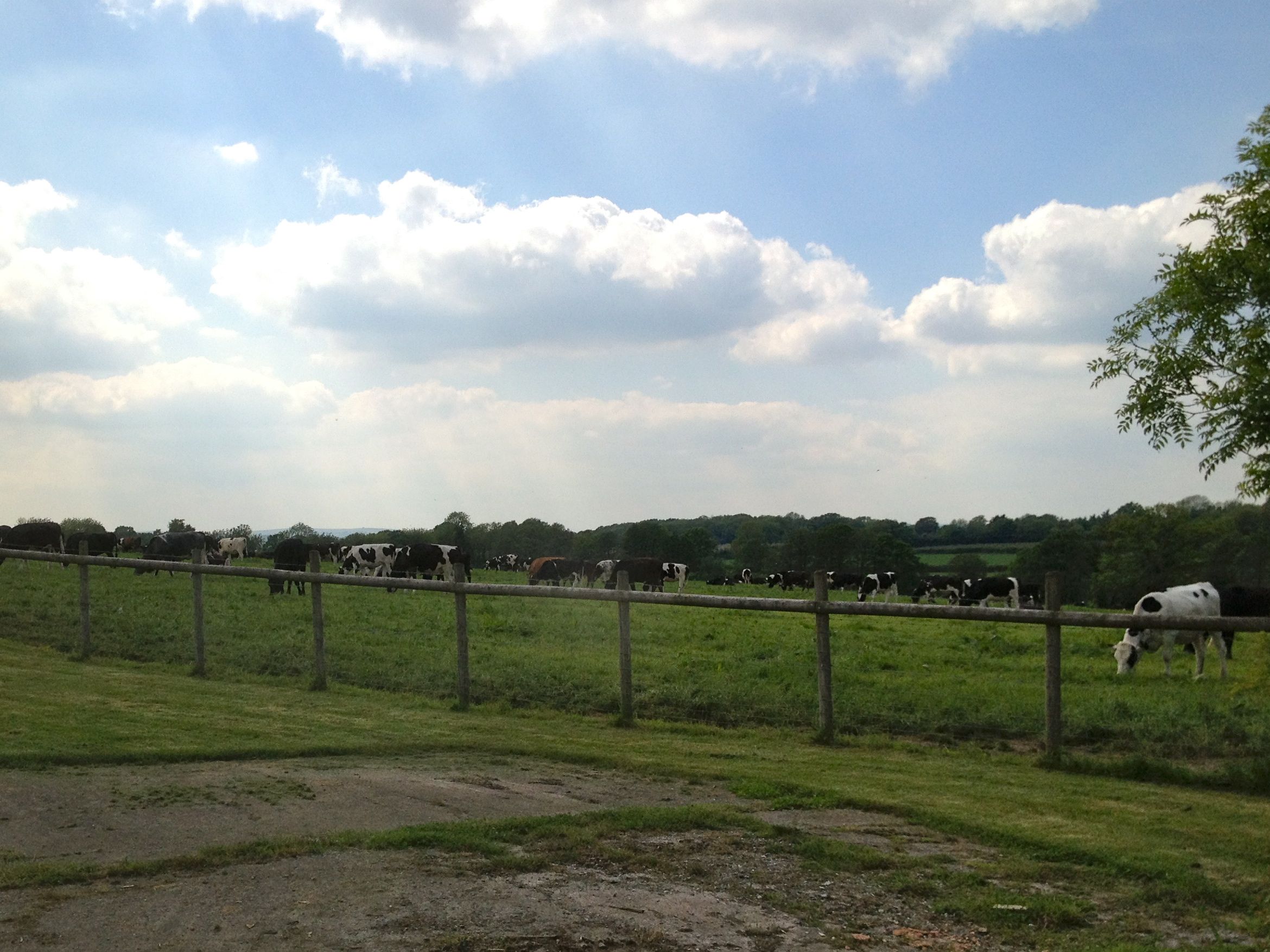
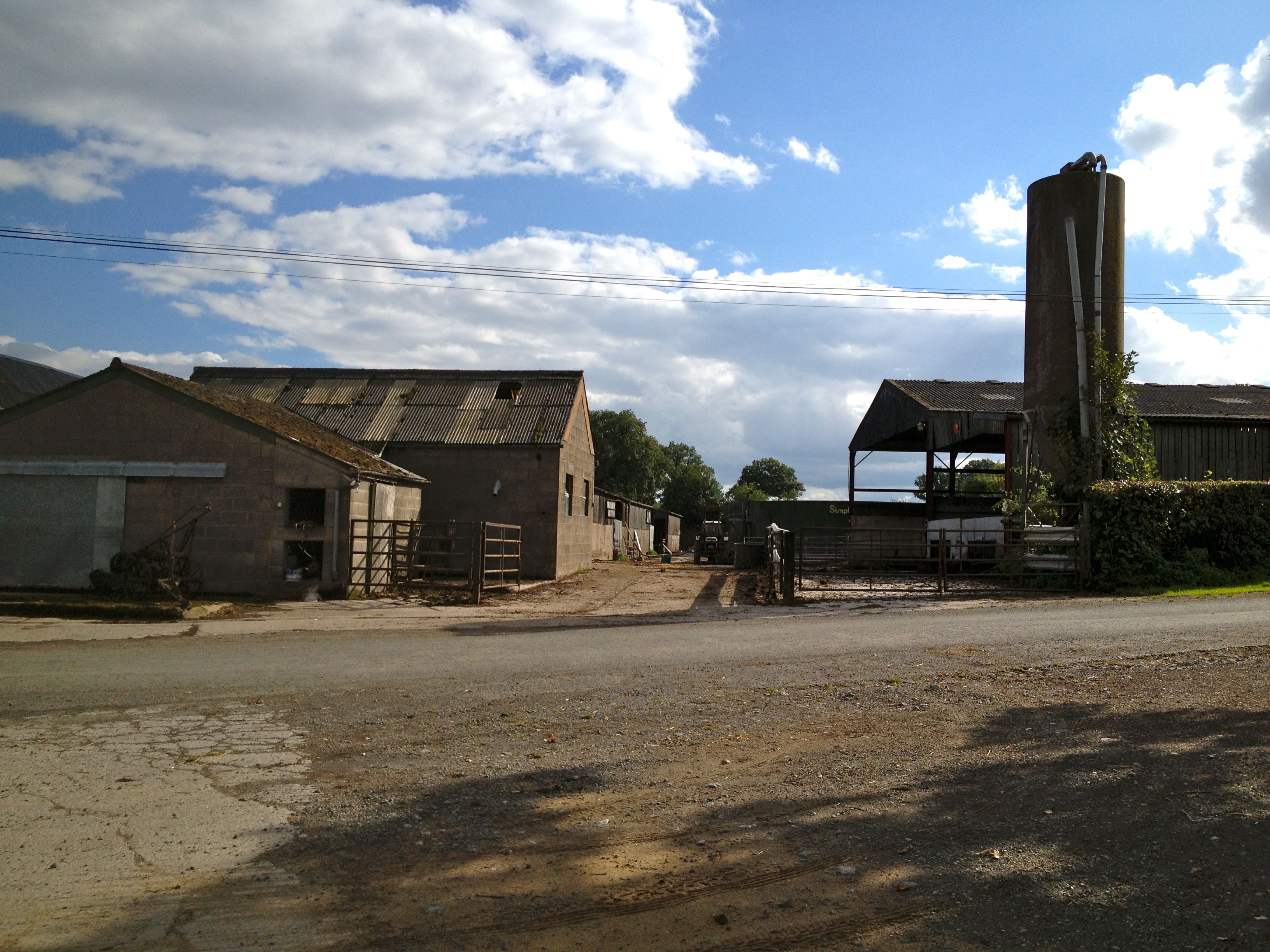
Tibhall cowsVery good friends of mine have a family farm. Over the years they have had to diversify in response to changes in farming. The dairy went a while back, but they still raise cattle for other people. There are several holiday lodges now on part of their land. While the father continues to run the farm, ably supported by his wife, their daughter lives next door, and she and her husband have invested in a high-tech egg business involving far too many chickens to count. The son and his wife live in an annex to the main farmhouse, and they are also involved in the farm, although the son’s wife also works full time as a nurse. I haven’t done the family justice in these few words, but the point is that the hard work and diligence of each generation on this particular farm has, in the words of Proverbs 27:24, meant that the ‘crown has endured (to date) to every generation.

If you managed to find this farm, which is accessed via narrow country lanes, you would see nothing unusual. There is a collection of buildings with the houses on one side of the road, and the farm buildings on the other. There may be a tractor and other farm machinery parked up. It looks every bit the working farm that it is!

TibhallWhat you would not see when you drive past the farm is the hearts of the people who live and work there. It is much more than the farm that is passing down through the generations. John and Jean, my friends, have been faithful in many ways. In addition to contributing to the life and work of the Baptist church in the nearest town, they have also been faithful supporters of the local Methodist circuit, with special involvement in the nearest small chapel. Their son David attended Baptist College and trained for full time ministry. Although David still works on the farm, he is also an agricultural chaplain serving others in the farming community. I know a little of what David does and it blesses me greatly to see this young man investing not only in the family farm through his labor, but also in the lives of others in an industry that is struggling for many reasons.

Investing in the lives of others is what Jesus did during three years of ministry. Jesus described Himself as the Good Shepherd, and gave examples through His teaching of the way that He loves and cares for His flock. This is an example we need to follow. It is also an example we must show not just to our children and our grandchildren, but to our neighbors and colleagues, and to anyone who may cross the path that God has set us on. David the farmer’s son is sowing different seed as a chaplain. But if you think about it, Jesus calls us all to be chaplains.

“You are the light of the world. A town built on a hill cannot be hidden. Neither do people light a lamp and put it under a bowl. Instead they put it on its stand, and it gives light to everyone in the house. In the same way, let your light shine before others, that they may see your good deeds and glorify your Father in heaven. (Matthew 5:14-16 NIV)


Eyes Wide Open

Proverbs 27:12

A prudent man foreseeth the evil, and hideth himself; but the simple pass on, and are punished.
A prudent person foresees danger and takes precautions. The simpleton goes blindly on and suffers the consequences. (NLT)

Recognizing Danger

Young people have an often-deserved reputation for failing to recognize danger, and on occasions choosing to ignore it. When I was a cadet in the Merchant Navy many an old sea dog dished out advice on numerous aspects of life, not least of all issues of safety associated with what was considered to be a dangerous job. Sometimes I listened, sometimes I didn’t. Even when going ashore I wasn’t always blessed with wisdom about places to go and places to avoid.

One piece of advice given to those on their first trip to sea involves sitting on the rails of a ship. For some reason only first trippers and seagulls have an attraction to rails. The difference is that seagulls perch and have wings to rescue themselves if required. First trippers are more likely to do a couple of somersaults before hitting the water and being left behind as the ship disappears into the sunset.

Spiritual Risk

Given that life is full of danger it is difficult to understand why so many of us walk straight into it. While we are unable to see what is around every corner this does not excuse us from approaching each corner with caution.

In spiritual terms Solomon is warning about the dangers of not recognizing evil. The problem with evil is that it has many disguises. Even in church, perhaps especially in church, there is vulnerability and the potential for problems of various magnitudes. God does not want or expect us to live our lives with our eyes shut. Nor does He expect us to live with our minds closed to Him. If we are tuned into God, if we are constantly hungry for more of Him, then He will provide us with early warnings of danger as our sensitivity to His will increases. We may still walk into walls, but God will be there right by us.


Anyone for Dessert?

Proverbs 27:7 

The full soul loatheth an honeycomb; but to the hungry soul every bitter thing is sweet.
A person who is full refuses honey, but even bitter food tastes sweet to the hungry. (NLT)

Really Hungry?

The longest I have been without food was during a hospital stay for abdominal surgery. I wasn’t allowed to eat before going into hospital, and it was about eight days after the surgery before I was allowed to look at food again. I don’t remember that I was particularly hungry at this time, as I had been connected continually to a drip since the surgery and received sustenance in this way. The first meal I was given was soup followed by ice cream. I often tell people that the ice cream was warmer than the soup! Did I enjoy this meal? No! I guess if I had been really hungry then anything would have tasted good, even bitter food or warm ice cream.

Room for Dessert

raspberry profsDespite the hospital experience I don’t think I have ever experienced true hunger. I am fortunate to live in a part of the world where there is more than enough to eat. As I get older I find I eat less, and while often tempted, I am usually unable to find space for dessert after a good meal in a restaurant. This is difficult as I have a sweet tooth and I love dessert.

Hungry for What?

The challenge that this proverb throws at me is not really one of absence of food or a desire for dessert, but a question about my hunger for God. Is it possible to feed on God so much that it is impossible to consume any more of Him? Is it possible to be so filled with the Holy Spirit that I can barely stand? I think back to an incident in the Temple when two people had their hunger for God satisfied. Simeon was described as a righteous and devout man who was eagerly waiting for the Messiah (Luke 2:24). When he set eyes on Jesus he took the Child in his arms and praised God.

Anna, a prophet was standing nearby earwigging. A widow of eighty-four, Anna had remained in the Temple for many years worshipping God day and night with fasting and prayer. Her delight in Jesus was so great that she couldn’t stop talking about Him to everyone she encountered. Anna fasted but her hunger was not for food but for more of God. Simeon had waited his whole life for his hunger for Jesus to be satisfied, having been promised by the Holy Spirit that he would not die until He had set eyes on the Messiah. While we don’t have to wait for Jesus, the irony is that Jesus spends most of His time waiting for us to recognize our hunger and come to feed from Him. As I write these words I am overwhelmed by a sudden and urgent hunger that food will never satisfy. I need more of Jesus.


Mind Your Tongue

Proverbs 27:3 

A stone is heavy, and the sand weighty; but a fool’s wrath is heavier than them both.
A stone is heavy and sand is weighty, but the resentment caused by a fool is even heavier. (NLT)

My wife helps runs a mother and tot group. I help put out the toys, although not every week. One item that appears periodically is the sandpit. I hate the sandpit. All the helpers hate the sandpit. Not just because it is heavy, but also because it is awkward to maneuver. Every now and again my wife asks me to visit the local DIY store to buy new sand for the sandpit. The bags of sand are also heavy and awkward, especially when lifting them into the boot/trunk of a car. I have had cause to buy bags of stone pebbles from the same store for my garden. The bags of stone are equally difficult to carry. If the bags of sand and stone were smaller then life would be easier, but that would mean moving more bags. Whichever way you look at it sand and stones can be a nuisance.

A fool shouting off his mouth about something he is ill informed to comment about is also a nuisance. Solomon refers to the anger caused to anyone on the receiving end of a fool’s nonsense. Like a bag of sand being lifted and carried the weight of it wears the carrier down. Lift or carry the bag awkwardly and it will cause pain, potentially for several weeks. In a similar way foolish words spoken without thought can cause pain for several weeks, perhaps even months and years. There is a daily responsibility shared by all of humanity to think carefully before words are spoken, and not be the fool that causes anger, resentment or pain.

All you need to say is simply ‘Yes’ or ‘No’; anything beyond this comes from the evil one  (Matthew 5:37 NIV)


Looking Inside the Pot

Proverbs 26:23 

Burning lips and a wicked heart are like a potsherd covered with silver dross.
Smooth words may hide a wicked heart, just as a pretty glaze covers a clay pot. (NLT)

This is the first of several proverbs dealing with the subject of hypocrisy. Loosely defined this is saying one thing and doing another. Jesus warned about hypocrisy when he spoke about the teachers of the law and the Pharisees in Matthew 23 verses 1-7:

Then Jesus said to the crowds and to his disciples: “The teachers of the law and the Pharisees sit in Moses’ seat. So you must be careful to do everything they tell you. But do not do what they do, for they do not practice what they preach. They tie up heavy, cumbersome loads and put them on other people’s shoulders, but they themselves are not willing to lift a finger to move them. 

“Everything they do is done for people to see: They make their phylacteries wide and the tassels on their garments long; they love the place of honor at banquets and the most important seats in the synagogues; they love to be greeted with respect in the marketplaces and to be called ‘Rabbi’ by others.

The Pharisees liked to dress up in fancy clothes and have the place of honor wherever they went. They constantly sought respect from the people of Israel, yet had a reputation for not practicing what they preached. The dressing up bit is mentioned in this proverb where it refers to covering an ordinary clay pot with silver. It isn’t what the pot looks like on the outside that matters – it is what it looks like on the inside.

The Apostle Paul taught that we should examine ourselves, especially before participating in communion (1 Corinthians 11:28-31). Communion in my church is scheduled twice monthly. What about the rest of the time? The fact is that we should be constantly checking up on ourselves. Portraying Jesus Christ is not an easy task. But we owe it to Jesus to do our best at following His example.

It is possible that Jesus appeared drab when standing close to the Pharisees, but only if you looked at what they were all wearing. When I read Scripture and look into Jesus I see the most beautiful person who ever lived. The problem is that He calls me to live like Him. If I claim to follow Jesus then I have to try and make that evident through the way that I live, not through what I am wearing, what I earn, what I drive, my position in church or any other thing. Jesus has to be visible in how I act, through the words that I speak, and in the thoughts behind the words that might not betray me to people, but are completely visible to God. I hate the thought of being a hypocrite. It is up to me to something about it.


Money for Nothing

Proverbs 26:15 

The slothful hideth his hand in his bosom; it grieveth him to bring it again to his mouth.
A sluggard buries his hand in the dish; he is too lazy to bring it back to his mouth. (NIV)

This is the third verse in a row in which Solomon focuses on the lazy, with one more to follow. For some reason Solomon is really hammering home the point about laziness. I simply can’t imagine a person so lazy that he is unable to lift food from a dish to his mouth, but the point being made here about laziness is that it is completely unacceptable.

Right now in the UK we have a government that is trying to deal with a culture of living on benefits that appears to have become the norm for a proportion of society. If you believe the politicians and the press we have families where more than one generation has never worked in this country. While there are obviously other reasons for unemployment than laziness, the fact remains that there are folk who are quite happy to sit back and live on handouts. Some even call these handouts their wages! That is quite an insult to those who have worked and paid taxes all their lives.

My third son James graduated from University in 2009. He decided to spend a year working to save money to add to what he had already saved so that he could take a masters degree. He got an invite to live with his eldest brother and his wife, and set about looking for work. Having worked two jobs while studying for his BA he thought that this would be a simple matter. It wasn’t. Recession had kicked in and there wasn’t much work around. He refused to claim benefits and carried on searching, doing jobs around the house to compensate his brother and sister-in-law for feeding him. It took a few weeks, but James found two part-time jobs. He had to leave those jobs to return to University but managed to start another job before he completed his masters. Now that impresses the pants off me, not just because James is my son, but because he has shown what is possible despite the dire condition of the economy. I am proud of my son for not choosing the path of laziness.