
Author Archives: David

About David

Unknown's avatar
David: Half Scot, grew up in Guernsey and the UK. Lives in one of the most rural counties of the UK not far from the Welsh border. Former Merchant Navy officer and hydrographic surveyor. Self-employed risk management consultant from 1992 travelling globally to carry out risk and security audits, plus some loss adjusting. Now retired. Father of Nick who encouraged David to start blogging. Married to Marilyn for 47 years. Four other children in addition to Nick. Eleven grandchildren.

Good Advice or God Advice?

Proverbs 24:5-6 

A wise man is strong; yea, a man of knowledge increaseth strength. For by wise counsel thou shalt make thy war: and in multitude of counselors there is safety.
The wise are mightier than the strong, and those with knowledge grow stronger and stronger. So don’t go to war without wise guidance; victory depends on having many advisers. (NLT)
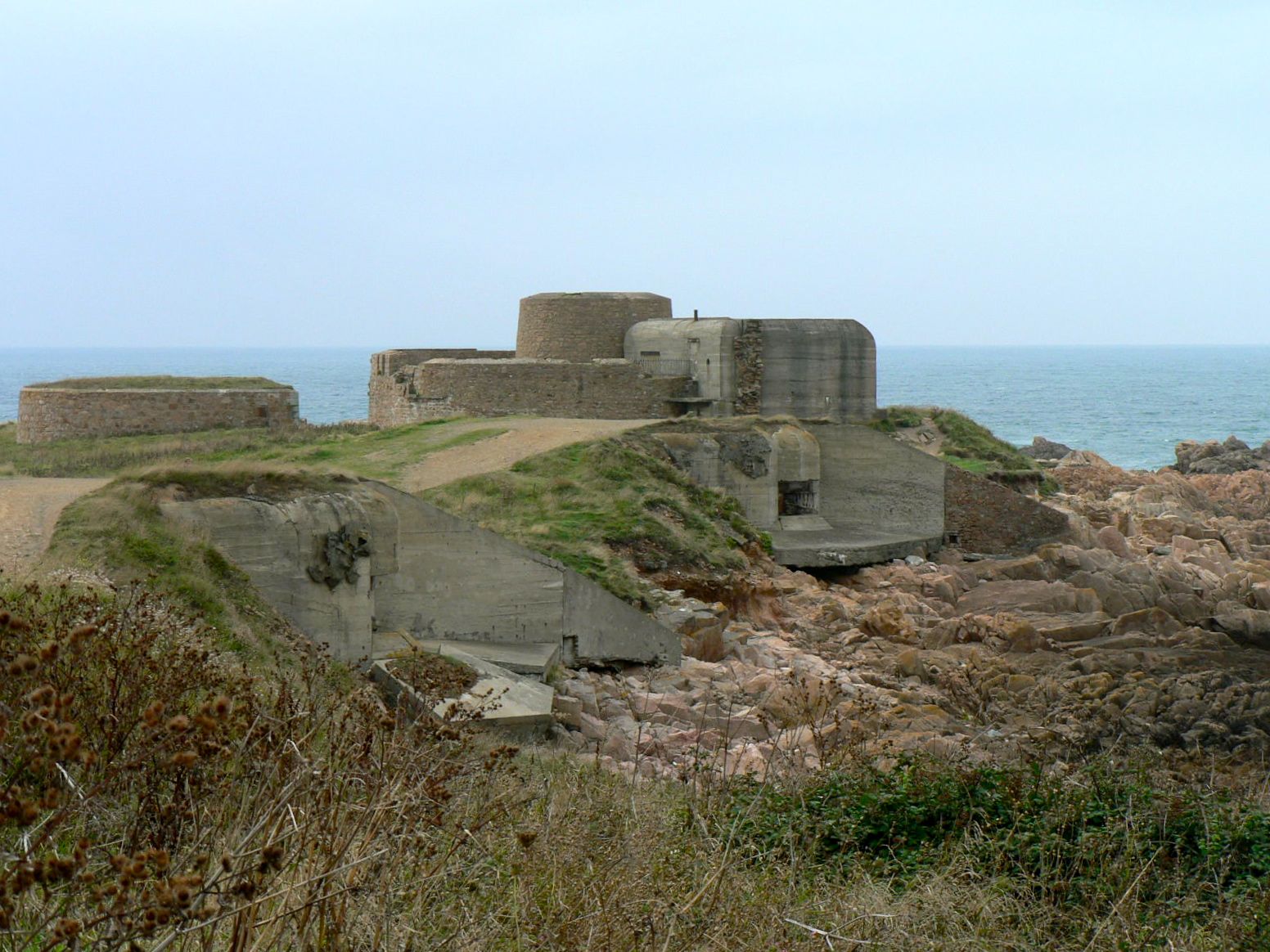
P1080021I was born twelve years after the cessation of hostilities in Europe when World War 2 finally came to an end. My parents lived through things I have never experienced. Evacuation, bombing raids, nights spent in bomb shelters clutching gas masks, watching dog fights in the skies above, and food rationing all became part of their daily lives as they grew up. In contrast I grew up with the evidence of war around me, living as I did in the one part of the British Isles to suffer German occupation during the war (the Channel Islands). The coastal bunkers and forts with their gun emplacements were part of our playground as children, but we had no real understanding of the horrors of the war, or the suffering of the islanders during the Occupation.

P1080017Modern communications and media leave no excuse for this generation not to understand the effects of war on a population. Despite such widespread knowledge there seems to be no end to conflict, with soldiers and civilians continuing to suffer injury, torture and death in various parts of the world. Solomon gave sound advice when he said, “don’t go to war without wise guidance” (Proverbs 24:6 NLT). Sadly, it seems that Solomon’s advice is often ignored by presidents and prime ministers, perhaps because ulterior motives are the driving force.

On a personal level it is also good to challenge motives, and consider the effects of actions we might be considering. But where can we find wise guidance? And is it good to have many advisors, or might we receive conflicting advice, making a decision even harder. The answer, as ever, is in scripture. When the Israelites entered the Promised Land they were successful in the battles they fought when they sought guidance from God. On the occasions that they dived in without asking God they suffered defeat (Joshua 7 & 8). King David who was one of the greatest military tacticians also sought guidance from God. He probably had numerous human military advisors, but he rarely took action without coming first on his knees to ask God (1 Samuel 30:8). It is not a sign of weakness to ask for advice. In fact it is foolish not to. It is even more foolish to rely on human advice alone.


What Shall We Do With the Drunken Sailor?

Proverbs 23:29-35 

Who hath woe? who hath sorrow? who hath contentions? who hath babbling? who hath wounds without cause? who hath redness of eyes? They that tarry long at the wine; they that go to seek mixed wine. Look not thou upon the wine when it is red, when it giveth his color in the cup, when it moveth itself aright. At the last it biteth like a serpent, and stingeth like an adder. Thine eyes shall behold strange women, and thine heart shall utter perverse things. Yea, thou shalt be as he that lieth down in the midst of the sea, or as he that lieth upon the top of a mast. They have stricken me, shalt thou say, and I was not sick; they have beaten me, and I felt it not: when shall I awake? I will seek it yet again.
Who has anguish? Who has sorrow? Who is always fighting? Who is always complaining? Who has unnecessary bruises? Who has bloodshot eyes? It is the one who spends long hours in the taverns, trying out new drinks. Don’t gaze at the wine, seeing how red it is, how it sparkles in the cup, how smoothly it goes down. For in the end it bites like a poisonous snake; it stings like a viper. You will see hallucinations, and you will say crazy things. You will stagger like a sailor tossed at sea, clinging to a swaying mast. And you will say, “They hit me, but I didn’t feel it. I didn’t even know it when they beat me up. When will I wake up so I can look for another drink?” (NLT)

I love the clarity in the NLT translation of this passage. The reference to a sailor tossed at sea does not infer that sailors are always drunk, although the word ‘jolly’ in the nickname ‘Jolly Jack Tar’ could suggest that seafarers may take a drink or two more than they should. It is unfortunate that while alcohol can provide a temporary lift and induce happy feelings in the short term, it can often produce other less desirable effects.

Using Jack Tar as an example I can recall several unpleasant fights from my seafaring days in which alcohol played a part, some of which resulted in the hospitalization of at least one of the individuals involved. I can remember drinking games in the ships’ bars and ashore. On my first ship we sailed from Mobile, Alabama without any of the three watch-keeping engineers, all of whom were in police custody ashore after drinking too much. On my fifth trip as cadet the chief officer had such a problem with alcohol that the captain insisted he always had a cadet on watch with him. When sailing with a pilot through the Norwegian fjords the pilot asked me to call the captain as we came to a difficult area. As I went to pick up the telephone the pilot looked across at the chief officer and said to me; “hadn’t you better wake that up first?” One again the chief officer was drunk and had fallen asleep – in the pilot’s chair!

The message in this passage is not ‘don’t have a beer with a friend or a glass of wine with a meal’, but don’t drink to excess. The very clear warnings about the results of alcohol abuse shout louder than a swaying drunk as he staggers from one bar to the next. Once again the message is one of wisdom. If you can’t be a wise drinker then do not drink at all.


The Truth, the Whole Truth, and Nothing but the Truth

Proverbs 23:23 

Buy the truth, and sell it not; also wisdom, and instruction, and understanding.
Buy the truth and do not sell it – wisdom, instruction and insight as well. (NIV)

Have you ever seen truth for sale in a supermarket? It is sometimes a fact that product labeling hides the truth that something may be bad for our health, or that our bargain is the result of a supplier taking a loss so that the supermarket can make even larger profits. Who do you think funds the ‘buy one get one free’ promotions? Not the supermarket, that’s for sure.

Perhaps selling the truth might be a good sales tactic. Potential customers might flock to a store with a reputation for truthfulness. In a 1970s UK sitcom a certain Reginald Perrin set up a shop called ‘Grot’ with sales slogans such as; ‘every single thing in this shop is guaranteed absolutely useless,’ and ‘plenty of gifts for people with no taste.’ The fact that the shop was a runaway success was an indication perhaps of the value that Reggie Perrin’s customers placed on the truth. Within two years Grot expanded to a chain of forty-four shops.

Solomon knew the value in truth. He measured its worth on an equal basis with wisdom, instruction, and understanding. If we value the truth too, then we have a responsibility to ensure that we are as truthful with others as we expect others to be with us. Honesty is so important that it was included among the Ten Commandments (do not testify falsely against your neighbor – Exodus 20:16). Jesus taught that we will all be required to give an account on judgment day of every idle word we speak (Matthew 12:36). An idle word could be an untruth, a word spoken without thought, or an opinion expressed without understanding. A wise person takes the greatest of care with items of great value. How careful are you with the truth?


Parental Responsibility

Proverbs 23:15-16 

My son, if thine heart be wise, my heart shall rejoice, even mine. Yea, my reins shall rejoice, when thy lips speak right things.
My son, if your heart is wise, then my heart will be glad indeed; my inmost being will rejoice when your lips speak what is right. (NIV)

My experience of being a parent is that it is a great privilege, although my father may have different opinions on the subject! It is also a huge responsibility. I do not believe that God expects us to parent alone and throughout the lives of our children I have prayed for His help and guidance in parenting. I truly believe that God has shared the responsibility, and I have seen clear evidence of His touch on the lives of the children He has placed in our care

Unfortunately children do not always make wise choices. I remember the day that my father had to collect me from the Police Station when I was fifteen years old. Dad didn’t need to say a word when he walked into the room. Disappointment was written all over his face and it completely destroyed me. Compare that with his pride a year later when he dropped me at the airport in my brand new uniform to fly to Göteborg to join my first ship. It was five months before he saw me again but I knew from the letters he and my mother wrote that they were proud of my career choice.

My wife and I have also known times of disappointment as well as times of great joy in raising our five children. There have been many times when our hearts have been warmed by things our children have said, done, or achieved. Just this last weekend we visited James, our middle child, and stayed in the home he and his fiancée have made. They get married in October. We were impressed by many aspects of their home-making, but even more so by the fact that have chosen to honor God and each other, and not share a bed until after they are married. That, in our opinion and experience, is an excellent basis for a married life built on trust. To me it also underlines the responsibility of example.

It is a parental responsibility to teach wisdom through example. Results may not be guaranteed, but nothing ventured, nothing gained. If we hope to see wisdom shown in the lives and words of our offspring, then we need to make sure that it is evident in ours.


I Did It My Way

Proverbs 23:9 

Speak not in the ears of a fool: for he will despise the wisdom of thy words.

All of us fall into ‘the fool who doesn’t listen’ category from time to time. One example that comes to mind is of Martin, a fellow cadet on my second trip to sea. Martin was a first tripper and all seafarers are aware that first trippers know nothing. Hence the saying ‘only first trippers and seagulls sit on a ship’s rails!’

Mart154Martin was an intelligent but unconventional young man, with an unusual upbringing. This included time spent growing up as a missionary kid out in the bush in Kenya, followed by a boarding school education back in England, while his parents continued to serve in Africa. We hit it off straight away. Martin was a couple of years older than me, but theoretically I was the senior cadet having served longer at sea. Friendship and length of sea time did not mean that Martin listened to me. In fact, his failure to listen meant that we both regularly got into trouble with the chief officer (otherwise known as the mate) and even the captain on occasions. Three incidents in particular spring to mind:

1. When we were told to paint the emergency fire pump Martin thought it would look better in rainbow colors. I told him the mate would not like it. Martin didn’t listen and we ended up repainting the fire pump. In our own time.

2. When given the task of repairing the canvas lifeboat covers Martin soon got tired of stitching on the patches. He suggested glue. I told him the mate would not like it. He didn’t. He made us stitch around the patches we had glued. In our own time.

3. When presented with numerous flags to wash by hand Martin felt that a spot of bleach might help restore the flags to their former glory. I took a stand on this one and told him that bleach would damage the flags. Martin didn’t listen. I didn’t see him add the bleach but I sure as heck saw the results. So did the captain when we tried to sneak the damaged flags back to the wheelhouse. I still remember the explosion. “YOU DID WHAT! YOU WASHED THE FLAGS IN BLEACH?!!!” The captain’s cap didn’t quite leave his head, but as a small man he was prone to jumping up and down a lot when he lost his temper.

Martin had a knack of thinking up shortcuts. No amount of advice would deter him from taking action that others were convinced was foolish. I guess the best defense that Martin had was his youth, but many of us left youth behind many years ago yet still fail to heed a voice of wisdom, or worse the voice of God. It is no excuse to say we didn’t hear, we didn’t understand, or we thought that our way was better. When God speaks we need to listen. Carefully. Then we need to do what He says, when He says, and how He says. 


Moving the Goalposts

Proverbs 22:28 

Remove not the ancient landmark, which thy fathers have set.
Don’t cheat your neighbor by moving the ancient boundary markers set up by previous generations. (NLT)

My house is one of a cul-de-sac of eleven homes that were built in the late 1980s on land that was previously an apple orchard. Owners of bungalows behind the new cul-de-sac believed that bungalows would be built in the orchard. Instead the developer built two-story homes that overlooked the bungalows. To placate the mainly elderly bungalow dwellers the developer erected a six-foot high fence between the new houses and the bungalows.

All was well until my rear fence blew down in a storm. The neighbor in the bungalow behind my house soon asked me when I would carry out repairs. I told him that according to my deeds the fence was his responsibility, and showed him the deeds. He then admitted that the fence had been built eighteen inches on my side of the original boundary and that he had removed the previous fence and gained eighteen inches of garden. Eighteen inches of my garden to be precise. Although hardly an ancient landmark, the boundary had been moved.

I do not believe that my neighbor intended to cheat me. He just did what seemed logical, never expecting to be rumbled one day. Am I bothered? Not really. I never had that eighteen-inch strip of land, and my neighbor is a good man, who on viewing my deeds immediately agreed to pay for the fence repair. Others may have taken a different view and demanded that the fence be moved.

moving-the-goal-posts_dilbert_9498While the removal of ancient landmarks was a serious offence when this proverb was written, the issue remains relevant today, but not only where property is concerned. The modern day equivalent in the UK is ‘moving the goalposts.’ This metaphor may have its origins in sport, but is increasingly used to describe an agreement or business deal where one party changes the conditions to the detriment of the other. The word cheat, as used in the NLT translation of this verse, is an apt description of a person who moves a boundary, the goalposts, or acts in a generally devious manner that harms another person to the benefit of the cheat.

There are goalposts or boundaries set for us by God that we should never try to move. In Acts 17:26 Paul states:  ‘From one man he made all the nations, that they should inhabit the whole earth; and he marked out their appointed times in history and the boundaries of their lands.’ That is a mind-blowing statement. God who knows no boundaries is so involved in every aspect of our daily lives that He marked out boundaries for when and where we should live. This means that you are where you are now because God placed you there, and God wants you there. It is futile to try to move God’s goalposts. Instead we should rejoice in His intimate involvement in our lives.


Oppressing the Poor

Proverbs 22: 22-23 

Rob not the poor, because he is poor: neither oppress the afflicted in the gate: For the Lord will plead their cause, and spoil the soul of those that spoiled them.
Do not exploit the poor because they are poor
 and do not crush the needy in court, for the Lord will take up their case and will exact life for life. (NIV)

Once again the writer challenges our attitudes to the poor. How we treat those who are poorer than us, or even weaker than us is important. Most of us would probably read this proverb and think that it doesn’t apply to us personally because we haven’t robbed or oppressed anybody. Perhaps we haven’t, but are we sure? What about times we have failed to stand up for someone? Take it right back to the school playground where it was easier to walk away than stand up for a fellow pupil facing ridicule or even physical violence. I can remember thinking ‘rather him than me’ on more than one occasion.

Then there is the work place. When I joined the Merchant Navy as a sixteen-year-old cadet it was made perfectly clear to me that I was at the bottom of the pecking order. The chief officer on my first ship used to shout at me regularly, perhaps because he had been treated the same way when he was starting his career. I remember the captain sticking up for me one day and the treatment I received improved a little after that. A few years later when I was an officer I found myself speaking up for a young Rastafarian able seaman who was assigned to my watch. In this case the bosun and another seaman were making this young man’s life a misery, with the knowledge of the chief officer! He had nobody to plead his case until I stepped in. I did not make myself popular in the process, but I could not ignore what was going on.

Oppression takes many forms. Read through these verses again – there is a significant warning in verse 22. Is God challenging you about your attitude to others, or is He calling you to take a stand in someone’s defense today?


Rich or Poor

Proverbs 22:16  

He that oppresseth the poor to increase his riches, and he that giveth to the rich, shall surely come to want.
One who oppresses the poor to increase his wealth and one who gives gifts to the rich – both come to poverty. (NIV)

There is a school of thought that says that without poverty wealth could not exist; that one man’s poverty is another man’s riches. But I’m not rich you say! I work hard to pay my mortgage and my car loan, and to feed and clothe my family. However, if you have a mortgage on a property that boasts running water, heat and light, etc., then you are rich in comparison to many fellow citizens of planet earth.

Is it wrong then to own property? I don’t think so, but I do believe that it is necessary for all of us to examine ourselves, and the way that we live. Do we give, and are we generous in our giving? Or do we keep all that we have for ourselves justifying our actions by believing that we cannot afford to give? Is giving just about money? What about time? What about company? And at its most basic level what about a smile or a greeting for each person you meet? Just yesterday I said good morning to a man sweeping the floor at Dublin Airport. All the other passengers walked past without looking at him. It cost me nothing, but by his response I knew that my greeting was appreciated.

There is also a danger of pride in financial giving. Carefully setting aside that 10% tithe and feeling good about it is not what giving is all about. Jesus pointed out the poor widow who put all that she had in the offertory box. Tony Campolo once said that we should forget about the 10% we tithe and question what we do with the 90% we keep for ourselves. One thing for certain is that whatever we have in material terms it cannot leave the planet with us. So why then do we hoard? Could it be that this proverb is aimed at all of us, to encourage generosity in all aspects of our daily lives?


A Good Excuse?

Proverbs 22:13 

The slothful man saith, “There is a lion without, I shall be slain in the streets.”
The lazy person claims, “There’s a lion out there! If I go outside, I might be killed!” (NIV)

The chances of seeing a lion outside my house or anywhere in the vicinity, is extremely unlikely. I live in rural England, close to the border with Wales, where the largest creatures around are usually cows, which are not known to be carnivorous. There are occasional reports in the media that large cats of African origin have been seen, although this often appears to be an excuse made by farmers when they cannot locate all of their stock. But this proverb is not about lions, it is about laziness and the excuses human beings make to justify bad attitudes.

I wonder what would have happened if Jesus had been lazy? I guess that His ministry on earth would have been seriously curtailed. Fewer miracles, fewer people brought into the Kingdom, and demoralized disciples perhaps? And that is exactly what happens when modern day disciples are lazy. If more people in each church decided to get involved in the various ministry areas, spreading the load might just ensure that the word is spread more effectively.

If you want to know what Jesus thought about lazy people turn to Matthew 25:14-30 and read the parable of the talents. The key verse is the master’s response when he found one servant had buried what he had been given in the ground. Jesus told it like this:

“Then the man who had received one bag of gold came. ‘Master,’ he said, ‘I knew that you are a hard man, harvesting where you have not sown and gathering where you have not scattered seed. So I was afraid and went out and hid your gold in the ground. See, here is what belongs to you.’
“His master replied, ‘You wicked, lazy servant! So you knew that I harvest where I have not sown and gather where I have not scattered seed? Well then, you should have put my money on deposit with the bankers, so that when I returned I would have received it back with interest. So take the bag of gold from him and give it to the one who has ten bags. For whoever has will be given more, and they will have an abundance. Whoever does not have, even what they have will be taken from them. And throw that worthless servant outside, into the darkness, where there will be weeping and gnashing of teeth.” (Matthew 25:24-30 NIV)

There is a Day

Proverbs 22:8

He that soweth iniquity shall reap vanity: and the rod of his anger shall fail.
Those who plant injustice will harvest disaster, and their reign of terror will come to an end. (NLT)

Injustice has been part of our world since the first act of iniquity in the Garden of Eden. The simple act of listening to the wrong voice, resulted in God being disobeyed and had terrible consequences. Adam and Eve were removed from the perfection of the Garden to make their way in a world dirtied by sin. A world in which iniquity and injustice multiplied to the point where we find ourselves today.

But it will end. The reign of terror that began in Genesis will end in Revelation when our Lord Jesus returns. There is a day when He will return and sweep iniquity and injustice aside. He came once. He is coming again. He promised. Hallelujah!

There is a day, that all creation’s waiting for,
A day of freedom and liberation for the earth.
And on that day

The Lord will come to meet His bride,
And when we see Him

In an instant we’ll be changed.


The trumpet sounds
And the dead will then be raised
By His power,
Never to perish again.
Once only flesh,
Now clothed with immortality;
Death has now been

Swallowed up in victory.
 
We will meet Him in the air

And then we will be like Him,
For we will see Him, as He is,
Oh yeah!
Then all hurt and pain will cease,
And we’ll be with Him forever,
And in His glory we will live,
Oh yeah, oh yeah!
 
So lift your eyes

To the things as yet unseen,

That will remain now
For all eternity.
Though trouble’s hard

It’s only momentary,
And it’s achieving

Our future glory.
 
(Phatfish)