
Tag Archives: God

A Good Name

Proverbs 22:1.

“A good name is rather to be chosen than great riches, and loving favour rather than silver and gold.” (KJV).

Choose Your Own Adventure:

When I was a child growing up in the 80’s, one of my favourite series of books was the Choose Your Own Adventure Books by Bantam. This series contained stories that were written from a second-person point of view, where the reader took on the role of the protagonist and made choices that determined the main character’s actions and the plot’s outcome. It was a very interesting concept, and depending on what choices you made, you either had a good ending, or a bad ending (often resulting in your character’s death).

When I was in junior high school, Choose Your Own Adventure put out a writing contest for teenagers, and I entered it. Although I didn’t win the writing contest, I was pleasantly surprised by a personal letter from editors Edward Packard and R.A. Montgomery, telling me how much they personally enjoyed my story, and encouraging me to continue writing.

You Choose:

As I was reflecting upon today’s Proverb, I thought about how the Bible is like a Choose Your Own Adventure Book. Especially in the Book of Proverbs, God’s Word gives us wisdom for daily living, and encourages us to choose often between two different options. In today’s Scripture, Solomon gives us two sets of options: The first one is to have a good name and loving favour (or high esteem), and the other is to have great riches such as silver and gold.

It is interesting to notice that the Bible’s contrasts of two different options are not always opposites. For example, the Proverb doesn’t say, “A good name is better than a bad name.” Rather, it says, “A good name is rather to be chosen than great riches.” When you read something like that, it’s good to ask yourself, “Why does God contrast those two things?” Could it be because oftentimes people who pursue great riches do so to the exclusion of having a good name? How many people strike it rich, but do so at the expense of others, or by giving up their reputation, honesty or integrity?

The Choice:

In the New Living Translation of the above Scripture, Solomon plainly says, “Choose a good reputation over great riches, for being held in high esteem is better than having silver or gold.” As you’re setting a goal for your life, choose to do what is right and good, and have a good reputation that brings honour and glory to the Lord. Amen!

Counsel God?

Proverbs 21:30

“There is no wisdom nor understanding nor counsel against the LORD.”

Intelligent

I am a half-way intelligent guy. There are degrees hanging on the wall of my study, a few awards, and a lot of books on the shelves that I’ve actually read. But don’t be too impressed; I don’t have a doctorate (yet) and I still have problems with math and spelling restuarant.

What’s worse is I’m supposed to be a “spiritual leader,” a pastor, a Reverend. Along with those degrees on my wall, there is also a piece of paper that says I’ve been “Ordained to the Gospel Ministry.” According to some, that puts me on God’s speed dial. Riiiiight.

In actuality, I am only human, and a flawed one at that. This past weekend my daughter had to take the spiritual lead and call me to the carpet. She has no degree or title, but she does walk with God and loves the Word. So, when she saw me making a mess of things she exercised spiritual wisdom, understanding, and counseled against me. “Daddy,” she said through tears, “you told me to be bold, so I’m going to do that now…we haven’t even prayed!”

Infinite

Then there’s God.

No degrees. No diplomas. Only 66 books to His credit. Never been graded. The ultimate Self-Starter.

His library is limited to some scrolls, but He invented language and the light by which to read. He even provides the Light that illuminates the mind.

He is Wisdom. He is omniscient (knows all). He is the Judge of Heaven and Earth before who’s bar only one Counselor has the right to intercede.

I can be questioned. I can be challenged. I can be corrected. No matter how wise or spiritual I become, I am still just a wisp of mist in the air; human.

Our God is the LORD; His children stand in awe.


Would You Rather?

Proverbs 21:19.

“It is better to dwell in the wilderness, than with a contentious and an angry woman.” (KJV).

A Simple Youth Group Game:

Today’s Proverb made me think of a game that I used to play with our church’s youth group called “Would You Rather?” Typical questions would include, “Would you rather… share a bed with a skunk, or with a porcupine?” “Would you rather… be rich and ugly, or poor and good looking?”

After the students answered the question, I would usually ask them why they chose the answer they picked. Most of the choices in the game are unappealing, but in choosing the less-unappealing one, it is designed to reveal something about their interests and values.

Two Places to Live:

The above Scripture gives us two different options: To live in the wilderness, or to live with a contentious and an angry woman. Which would you rather? To help you answer the question, let us look at what each of the two different options entail:

What does it mean to live in the wilderness? In John Gill’s commentary on this Proverb, he describes it as, “Where persons live without shelter, and are not only exposed to storms and tempests, but to beasts of prey; where there is lack of the necessaries of life.” That doesn’t sound very appealing, does it? Who would want to live there?

The other option is to live with a contentious, angry woman. The word contentious means tending to argument or strife; quarrelsome. The word angry means a strong feeling of displeasure and belligerence aroused by a wrong; wrath. That doesn’t sound very appealing either, does it?

A No-Brainer:

One of my favourite Scriptures is Deuteronomy 30:19. God says, “I have set before you life and death, blessing and cursing; therefore choose life, that both you and your descendants may live.” The reason I like it is because God gives people a choice: “You can choose life or death, blessing or cursing – the choice is yours.” But then He adds these three little words that make me chuckle. “Therefore, choose life.” In other words, in case you missed this no-brainer, choose life, people!

In today’s Scripture, God tells us the answer to the question about which is better – to live in the wilderness (without shelter, exposed to storms, wild animals and the elements), or to live with a contentious, angry woman. He says, “It is better to live in the wilderness!”

How do we apply this Scripture to our lives? To young single people I would say: The most important decision you will ever make in your life (after making Jesus Christ your Lord and Saviour) is the choice of the person you are going to marry. Since marriage is for life, choose wisely. (Otherwise, one day you may find yourself wishing you were living in the desert). And secondly, to a wife I would say – don’t be angry or contentious, or your husband will be wishing he was in the wilderness!


Establish Your Way

Proverbs 21:29.

“A wicked man hardens his face, But as for the upright, he establishes his way.” (KJV).
“A wicked man displays a bold face, But as for the upright, he makes his way sure.” (NASB).

Righteousness or Wickedness:

We have seen that one of Solomon’s teaching tactics includes contrasting two opposing life choices, such as wisdom and foolishness, diligence and laziness, and humility and pride. In today’s Scripture, Solomon tells us that wicked people harden their face, or put on a bold face. In other words, they pretend to be okay when they are not. The upright, or righteous, on the other hand, establish their way, and make their way sure. They don’t have to pretend to be right, but by God’s grace, choose to do what is right.

Solomon tells us: “Treasures of wickedness profit nothing, But righteousness delivers from death.” (Prov. 10:2). And “As righteousness leads to life, So he who pursues evil pursues it to his own death.” (Prov. 11:19). To choose a righteous lifestyle leads to life and blessing, and to choose wickedness leads to death and destruction. But – what is righteousness?

Righteousness Defined:

Righteousness can be looked at from two different perspectives. One is right-standing with God, and the other is acting in an upright, virtuous, moral way. Let’s take a look at these two different aspects to righteousness:

1.         Right-standing with God – Putting Your Faith in Jesus:

The first time we see the word righteousness used in the Bible is in Genesis 15:6 where it says, “And Abraham believed in the Lord, and He accounted it to him for righteousness.” Here we see that Abraham’s right-standing with God did not come from living a perfect, holy life (because indeed no one can or ever has lived a perfect life, except for Jesus). Rather, righteousness was credited to his account as a gift when he put his faith in the Lord.

Romans 1:17 teaches us this: “This Good News tells us how God makes us right in his sight. This is accomplished from start to finish by faith. As the Scriptures say, It is through faith that a righteous person has life.” (NLT). Do you want right-standing with God? Put your faith in Jesus, and trust Him to be your Lord and Savior, and forgive you of all of your sins. Believe on the Lord Jesus Christ today!

2.         Right-living before God – Acting in an Upright Manner:

In addition to our positional righteousness, which comes from a personal relationship with Jesus, there is also a practical righteousness, where we choose to do what is right and good – that is, we obey the teachings of the Bible. “But seek first the kingdom of God and His righteousness, and all these things shall be added to you.” (Matt. 6:33).

Lord, help us as your people to walk in righteousness so that we can establish our way according to your righteousness. In Jesus’ name, amen.


Soul Trouble

Proverbs 21:23.

“Whoso keepeth his mouth and his tongue keepeth his soul from troubles.” (KJV).
“Whoever guards his mouth and tongue keeps his soul from troubles.” (NKJV). 

Powerful Words:

The Book of Proverbs has a lot to say about the words we speak – our mouth, our tongue, and our lips. I don’t think many people realize just how powerful our words are, but Proverbs 18:21 says, “Death and life are in the power of the tongue, And those who love it will eat its fruit.”

What do you think would happen if, for the next 24 hours, every word you spoke became a reality? If you said, “I wish you were dead!” to someone, and they dropped dead. If you said, “I’m so fat and ugly,” and poof! Instantly you became fat and ugly. I think if we experienced one day like that (assuming we survived it), it would radically change the way we speak.

Although what we say may not always literally or instantly come to pass, there is still a supernatural power or energy behind those words. Proverbs tells us that our words can be pleasant like a honeycomb, words of wisdom, knowledge and understanding, or words can be deceitful, wicked, perverse, or foolish. Words can bring life or death, blessing or cursing. Today’s Proverb tells us that if we guard our mouth and tongue – and speak only words of life – we will keep our soul from trouble.

Idle Words:

Jesus Himself said, “But I say to you that for every idle word men may speak, they will give account of it in the day of judgment. For by your words you will be justified, and by your words you will be condemned.” (Matt. 12:36-37). Now that’s a sobering thought, isn’t it? When we get to Heaven, we will have to give an account of every word we have ever spoken.

Lying words.              
Gossip words.
Slanderous words.     
Curse words.
Hurtful words.           
Critical or judgmental words.

Knowing that truth, shouldn’t we be motivated to guard our mouth and tongue? In doing so, we will be guarding our soul from trouble.

Graceful Words:

The Bible says, “Let no corrupt word proceed out of your mouth, but what is good for necessary edification, that it may impart grace to the hearers.” (Eph. 4:29). Not only do our words bring death and destruction, they can also bring life, peace and blessing, and even impart God’s grace to other people’s lives.

Loving words.            
Kind words.
Helpful words.           
Encouraging words.
Accepting words.       
Forgiving words.
God’s Words.

What kind of words are you speaking?


Addicted to Thrills

Proverbs 21:17

“He that loveth pleasure shall be a poor man: he that loveth wine and oil shall not be rich.” (KJV).

Living in the Last Days:

In a letter the Apostle Paul wrote to a pastor named Timothy, he described the signs of the times of the last days: “But know this, that in the last days perilous times will come: For men will be lovers of themselves, lovers of money… lovers of pleasure rather than lovers of God, having a form of godliness but denying its power. And from such people turn away!” (2 Tim. 3:1-5).

Those words aptly describe the world we’re living in today! People love themselves, they love money, and they love pleasure – more than they love God. Paul says that we need to turn away from such people, because bad company corrupts moral character. The reason for the warning comes through clearly in the Proverb: If we love pleasure, we will become poor.

The Pursuit of Pleasure:

The Message Bible translation of the above Proverb paraphrases the text: “You’re addicted to thrills? What an empty life! The pursuit of pleasure is never satisfied.” (Message). Now does this mean that Christians can’t enjoy life? That the call to follow Jesus is equated with joyless boredom and drudgery? Sadly, some people have interpreted the Christian life in such shallow terms. They say that Christians can’t have fun, because anything fun is sin. But nothing could be further from the truth! Jesus said that the devil comes to steal, kill and destroy, but Jesus comes to give us an abundant, joy-filled life.

Sadly, many people think of the Christian life as being comparable to this scene from Monty Python:

It reminds me of one of my favourite quotes by C.S. Lewis: “We are half-hearted creatures, fooling about with drink and sex and ambition when infinite joy is offered to us, like an ignorant child who wants to go on making mud pies in a slum because he cannot imagine what is meant by the offer of a holiday at the sea. We are far too easily pleased.” You see, the Bible never says that pleasure is wrong; rather it condemns the love of pleasure. When we love pleasure more than God, when we love the gifts more than the Giver, we’ve missed the point.

The Pleasure we seek:

Before I became a Christian, I loved pleasure and looked for satisfaction in the bars, at parties, and in relationships with girls. For the first 18 years of my life, that’s where I sought pleasure. But after coming to know Jesus as my Lord and Saviour, I experienced a joy I had never known before.

The Bible says: “You will show me the path of life; In Your presence is fullness of joy; At Your right hand are pleasures forevermore.” (Psalm 16:11). When we seek God first, and His kingdom, we experience fullness of joy and rivers of pleasure. Don’t be satisfied with the world’s cheap substitute of drunkenness, sex and drugs, when God offers indescribable, glorious joy. He offers His very presence. That’s the pleasure we seek!


Hear the Poor

Proverbs 21:13.

“Whoso stoppeth his ears at the cry of the poor, he also shall cry himself, but shall not be heard.”

Youth Serve at Union Gospel Mission:

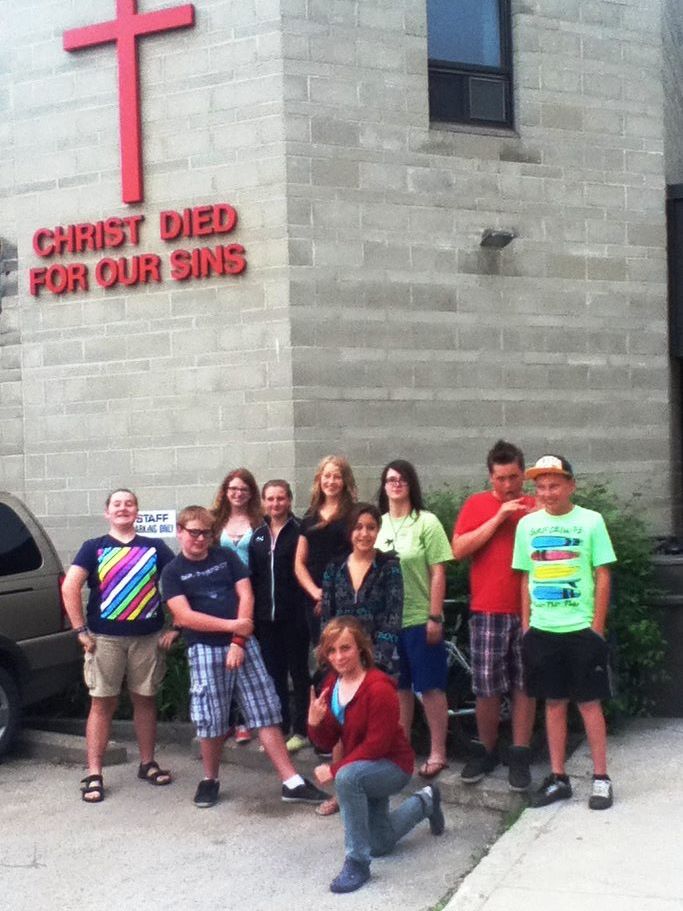
One of the privileges that I have as a pastor is being able to work with the youth group in our church. I have always loved working with teenagers, and love their passion for life. A couple of weeks ago, we took a team of youth from our small town of Beausejour, to serve at Union Gospel Mission, a street outreach in Winnipeg.

It was Matthew 25:40 in action: Jesus said: “Assuredly, I say to you, inasmuch as you did it to one of the least of these My brethren, you did it to Me.” I was so blessed to see a group of teenagers taking their Saturday night and – instead of staying home and playing video games or watching TV – they came to serve. And serve they did! They washed chairs in their chapel in preparation for their evening service, cleaned windows, worked in the kitchen, mopped floors, and greeted street people at the door as they came in for their meal. I was so proud of our amazing team!

Our youth at Union Gospel Mission in Winnipeg, MB

Our youth at Union Gospel Mission in Winnipeg, MB

God Loves the Poor:

Many people wonder why our young people would give up their Saturday night to go and serve the homeless, and the answer is simple: God loves the poor! There are so many Scriptures that reveal to us God’s heart for the poor, the lonely, the orphans and widows, and the strangers:

  • Leviticus 19:10: “And you shall not glean your vineyard, nor shall you gather every grape of your vineyard; you shall leave them for the poor and the stranger.”
  • Deut. 15:7: “If there is among you a poor man of your brethren… you shall not harden your heart nor shut your hand from your poor brother.”
  • Psalm 41:1: “Blessed is he who considers the poor; The Lord will deliver him in time of trouble.”
  • Psalm 82:4: “Deliver the poor and needy; Free them from the hand of the wicked.”
  • Gal. 2:10: “They desired only that we should remember the poor, the very thing which I also was eager to do.”

Don’t Ignore the Poor:

In today’s Scripture, Solomon says, “Those who shut their ears to the cries of the poor will be ignored in their own time of need.” (NLT). This is echoed in another Proverb: “He who has pity on the poor lends to the Lord, And He will pay back what he has given.” (19:17).

God loves the poor. But some would say, “Aha! If there is a God, and He is all-powerful and all-loving, then why are there so many needy people in the world?” The answer to that is simple. As Christians, we are called to be God’s hands and feet in the world. If the poor aren’t being helped, it’s because we aren’t doing our part in reaching them with the love of God. Let’s hear the poor!


I’ll Stay Where I Am

Proverbs 21:12

“The righteous man wisely considereth the house of the wicked: but God overthroweth the wicked for their wickedness.”

Envy

A sin “that doth so easily beset” us is the sin of envy. In other words, envy is something most humans battle with on a regular basis, especially when they live paycheck-to-paycheck. Envy is an ever-present danger.

In a world where most people do their best just to get by, it is hard not to envy the rich and famous with their Hollywood “cribs,” their sports cars, their exotic vacations, the best clothes, and the best-looking friends and temporary spouses. If given the opportunity, many of us would exchange our house for theirs in a heartbeat. On the surface, which is all we normally see, everything seems better on the other side of the fence.

Envy, however, is a blindfold over the eyes of wisdom.

Seeing Clearly

See with discerning eyes and “consider” the house of the wicked. Is it really all it is made out to be? Is it really worth desiring over a life filled with suffering, sacrifice, and want? What does the wicked have that should entice the righteous?

My favorite Shakespearean sonnet is number 29. It speaks of a man feeling sorry for himself, hating himself, and wishing to be like others “more rich in hope.” Yet, in the end, he sees the truth: that love makes one more wealthy than the richest of kings.

shakespeareWhen in disgrace with fortune and men’s eyes
I all alone beweep my outcast state,
And trouble deaf heaven with my bootless cries,
And look upon myself, and curse my fate,
Wishing me like to one more rich in hope,
Featured like him, like him with friends possessed,
Desiring this man’s art, and that man’s scope,
With what I most enjoy contented least;
Yet in these thoughts my self almost despising,
Haply I think on thee, and then my state,
Like to the lark at break of day arising
From sullen earth, sings hymns at heaven’s gate;
For thy sweet love remembered such wealth brings
That then I scorn to change my state with kings.

Love Possessed 

No one knows for sure to who’s “love” Shakespeare was referring. I am thankful that he did not get specific, for when I read Sonnet 29 two different loves come to mind: the love of my wife, and the love of God.

When I consider the house of the wicked, as Solomon suggests, I see a lot of “stuff.” What I don’t see is love without lust, peace without prescriptions, or comfort without consequences. Why would I exchange the unconditional love of a godly wife for conditional, revolving-door relationships that evaporate the soul?

But even more, when I remember the love of God, I would rather be a pauper than a king. His love brings everlasting wealth, the likes of which the wicked will ever know. Why should I desire to leave the house of the Lord for one which will be “overthrown”?


Simple and Wise

Proverbs 21:11.

“When the scorner is punished, the simple is made wise: and when the wise is instructed, he receiveth knowledge.” (KJV).
“A simpleton can learn only by seeing mockers punished; a wise person learns from instruction.” (NLT).

Consequences and Punishment:

I started Kindergarten way back in 1977 (no jokes about how old I am, please!). Back then, principals and teachers were still allowed to exercise corporal punishment as a form of discipline. If a child misbehaved, and if the bad behaviour warranted it, they would get the strap. Now, although I was no saint, I never had the fortune (misfortune?) of receiving that form of discipline. However, I did have a friend who got the strap, and I knew enough to know that I never wanted to experience that form of discipline for myself.

Now, don’t read too much into my illustration and its connection to the above Proverb. I’m not saying that I was a simpleton, but I can tell you that by seeing someone else being punished for their disobedience, I learned a lot! I had no desire to be spanked for my wrong doing, so I did whatever I could to be good, or at least make sure that if I misbehaved, I didn’t get caught.

As a parent with four children in grades 5-11, one of the most frustrating things I see with our education system today is the fact that the teachers exercise little or no discipline over their students. If a teacher gives an assignment that is due on a certain date, and the majority of students don’t hand it in on time, then the teacher extends the deadline for the students. It seems like teachers don’t even have the power to be able to fail a student, even when they don’t complete any assignments. (In the teachers’ defense, I realize that they are a part of a system where they could not discipline even if they wanted to).

When I was in school, if we didn’t hand our assignments in on time, we would lose marks for every day it was late, and after a certain point, the teacher would no longer accept it! What lesson are teachers giving their students when they don’t have negative consequences for not handing in assignments? How will that help them when they get into the real world? The answer is: it won’t.

Wisdom and Instruction:

Solomon teaches us that a wise person can learn from instruction. In other words, they don’t have to learn from their mistakes. When mom and dad say, “Don’t touch the hot stove,” they trust the wisdom of their parents, and receive knowledge. When the preacher says, “Don’t sin, because sin kills,” we believe the truth of the Bible, and do whatever we can to avoid sin.

The reality is that we’re living in a world where there are consequences for our actions – either for good or for evil. And the sooner we learn that, and instill it in our children, the better.


Get Rich Quick

Proverbs 21:5.

“The thoughts of the diligent tend only to plenteousness; but of every one that is hasty only to want.” (KJV).
“Good planning and hard work lead to prosperity, but hasty shortcuts lead to poverty.” (NLT).

What’s Wrong With That?

It’s amazing to me how many people chase after the latest get-rich quick schemes. “Make money fast from home and become a millionaire this year! Small investment, big return!” And don’t even get me started on lottery tickets: They are aptly named an “idiot tax.”

In the small town that I live in, we have a corner convenience store just down the street from my house, and it’s amazing to me that almost every time I walk in there, someone is buying a lottery ticket or scratch-and-win ticket, hoping to be the next big winner. What’s going on here? It seems we have created an entire culture that is devoted to trying to get something for nothing, to get rich without having to do any work for it. But some might be asking – is there really anything wrong with that? Well, that depends on whether or not you believe the Bible.

Poverty or Prosperity?

In today’s Scripture, Solomon tells us that we can choose plenteousness or want, prosperity or poverty. To reach each destination, there are two very different roads that lead there.

If you want to be prosperous, the road is called good planning and hard work. No shortcuts here! You need to be diligent. Get a job and work hard. And as Matthew Henry says, “The thoughts of the diligent are as necessary as the hand of the diligent. Forecast is as good as work.” It’s good to plan ahead if you want to prosper and do well financially! Plan a budget. Honour the Lord with your tithe. Be generous and give to the poor. All of these will help you succeed.

If you want to be poor, it’s a whole lot easier to get there. Don’t be diligent. Don’t get a job. Don’t work hard. Don’t plan ahead. Spend foolishly. Waste your money on things lottery tickets and other things you don’t really need. You’ll be poor before you know it!

Lord, help us as your people to make good plans and work hard, so you can bless us financially. Not just so we can be blessed, blessed, blessed, but we know you bless us so that we can be a blessing to others. To help the poor. To build the Kingdom of God. To make a difference in the lives of others. Help us to make wise choices with our finances, and be good stewards of all of our resources. In Jesus’ name, amen.