Author Archives: Anthony Baker

About Anthony Baker

Unknown's avatar
Husband, dad, pastor, artist, and musician. Time Magazine's Person of the Year in 2006 (no joke!). Loves coffee (big time), good movies, and sarcastic humor. Holds a Doctorate in Ministry. Most importantly, a servant of the Lord Jesus Christ. All glory belongs to Him! Matthew 5:16

Slings and Stones

Proverbs 26:8

“As he that bindeth a stone in a sling, so is he that giveth honour to a fool.”

Sling Shots

I used to own a pretty sweet sling shot. It had a handle shaped like a pistol grip, along with a metal brace that would go over my forearm. Attached to the forks was rubber tubing and a leather pouch. I could put a lead or steal ball in that sling shot and kill an elephant (at least in my imagination). However, the sling shot that I had as a child could not compare to the ones that were used during biblical times.

Home-made sling.

Home-made sling. (Photo credit: Wikipedia)

The one that David used against Goliath was a serious weapon which required considerable skill to use. Sure, my sling shot could kill small vermin and knock down targets at close range, but the type of slings Solomon was referring to could, and did, kill people. In Judges 20:16 we read how the Benjamites had 700 left-handed slingers who could aim at a hair and not miss. In 2 Kings 2:35 we read how that the Israelites used slings in warfare. As a matter of fact, lead shot used by the Greeks and Romans in warfare could have an effective range of over 200 yards.

Amazingly, even though the sling was in use over 3,000 years ago, it is still being used today as a weapon by survivalists and fighters alike.  It would seem that its simple construction, ease of use, low cost, unlimited availability of projectiles, and deadly potential could keep the sling in use forever. In the hands of a trained slinger, it is practically foolproof…unless you bind the stone.

Bound Stones

As good of a weapon that the sling shot is, it is worthless if the stone or shot never leaves the pouch. Sometimes a stone can fall out of the pouch by accident, but putting another one in only takes a second. But the idea of securing the stone to the sling so that it never leaves is like plugging the end of a rifle.

But this is what Solomon is trying to explain. Honor, prestige, wealth, giftedness, glory: all of these things are wonderful tools which can be used to great effect by the wise man. However, when in the possession of the fool, all of these things, especially honor, are worthless.

Implications

Solomon is speaking to the one who actually gives honor to a fool. The fool doesn’t posses honor on his own, but has it given to him. The warning in this verse is really aimed at the one who needs the stone thrown.

Some people will honor people who don’t deserve it with promotions and bonuses, thinking that those blessings will make the fool more of an asset. The problem is that the fool will not share in the honor given, nor will he use it appropriately. Therefore, instead of being useful, the fool has now become a liability, much like a soldier who refuses to fight.

Beware of political correctness. Beware of honoring for the sake of honoring. The one who truly makes honor worthless is the one who gives it to the fool in the first place.



Worthless Legs

Proverbs 26:7

“The legs of the lame are not equal: so is a parable in the mouth of fools.”

This verse and verse 9 are very similar; both talk about worthlessness of wisdom given to fools. In this verse we see a parable compared to a crippled person’s legs. In verse 9 we will see a parable compared to a thorn in a drunk’s hand.

Parable

Before we go any further, let’s make sure we understand what a parable is. One dictionary defines a parable as “an extended metaphor or simile which compares a religious truth with a common experience or circumstance in life.” [1] But if that was too confusing, a parable is “a simple story used to illustrate a moral or spiritual lesson.” [2]

Jesus was famous for using parables to illustrate certain truths to His disciples. For example, you may remember the parables of the mustard seed (Matt. 13:31), the seed and the sower (Mk. 4:3), and the ten talents (Matt. 25). Each one was used to illustrate a point in such a way that the hearer could relate truth to a common experience.

Legs of the Lame

The King James version describes the legs of the crippled person as “not equal.” At first glance it may seem like Solomon is talking about one leg that is shorter than another. However, That “not equal” is another way of saying limp, worthless, or shriveled.

Imagine legs that have no strength, unable to bear the weight of the owner. They are deformed, curled under, twisted, and completely useless. Taking into account the original meaning of the Hebrew term (see Strong’s H1802), they may do nothing more than hang like string.

Parable In the Mouth of a Fool

Now, take the image of crippled legs that you have in your head and imagine them being a parable. How good is a parable that is incapable of illustrating truth? How good is a story that bears no resemblance to common experience? A parable like that can’t even stand on it’s own two feet.

How worthless, then, is the advice of a fool? What good is his counsel? Why should we listen to him?

Keep that in mind the next time you are offered emotional, spiritual, relational, and marital advice from someone who doesn’t even believe there is a God.


[1] David H. Wallace, “Interpretation of Parables,” ed. Ralph G. Turnbull, Baker’s Dictionary of Practical Theology (Grand Rapids, MI: Baker Book House, 1967), 107.

[2] Catherine Soanes and Angus Stevenson, Concise Oxford English Dictionary (Oxford: Oxford University Press, 2004).


Conversational Traps

Proverbs 26:4

“Answer not a fool according to his folly, lest thou also be like unto him.”

To some it seems like a contradiction in Scripture. Here Solomon is telling us to not answer a fool, but in the very next verse he seems to say the opposite. The Apostle Peter even tells us (1 Peter 3:15) to “be ready always to give an answer to every man that asketh you a reason of the hope that is in you.” Why, then, should we “answer not?”

Flawed and Senseless

Have you ever tried debate a teenager (or self-assured college-age daughter)? Trying to convince them of truth is like a genuine exercise in futility. When they are convinced they know what is right, there is no arguing, even when they realize their argument is flawed.

Some people will argue over things that make no sense at all, thereby making it impossible to win, no matter what side one’s on. For example, there was lady who called into a radio talk show complaining about the placement of deer crossing signs (signs that warn motorists that deer cross in that area). Let me give you a paraphrased version of the conversation…

deer crossingLady:  I’ve been trying to talk to somebody about this, but no one listen to me.

Radio: Really? What is the problem?

Lady: Well, there have been a lot of people hitting deer on the highway, including me. I just feel they should move these signs to places where there are less cars and slower speeds…I mean, we shouldn’t encourage deer to cross the interstate…that’s too dangerous.

Radio: Are saying these signs are instructing the deer where to cross?

Lady: Yes, and all it would take is moving the crossings to a safer place, like a school zone, where people would have time to see the deer coming and not hit them.

The problem with answering  a fool is that, when we do, we give the fool credence. Answering a fool in his “folly” tends to legitimize the fool’s efforts and encourages him to continue.

“Like unto him”

As a blogger, I receive comments from people all over the world, and believe me, the world is full of fools. Fortunately, I have the option approve or deny the comments people leave. Some of those who visit my blogs challenge me with questions that are obviously meant to entrap, inflame, and waste time. Answering does nothing but frustrate me and make the fool look important, so now I avoid them.

Interestingly, a recent study has shown that “anger is the internet’s most powerful emotion.” Therefore, it is very likely that we will encounter angry, irate, and irrational rants in some future cyber-conversation. The true mark of wisdom is knowing when to avoid getting into the fray, and when to calmly answer (26:5).

Unfortunately, too many of us in this day and age are falling for the fool’s folly and becoming “like unto him.”  Beware of conversational traps.


Cursed Curses!

Proverbs 26:2

“As the bird by wandering, as the swallow by flying, so the curse causeless shall not come.”

Curses!

I recently watched a funny scene from the movie Despicable Me. Vector, the really bad guy, had stolen a stolen shrink ray and was playing with it in his bathroom (lavatory), and that’s when he purposely shrunk his toilet. He then proceeded to mock the toilet like it was a defeated enemy. When the shrunken toilet popped off the water line, Vector yelled, “Curse you, tiny toilet!”

Curses are as old as mankind, I suppose. They have been around long before Vector, Scooby Doo, Endora (Samantha’s mother), or the literal witch of Endor (1 Samuel 28:7). The first curses recorded in the Bible can be found all the way back in the book of Genesis. There God cursed the serpent (Gen. 3:14), the ground (Gen. 3:17), Cain (Gen. 4:11), and even the anger of Simeon and Levi (Gen. 49:7). So, it would seem that the earliest curses came not from witches, but from God.

However, when God pronounces a curse, it is usually a denunciation of sin (Nu. 5:21, 23; Dt. 29:19–20), His judgment on sin (Nu. 5:22, 24, 27; Is. 24:6), and the person who is suffering the consequences of sin by the judgment of God is called a curse (Nu. 5:21, 27; Je. 29:18).[1]  On the other hand, men use curses as tools to bring something about. However, the difference between a curse from God and a curse from man is capacity: man’s is limited, but God is omnipotent.

Capacity

Those who spew out curses typically have no ability to see them come to fruition. In Eccl. 8:4 we read: “Where the word of the king is, there is power.” In other words, a king can pronounce a curse on his subject’s land or life and have the ability to make it happen. But for most people, “damning” someone is pretty useless.

Click the picture to watch the video.

I once made a video depicting a monkey puppet making fun of evolution. The video asked the question: “What do you get when cross a monkey with time?” The answer was, “A man? No, just a monkey.” Immediately I received hate mail and curses from atheists around the globe.

On other occasions I have written about my views on marriage, which have brought even more hateful language, and even threats. The curses came by the boat load and generally read like this: “I hope you get sick and die!…go to hell!…damn you!” But therein lies the point of today’s proverb – cursed curses are useless.

Causeless

Solomon said, “the curse causeless shall not come.” Therefore, we should not fear the curses of fools, for they do not have the capacity bring about the end result. They presume upon a Power beyond their own to bring about the judgment they declare, but “there is therefore now no condemnation to them which are in Christ Jesus” (Romans 8:1).

Let the witch doctor cast spells; let the voodoo doll be stuck with pins; let the curses come from Hell itself; they will fly by me like sparrows on the wind, for they are as powerless as the cursed fools who send them.


[1] J. A. Motyer, “Curse,” ed. D. R. W. Wood et al., New Bible Dictionary (Leicester, England; Downers Grove, IL: InterVarsity Press, 1996), 248.


How Are Your Walls?

Proverbs 25:28

“He that hath no rule over his own spirit is like a city that is broken down, and without walls.”

City Walls

Most cities today have no walls; they are usually protected from invaders in other ways. But back in the days of Solomon it was common to see a city with large walls built around it for defense. Without those tall, stone walls, much like what we would imagine circling a castle, a city would be completely vulnerable to attack.

English: Building the Wall of Jerusalem; as in...

In the Old Testament we can read of a man named Nehemiah who realized the importance of city walls. When one of his brothers came to visit, he asked how things were going in Jerusalem. That’s when he found out the bad news.

“They said to me, “Things are not going well for those who returned to the province of Judah. They are in great trouble and disgrace. The wall of Jerusalem has been torn down, and the gates have been destroyed by fire.” When I heard this, I sat down and wept. In fact, for days I mourned, fasted, and prayed to the God of heaven.” – Nehemiah 1:3-4 NLT

Later, Nehemiah went before King Artaxerxes, the kink in whose court he served, to ask permission to rebuild the wall. His request was graciously accepted, and the king even provided the materials needed for the job. However, none of this would have happened had Nehemiah not realized the humiliating and dangerous predicament Jerusalem was in. They needed walls.

Walls of Discipline

Solomon knew what he was talking about when he wrote this proverb, for he knew about human desire. But, as a king, he also knew about city walls and the need for defense. He recognized the similarity between a defenseless city and the undisciplined, careless soul.

A person who has no control over his desires is like a city that parties away the night without any clue that an invasion is imminent.

He with no rule over his own spirit is like a city full of treasures ready to be plundered.

The one with no self-control invites destruction.

Maybe it is time we share the burden of Nehemiah and repair the broken down walls in our own lives. 


Muddied Water

Proverbs 25:26

“A righteous man falling down before the wicked is as a troubled fountain, and a corrupt spring.”
“A righteous man falling down before the wicked is as a troubled fountain, and a corrupt spring.” – NLT

Well Water

Years ago, when I was young (many years ago), we got all of our water from a well. Instead of “purified” city water, we had an electric pump that drew water from deep down inside the ground. The water was cold and sweet – and free.

However, the only problem with our well was that when it rained really hard, especially after the weather had been dry for a while, the water from the well would turn a muddy red. Runoff from the mountains would somehow find its way into the underground stream from which our water was drawn.

Red Rice

Once, when I was single, poor, and living on my own, all I had to eat one evening was some Uncle Ben’s white rice. That day it had come a hard rain, and as usual, the water was as red as Georgia clay. Since I had no fancy bottled water, the only option I had was to boil my rice in muddy water, which, as you can imagine, also turned my rice red.

I have had red beans and rice, but red rice, especially muddy-tasting red rice, is not particularly appetizing. It’s not something I would recommend.

Dirty Water

There is nothing more naturally refreshing to one who is thirsty than cold, clean, fresh spring water. And when it comes to those who are thirsty for clean, pure truth; for hope that sustains; for counsel that refreshes; there’s nothing more helpful than a word of wisdom offered by a righteous man of God.

However, a righteous man who has given in to the influence and pressures of the world “is as useless to society and as harmful to the good cause as a spring that has been defiled by mud stirred up or extraneous matter introduced is unserviceable for drinking and prejudicial to those who use it.”[1]

Be Careful

The saddest thing is that unless one knows the source of a spring, or unless one is able to determine the water’s purity, polluted water can go undetected until it is too late. Water doesn’t have to be visibly muddy to be unhealthy, or even deadly. Therefore, unless the source of wisdom is Wisdom himself, then the well must be suspect.

How many thirsty men and women, boys and girls, have been sickened by “polluted springs?” Even worse, how many of us have allowed ourselves to be polluted by sin, only to poison others?

The only water guaranteed to “spring up into everlasting life” comes from Jesus (John 4:14), and He said: “If any man thirst, let him come unto me, and drink” (John 7:37).

Don’t muddy the Water.


[1] H. D. M. Spence-Jones, ed., Proverbs, The Pulpit Commentary (London; New York: Funk & Wagnalls Company, 1909), 485.


Foaming Angry

Proverbs 25:23

“The north wind driveth away rain: so doth an angry countenance a backbiting tongue.”

Which Is It?

This is one of those verses in the Bible that cause interpreters and writers of commentaries to scratch their heads. One puts it this way: “This little proverb is extraordinarily beset with problems.”* According to the scholars and biblical language experts, it is hard to determine what Solomon means, exactly.

You see, there are issues with the “north wind”: does the verb “driveth” really mean to “drive away” or to “bring?” The verb actually means to “bring forth, as with labor pains.” Either way makes the second part hard to interpret: does an angry look come because of a “backbiting tongue,” or does the indignant tongue make the “angry countenance” go away?

If the north wind drives a cold rain away, then the parallel is that an angry look should hush up a slandering tongue. However, if the north wind brings the rain, then a slandering, backbiting tongue causes angry looks. Which one is it?

My Interpretation

One day, a long time ago, I tried to help someone. With a humble, servant-like attitude I bent over backwards to accommodate this individual, even though I knew it was going to be difficult for me. Then, that very evening, I was informed of slander being spread about me – stories that I had done the complete opposite and actually refused to help the person in need.

The word in this verse translated “angry” means “to foam at the mouth, speaking of a camel…”** Dear reader, I am not super spiritual – I am still human – so when I heard of what was being said of me, well…let’s just say I’m glad the walls of my house are made of brick. You could say I was foaming-at-the-mouth angry.

However you choose to interpret Proverbs 25:23, backbiting and slander can cause serious problems. Talking about people behind their backs simultaneously drives away showers of blessing and brings in cold rains of sorrow.

Watch your tongue and the weather will be fine.

“Keep your tongue from evil and your lips from speaking deceit. Turn away from evil and do good; seek peace and pursue it.” – Psalms 34:13-14 ESV

Sources:

*Duane A. Garrett, Proverbs, Ecclesiastes, Song of Songs, vol. 14, The New American Commentary (Nashville: Broadman & Holman Publishers, 1993), 209.

**Wilhelm Gesenius and Samuel Prideaux Tregelles, Gesenius’ Hebrew and Chaldee Lexicon to the Old Testament Scriptures (Bellingham, WA: Logos Bible Software, 2003), 250.


Happy Songs Not Allowed

Proverbs 25:20

“As he that taketh away a garment in cold weather, and as vinegar upon nitre, so is he that singeth songs to an heavy heart.”

Country Songs

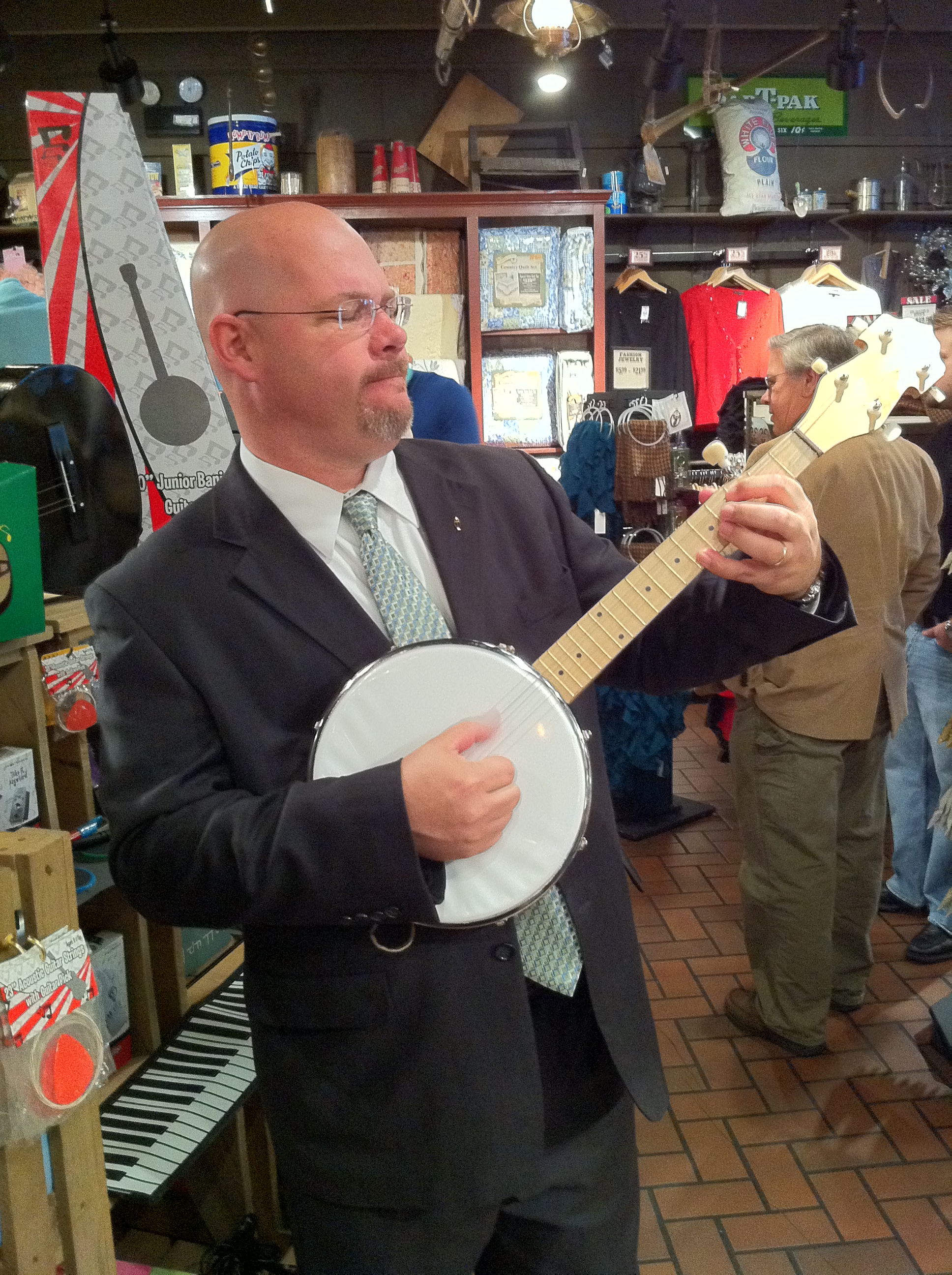
banjoConsidering how I was born and “raised” in Tennessee, I know a little about country music. Believe it or not, I have written a country song (to prove I could), played and recorded music in Nashville, and even toured Brenda Lee‘s house when I was a kid (I helped her daughters with a lemonade stand).

Country music (at least the stuff before Kid Rock) was earthy, blue-collar music that spoke of real life, or at least what was left of it after one spent too much time hunting, fishing, or drinking in a bar. The lyrics were usually sad, depressing, and great reasons to stay drunk. For example…

“Hunting Dear”

I came home late from hunting deer / My wife drank all my favorite beer / And then before the night was even done / My fishing poles were broke in two / And as she said, “I’m gone – we’re through / She took my dog, my truck, and my gun!

So I’ll walk down to the bar / I can stumble along that far / A country boy don’t need a cheetn’ girl / I’ll drink away my pain / Till my dog comes home again / Then we’ll both go out together…huntin’ dear.

– by Anthony Baker (just now)

Heavy Hearts

The reason why country music is so loved is the same reason the blues are so popular: heavy, broken hearts. Some say it’s impossible to really play the blues if you’ve never been heartbroken. I believe it.

I don’t know what version of country or blues Solomon had playing in his chariot, but he evidently understood that people with broken or heavy hearts hate to hear happy songs. He implied that playing cheerful music for a heavy heart is about as smart as taking one’s coat off in cold weather, or pouring vinegar on soda.

It’s Like This…

Imagine the feeling of already being chilled, but then having your coat taken away. It’s like going from bad to worse. When a person is down and depressed the last thing he really wants to hear at the moment is, “I am happy; you can be too!” Saying (or singing) that just makes the cold even colder.

The word nitre comes from the Hebrew word נֶתֶר (nether), which is what we would recognize, today, as carbonate of soda. Have you ever seen what happens when you pour vinegar on baking soda?  Not only does the soda become worthless for cleaning, but it will explode! That’s what can happen when a sad person hears a happy song.

Just Listen

In reality, besides listening to country music or the blues, the one with a heavy heart needs someone to listen, to nod a head, and be a friend. Singing a happy song to a hurting friend, although well-meaning, may seem like you don’t care, or worse, like you haven’t heard.

For we have not an high priest which cannot be touched with the feeling of our infirmities…” – Hebrews 4:15

Sometimes the best encouragement for a hurting friend or loved one is to cry along with them. That’s one reason why Jesus came.


Get Out!

Proverbs 25:17

“Withdraw thy foot from thy neighbour’s house; lest he be weary of thee, and so hate thee.”

“Let’s Go to Bed…”

My mom and dad used to have some friends that we visited a lot. One time, after staying late watching television (we didn’t have one at the time), the man of the house stretched…yawned…then said to his wife:

“Honey, let’s go to bed so these people can go home.”

What a nice way to tell your friends to leave! Talk about shifting the blame, huh? It’s like saying: “These nice people feel obligated to stay here because we are awake. They must be tired of our company by now, so why not give them a way out?” In reality, it was a humorous way of telling someone “go home.”

Lingering Guests

Every once in a while people lose the ability to determine when a party is over. Some people, because of a host’s hospitality, feel they are more wanted, more part of the family, than they actually are. These people for get that the host has limited resources, both in food and patience.

Even those of us with close, intimate friends have times when we want to be alone. Good friends recognize this and are careful not to wear out their welcome. Selfish friends invite themselves over to ever family dinner, every game night, every outing, and never seem to get the message. When someone suggests going to bed so they can leave, they just say, “No problem, I’ll sleep on the couch.”

Loving others requires us to respect them, so be a good guest and a respectful friend. 


Trust Him, Honey

Proverbs 25:16

“Hast thou found honey? Eat so much as is sufficient for thee, lest thou be filled therewith, and vomit it.” 

Honey

Believe it or not, I have mixed emotions about honey. I love the flavor and everything about it, except the fact that it is made by insects. Just thinking about the legs and mouths of tiny little bugs preparing my food is creepy. But on the other hand, I try not to think about where milk comes from, either.

But wherever we get it, honey is a wonderful food. It is super sweet, yet healthy. It has anti-bacterial properties and can keep for a long time. It’s good for a quick pick-me-up, or to soothe a sore throat. It’s uses are many. Yet, even with honey, too much of a good thing can be a bad thing.

Sufficient

Western society has a problem knowing when to say, “no.” We eat far more than is sufficient for us, and our waste lines can prove it.

However, some people are starved for good things. Even simple pleasures like honey may be hard for some to get. Therefore, when they do manage to lay hold of them, they eat like there is no tomorrow. They eat until they get sick, which leads to vomiting. They eat more than what was sufficient to meet their need.

Faithless Waste

Why do we eat more than what is sufficient? Most of us overindulge because our bodies allow it. We have grown accustomed to eating more than is sufficient, so we normally have no food left before we reach the point of throwing up. But why do we do it?

Maybe fear (a lack of faith) has a lot to do with it. Like a dog starved of food will gulp down everything it is given in just a few bites, we sicken ourselves on good things like there is no tomorrow.

In Exodus sixteen we can read of how God gave the people of Israel manna in the wilderness. Yet, God told them only to collect enough for each day, and no more; the rest would spoil. There was no need to worry, for God was faithful. Could it be that we have no faith? Could it be that we have trained ourselves to take more than is sufficient because we don’t trust God to provide what is sufficient for tomorrow?

What a waste, especially since all the extra will end up on the ground.