Author Archives: Anthony Baker

About Anthony Baker

Unknown's avatar
Husband, dad, pastor, artist, and musician. Time Magazine's Person of the Year in 2006 (no joke!). Loves coffee (big time), good movies, and sarcastic humor. Holds a Doctorate in Ministry. Most importantly, a servant of the Lord Jesus Christ. All glory belongs to Him! Matthew 5:16

Acquit or Convict?

Proverbs 18:5

“It is not good to accept the person of the wicked, to overthrow the righteous in judgment.”
“It is not right to acquit the guilty or deny justice to the innocent.” – NLT

Legal Precedent

My youngest - an aspiring lawyer - at a mock trial competition.

My youngest – an aspiring lawyer – at a mock trial competition.

It is too hard for me to go back and review the legal history of all mankind, but I would venture to say that poor legal decisions have been made even before the first judge received his mail-order diploma.

Every time we turn on the television or read the newspaper we discover another criminal who has been released, or another innocent victim who has been punished. It’s almost too depressing to watch. Who can forget O. J. Simpson?

Not long ago I read of a man who was sent to prison for 20 years all because he fired a weapon to protect his family. Every day I hear of the elderly losing their homes to pay taxes; of the criminals getting rewarded with large settlements; and of the innumerable politicians who lie and steal with impunity while the taxpayer suffers without recourse. When will it all end?

The Righteous Judge

It is wrong to acquit the guilty. It is even more wrong to punish the innocent. But even though the fools of this world continue to do such things, even bragging about their actions, God’s mercy will not endure forever. He is still the Righteous Judge who will hold all accountable.

“Let the sea roar, and the fullness thereof; the world, and they that dwell therein. Let the floods clap their hands: let the hills be joyful together Before the LORD; for he cometh to judge the earth: with righteousness shall he judge the world, and the people with equity” (Psalm 98:7-9).

Proverbs 17:15 says, “He that justifieth the wicked, and he that condemneth the just, even they both are abomination to the LORD.”

There WILL come a day when the scales of justice are balanced.


What I Thought Was a Good Thing Was Not

Proverbs 18:1

“Through desire a man, having separated himself, seeketh [and] intermeddleth with all wisdom.”

Embarrassing

When talking through the Proverbs on one Wednesday night at church, my own wife, sitting on the front row, asked a question that caused me a little embarrassment. I had just read the above verse from the King James Version and was about to give my thoughts when she asked, “Why does my version read so differently?”

You see, I encourage my congregation to compare translations when doing a verse-by-verse study of Scripture, for, like turning a faceted jewel, a different perspective can bring out color and sparkle never seen before. It’s the same flawless stone, but from a different angle. Granted, not all translations agree on every interpretation, but where one might be off, a group of translations will clarify the proper meaning of the text.

So, my wife’s version read: He who separates himself seeks [his own] desire, He quarrels against all sound wisdom(NASB). At that, another church member volunteered her version’s take: “Unfriendly people care only about themselves; they lash out at common sense” (NLT).

I didn’t have an answer. What’s even worse, my interpretation of Proverbs 18:1 and the application I was going to make was no where even close to the idea the other two versions were conveying. What we had here was a preacher who didn’t follow his own advise and got caught not doing his homework.

My Original Thoughts

My original thoughts on Proverbs 18:1, based simply on a cursory reading of English I thought made perfect sense, went something like this:

“Through desire,” because a man has to have the desire or drive to do something worthwhile, a man who wants to learn sometimes has to get alone, push aside distractions, and “separate himself.” It’s something that takes commitment – you have to want it. But it’s not simply the “getting alone” that makes all the difference; it’s the seeking of wisdom from multiple disciplines that gives one understanding in more than one area of life. Or, you could just say that learning takes hard work, but you can’t be lazy – you have to work for it.

But that wasn’t what this verse is saying.

The Real Meaning

Please understand, the King James Version’s translation of verse 1 is not incorrect; the way we say things and how we use our words have changed, that’s all.

The other translations I mentioned rendered Proverbs 18:1 in a way modern readers, such as myself, could better understand the original text. Where I thought “desire” and “separated himself” meant something noble, the actual meaning of the original text (and the way an Elizabethan reader would have understood the KJV) was something selfish and arrogant.

Where I thought “intermeddleth with all wisdom” was saying the man checked out more than one book in the library, the word “intermeddleth” means to “to expose, lay bare,” or “quarrel with anyone, especially in dice, drinking, or in dividing an inheritance” (Gesenius’ Hebrew-Chaldee Lexicon).

So, another way you could interpret Proverbs 18:1 might go like this:

“Loners and arrogant know-it-alls think they’re in a class all to themselves and make few friends. They also have contempt for any wisdom that doesn’t come from themselves and are always trying to meddle with or subvert it to gain an advantage.”

Would you have interpreted it differently?


Stepping on Snakes

Proverbs 17:24

“Wisdom is before him that hath understanding; but the eyes of a fool are in the ends of the earth.”

If It Had Been a Snake

I have heard this saying all my life: “If it had been a snake, it would have bit you.” What exactly does that mean?

One time I heard it after I had been searching for a water hose in some tall grass I should have mowed earlier. My dad and I had to look for the missing hose, so when my foot slipped on the round rubber tube, my dad said, “If it’a been a snake, it would’a bit ya’.”

The meaning is that sometimes we miss the most obvious things, even though they may be right in front of our face.

It Was a Snake

800px-Copperhead05

Credit: Wikipedia

Because we lived next to the woods and near the Tennessee River when I was younger, rattle snakes and copperheads (venomous snakes) were common. One day, when a friend of mine came to visit for the evening, he walked in front of me to the front door of our house. What he failed to see stretched out on the ground in front of him, right below the door, was a 3-foot copperhead. He didn’t see it, but I did – just in time – so I threw him (my friend) off the porch and into the yard (I guess it was the adrenalin).

The reason my friend did not see the snake was because he was looking other places.

Not a Snake

Wisdom is not a snake, but you probably knew that. Yet, why is wisdom so hard for some to recognize? Solomon previously described Wisdom as even crying out in the streets (Prov. 1:20). It’s not like we can call wisdom elusive, can we?

I am reminded of what God said through Moses,

11 “This command that I give you today is certainly not too difficult or beyond your reach. 12 It is not in heaven so that you have to ask, ‘Who will go up to heaven, get it for us, and proclaim it to us so that we may follow it?’ 13 And it is not across the sea so that you have to ask, ‘Who will cross the sea, get it for us, and proclaim it to us so that we may follow it?’ 14 But the message is very near you, in your mouth and in your heart, so that you may follow it.[1]

Wisdom is as close as our face, if we would just pay attention. All it would really take is for one to want to see it.

The Fool Will Get Bitten

Unlike the man with understanding, the fool has his eyes looking around for anything and everything that doesn’t matter.  Instead of recognizing what is in front of his face, he looks up to the stars and across the seas.

In the end, it won’t be wisdom that bites, but another kind of Serpent.


[1] The Holy Bible: Holman Christian Standard Version. (Nashville: Holman Bible Publishers, 2009), Dt 30:11–14.


Perverted Justice

Proverbs 17:23

“A wicked man taketh a gift out of the bosom to pervert the ways of judgment.”
“The wicked accept bribes in secret to pervert the course of justice.” -NIV

What “They” Do

Bribes are bad, especially when truth and justice is perverted. That is the main point of this proverb. The wicked man takes a bribe in order to keep justice from going forward.

We’ve seen the movies, read the books, and may have even experienced the results in real life. We are all familiar with what the bad guys typically do. They take money to keep from testifying at a trial. They are given a little off the top to collect a little more from a debtor. They are paid to tell a lie in order to get another bad guy acquitted of a crime. That’s what bad guys do.

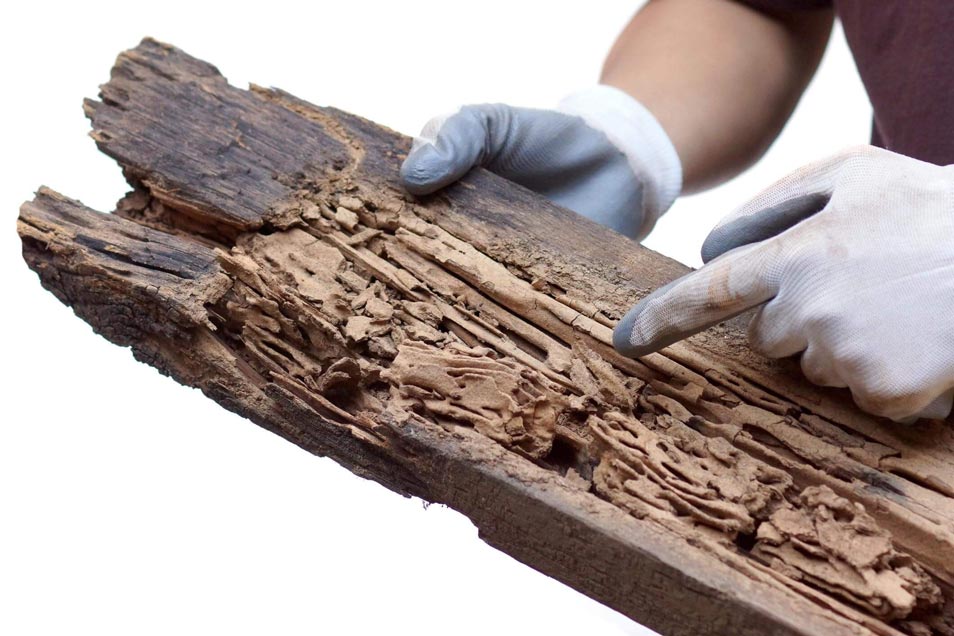
Image result for termite damage"I once knew of a pest control company that was bribed to give clearance letters. Builders who wanted to save a few hundred dollars would give fifty to the owner of the company, and in turn he would give the builder a letter stating the new property had been pre-treated for termites. Justice was perverted because the new houses were sold with no protection from termites, and when they did come, the homeowner was usually convinced to pay a large sum to the same pest control company for a termite treatment.

These were bad guys, and that’s what they do.

What “We” Do

What many fail to recognize is the wickedness in their own hearts. It is so easy to judge others, but it is very hard to judge ourselves.

Have you ever given someone money for doing a small job, but then asked the person to not report the money on his tax return? Have you ever said, “If we do this ‘under the table,’ you won’t have to report it, and we’ll both be better off“? If you did, the law was skirted, and justice was perverted. Now who’s the bad guy?

Lord, help us to do what is right at all times, even when doing what is right cost us a little more. Help us to desire justice, not pervert it. 


Gates of Destruction

Proverbs 17:19

“He loveth transgression that loveth strife: and he that exalteth his gate seeketh destruction.” 
“Whoever loves a quarrel loves sin; whoever builds a high gate invites destruction.” – NIV

Always Arguing

I know people who will argue over anything – and I mean anything. If you say the sky is a pretty shade of blue, they will argue that it isn’t really blue. If you say you like a particular movie, book, or food, they will give you every reason your choices are flawed.

People like that are tiring and have few friends, and they bring it on themselves. They complain that no one likes them, that everyone hates them, and that no one wants to listen to their opinions, but they are the ones responsible for driving everyone away.

This is the type of person being spoken of in this verse. It is the type of person who loves to argue. It is also the person who loves sin.

Loving Sin

It may come as a shock to some, but many who claim to be righteous are really lovers of sin. I know a particular person who willfully admits his failures and flaws, but continues to do the very things that are wrong. He says, “I know I have a problem with (blank), but I know I’ll never change, so I’ll just have to keep asking for forgiveness.

The real problem is that he loves the sin, and therefore refuses to truly repent and “turn from his wicked ways.” His particular sin is his claim to fame, therefore he gets all the more attention. Without it, he wouldn’t be noticed as much.

Inviting Destruction

The second part of this proverb reminds me of what happens to people who choose to park their exotic luxury cars in more than one parking place. They say they do it to keep people from dinging their doors. In reality, they are doing nothing more than inviting a sledge hammer to the fender. I have seen plenty of nice cars that have been “keyed” by irritated “poor” people.

The prideful man is depicted in this verse as building a tall, elaborate gate to protect his belongings. What he doesn’t seem to understand is that his audaciousness is only an invitation to robbers.

The same can be said about Christians who go around bragging about their own spirituality. What fools! Don’t they know that it won’t be long before humility  comes crashing through the gate?

“Pride goeth before destruction, and an haughty spirit before a fall.” – Proverbs 16:18


Six, or Half a Dozen

Proverbs 17:15

“He that justifieth the wicked, and he that condemneth the just, even they both are abomination to the LORD.”

My Daddy Used to Say

Down here in the southern United States it is common to hear someone say, “Like my daddy used to say…” What did my dad use to say? He said a lot of wise things. Here are a few examples…

  • daddy“You haven’t really worked until you’ve shed some blood.”
  • “It’s colder than a witch’s upper torso outside.”
  • “I love your soul, but I’m gonna woop your flesh.”
  • “I brought you into this world; I can take you out” (he borrowed that from Bill Cosby…before the scandal).
  • “Right before God does something, the devil will always try to mess it up. So, if something bad is happening, God’s just about to do something.”

But when I read this proverb, the first thing that came to my mind was something else my father used to say all the time: “Six of one, half-a-dozen of another.” In other words, one thing meant about as much as another thing.

My God Says

Well, my Abba Father has said a lot of wise things, too. And when it comes to people who either justify the wicked (say what they are doing is OK) or condemn the just (say what is right is wrong), His disgust with them is about “six of one, half-a-dozen of another.” God despises them both equally.

Isaiah 5:20 – “Woe unto them that call evil good, and good evil; that put darkness for light, and light for darkness; that put bitter for sweet, and sweet for bitter!”


Flood of Trouble

Proverbs 17:14

“The beginning of strife is as when one letteth out water: therefore leave off contention, before it be meddled with.”
“Starting a quarrel is like breaching a dam; so drop the matter before a dispute breaks out.” – NIV

Flood Gates

Not far from where I used to live is the Tennessee River. When it rains for days on end, as it did not long ago, the river level rises, which causes the dams across the river to have to open their gates. I have seen the water come through those gates with ferocious power.

Sometimes dams fail. When that happens, depending on the size of the dam, lots of property is damaged and people are killed. When the Kaloko Dam in Johnstown, Pennsylvania burst in 1889, a whole town was washed away, along with 2,200 lives.

In some cases, human error was the cause of dams bursting. And according to Solomon, it’s not always water that destroys.

Dam Meddler

People who start arguments for no reason, or keep one going when it could have faded away, are like those who meddle with a weak dam. If nothing else, they are as those who would open a floodgate, but not know how to shut it.

Have you ever heard the phrase, “Just back away and count to ten?” I wonder how many lives could have been saved had they heeded Solomon’s warning?

You never know what hell is waiting to be unleashed when a quarrel is started. It is far, far better to simply walk away than to chip away at a crack in the dam. Drowning in the waters of strife is for fools.

The above video was taken at the Chickamauga Dam, Chattanooga. It was finished in 1939 and President Roosevelt was there for the dedication. But even though this video is impressive, I’ve seen it when all the gates were all the way open. On a normal day, the water’s not too rough below the dam. But on days like this, the power can shake your bones.

What a sobering reminder of how dangerous meddling can be. 


Do I Hear Nathan?

Proverbs 17:13

“Whoso rewardeth evil for good, evil shall not depart from his house.”

Did Solomon Remember?

I can’t help but wonder if Solomon was thinking of his own house when he wrote this. How well did he know the words that Nathan spoke unto his father, King David?

Why have you despised the word of the LORD, to do what is evil in his sight? You have struck down Uriah the Hittite with the sword and have taken his wife to be your wife and have killed him with the sword of the Ammonites. Now therefore the sword shall never depart from your house, because you have despised me and have taken the wife of Uriah the Hittite to be your wife.” – 2 Samuel 12:9-10 ESV

Uriah had been nothing but a loyal, devoted soldier. Even when David tried to get him to go home to be with his wife, Uriah couldn’t bear the thought of being comfortable while his fellow soldiers were sleeping on the battlefield (2 Samuel 11:11). And what did Uriah receive in return for his loyalty? A death sentence.

Was Solomon thinking of his brother, Absalom, the one who tried to kill his father? Did he think of his sister, Tamar, who was raped by her brother, Amnon (2 Samuel 13:10-20)? I wonder what he thought when he looked around at his family. Did he ever think to himself, “Why, dad? Why?”

Do I Hear Nathan?

It is one thing to reward evil with evil. Most people understand the concept of “an eye for an eye.” However, it is a vile, ruthless, selfish man who accepts good from another, only to give evil in return. He deserves whatever bad may come.

That should make all of us think. Has God been good to us? What have we given Him in return?

The prophet Nathan told David, “Thou art the man” (2 Samuel 12:7). What would he tell us?

By the Way

On a different note, some say the Bible cannot be the Word of God because it defames the character of the prophets. They (Muslims) say stories like the one told in 2 Samuel 11 and 12 are proof the Bible is a fabrication. The Koran, they say, would never, never allow the moral character of a prophet to be questioned, but would hold such role models in high esteem, blotting out any record of sin.

Fortunately for us, the Bible IS true. It doesn’t candy-coat the bad but shows how God can work through flawed, fallen men. The Bible, because it is true, highlights the goodness and grace of God, not the righteousness of man.

David was “the man,” but David was human. Unlike the “perfect prophets” in other religions, David prayed, “Wash me thoroughly from mine iniquity, and cleanse me from my sin [emphasis added]” (Psalm 51:2).

Don’t let evil move into your house.


The Bear Facts about Fools

Proverbs 17:12

“Let a bear robbed of her whelps meet a man, rather than a fool in his folly.”

“Let a man meet a she-bear robbed of her cubs rather than a fool in his folly.” – ESV

Dangerous Bears

There are a lot of people who go hiking in forests where big, furry, and not-so-cuddly bears live. There are also people who swim in the ocean where razor-toothed guppies the size of cars hunt surfboards. Hey, whatever floats your boat.

Personally, I prefer to swim in chlorinated kiddie pools rather than in a shark’s kitchen. And when it comes to hiking, well, I prefer forests where the bears ain’t. Otherwise, I’m taking a 12 gauge with slugs in it.

You see, it’s like this: bears are dangerous. They especially don’t like it when people pretend to be Goldilocks and mess with baby bear. Believe me, it’s better to stay away from Little Red Riding Hood’s back yard unless you seriously know what you are doing; otherwise, you may end up Pooh poo.

Dangerous Fools

But no matter how dangerous a she-bear is, Fuzzy Wuzzilina is nothing compared to a fool caught in his foolishness.

The fool is terribly fond of his lustful pursuits and passions, more so than a bear of her cubs. Threaten them, or take them away, and what you have on your hands is an angry, ferocious, indignant enemy determined to destroy.

Many years ago, when I was young, my father worked for a man who was having an affair. When my father and another employee witnessed the business owner having sex with his mistress at work, the man admitted what he was doing was wrong. However, as time went on, the businessman became indignant, hateful, and angry over the thought of giving up his relationships.

I still remember the drive-by shooting, the attempt to gun down my father behind the pulpit, and the phone calls saying, “I know where your wife and kids are, and when you’re not looking…

Eventually, as my father warned, sin’s payday would come. Sure enough, the husband of the mistress found my dad’s boss and the woman and killed them both.

Stay Away

Solomon must have had some experience with fools. Maybe we should heed his warning.

“A person who can accept criticism has an approachable personality and can function well in social interaction. People who cannot accept a rebuke, however, cause chaos in the public arena. It would be better to try to deal with an angry bear in search of her cubs!”*

*Duane A. Garrett, vol. 14, Proverbs, Ecclesiastes, Song of Songs, The New American Commentary (Nashville: Broadman & Holman Publishers, 1993), 161.


Don’t Remind Me!

Proverbs 17:9

“He that covereth a transgression seeketh love; but he that repeateth a matter separateth [very] friends.”
“Whoever covers an offense seeks love, but he who repeats a matter separates close friends.” -ESV

Reminding

Have you ever had someone remind you of a mistake you made years ago? If you are a husband, like me, then the answer is “Yes!

photo (77)I may be running the risk of alienating many female readers, but men who are married know that mistakes made today are likely to be discussed tomorrow…and next month…and ten years from now. You see, wives are endowed by God with the uncanny ability to remember every time a man goofs up. I am convinced it’s an ability given to them to help even out the “weaker vessel” playing field.

However, I have also learned something else about wives – they know when to draw the line. If they wanted to, they could talk all day about the stupid things we men do; but they don’t (praise God). They remind us just enough to keep us humble, but not enough to break our spirits. Thankfully, most wives love their husbands.

Repeat Reminding

Sometimes, however, it is necessary to remind a person that is about to make a mistake what happened in the past. For instance, a true friend who might have been robbed by another friend who was drunk, or on drugs, might remind that person of his actions when he is tempted to take another drink. The reminder can be a warning designed to preserve a friendship, if not a life.

On the other hand, there are people who like to bring up the past on a regular basis. Their intentions are not to prevent anything, but to manipulate and control. That is what Solomon was talking about in today’s proverb.

The word translated repeateth is in the “active participle” tense.  So, to put it another way, the person who is losing friends is the one who is continually bringing up the past.

Gracious Love

Proverbs 10:12 says, “Hatred stirreth up strifes: but love covereth all sins.” In other words, it is hatred that keeps uncovering the pain of the past, but love heals as it covers. Now, this doesn’t necessarily mean that everything must be forgotten, for even though a bandage covers, the bandage only signifies a wound was there in the first place.

Of course, that’s what makes grace so great. Without sin there would be no need for grace; but because of sin, grace abounds. A love that is real is a love that testifies something is covered.

Marvelous grace of our loving Lord,

Grace that exceeds our sin and our guilt!

Yonder on Calvary’s mount outpoured,

There where the blood of the Lamb was spilt.

Grace, grace, God’s grace,

Grace that will pardon and cleanse within;

Grace, grace, God’s grace,

Grace that is greater than all our sin!

– Julia H. Johnston (Grace Greater than Our Sin)