Author Archives: Anthony Baker

About Anthony Baker

Unknown's avatar
Husband, dad, pastor, artist, and musician. Time Magazine's Person of the Year in 2006 (no joke!). Loves coffee (big time), good movies, and sarcastic humor. Holds a Doctorate in Ministry. Most importantly, a servant of the Lord Jesus Christ. All glory belongs to Him! Matthew 5:16

He Met a Harlot

Proverbs 7:10

“And, behold, there met him a woman with the attire of an harlot, and subtil of heart.”

Simple Observations

I am sure that much could be said about this verse, but I would like to make some simple observations.

First Observation. “And, behold, there met him…” Believe it or not, there are some places a man, much more a Christian man, should never go. This applies to the women, also. There are places such as bars, strip clubs, night clubs, and chicken wing places with servers wearing next to nothing, that invite not only temptation, but leave one open to attack.

Notice, the young man went to a place “near her corner,” next to her house, in the dark, and late at night (7:8-9). Folks, when you walk into a spider’s lair, expect her to come out to meet you. She’s looking for you.

Second Observation. “with the attire of a harlot” Ladies and gentlemen, boys and girls of all ages, there are ways to dress that are decent, and then there are ways to dress that make you look like a hooker. Why is this so hard for some to understand?

The whole idea, here, is that there is a woman on the prowl, and she has dressed herself in such a way to lure a man to his doom. If it didn’t matter how one dressed, then it wouldn’t have meant anything for Solomon to point out the obvious. But Solomon did point out that what this dangerous woman was wearing was typical of her trade.

Men, stay away from any woman who dresses in such a way that intentionally makes your eyes wander. Women, when you dress provocatively, you send a message that is ungodly. Parents, shame on you if you let your little girl leave the house looking like a prostitot!

Third Observation. “subtle of heart” I was curious about the use of the word “subtle.” According to one online dictionary*, “subtle” means “not loud, bright, noticeable or obvious in any way.” This didn’t seem consistent with what I was reading. There’s nothing much “subtle” about a woman who goes out into the dark wearing clothes that look like a harlot. So, I dug deeper.

It seems that the word translated “subtle” is the Hebrew word natsar**, which means “to guard, watch over, keep.” In other words, “subtle of heart” means something like, “you don’t know how hard, cold, and wounded her heart is.” She will never let you know the pain she hides, but she will unleash it on the fool she finds in the dark.


*Source: http://dictionary.cambridge.org/dictionary/british/subtle

**”Hebrew Lexicon :: H5341 (KJV).” Blue Letter Bible. Accessed 7 Nov, 2013. http://www.blueletterbible.org/lang/lexicon/lexicon.cfm?Strongs=H5341&t=KJV



Never Underestimate Jealousy

Proverbs 6:34-35

“For jealousy is the rage of a man: therefore he will not spare in the day of vengeance. He will not regard any ransom; neither will he rest content, though thou givest many gifts.”

These two verses are stocked full of practical insight which is lost on the man who fools around with a married woman. The wisdom of Solomon should be heeded, for nothing good comes from making a married man jealous. But there is also wisdom to be had for the woman.

Foolish Games

I recently read an article on a website called Selfgrowth.com entitled “How to Make a Guy Jealous – 5 Teasing Ways to Make Him Want You More.” In that article, written for girls, the writer suggests that “jealousy can also be good – just as long as it’s not destructive.” Really, what kind of wisdom is that? Well, I guess one should consider the source. Just read the author’s bio:

“Steffi Hall is a seduction and attraction expert who teaches men how to attract and pick up beautiful women. As a former model who has been sought after by many men, Steffi has the experience in passing on the skill of attraction, since she was a target of many men herself. There is no better teacher then the target itself, learn from the source.”

Do verses 25 and 26 of this chapter ring a bell? Why would anyone want to learn about relationships from a self-proclaimed seducer? How wise is it to tell your current man “about your other guy friends and what you usually do when you hangout,” or how your ex “was such a great kisser?”

Jealousy is a foolish game to play, for jealousy often leads to rage.

Rage Against Fools

Proverbs 6:27 and 28 talk about getting “burned.” Verse 33 talks about getting “wounds.” No wonder Solomon says in verse 32 that a man who commits adultery with a woman “lacketh understanding.” Aside from having no “heart,” the man is a fool. Does he ever stop to consider that the husband may want revenge?

I have personally known of several men who had their wives betray them.  In one of those cases the husband killed the adulterer and the adulteress with a shotgun. In another, the husband killed his wife, then himself. The rage that results from being betrayed by a spouse in very dangerous, and in these two cases what Solomon warned came to pass – the husbands did not “spare in the day of vengeance.”

Fool’s Gold

Even if adultery doesn’t end in murder, it usually ends in divorce. What kind of fool thinks he can lay with another man’s wife and then smooth everything over with money and gifts? Evidently, some do. Some think they can bribe themselves out of any situation.

Solomon warns that a jealous man is one who cannot be bought off or placated with money or things. If money can’t buy love, it can’t replace love betrayed.


Dangerous Eyes

Proverbs 6:25

“Lust not after her beauty in thine heart; neither let her take thee with her eyelids.”

Blink Like an Egyptian

When I think of seductive eyes, I think of Susanna Hoffs. Her name might not ring a bell with a lot of people these days, but back in the 80’s she had everybody walking “like an Egyptian.” In the last few second of a music video, Susanna Hoffs, lead singer for The Bangles, paused, looked side to side, and made every red-blooded male swoon (and buy records, cassette tapes, and posters).

It was amazing…no music…no seductive clothing showing…just those eyes. Susanna Hoffs reminded the world how powerful they can be.

A Little Irony

The above verse contains a very ironic twist: the eyes of the deceived are taken by the eyes of the deceiver. Do you see it? When we lust after someone, we fall victim to a trap set for our eyes. In this case, the eyes are the bait.

It is so dangerous to lust after a woman. Yet, we live in a culture that depends on lust to make billions of dollars every year. Seductive beauty is everywhere, and hard to avoid. But avoid it we must! It is in the moment of lusting we run the danger of eye contact. When she sees us looking, she looks back, and it’s over.

Real Danger

Believe it or not, do a quick search on the internet and you’ll find plenty of instructions for seducing with the eyes. “How to Seduce Someone Using Only Your Eyes: 6 Steps” and “Eye Seduction Secrets” are only a fraction of the links available. Obviously, there are plenty of women who want that info.

One suggestion in WikiHow reads, “Spend about 20 minutes a day or more practicing this in front of a mirror. The look you want in your eyes could best be described as ‘intense’. Think lustful thoughts…” Isn’t that sad? Some women are spending far more time each day practicing the art of seduction than most men ever spend in God’s Word. Is it any wonder why so many fall prey to their “eyelids?”

Decide Now

Men (and women), we need to be more like Job in the Old Testament. We need to decide beforehand what we allow our eyes to see. We should avoid people, places, and things that tempt us to lust. We should also know our weaknesses. But like Job, we should make “a covenant with [our] eyes not to look with lust at a young woman [or man].” – Job 31:1 NLT

When we don’t decide early on, that is when we are subject to fall. And as we will see in the next few verses, a fool falls hard.


A False Witness

Proverbs 6:19a

“[These six things doth the LORD hate: yea, seven are an abomination unto him:] … A false witness that speaketh lies, and he that soweth discord among brethren.”

Slander

“The slanderer is amongst the greatest of social curses. He robs his fellow creature of his greatest treasure – his own reputation, and the loving confidence of his friends.” – Joseph S. Exell*, 1905.

Daniel Webster (1828 dictionary) called slander “that worst of poisons.” And that is what the above verse is speaking of – poison that destroys reputations, confidence, and even lives.

No Weapons Needed

If you were to ask me to paint a picture in my mind of the perfect assassin, all I would need is a little black paint. On my mental canvas I would paint a Ninja warrior, armed to the teeth with swords, shuriken, darts, spiked gloves, and smoke grenades. As far as I know, ninja are the elite of stealthy killers.

Then again, I wouldn’t necessarily have to paint my ninja with weapons in hand. His hands are weapons to themselves. A ninja can slay 50 people with his pinky finger – just ask Chuck Norris.

But in reality, no assassin is more evil than “a false witness that speaketh lies.” No secret killer is more deadly than one who slanders the reputation of another. The slanderer needs no weapons, not even hands, to wipe out multiple lives. All he/she has to do is speak.

Totally Opposite

In the book of Genesis we can read the story of creation. In the book of John we can read even more…

“In the beginning was the Word, and the Word was with God, and the Word was God. The same was in the beginning with God. All things were made by him; and without him was not any thing made that was made.” – John 1:1-3 KJV

The Word created everything that is. When there was absolutely nothing, not even time, Jesus, the Word of God made flesh (John 1:18), turned nothing into everything. He created. He brought life. He made life.On the other hand, the one who bears false witness does nothing but destroy with every word that comes from his/her mouth. What a contrast! Is it any wonder why God abhors this person?

“If any man among you seem to be religious, and bridleth not his tongue, but deceiveth his own heart, this man’s religion is vain.” – James 1:26 KJV

“For the Scriptures say, “If you want to enjoy life and see many happy days, keep your tongue from speaking evil and your lips from telling lies.” – 1 Peter 3:10 NLT

Granny’s Advice

I think my granny may have actually met Solomon. She always said, “If you can’t say something nice, don’t say anything at all.” Maybe Granny was right.

*Exell, Joseph S. The Biblical Illustrator, (New York: F. H. Revell, 1905), 170.

Swift to Mischief

Proverbs 6:18b

“These six things doth the LORD hate: yea, seven are an abomination unto him: A proud look, a lying tongue, and hands that shed innocent blood, An heart that deviseth wicked imaginations, feet that be swift in running to mischief,”
Thinking of Nugget

I was sitting and thinking about the above verse, the one about “swift feet” running to mischief, and one thing came to mind – our little dog, Nugget.

Nugget is a little Chorkie (Chihuahua/Yorkie) with a desire to run, and run, and run. Not only does he like to run, but he likes to run away! Any time he can get out of the house without a leash, Katie bar the door (which is ironic, because if Katie had barred the door, he wouldn’t have gotten out).

Normally, when we let Nug out on a long string, even though he has 50 ft., it’s not enough. As a matter of fact, he could run all over our front yard, but he doesn’t. Usually, he just looks sad and depressed. He knows what lies just out of reach – freedom.

“I’m Free!”

When Nugget gets loose, his little feet turn into a blur as he tears up the grass. Like a little streak of furry lightning he takes off for the back yard, to the same place, right where there’s a hole in the neighbor’s fence. Believe me, he knows he’s not supposed to go out of our yard, but the temptation to play with bigger dogs is too much.

When he does get loose, a tiny smile becomes visible, exposing his tiny little underbite, as his feet run swiftly to mischief. Freedom from restraint causes him to bark, “I’m free!” as I begin to chase him through the neighborhood (in our car).

Yard Dogs

My dad used to have a saying. Whenever he talked about people who had no moral restraint, especially in the area of promiscuity, he would say, “They’re no different than a bunch of yard dogs.” In his mind he equated people who run to sin with dogs having no restraint, no morals, and an animalistic desire to fulfill the flesh.

Surely the above verse applies to those who, like Nugget, like a dog, are immediately drawn to cross every boundary. Like “yard dogs,” people with feet that are “swift in running to mischief” do so no matter how much the Master calls. Is it any wonder why He gets disgusted?

“I’m Constrained”

The difference between an unbeliever who runs to evil, and a Christian who doesn’t, can be found in the words of the Apostle Paul: “the love of Christ constrains me” (2 Cor. 5:14).

When a person truly makes Jesus Christ Lord of his life, he no longer needs to be tied down by external restraints. He doesn’t need a leash around his neck – there’s a leash in his heart (Jer. 31:33). The Christian, reflecting upon the manifested love of Christ (1 John 4:9), keeps his feet planted on righteous soil.

When the big dogs call; when there’s a hole in the fence; when we are tempted to run to mischief; the love of God within our hearts cries, “I’m constrained! I’m constrained!” Without a leash, we play with our Master in fields of grace.

He loves that.


God’s Not Safe

Proverbs 6:16

“These six things doth the LORD hate: yea, seven are an abomination unto him:”

He’s Not Safe

So many people have the impression that God is nothing but love, love, love. Thinking all He cares about is their happiness and well-being, they forget that angels surround His throne crying “holy, holy, holy, Lord God Almighty” (Rev. 4:9).

In the “seeker-friendly” community of churches, many focus on a God who is “for us,” while avoiding any mention of a God who hates sin. They treat Him like a rich grandfather who winks at their indiscretions. They treat Him like a tame pet. But He’s not tame. And He’s not safe.

When I read the above verse I was reminded of a conversation in The Lion, the Witch, and the Wardrobe by C. S. Lewis. Susan, Lucy, and Peter were talking to Mr. and Mrs. Beaver about Aslan:

“Is he – quite safe? I shall be nervous about meeting a lion [said Susan]”

“That you will, dearie, and no mistake,” said Mrs. Beaver, “if there’s anyone who can appear before Aslan without their knees knocking, they’re either braver than most or else just silly.”

“Then he isn’t safe?” said Lucy.

“Safe?” said Mr. Beaver. “Don’t you hear what Mrs. Beaver tells you? Who said anything about safe? ‘Course he isn’t safe. But he’s good. He’s the King, I tell you.”

A “safe” God is one who doesn’t care what you do, as long as you love Him and worship Him, but a Holy God hates sin. And He is nothing to trifle with.

Abominations

In the next few days we will be looking at verses 17 through 19 and the seven things God hates – yes, hates. It might be hard for some to contemplate, but even though God is love (1 Jn. 4:8), He is righteous, and He tests the hearts of men (Ps. 7:9).

As we look at these things, remember that we are all guilty of them. If you don’t think so, then you’re deceiving yourself (1 Jn. 1:8). All of us have sinned (Rom. 3:23) and fallen short of God’s righteous standards. He hates our sins, and that will never change (Mal. 3:6).

Salvation Not a License

It might be tempting to leap right to the good part – the Gospel. John 3:16 says that Jesus came to die for our sins and make things right between God and us (Col. 1:20). But hold on! That doesn’t change God’s view of sin. He still hates it.

God is love, but the Bible also says that a man who loves God will keep His commandments (Jn. 14:15; 15:10). Christ paid our sin debt on a cruel cross, and those who are truly His will avoid sin. What God hates, the Christian should hate.

“Who is wise? He will realize these things. Who is discerning? He will understand them. The ways of the LORD are right; the righteous walk in them, but the rebellious stumble in them.” – Hosea 14:9 NIV

A Prayer

Lord God, thank you for loving me. Thank you for the gift of forgiveness. But help me to remember Who you are – King. Help me to hate the things you hate, and love the things you love. 


Thoughts On Co-signing

Proverbs 6:1-5

1My son, if thou be surety for thy friend, if thou hast stricken thy hand with a stranger,
2Thou art snared with the words of thy mouth, thou art taken with the words of thy mouth.
3Do this now, my son, and deliver thyself, when thou art come into the hand of thy friend; go, humble thyself, and make sure thy friend.
4Give not sleep to thine eyes, nor slumber to thine eyelids.
5Deliver thyself as a roe from the hand of the hunter, and as a bird from the hand of the fowler.

Practical Wisdom

When it comes to the wisdom of Proverbs, some think it’s all spiritual. Much like the person who thinks faith should be kept out of everything secular, such as politics or the workplace, these people assume biblical wisdom is incompatible with everyday life. How wrong they are!

Today’s passage is a lesson in financial wisdom. Here, Solomon is addressing the dangers of unwisely obligating one’s self to a creditor (stranger) on behalf of a friend.

Unsure Surety

There is nothing wrong with helping a friend. As a matter of fact, it was Paul who told Philemon that if Onesimus owed him anything to “put that on my account…I will repay” (Phil. 1:18-19). Helping someone out when they are truly in need, especially when you have the ability, is the right thing to do.

“If there is a poor man among your brothers in any of the towns of the land that the LORD your God is giving you, do not be hardhearted or tightfisted toward your poor brother. Rather be openhanded and freely lend him whatever he needs.” – Deuteronomy 15:7-8 NIV

However, Solomon is warning that we should be very careful when entering agreements (striking hands) on behalf of others, even our friends. You see, to be a “surety” for someone means guaranteeing the lender your friend will pay his debt. The problem comes when you end up owing what you cannot pay, therefore putting your family and your self at risk.

“Can You Co-Sign for Me?”

How many times have you been asked to co-sign on a loan? How many times have you had a brother-in-law ask for help starting a business that “can’t fail?” How many times have you felt sorry for someone, only to get burned in the end?

Many times we want to help our friends and loved ones, but end up snared by people we don’t even know. “I’ll help you this time,” we say. Then, a few months later, Hunter Loan Company is tracking us like deer.

Spiritual Application

There is a practical, yet spiritual principle to be found in the following verse: “[If] any provide not for his own, and specially for those of his own house, he hath denied the faith, and is worse than an infidel” (1 Tim. 5:8). The principle is “if you can barely afford to take care of your own family, don’t make financial commitments you can’t keep.”

Solomon says that even if you have become surety for a friend, prove his friendship – get him to relieve you of your obligation. Otherwise, when the rubber check hits the road, you risk losing not only your money, but your good name, your friend, and even your faith.


Run Away! Run Away!

Proverbs 5:7-9

7 Hear me now therefore, O ye children, and depart not from the words of my mouth. 8 Remove thy way far from her, and come not nigh the door of her house: 9 Lest thou give thine honour unto others, and thy years unto the cruel.”

Mean Cat

My grandmother used to have a mean cat. This cat was an absolutely anti-social, psychotic, frenetic feline. One couldn’t get near her without getting hissed at, and that just made us want to aggravate it more.

I know it probably wasn’t the smartest thing to do when we were young, but we would love to try to tease the cat without getting bit. Fortunately, the monster had been declawed; however, her piercing fangs remained. If we got too close she could leave a couple of bloody reminders that she still had a mouth. Playing with her was playing with danger. That’s why it was fun.

Temptation

It’s really all about temptation, isn’t it? Solomon knew that if you play with sin, or get too close, you will get bit, and it will hurt.

Jesus knew something about temptation, also. He said, “the spirit is willing, but the flesh is weak” (Matt. 26:41). Maybe that’s why the Apostle Paul warned Timothy to “flee” from “youthful lusts” (2 Tim. 2:22). Lust tends to make us buy things we can’t afford.

“But every man is tempted, when he is drawn away of his own lust, and enticed. Then when lust hath conceived, it bringeth forth sin: and sin, when it is finished, bringeth forth death.” – James 1:14-15

Flirting

Many times we like to get just close enough to the forbidden fruit that we can smell it. No, we know we shouldn’t take a bite, but the aroma gives us a little thrill. Flirting with the wrong woman is nothing more than trying to sin a little. But a little sin is still a sin.

In reality, if we know where temptation lives, why would we want to drive by? Do we secretly long for what we know will harm us? If we have lust in our hearts, then the answer is “yes.” As James said, we are only tempted when we are drawn away by our own lusts. Flirting is dangerous.

Giving it Away

The consequences of sin are never worth the temporary fun. In this case, Solomon warns that the price is one’s honor and freedom. When a young man enters the “strange” woman’s door, the result is usually shame that rarely goes away.

On top of that, there’s the wasted time – time that could have been spent building a loving relationship. Instead, all your energy, your emotions, your wealth, and your health is squandered on a user of men.

“Do not let sin control the way you live; do not give in to sinful desires. Do not let any part of your body become an instrument of evil to serve sin. Instead, give yourselves completely to God, for you were dead, but now you have new life. So use your whole body as an instrument to do what is right for the glory of God.” – Rom. 6:12-13 NLT

Final Thought

My son, the next time you feel drawn to a “strange” woman, remember the words of King Arthur in Monty Python and the Holy Grail….

“RUN AWAY! RUN AWAY!”


Watch Your Mouth

Proverbs 4:24

“Put away from thee a froward mouth, and perverse lips put far from thee.”
The Old Days

There used to be a day, when I was young, that foul language was not permitted in polite company. I remember going to see a movie with my parents, and right in the middle of the film we got up and left the theater. My parents were not going to sit through a bunch of “cuss’n.”

Back in the old days, before MTV and Southpark, it was not unheard of to punish a child who used “perverse” language. Now, it is not uncommon to hear small children curse like sailors. It used to be acceptable to wash a child’s mouth out with soap; but not anymore. Today’s children, not to mention the average TV show or movie, are accustomed to vulgarity.

Not Cuss’n

But this verse is not really addressing the use of four, six, or ten-letter words. Solomon is speaking here of something a little different. Oh, I’m sure this proverb could also be applied to the folly of foul language; but there is more to this verse than that.

If we take a look at the word “froward” in this verse, it means to be “distorted, or crooked” (Strong’s H6143). More than just advising his children to watch their language, Solomon was telling them that a wise man will speak straight, and not twist words to his own advantage.

Lies

If we were to dig down below the surface of this verse, I believe at the foundation we would find the command, “Thou shalt not lie.” And what is a distortion of the truth, but a lie?

It is so easy to lie when we get into trouble. It is also tempting to distort the truth (which is lying) for our own benefit. However, a wise man is one who understands there will always be consequences for lying; maybe not in this life, but eternity.

Used Cars

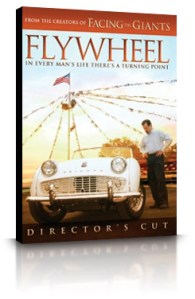
Several years ago there was a movie called Flywheel. In a nutshell it was about a used car salesman who realized God was not pleased with his gimmicks and half-truths. When he got his heart right, he put the “froward mouth” and “perverse lips far from [him].” In contrast he became a man of integrity whom people could trust.

You may not be a crooked used car salesman, but when was the last time you bent the truth? Was it when you tried to get out of that speeding ticket? Was it when you said that lunch was tax-deductible, when it wasn’t? Was it when you were late, but the right excuse would let you get by?

A wise man understands that there will come a day of reckoning. He understands that men will have to give an account for every idle word in the day of judgment (Matt. 12:36).

If anyone considers himself religious and yet does not keep a tight rein on his tongue, he deceives himself and his religion is worthless. – James 1:26 NIV


The Way to Go

Proverbs 4:11-12

“I have taught thee in the way of wisdom; I have led thee in right paths. When thou goest, thy steps shall not be straitened; and when thou runnest, thou shalt not stumble.”

A Way Walked

The first part of this passage is fairly simple to understand. In a moment of recollection, Solomon is reminding his children that he has given them good instruction; that he has led them.The best teachers are those who can say, “I have been down that road.” Sure, it is easy to give directions, but how much more valuable is the instruction when the teacher can relay first-hand experience?

As a bus driver, I drive the same route every day. I could draw a map that would be as accurate as one printed. But the difference between my map and an image from a satellite would be my knowledge of hazards unique to the vehicle. Unlike automobiles, 40 foot buses aren’t able to straighten some curves, or go under some bridges. Maps don’t usually show those things; but experience will.

Solomon is telling his children, as God is telling us, that the way ahead will be much easier if we listen to those who have gone before.

A Parental Challange

One interesting thing to note is where Solomon says “I have taught thee…” A deeper look at the word taught will show that it also means “to throw, to shoot.” Let this be a reminder – children are ours for a purpose.

In Psalm 127:5 David refers to children as “arrows” in a quiver. Arrows are worthless unless they are used. Arrows are worthless unless they are sharp, straight, and designed for a specific target. Children are to be considered tools with a mission, and we are to train them and keep them until we launch them toward their goals.

Straight, or Not?

Another interesting thing to consider is the word “straightened.” At first glance, we might consider the word here to mean the same as implied in the phrases “straight and narrow,” or “straight as an arrow.” Why, then, does Solomon say “thy steps shall not be straightened?” Does he want them to encounter curves along the way?

Actually, the word here is yatsar (Strong’s H3334), which can mean “to bind, be distressed, be in distress, be cramped, be narrow.” In reality, Solomon is saying that if one follows wise instruction, the way ahead will be less stressful, less binding, less depressing.

Thinking about this, I am immediately reminded of a particular place on the path through Rock City (a tourist attraction near Chattanooga, TN). It is called “fat man’s squeeze.” Seriously, if you are over 250 pounds, you might not make it through this narrow passage between two huge walls of rock. Yet, if you follow the signs along the way, you will be led to a different way around this “squeeze.”

If we would just follow wise counsel, the chances are much better that we will reach our goals, instead of stumbling or getting stuck along the way.