
Category Archives: conversation/speech

A Tattler No More

Proverbs 11:13

“A talebearer revealeth secrets: but he that is of a faithful spirit concealeth the matter.”

There is a reason verse thirteen comes after verse twelve (other than the logical number sequence). As implied and stated yesterday, all people are our neighbors, and what we do and say with/about one person easily comes out around others including loved ones. It comes out of what is in our hearts.

Tattle-tale

In middle and high school (late primary and early secondary school, for all of you who think of it that way), after years of bullying and before being led to the arms of Christ, I let the things of life get to me. It started with not liking certain people, which grew to hating certain people, which grew to hating pretty much all people, which grew to even hating myself. I hid the truth of how I felt, because I was sure no one would understand … or that they might stop me from finding enjoyment.

The only enjoyment I seemed to find was in causing dissension, getting a rise out of others. My method of choice:

Making up stories or discovering stories that others wanted secret and then spreading them.

Needless to say, I did not help matters with my personal life (though, I did get quite good about covering my slandering tracks … not a good thing, to be sure). But I did not care.

It caused more pain than pleasure, not only for others but also me.

Faithful

I know God changed me because of this.

I went from spreading stories out of my hatred to wanting to not cause pain and usurp hatred in my life. In fact, some loved ones jokingly loathed how I changed!

I still spread stories and revealed facts that some found embarrassing, but they were always about me. I learned that to avoid hatred and evil growing within me, keeping myself accountable meant keeping others in the know.

Instead of other people’s dirty laundry, I share my own. It hurts at times, but people know a) how to pray for me and b) that I do understand many things they may be going through.

I do not share, however, everyone else’s secrets. God is gracious enough to forget and help me grow past my sins, so I can forget and help people grow past their secrets and sins. If they are to be shared, the other person can share.

I am only trustworthy because of God. That is really the main point.

Lord, grow in me a faithful spirit. Let others know that I can be trusted with their hurts and secrets. Let others know they can find love in me, because You are in me.

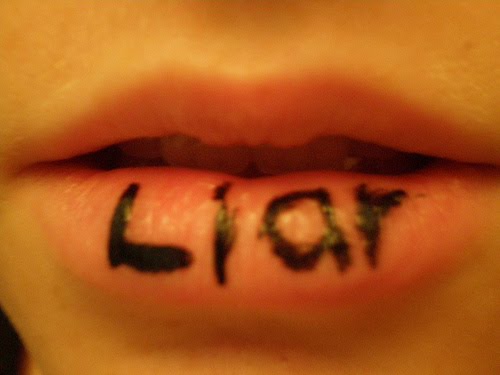

What’s In Your Heart?

Proverbs 11:12

He that is void of wisdom despiseth his neighbour: but a man of understanding holdeth his peace.”

Have you watched any TV or movies in the past few decades and seen those stories with neighbors that fight about who has the best lawn, the best toys, or the best Christmas decorations?

Most of the best end (or at least have middles) with these enemies coming together to work together or even in friendship.

War and Peace

The funny thing about all of these stories is that these neighbors (usually men, but sometimes women or both) fail to see just how much in common they have with each other, even to the point of hating something both parties have in common, or go beyond reason in their hatred. It is as if they have declared war, not only against their neighbor, but against common sense and reason.

These neighbors spread rumors, sabotage each others’ endeavors, and openly mock each other without realizing how foolish they look to most other people.

Many times, this attitude ends up carrying over to others, including family and friends.

Compare this to the neighbor everyone loves and wants to be around.

This neighbor often lends a helping hand to others, even those people others might not be inclined to help … including unliked neighbors.

This neighbor rarely, if ever, has anything bad to say about others, oftentimes because of an understanding of how bad hurtful words can feel.

You and I

What about us? Have you considered the words that leave your mouth? Do you think about what you say before you say it?

Do you know what is in your heart?

But those things which proceed out of the mouth come forth from the heart; and they defile the man. For out of the heart proceed evil thoughts, murders, adulteries, fornications, thefts, false witness, blasphemies: – Matthew 15:18-19 KJV

Perhaps the reason neighbors can not get along, people look and sound foolish, and we say things that we are ashamed of later is that we have those things listed above in our hearts.

You and I need to lift each other up as we seek the heart of Jesus Christ. We must help each other in our desire to have Jesus change our hearts to be like His.

You and I, to be able to hold our tongues and no longer have the need to hold our tongues, need the Wisdom of God, Jesus Christ, dwelling in our hearts.

Heavenly Father, without You we have evil hearts and defiled tongues. Through the power of Your Holy Spirit, live in our hearts and change them to be like Your Son’s. Teach us to love our neighbors. Give us Wisdom to not only say what needs to be said but to want to choose You.


Passing Us By

Proverbs 11:9

“An hypocrite with his mouth destroyeth his neighbor: but through knowledge shall the just be delivered.”

“Evil words destroy one’s friends; wise discernment rescues the godly.” – NLT 1996

Polluted

The word hypocrite has its origin in the Greek word for stage actor. In Greek drama actors apparently used masks to portray different characters. While we understand that a hypocrite is a two-faced person who pretends to be what he is not, the Hebrew word used in Proverbs is ‘chaneph’ which may be translated as polluted, corrupt, profane or godless. Polluted aptly describes the condition of all humanity at birth. Although we cannot change the way we were born, God provided a way through Jesus Christ in which He can change the way that we live, if we let Him. This includes what comes out of our mouths.

Words

It isn’t difficult to see how a hypocrite might destroy his neighbor with his mouth. It all comes back to words. The NLT Life Application Study Bible note for Proverbs 11:9 states: ‘The mouth can be used as a weapon, or a tool, hurting relationships or building them up.’ We need to choose our words carefully. But we also need to remember who lives in us. In John 20:22 Jesus breathes on the disciples and instructs them to receive Holy Spirit. If the Holy Spirit lives in us then how we say anything hurtful to another human being? If the same power that raised Jesus Christ from the dead is present in us, then how we be anything other than relationship builders, who use words wisely to encourage. Are we speaking words of life to those around us? Do our words point others to the One who speaks words of eternal life?

Simon Peter answered him, “Lord, to whom shall we go? You have the words of eternal life.” John 6:68 (NIV)

Reflections for Ragamuffins. Brennan Manning


Watch Your Tongue!

Proverbs 10:31

“The mouth of the just bringeth forth wisdom: but the froward tongue shall be cut out.”

A Way with Words

The Bible sure has a way with words, doesn’t it?

Could you imagine if every person who said stupid things, those things that just irk others, cause division, and make people generally feel bad, had their tongues cut out?

For starters, this world would be a lot quieter! Secondly, those who believe the Bible would be seen as cruel (or saviors of Mankind!) for taking someone’s tongue.

The thing is, people who are able to say the right thing at the right time have a way with words, but not all of them are righteous or just. For example, a great teacher can push a student to learn, to have a higher self-esteem, and to want to change for the better, and much of the time only with words.

Compare this to someone like Donald Trump. He can say many things that make a business great, but most people do not have “friend” or “colleague” or “inspiration” come to mind about him.

What about most politicians? Most people cannot wait for these people to stop talking!

This is basically the point.

People generally enjoy listening to someone who speaks wisdom.

A just person builds peace, grows confidence, and is easily respected. But even though some people can pull off one or two of these, without all three one ends up speaking mostly hot air. They may promote more dissension than peace; instill more fear or confusion than confidence; and find it harder to gain or maintain respect.

However, their tongues (usually) will not be cut out! Instead, by the Hand of the Lord, whether through circumstances or other people, they find no one listens to them.

“He will keep the feet of his saints, and the wicked shall be silent in darkness; for by strength shall no man prevail.” – 1 Samuel 2:9

Lord Jesus, give us Your wisdom and heart for people. Help us to not only hold our tongues but to change our minds and attitudes toward all circumstances and people. May we always glorify You in what we say that we may not be silenced.


Pricey Tongue, Worthless Heart

Proverbs 10:20

“The tongue of the just is as choice silver: the heart of the wicked is little worth.”
Contrast

When we look at this verse, it is important for us to remember that there is a comparison/contrast being made. An “opposite parallelism” is being used to make a point that one thing is valuable, while another is worthless.

In this case, it is easy to notice that Solomon is contrasting “the tongue of the just” with “the heart of the wicked.” The tongue of the just person (the words that he speaks) is something beautiful and of great value, while the wicked man’s heart is just the opposite. But if we were to look a little deeper, there is more than meets the eye, or first impressions.

The Heart

What is really being contrasted are the hearts of both the wicked and the just. You see, what comes out of a person’s mouth is directly related to what’s in his heart. Proverbs 16:23 says, “The heart of the wise teacheth his mouth, and addeth learning to his lips.” In the book of James (3:11) we read, “Doth a fountain send forth at the same place sweet water and bitter?”

Essentially, you can tell what is in a person’s heart by what comes out of his mouth. Jesus said, “It’s not what goes into your mouth that defiles you; you are defiled by the words that come out of your mouth.” – Matthew 15:11 (NLT)

Do you like to tell dirty jokes? Then there must be lust in your heart. Do you always talk hateful? Then there is hatred (and maybe murder – see Matthew 5:21-22) in your heart. Do you ever talk about God? About Jesus? About your love for Him? If not, maybe He’s not in there.

On Display

Do your realize that your heart is on display? No, I don’t mean that your chest cavity is transparent, nor do I mean that everyone can see your bloody, beating heart muscle. That’s sick!

What I do mean to say is that there is no hiding what is in your heart; because your words, the words from your mouth, tell the whole story.

Maybe we should listen to ourselves. Maybe we should ask others to tell us what they hear. Maybe we should be like King David and pray this prayer…

“Let the words of my mouth, and the meditation of my heart, be acceptable in thy sight, O LORD, my strength, and my redeemer.”– Psalm 19:14


Lying Lips

Proverbs 10:18

“He that hideth hatred with lying lips, and he that uttereth a slander, is a fool.”

In this proverb of Solomon (10:1), he joins together two actions related to the tongue which at first blush appear to be opposites, and yet paradoxically, the two actions produce the same outcome!  Let’s look more closely.

A PARADOX

In the first instance, he draws to our attention the one who “hideth hatred with lying lips.”  In other words, his lips are moving, but the words pouring forth from his mouth conceal the hatred and loathing in the heart.

Perhaps you’ve caught yourself exchanging Monday-morning pleasantries with a co-worker, chatting harmlessly about the activities of the recent weekend… on the outside you present the image of the nicest guy in the office, but on the inside, you hate the co-worker’s guts!  You are speaking, but your speech is not consistent with your heart.

In the second instance, he speaks of a different sort of person entirely – one whose mouth spews venomous slander.  To return to the example of Monday morning in the office, this is the co-worker who verbally “runs down” everyone and everything, especially attacking the actions and motivations of others, casting others into a negative light.

The polite person with the hateful heart, and the hateful person gushing poisonous slander – they’re entirely different, right?  No, says Solomon, they are surprisingly similar.  Both are morally deficient – fools, in fact.

THE POINT OF THE PROVERB

Listen up, because this is key.  The “jab” of this proverb lies in the first half.  It speaks to those of us who have been trained to “be polite,” when our outer friendliness is a mask of hypocrisy.  Jesus reserves his harshest condemnation for people who pretend to be something on the outside, but have murder within (and yes, according to Jesus, hatred is the moral equivalent of murder – Matthew 5:21-22).  It is so easy to identify – and condemn – the slanderer.

As a pastor, I can say without question that slander is one of the most destructive sins that can strike a congregation.  But at least with the slanderer, you know what you’ve got. How much more deceptive, subtle, and evil is the Pharisaic hypocrisy of hiding hatred with lying lips.

SIMPLICITY OF SPEECH

The proverb calls us to simplicity of speech.  Say what you mean, and mean what you say.  As the Master said, “Let your ‘yes’ be ‘yes,’ and your ‘no,’ ‘no’; anything beyond this comes from the evil one” (Matthew 6:37).  And no, that’s not a free pass to tell people off!  As Jesus-Followers, we “speak the truth in love” to one another (Ephesians 4:15).

Father God, grant us simplicity of speech coming from hearts full of the love of Christ.  Forgive us our sins of the tongue, we ask, for the sake of Thy dear Son, Christ our Lord, in whose Name we pray:  Amen. 


Saving Words

Proverbs 10:14

“Wise men lay up knowledge: but the mouth of the foolish is near destruction.”

A Penny Saved

I am not sure where the saying “A penny saved is a penny earned” originated. For the longest I was under the impression that Benjamin Franklin coined it (coined it – now that’s funny), but evidently it originated much earlier in the 17th century. That’s OK, though. Whoever “coined” the “penny saved” idiom, if not already dead, is probably too thrifty to sue over copyright infringement.

Nevertheless, the idea of the idiom is that not spending a penny is the same as saving a penny. And when you save a penny, you grow richer in pennies by the day. Too bad pennies aren’t even worth pennies any more. But I digress.

You may be wondering what saving pennies has to do with today’s verse. Well, like pennies, or dollars, or pounds, or whatever, a wise man knows not to use up all his words. He knows there is profit in saving his wisdom for the right time.

A Penny Wasted

Even though pennies are of little value these days, they do have some value. Save enough of them and you could eventually have some money on hand. The foolish man, however, fails to recognize how things add up, so he spends his words quicker than a child’s allowance in a game room.

This sorta reminds me of what my wife tells young children when they won’t stop talking. She says, “Don’t use up all your words.” Wisdom teaches us to use our words carefully, but a fool speaks until he’s proven bankrupt.

A penny saved is a penny earned, and a watched word is wisdom stored.

A Prayer

Lord, some of us love to talk. Help us to save our words instead of spending them all in one place. 


Stuff a Sock In It!

Proverbs 10:8 

“The wise in heart will receive commandments: but a prating fool shall fall.”

Prating

Instead of starting with the first part of this proverb, let us look at the last.  What is a “prating fool,” anyway?

Different translations render the Hebrew word saphah, which could simply mean “lip,” as “babbling” (NLT, ESV) and “chattering” (NIV). However, the Authorized Version, along with the NKJV, RSV, and the ASV choose to use the word “prating.” To prate is to go on and on about something, even when others really don’t care to hear what you’re saying.

Know-It-Not

Have you ever known a know-it-all who thinks he knows everything about everything, yet in reality knows very little about anything? Instead of a know-it-all, he’s a know-it-not.

The wise in heart will admit he needs instruction. The wise in heart will be humble enough to receive commandments. The prating fool will fall because when instruction is given it won’t be heard – the fool won’t quit talking!

Know It’s Us

How often are we the prating fools? How often does our pride get in the way of instruction? How often do we miss key information because we go on and on and on about what we think we know?

Not long ago my wife, Valerie, an accountant, was talking to someone about taxes. As my wife was trying to explain what needed to be done to file this persons taxes properly and save money (not to mention be legal), the customer/friend kept going on and on (prating) about what they did last year. Finally, out of frustration, Valerie said, “If you would just shut your mouth and listen to me…!”

There’s probably a little fool in all of us, don’t you think? Let’s just make sure we carry around an extra sock to stuff in his mouth – we may need to learn something.


When Silence is Self-Hate

Proverbs 29:24

“Whoso is partner with a thief hateth his own soul: he heareth cursing, and bewrayeth it not.”

Bewrayeth

When was the last time you used “bewrayeth” in a conversation? I don’t know if I have ever even seen it in a crossword puzzle. But before we go any further, let’s make sure we understand this old English word.

According to Strong’s Concordance,  the Hebrew נָגַד (nagad ) occurs 370 times in the King James Version. Besides “bewrayeth,” nagad is translated most often as “tell,” “declare,” and “shew.” Therefore, it is safe to conclude that “bewrayeth” carries with it the idea of making something known or telling it the way it is.

So, then, what does “bewrayeth’ have to do with partnering with a thief and hating one’s soul?

Partners

First, it must be understood that a partner in crime is just as guilty as his other partner in crime. The one driving the getaway car and the one laundering the money are just as guilty of bank robbery as the one who takes the bag of cash from the safe.

Are you a partner with a thief? Do you recoil at that question? Stop and consider that if you know of someone committing a crime, no matter how small, then you are just as guilty if you keep silent. For instance, do you know of a man who beats his wife and yet have never reported the abuse? If so, then you are enabling him to do his dirty work, which makes you his partner in crime.

Self-Haters

The hard thing to grasp is that when we try to stay out of something by remaining silent, we are not doing ourselves a favor. So many people will witness a wrong or learn of a crime, but keep silent in order to protect themselves. But even though one may stay out of the spotlight or courtroom, the one that “bewrayeth it not” hates his own soul.

What is a worse form of hate: to hate one’s body, or hate one’s soul? Which is worse, the fear of jail time or eternal damnation? Simply put, there are deeper consequences for “not getting involved” than for speaking out in the face of evil.


Fast Talk

Proverbs 29:20 

Seest thou a man that is hasty in his words? there is more hope of a fool than of him.
There is more hope for a fool than for someone who speaks without thinking. (NLT) 

The problem with words when issued in haste is that they cannot be withdrawn. In this day and age the warning in this proverb should also apply to email. I speak from experience. Several years ago I hit the send button on an email I thought I was forwarding, without checking the email properly, or considering what I had written. I was frustrated with a certain Swedish individual by the name of Lennart who had just informed that he would be unable to translate a couple of documents for at least two weeks. These documents were vital to a report I was required to submit in less than two weeks. In my frustration I forwarded the email to my boss with the comment; ‘Lazy Lenny says he can’t translate our statements!”

To my surprise I received a reply almost immediately. Incredibly it was not from my boss but from Lazy Lenny. I couldn’t understand how he had accessed my email, but I felt my face starting to glow and radiate extreme amounts of heat as I read the words; “I am not Lazy Lenny sitting on the beach all day drinking beer!” Various excuses as to why he could not translate the documents sooner were also included. When I looked through the email more carefully I realized my error. I had hit the reply button instead of forward.

My email did spur Lazy Lenny into action and I had my translations later that day, but the point is that I wrote words that were rude in haste. I learned a massive lesson that day: The wisdom of Scripture is as important in our modern electronic age as it was thousands of years ago.

But most of all, my brothers and sisters, never take an oath, by heaven or earth or anything else. Just say a simple yes or no, so that you will not sin and be condemned. (James 5:12 NLT)