Category Archives: Uncategorized

I’d Rather Live In a Tent

Proverbs 14:11

“The house of the wicked shall be overthrown: but the tabernacle of the upright shall flourish.”

House vs. Tent

There is a huge difference between a house and a tent. At one point in our marriage, my wife and I actually contemplated buying a nicer tent (one with rooms) and living in it during the summer. We briefly wondered if doing that could help us save money, as opposed to renting a house. The only problem with that was air-conditioning and running water – a tent has neither.

Another thing or two that a tent does not have are solid walls, doors, outlets for electricity, and appliances for washing clothes and cooking food. A tent is not the kind of dwelling you want to hang pictures inside, either. Tents are not meant for long-term, settled living; they’re only good for temporary stays, like at the lake, or in one’s back yard while on a dinosaur-hunting safari.

Houses are solid buildings meant to last. They are meant to be left for an inheritance  They are meant to be places where roots are dug deep and social identities are made. They are ideally meant to become permanent homes. Tents are for pilgrims.

Conventional Wisdom

Conventional wisdom leads one to believe that the more sturdy a house is, the better the investment. Conventional wisdom says that a tent is not the kind of dwelling in which to raise a family and secure a future. But when we are talking about the wicked and the upright, conventional wisdom is worthless.

Conventional wisdom teaches that in order to have longevity and a solid future, one which will insure one’s name is passed on from generation to generation, one must be tied down to the world. It makes no sense, therefore, to rest at peace in a temporary dwelling, like a tent, which is what the word translated “tabernacle” means. But godly wisdom is anything but conventional.

Godly Wisdom

In this proverb the writer wants us to understand that in order to “flourish” and grow we must be pilgrims in this world, not “house builders.” The “house” of the wicked will never be as secure as the temporary “tabernacle” of the righteous.

The Apostle Paul said, “If ye then be risen with Christ, seek those things which are above, where Christ sitteth on the right hand of God. Set your affection on things above, not on things on the earth” (Colossians 3:1-2). Followers of Christ are “strangers and pilgrims” on this earth (Hebrews 11:13). The upright knows this world is not his final home, therefore he is always ready to pull up stakes and move.

Storm Shelters

If you have every been in a severe storm, you understand the value of a storm shelter. Storm shelters are meant to be ultra-strong and immovable. But when it comes to the teaching of this proverb, the opposite is true. When it comes to the storms of life, the one that will be overthrown is the one who is tied down to the world. The pilgrim living in a tabernacle (tent) will not be swept away, but “flourish.”

When the worst weather of life comes, it is better to dwell in the flimsiest, most temporary structure built by God, than in the strongest, most secure castle built by man.



Listen to the Teacher

Proverbs 14:6

A scorner seeketh wisdom, and findeth it not: but knowledge is easy unto him that understandeth.

Memories of School

When we were children we were regularly told that we would one day look back on our time in school as the happiest period in our lives. Really? As a child I knew that even a minute in school was wasted time. I was far happier outside the classroom playing on the rocks and the old fort at Grandes Rocques. It wasn’t that I scorned the wisdom of my teachers; it was just that I thought that I had better things to do with my time. I wasn’t the only one. I recall the day that the headmaster took our class down to the old watchtower at Le Guet. The Germans used Le Guet during World War Two because of its commanding view out across the Atlantic. We were given tasks relating to the flora around the watchtower, but most of the class were back in the 1940s pretending to be either German or British soldiers engaged in a battle for the watchtower. When we returned to school and found out that we were expected to write an essay on the visit to Le Guet we had a problem because we hadn’t listened to our headmaster. To say that he did not appreciate our work is an understatement.

Legalistic or Simplistic?

While there are often pupils in school who are difficult to teach, surely that is part of the daily challenge for a teacher? This was a problem that Jesus would have recognized. Strangely, many of those who failed to listen to Jesus or benefit from His wisdom were the most educated men of the day. These Pharisees and teachers of the law were so focused on their legalistic approach to religion that they failed to grasp the simplicity of Jesus’ words. If only they had remembered this verse from Proverbs. “Knowledge is easy unto him that understandeth.

“Woe to you, teachers of the law and Pharisees, you hypocrites! You give a tenth of your spices – mint, dill and cumin. But you have neglected the more important matters of the law – justice, mercy and faithfulness. You should have practiced the latter, without neglecting the former. You blind guides! You strain out a gnat but swallow a camel.

“Woe to you, teachers of the law and Pharisees, you hypocrites! You clean the outside of the cup and dish, but inside they are full of greed and self-indulgence. Blind Pharisee! First clean the inside of the cup and dish, and then the outside also will be clean.

“Woe to you, teachers of the law and Pharisees, you hypocrites! You are like whitewashed tombs, which look beautiful on the outside but on the inside are full of the bones of the dead and everything unclean. In the same way, on the outside you appear to people as righteous but on the inside you are full of hypocrisy and wickedness.” (Matthew 23: 23-26 NIV)


Clean Troughs

Proverbs 14:4

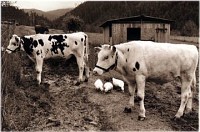
Where no oxen are, the trough is clean;
But much increase comes by the strength of an ox.

A long line of tightwads

      I have a disclaimer, everybody:  I come from a long line of tightwads.  When my parents became engaged, a mutual friend quipped that their engagement was an excellent match:  “Jim & Maryanne gettin’ married?  That’s good. They can pinch pennies together.”  In 1982, my parents took me and my two older brothers to visit the World’s Fair in Knoxville, Tennessee.  If you visited the Fair in mid-July of that year, you probably remember us.  We were the teenage boys carrying wilted cheese sandwiches in satchels dangling from our belts (in 92 degree heat and 98% humidity) to avoid the high cost of fairground fare for lunch.


That is to say, I “get it honest”.  I was 20 years old before I bought my first car, a 1973 Plymouth Scamp for which I paid $850. It came complete with a shredded and flapping vinyl top and fenders so rusted out from the salt on the winter highways of Southwest Virginia that I dared not drive the car through a car wash for fear of leaving too many parts behind.  When driving in the rain, water would pour in under the dashboard, soaking shoes, socks, and pants legs. I’m not exaggerating!  Early in our marriage, I can remember having discussions with my new wife concerning the threshold of excessive toilet paper usage.  (Just use your imagination.)  As I type these words, I examine my current attire:  a striped, button-down, long-sleeve shirt which came to me second hand from America’s Thrift Store, a worn pair of khaki pants purchased on sale in a discount clothing store three years ago for around $20, and socks and underwear that are, let’s just say, of mature age.  Only my shoes are of a brand name which you might possibly recognize, a brand and style I am medically required to purchase to give support to my very flat feet.

So today’s proverb is really for me and for others of the dying breed of folk who are allergic to the spending of money.

Expensive critters

Let’s face it:  Oxen are expensive critters to keep around.  It has been scientifically proven that they have to be fed a certain amount to survive.  Oxen require a ready supply of drinking water.  Oxen need routine preventative and maintenance veterinary care.  They need strong fences to contain them.  They need barns for shelter in severe weather.

Thus if you have no oxen in the stall, the trough is “clean”, or perhaps a better rendering would be, “the granary is empty”.  You don’t have to fill the barn with hay, or purchase corn for the crib, if you have no oxen to feed.  It’s much cheaper to own no oxen.

Wise capital investment

However, seen as a capital investment, oxen can bring the wise farmer great financial reward.  Of course the proverb harkens from a pre-industrial age, but the point is obvious.  Oxen drag the plow to cut the sod so that crops can be sown.  Oxen pull the carts and wagons when bringing in the harvest from the fields, and then they haul the harvest to market.  Indeed, “much increase comes by the strength of an ox.”

Investment is risky business.  By its very definition, invested money may be totally lost.  Otherwise healthy-looking oxen drop dead of heart attacks on occasion, I suppose.  But wise, intentional investments create the possibility for wonderful profits.  To interpret the biblical proverb with a proverb from our popular culture, “Nothing ventured, nothing gained.”

Two gospel passages

In light of Proverbs 14:4, two New Testament texts come to mind.  The first is the Lord’s parable of the sower (Mark 4:1-20).  Without recounting the parable’s details, I conclude that the Lord’s primary point is to emphasize the miraculous increase of the seed that fell on good ground (verses 8 & 20).  When it comes to our stewardship of the gospel, invest heavily!  Throw caution to the wind!  Proclaim the gospel of the Kingdom everywhere, and although three-fourths of the time it won’t amount to much, we can count on an astonishing, miraculous, God-given increase when the seed of God’s Word does hit the “pay dirt”.  There are so many Christian congregations which have the clean troughs of playing it safe in the ministry.  Our proverb would say, “Go big for the gospel of Jesus Christ!”

The second text is found in Matthew 25:14-30, the parable of the talents.  Space does not permit me to retell the passage, but the connection with our proverb is clear enough:  Invest for the master!  Don’t be a scrooge and hide heaven’s riches in a hole in the ground.  Take a chance!  Do something big and bold and risky for the Master!

Father God, make us to be wise and bold investors of all which you have entrusted to us, blessings both temporal and spiritual.  Forgive us when we fail, not for our sake, but for the sake of your own dear Son.  Through Christ our Lord: Amen. 


A Fool and His “Switch”

Proverbs 14:3

“In the mouth of the foolish is a rod of pride: but the lips of the wise shall preserve them.”
“A fool’s talk brings a rod to his back, but the lips of the wise protect them.” – NIV

Pick Your Own

If the typical Child Protective Services agent of today had been around when I was a wee heathen, my parents, grandparents, and great-grandparents would have been hauled off to jail. My parents, especially my paternal grandmother, would have wound up on the front page of the newspaper. They would have made the evening news on television. The story would read something like this…

APNews. Mary Baker, the half-Cherokee grandmother of sweet little Anthony Baker, was arrested for gross child abuse, today. Mrs. Baker, widow of the late William Baker (saw mill owner; moonshine runner), was found to have left marks on cute little Anthony’s backside and buttocks with a “hickory switch.”

Left-wing, pot-smoking, tree-hugging, liberal, hippie neighbors who somehow snuck into the neighborhood heard little Anthony screaming bloody murder and went to investigate. They reported seeing darling little Anthony bent over his grandmother’s knee as she mercilessly assaulted him with the large tree branch previously growing in the front yard.

According to the angelic little Anthony, his grandmother, upon hearing him backtalk her, told him to exit the house in order to retrieve said “switch.” When he didn’t return with the prescribed tool of abuse, Mrs. Baker sought him out, hewed down her own tree, then preceded to “wear him out.

Yes, when I was a child, you did not talk disrespectfully to your grandmother. If your mouth was bad enough you might even be made to pick your own tool of discipline – and it was wise to pick a big enough switch the first time.

A Fool’s Talk

Whenever I was about to get into serious trouble, my dad used to say, “Son, you’re cruising for a bruising.” Whenever I talked back (disrespectfully) to my parents, I was in danger of seeing stars (without a telescope). Therefore, it did not take long for me to learn how to control my tongue.

According to this proverb, though, a fool is pictured as having a rod (switch, branch, vine) growing out of his mouth. Because of his pride, the fool never learns from the consequences of his words. Every thing he says seems to come back and beat him.

The one who knows how to keep his mouth shut, however, is much more likely to be able to sit down without pain. At least that’s the way it used to be.

A Note for the Shocked

Please don’t misunderstand today’s proverb, nor my attempt at humor. No one here, especially myself, would advocate abusing a child. Corporal punishment should be administered in love, not anger, and only as a last resort.

The problem is that much of our society promotes “the mouth of the foolish.” Remember, “God is not mocked,” so the fool that runs off at the mouth today is still in danger of suffering from his words – one way or another.


Buddy or Parent?

Proverbs 13:24

He that spareth his rod hateth his son: but he that loveth him chasteneth him betimes.

Since 2005, I have not only served at my church as Worship Pastor but I have also held the position of Children’s Pastor. Because of the structure of our children’s program, I have volunteers that are mostly dealing with the children on a week to week basis. I have found that I am begin to work more and more with the parents of these children.

I had a mom come to me a few years ago and she told me that her and her husband were having problems with their daughter not wanting to obey them. They said that they had tried just about everything and nothing seemed to work. I asked them how they disciplined their daughter when she disobeyed them and I was astonished by the response.

Her response was this: I don’t want to punish her because I want her to like me and if I punish her then she will not like me!

HUH? What kind of sense that does that make? I told them that their daughter does not need a “buddy” but a “parent”!

This Is Going To Hurt Me More Than You

As I was growing up, you could say that I had my fair share of spankings. Well, to be perfectly honest, I had a whole lot more than my fair share. My father always joked with me that each morning he was going to just go ahead and spank me because he was sure that I would earn it at some point during the day.

Before either my father or my mother would spank me, they would always say, “This is going to hurt me more than it is going to hurt you.” I would always have the same thought go through my head – your not the one getting a spanking. How in the world is this going to hurt you more? It was not until I had a little girl of my own that I was able to have this question answered.

The Reason

After every spanking, my parents would take out their Bible and show me from God’s Word why they were disciplining me. They would turn to Proverbs 13:24 and read to me the words of Solomon. The reason that it hurt them more and the reason they disciplined me is that they loved me! They were not disciplining me because they wanted to be some kind of ruling tyrant, no, they were doing it because they loved me. The NIV says our verse this way, “Those who spare the rod of discipline hate their children. Those who love their children care enough to discipline them.”

If we are children of God, why does HE discipline us? Because HE loves us! Revelation 3:19 says, “Those whom I love, I reprove and discipline, so be zealous and repent.”

I praise the Lord for parents who disciplined me. Who took the time to tell me right from wrong; the good from the bad. Oh how I wish parents today would discipline their children the way my parents did me.

Lord, I pray that you would help me to love my child more and more each day. I pray that you would cause that love to discipline her when it is needed.  Help me to be the father that I need to be for my daughter so that I can train her according to Your Word.


Little Is Much

Proverbs 13:23

“Much food is in the tillage of the poor: but there is that is destroyed for want of judgment.”
“A poor man’s field may produce abundant food, but injustice sweeps it away.” NIV

We Complain 

Many times we complain about what we don’t have rather than thank God for what we do have. Have you ever complained about how small your house is, how old your car is, or how out of style your clothes are?  Sure you have. And you know, of course, that there are plenty of people out there who don’t even have a roof to sleep under, much less a new car or stylish clothes.

It might be a shock to you, but even pastors (ministers, preachers, bishops) have times when they complain about the “field” they are called to plow. I have done it. I even did it today, right before I read Proverbs 13:23.

We Whine

Today we had a death in our church. The loss of this key member has been a blow to all of our congregation. And being that our numbers are small, the loss of any member is painful, especially when growth has been extremely slow.

At one point I began to feel anxious. I asked God, “How can we grow a church if our younger adults start dying?” I thought to myself, “If we lose many more, we won’t be able to pay our utility bills, not to mention the little I get to feed my family.” For a moment I considered this field too small for even a minimal harvest.

No Excuses

Then I read this proverb. Then I read what the wise Matthew Henry had to say. Then I felt ashamed.

See…[how] a small estate may be improved by industry, so that a man, by making the best of every thing, may live comfortably upon it: Much food is in the tillage of the poor, the poor farmers, that have but a little, but take pains with that little and husband it well. Many make it an excuse for their idleness that they have but a little to work on, a very little to be doing with; but the less compass the field is of the more let the skill and labour of the owner be employed about it, and it will turn to a very good account. Let him dig, and he needs not beg.[1]

Sounds like I need to just get back out in the field and turn the soil, doesn’t it? A small field can be full of produce if worked well and wisely. It is those who complain that let a harvest waste away.

Like the old song says, “Little is much when God is in it...”

Dear Heavenly Father, strengthen our hands and energize our hearts for the work. The fields are truly white unto harvest, so who are we kidding? We just need to work a little harder to bring it in.

[1] Matthew Henry, Matthew Henry’s Commentary on the Whole Bible: Complete and Unabridged in One Volume (Peabody: Hendrickson, 1994), Pr 13:23.


Got Fleas?

Proverbs 13:20

“He that walketh with wise men shall be wise: but a companion of fools shall be destroyed.”

Just about everyone has heard the old English proverb, “He that lies down with dogs shall rise up with fleas.” If not, let me explain. This proverbs involves two things: a person and a dog. What is the action that is involved: they are very close to each other. So close in fact (“lies down with”) that, the fleas that are on the dog would move to the person.

So what does Proverbs 13:20 have to do with fleas? The answer: Association.

If the person was not associated with the dog then there is no possible way for that person to get fleas from that dog.

Solomon is explaining to us that we must be careful who we associate with in our lives. He is telling us that we need to be very careful who we have as our friends and those we depend on.

This verse is simply saying that we need to make sure that we associate with wise men and not with foolish companions.

As I was preparing for this post, I came across this saying,

“Your friends are like the buttons on an elevator. They will either take you up or they will take you down” – Author Unknown

I am asking you today, based on Proverbs 13:20, are the people that you associate with bringing you closer to God or taking you further away from Him?

I love the way the New Living Translation says this verse, “Walk with the wise and become wise; associate with fools and get in trouble.”

Psalms 1:1 says, “Blessed is the man that walketh not in the counsel of the ungodly…”

So, do you have fleas? Are you associating with people that are getting you into trouble? If so, it’s time to “de-bug or de-fool” your life and seek out people of wisdom. Just as the verse says, “walk with the wise and become wise”!

Lord, help us to be careful who we associate with in our lives. We know that we are to be salt and light in this world, but help us to make sure we seek the counsel of wise men and women and not those who will lead us into trouble. Give us wisdom each day to seek out those who give wisdom based on your Word.

Folk Wisdom:

  • “Tell me your companions, and I will tell you what you are.”
  • “He that lives with cripples learns to limp” (Dutch Proverb)
  • “He that goes with wolves learns to howl” (Spanish Proverb)

Rejoicing Light

Proverbs 13:9

“The light of the righteous rejoiceth: but the lamp of the wicked shall be put out.” 

What a Storm!

Hurricane Sandy (AP Photo/Weather Underground)

As this is being written, “Superstorm” Sandy is finally gone. The storm itself stretched over the entire eastern coast of North America, bringing hurricane winds, torrential rain, 13 ft. storm surges, and even two feet of snow in some places. Over 60 million people suffered its effects, the worst being in the north where states suffered tens of billions of dollars worth of damage.

There for a while, from Florida to Maine, the sun was hidden by clouds. Rain fell by the gallon as coastal towns were drowned with swelling tides. But amazingly, no matter how hard it rained, no matter how high the waves, it didn’t put out the sun. Go figure.

Light Source

The difference between the righteous and the wicked is their source of light. As with the sun, the Light of the righteous is far beyond the reach of nature. No storm, no matter how big, can quench its flame. It may be hidden from view at times, but it is always there, and always will be.

The wicked, on the other hand, light their own lamp. In other words, the source of their “light” comes from within, below the storm, subject to both torrent and tempest. It will go out, eventually.

“Who among you fears the LORD? Who obeys the voice of His Servant? Who walks in darkness And has no light? Let him trust in the name of the LORD And rely upon his God. Look, all you who kindle a fire, Who encircle yourselves with sparks: Walk in the light of your fire and in the sparks you have kindled–This you shall have from My hand: You shall lie down in torment.” – Isaiah 50:10-11 NKJV

 Still There was Light

Years and years ago, back when I lived in Kentucky, God allowed a “Frankenstorm” to hit the coasts of my life. The storm was so big and lasted so long, literally nothing of my own making remained standing. FEMA couldn’t even help me.

At one point it was so bad; it was so dark, that I literally raised my fist to heaven, cursed my God, and begged Him to do what I was too afraid to do. I told Him I hated Him and wanted nothing more to do with Him. It was a bad, bad storm.

Yet….(isn’t that a great word?)…Yet, even in the middle of the darkness, there was a Flame that could not be quenched. Even as I cursed my Heavenly Father, inside I could hear a still, small Voice whispering, “I understand…I know…It’s OK…I’m here…Let it out…I still love you…I’m not going anywhere.”

If you could see me crying right now…it’s hard to see the computer screen.

The light of the righteous rejoiceth…


Proverbs 13:7

“There is that maketh himself rich, yet hath nothing: there is that maketh himself poor, yet hath great riches.”

Pretenders

When you read this verse the first time, what did you think it meant? The first time I read it I thought it was talking about people who were rich, but had nothing of real value. I thought it was praising those who gave away everything to have riches in heaven. But that is not what this proverb is about. The word “maketh” has to do with appearances.

“One pretends to be rich, yet has nothing; another pretends to be poor, yet has great wealth.” – Proverbs 13:7 ESV

This proverb warns us about pretenders who appear to be something they are not. Some live extravagantly, yet have nothing. Others try to make everyone think they are penniless, yet they are loaded.

The Sad

Several years ago I had a relative who lived in one of the biggest houses in town, always drove a new car, wore the nicest clothes, and was responsible for the best gifts under the Christmas tree. Yet, when this person died, the truth came out: few things, if any, were not mortgaged, and credit card bills totaled in the hundreds of thousands. Nothing was what it seemed.

Not long ago there was a man named Walter Samaszko Jr. who was found in his Carson City, Nevada home a month after he actually died. Known as a recluse, he was the opposite of my relative. He didn’t try to impress; looking rich was the last thing Mr. Samaszko, 69, wanted to do. Yet, even though he left only $200 in the bank, hidden in his home were $7 million worth of gold bars. He could have used the gold to pay for a doctor.

The Sinister

This proverb is a warning to all of us who would make judgments based solely on outward appearances. It is a warning, not only because it is unwise to judge a person by his looks, but because we need to be wary of scammers and con-artists.

Some people are experts at taking advantage of others. This truth is comically portrayed in the 1988 movie Dirty Rotten Scoundrels, staring Steve Martin and Michael Caine. In this movie two con-artists, acting like men down on their luck, steal fortunes from compassionate, wealthy women. They “maketh” themselves poor (or rich, depending on the circumstance), yet take everything they want.

But real life is not funny. I have seen gypsies worth millions begging on the streets of eastern Europe. I have helped “needy” families with food and funds from our church’s stores, only to find out that the “needy” were only greedy. I have heard healthy men and women who refuse to work brag about “working the system” in order to obtain assistance meant for the poor and disabled.

Be warned, and don’t be like them.


Proverbs 13:4

“The soul of the sluggard desireth, and hath nothing: but the soul of the diligent shall be made fat.”

“I’m Gonna…”

I can’t tell you how many times I have heard people say, “I’m gonna (do this or that).” I have heard grand schemes, everything from opening a new business, to joining the military, to inventing a never-before-heard-of product that will revolutionize the world. Yet, nothing ever gets done.

The “sluggard” is a man or woman that is flat-out lazy. The word comes from the idea of calling a person a slug, or a snail. But at least a snail is usually on his way somewhere, albeit slowly. The sluggard does nothing but talk of plans in the works, but work is never seen.

Get a Job!

Just today I was talking with a mother of a grown man out of work. He constantly takes from her, then runs off until the money is gone. He abuses her property, never gives her respect, and tries to play “daddy” with a girl who is not his wife. And when it comes to work, he complains that he can’t find a job. Baloney…Hogwash…Cow feces!

I thank God for allowing my wife and I to hit rock bottom about 10 years ago. I went from making a large income to making nothing. In order to make it, because my career had be done away with, I had to find other work to pay the bills. In order to put food on the table and keep a roof over my family’s heads, I (and my wife) did everything from deliver news papers, to clean toilets in factories. I delivered pizza, worked on dangerous assembly line, and even sold insurance. At one point I was working 3-4 jobs at one time!

You see, the lazy sluggard has big desires, but won’t take responsibility and work for it. The diligent will do whatever it takes.

Little Patience

Today’s proverb reminds me of how little patience I have for “sluggards.” In my opinion there is no excuse for someone to sit on his duff and whine about what he doesn’t have. A real man will work, even if it is not the type of work he prefers. It is his responsibility, especially if he has a family.

Some want to use the “system” as an excuse for laziness. Others want to blame the government or the “bourgeoisie.” But in reality, the only one to blame is the one who desires something, but does nothing honest to obtain it. Honest, hard work is the answer to a great deal of society’s woes.

“But, there are no good jobs!” you may say. Sorry, washing dishes is a job. Cleaning floors is a job. And, if you do both at the same time, along with getting tips from waiting tables, you can live without mooching off your mother.

But if any provide not for his own, and specially for those of his own house, he hath denied the faith, and is worse than an infidel.” – 1 Timothy 5:8

The sleep of a labouring man is sweet, whether he eat little or much: but the abundance of the rich will not suffer him to sleep.” – Ecclesiastes 5:12

Let him that stole steal no more: but rather let him labour, working with his hands the thing which is good, that he may have to give to him that needeth.” – Ephesians 4:28

Thus sayeth the Lord: “Get a job.”