
Category Archives: Wisdom

Know the Certainty

Proverbs 22:17-21

17 Bow down thine ear, and hear the words of the wise, and apply thine heart unto my knowledge.
18 For it is a pleasant thing if thou keep them within thee; they shall withal be fitted in thy lips.
19 That thy trust may be in the Lord, I have made known to thee this day, even to thee.
20 Have not I written to thee excellent things in counsels and knowledge,
21 That I might make thee know the certainty of the words of truth; that thou mightest answer the words of truth to them that send unto thee?

The Importance of Scripture

Over the course of the past 22 chapters of Proverbs, we have seen all of the commands to hold to wisdom and take heed of the words that have been shared.

The Psalms speak repeatedly of God’s Law and the words of Scripture being so important, that we should memorize and act on these words.

What is so important about these words of wisdom and instruction?

Pointing to Something

As has been mentioned before, Jesus is the Wisdom of God (Proverbs 8, John 1).

Jesus said, “Do not think that I have come to abolish the Law or the Prophets; I have not come to abolish them but to fulfill them.” (Matthew 5:17, NIV)

He also said, “This is what I told you while I was still with you: Everything must be fulfilled that is written about me in the Law of Moses, the Prophets and the Psalms.” (Luke 24:44, NIV)

And Paul also mentioned Jesus: “For what I received I passed on to you as of first importance: that Christ died for our sins according to the Scriptures, that he was buried, that he was raised on the third day according to the Scriptures” (1 Corinthians 15:3-4, NIV).

Finally, because we know this, we find in Hebrews 10:19-25 (NIV):

19 Therefore, brothers and sisters, since we have confidence to enter the Most Holy Place by the blood of Jesus, 20 by a new and living way opened for us through the curtain, that is, his body, 21 and since we have a great priest over the house of God, 22 let us draw near to God with a sincere heart and with the full assurance that faith brings, having our hearts sprinkled to cleanse us from a guilty conscience and having our bodies washed with pure water. 23 Let us hold unswervingly to the hope we profess, for he who promised is faithful. 24 And let us consider how we may spur one another on toward love and good deeds, 25 not giving up meeting together, as some are in the habit of doing, but encouraging one another—and all the more as you see the Day approaching.

Dear Lord, help us to hold fast to Your Truth in our hearts and minds, that we may be changed to impact our world for Your glory!

A Good Name

Proverbs 22:1.

“A good name is rather to be chosen than great riches, and loving favour rather than silver and gold.” (KJV).

Choose Your Own Adventure:

When I was a child growing up in the 80’s, one of my favourite series of books was the Choose Your Own Adventure Books by Bantam. This series contained stories that were written from a second-person point of view, where the reader took on the role of the protagonist and made choices that determined the main character’s actions and the plot’s outcome. It was a very interesting concept, and depending on what choices you made, you either had a good ending, or a bad ending (often resulting in your character’s death).

When I was in junior high school, Choose Your Own Adventure put out a writing contest for teenagers, and I entered it. Although I didn’t win the writing contest, I was pleasantly surprised by a personal letter from editors Edward Packard and R.A. Montgomery, telling me how much they personally enjoyed my story, and encouraging me to continue writing.

You Choose:

As I was reflecting upon today’s Proverb, I thought about how the Bible is like a Choose Your Own Adventure Book. Especially in the Book of Proverbs, God’s Word gives us wisdom for daily living, and encourages us to choose often between two different options. In today’s Scripture, Solomon gives us two sets of options: The first one is to have a good name and loving favour (or high esteem), and the other is to have great riches such as silver and gold.

It is interesting to notice that the Bible’s contrasts of two different options are not always opposites. For example, the Proverb doesn’t say, “A good name is better than a bad name.” Rather, it says, “A good name is rather to be chosen than great riches.” When you read something like that, it’s good to ask yourself, “Why does God contrast those two things?” Could it be because oftentimes people who pursue great riches do so to the exclusion of having a good name? How many people strike it rich, but do so at the expense of others, or by giving up their reputation, honesty or integrity?

The Choice:

In the New Living Translation of the above Scripture, Solomon plainly says, “Choose a good reputation over great riches, for being held in high esteem is better than having silver or gold.” As you’re setting a goal for your life, choose to do what is right and good, and have a good reputation that brings honour and glory to the Lord. Amen!


Counsel God?

Proverbs 21:30

“There is no wisdom nor understanding nor counsel against the LORD.”

Intelligent

I am a half-way intelligent guy. There are degrees hanging on the wall of my study, a few awards, and a lot of books on the shelves that I’ve actually read. But don’t be too impressed; I don’t have a doctorate (yet) and I still have problems with math and spelling restuarant.

What’s worse is I’m supposed to be a “spiritual leader,” a pastor, a Reverend. Along with those degrees on my wall, there is also a piece of paper that says I’ve been “Ordained to the Gospel Ministry.” According to some, that puts me on God’s speed dial. Riiiiight.

In actuality, I am only human, and a flawed one at that. This past weekend my daughter had to take the spiritual lead and call me to the carpet. She has no degree or title, but she does walk with God and loves the Word. So, when she saw me making a mess of things she exercised spiritual wisdom, understanding, and counseled against me. “Daddy,” she said through tears, “you told me to be bold, so I’m going to do that now…we haven’t even prayed!”

Infinite

Then there’s God.

No degrees. No diplomas. Only 66 books to His credit. Never been graded. The ultimate Self-Starter.

His library is limited to some scrolls, but He invented language and the light by which to read. He even provides the Light that illuminates the mind.

He is Wisdom. He is omniscient (knows all). He is the Judge of Heaven and Earth before who’s bar only one Counselor has the right to intercede.

I can be questioned. I can be challenged. I can be corrected. No matter how wise or spiritual I become, I am still just a wisp of mist in the air; human.

Our God is the LORD; His children stand in awe.


Establish Your Way

Proverbs 21:29.

“A wicked man hardens his face, But as for the upright, he establishes his way.” (KJV).
“A wicked man displays a bold face, But as for the upright, he makes his way sure.” (NASB).

Righteousness or Wickedness:

We have seen that one of Solomon’s teaching tactics includes contrasting two opposing life choices, such as wisdom and foolishness, diligence and laziness, and humility and pride. In today’s Scripture, Solomon tells us that wicked people harden their face, or put on a bold face. In other words, they pretend to be okay when they are not. The upright, or righteous, on the other hand, establish their way, and make their way sure. They don’t have to pretend to be right, but by God’s grace, choose to do what is right.

Solomon tells us: “Treasures of wickedness profit nothing, But righteousness delivers from death.” (Prov. 10:2). And “As righteousness leads to life, So he who pursues evil pursues it to his own death.” (Prov. 11:19). To choose a righteous lifestyle leads to life and blessing, and to choose wickedness leads to death and destruction. But – what is righteousness?

Righteousness Defined:

Righteousness can be looked at from two different perspectives. One is right-standing with God, and the other is acting in an upright, virtuous, moral way. Let’s take a look at these two different aspects to righteousness:

1.         Right-standing with God – Putting Your Faith in Jesus:

The first time we see the word righteousness used in the Bible is in Genesis 15:6 where it says, “And Abraham believed in the Lord, and He accounted it to him for righteousness.” Here we see that Abraham’s right-standing with God did not come from living a perfect, holy life (because indeed no one can or ever has lived a perfect life, except for Jesus). Rather, righteousness was credited to his account as a gift when he put his faith in the Lord.

Romans 1:17 teaches us this: “This Good News tells us how God makes us right in his sight. This is accomplished from start to finish by faith. As the Scriptures say, It is through faith that a righteous person has life.” (NLT). Do you want right-standing with God? Put your faith in Jesus, and trust Him to be your Lord and Savior, and forgive you of all of your sins. Believe on the Lord Jesus Christ today!

2.         Right-living before God – Acting in an Upright Manner:

In addition to our positional righteousness, which comes from a personal relationship with Jesus, there is also a practical righteousness, where we choose to do what is right and good – that is, we obey the teachings of the Bible. “But seek first the kingdom of God and His righteousness, and all these things shall be added to you.” (Matt. 6:33).

Lord, help us as your people to walk in righteousness so that we can establish our way according to your righteousness. In Jesus’ name, amen.


Pride Comes Before A Fall

Proverbs 21:24

Proud and haughty scorner is his name, who dealeth in proud wrath.

How many of us have been warned in the past that pride comes before a fall? The saying is said to come from Proverbs 16:18 but there is a clearer definition of this age-old warning in Wiktionary: ‘A person who is extremely proud of his or her abilities will often suffer a setback or failure, because he or she tends to be overconfident and to make errors of judgment.’

Followers of boxing will be aware that fighters who swagger from the dressing room to the ring and ridicule their opponents often have cause to eat humble pie at some point during a fight. In some cases face meets canvas within seconds of the bell for the opening round. Whether down to overconfidence or basic errors in judgment, the result is the same. Members of the sporting press usually ridicule such falls from grace in fight reports, while the Internet means that the falls of the proud are recorded for posterity on YouTube.

Perhaps the writer of this proverb was talking about a different type of pride? The sort of pride that says man is all there is, and that God does not exist? The Psalmist calls such a person a fool: ‘The fool says in his heart, “There is no God.” They are corrupt, their deeds are vile; there is no one who does good.’ (Psalm 14:1/Psalm 53:1 NIV). If we deny God, then it could be argued that we are proudly elevating man to a position where he does not belong. Can man create a universe? Of course not. He can only speculate on how the universe came into existence. Sadly, many people spend hours engaged in proud but foolish speculation concerning the existence of God instead of humbly surrendering to Him and giving to God what is His. Paul spoke about this indirectly while teaching about the foolishness of loving money:

If anyone teaches otherwise and does not agree to the sound instruction of our Lord Jesus Christ and to godly teaching, they are conceited and understand nothing. They have an unhealthy interest in controversies and quarrels about words that result in envy, strife, malicious talk, evil suspicions and constant friction between people of corrupt mind, who have been robbed of the truth and who think that godliness is a means to financial gain. But godliness with contentment is great gain. For we brought nothing into the world, and we can take nothing out of it.
Timothy, guard what has been entrusted to your care. Turn away from godless chatter and the opposing ideas of what is falsely called knowledge, which some have professed and in so doing have departed from the faith. (1 Timothy 6:3-7, 20-21 NIV)

What is the condition of your heart reader? Are you a proud fool heading for a fall, or a humble servant surrendered to God and wealthy beyond imagination in God’s promise of eternal life?


Scale Those Walls

Proverbs 21:22

A wise [man] scaleth the city of the mighty, and casteth down the strength of the confidence thereof.

Impregnable

The Concise Oxford English Dictionary defines the adjective impregnable as “unable to be captured or broken into…unable to be overcome.”* It was used to describe such places as the Maginot Line, the Ardennes Forest, Fortress Singapore, Fortress Europe, and even America.

A similar word to impregnable is unsinkable. It was an adjective used to describe the Titanic, and we all know how that turned out – the “unsinkable ship” lies rusting away at the bottom of the Atlantic.

Sadly, many have placed their faith in the supposed strength and security of fortress walls, only to find out too late that they were unprepared to deal with resourceful invaders. Many have even trusted their lives to the audacious claims of engineers who defied the Almighty. This proverb reminds us that even the cities of the mighty can fall.

Scalable 

The same dictionary that defined impregnable also gives us a definition of scalable: “able to be scaled or climbed.” Believe it or not, there are a lot of walls built by the enemy which are thought to be impregnable, impenetrable, and impassable. They act as fortresses to rebuff any advance. In other cases they act as prisons to keep locked away the captive.

Happily, this proverb reminds us that the wise do not have to give up or walk away when faced with barriers to victory. If history tells us anything, it tells us that where there’s a will, there’s a way.

And hallelujah!, when it’s God’s will, there’s ALWAYS a way.

The weapons we fight with are not the weapons of the world. On the contrary, they have divine power to demolish strongholds. We demolish arguments and every pretension that sets itself up against the knowledge of God, and we take captive every thought to make it obedient to Christ. – 2 Corinthians 10:4-5 NIV


*Catherine Soanes and Angus Stevenson, Concise Oxford English Dictionary, 11th ed. (Oxford: Oxford University Press, 2004).


Which Generation?

Proverbs 21:20

“There is treasure to be desired and oil in the dwelling of the wise; but a foolish man spendeth it up.”
“The wise have wealth and luxury, but fools spend whatever they get.” (NLT)

The Greatest Generation

A lot has been said in recent years about “the greatest generation.” Those were the folks who made it through the Great Depression and World War II. They did what many today refuse to do – work and save.

I remember stories my grandfather told. I remember how he literally kept track of every penny, even making note where he found coins on the street. I also remember how there was no worry about money when he died. That was years ago, and my grandmother (in her 90’s) is still living off of his investments.

The “greatest generation” taught us that living on a budget, only spending what you have to, and putting off things you want until you have the things you need was being wise. Where has that wisdom gone?

The Latest Generation

Many of today’s generation know where to find money – it’s at their grandparents’ house. Today’s adults spend and spend without sacrificing their wants, then when there’s no money for bills, guess who pays?

The wise have savings accounts, investments, and even a secret box or two. They are the ones who are living in assisted living homes instead of on the street or in a government nursing home. The wise know how to live on a fixed income.

The fool gets a job, spends everything he makes on impressing his friends and neighbors, robs from his future, then begs from the wise. Then, when the wise go on to their final reward, the fool squanders his inheritance.

Lord, we all need more wisdom in this area. I thank you for family who were able to help me when I acted like a fool. Help me now, however, to act wisely, leaving an inheritance for those who come after me.


Fe Fi Fo Fum

Proverbs 21:16

The man that wandereth out of the way of understanding shall remain in the congregation of the dead.

It wouldn’t take much to imagine a fairy tale attached to this proverb. If we ponder the meaning of the last word, a tragic version of Jack and the Beanstalk might unfold.

The Giant Dead

Go ahead and think of the “congregation of the dead” as an assembly of gruesome zombies. No one would want to have supper with them, not unless they wanted to be the main course. Think also of a cemetery, a place where the dead have surely congregated and remain to this day. Either one would be a mental picture worthy of us staying on the right path.

giant

From “Jack the Giant Slayer”

But one could also think of the “congregation of the dead” as something else. One commentary points out that the early church Fathers regarded the Rephaim [the Hebrew word translated as “dead”] as “the giants,” in accordance with their interpretation of Gen. 6:1–4.* So, picture with me, if you please, a spiritual version of bone-crushing, fe-fi-fo-yelling, monsters.

What could be scarier than foolishly wandering off the path of understanding, only to run into a congregation of 50ft-tall man-eaters? Not much one can do.

The Wanderer

Sadly, there are many who wander away in their own wisdom. They think the way of understanding is too boring, too uneventful, and too safe. They believe they know a better way, so they take off on their own into the dark.

Unfortunately, Solomon uses language that implies a sense of permanence. He says that the one who wanders away “shall remain” with the dead, or giants, or whatever. By that he means a “rest as at a journey’s end; death will be his unchanging home.”**

The Wayward

Too often parents and grandparents say that children need to “sow their wild oats,” meaning that they should be allowed to act with indiscretion and abandon while they are still young. Tragically, many of those young people wind up trapped by the congregation of giants, never to be seen again.

Would Solomon have suggested sowing oats in a giant’s field?

Sources:

*Proverbs, ed. H. D. M. Spence-Jones, The Pulpit Commentary (London; New York: Funk & Wagnalls Company, 1909), 407.

**Robert Jamieson, A. R. Fausset and David Brown, Commentary Critical and Explanatory on the Whole Bible (Oak Harbor, WA: Logos Research Systems, Inc., 1997), Pr 21:16.


Hear the Poor

Proverbs 21:13.

“Whoso stoppeth his ears at the cry of the poor, he also shall cry himself, but shall not be heard.”

Youth Serve at Union Gospel Mission:

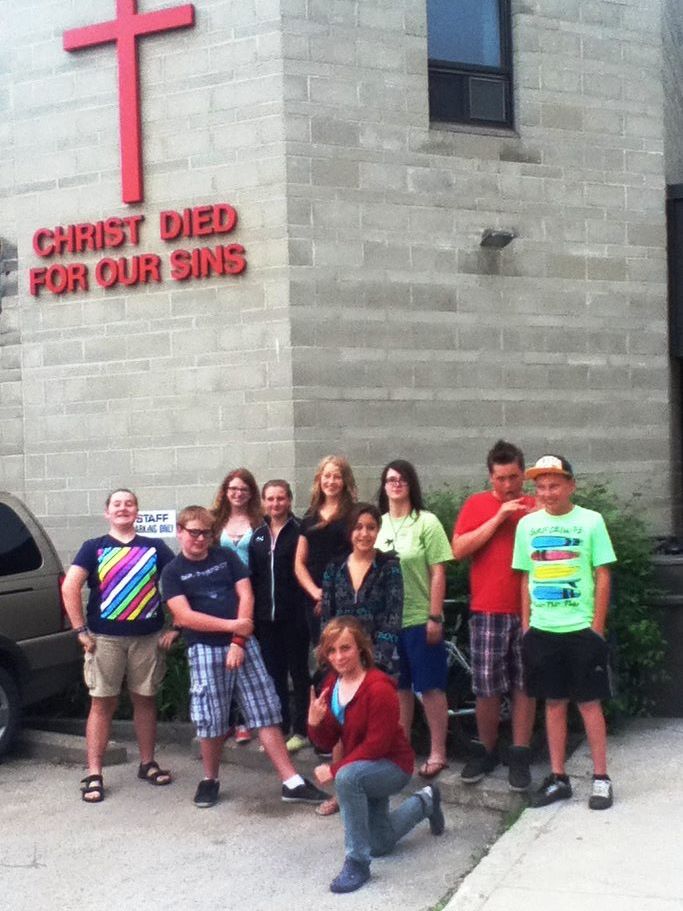
One of the privileges that I have as a pastor is being able to work with the youth group in our church. I have always loved working with teenagers, and love their passion for life. A couple of weeks ago, we took a team of youth from our small town of Beausejour, to serve at Union Gospel Mission, a street outreach in Winnipeg.

It was Matthew 25:40 in action: Jesus said: “Assuredly, I say to you, inasmuch as you did it to one of the least of these My brethren, you did it to Me.” I was so blessed to see a group of teenagers taking their Saturday night and – instead of staying home and playing video games or watching TV – they came to serve. And serve they did! They washed chairs in their chapel in preparation for their evening service, cleaned windows, worked in the kitchen, mopped floors, and greeted street people at the door as they came in for their meal. I was so proud of our amazing team!

Our youth at Union Gospel Mission in Winnipeg, MB

Our youth at Union Gospel Mission in Winnipeg, MB

God Loves the Poor:

Many people wonder why our young people would give up their Saturday night to go and serve the homeless, and the answer is simple: God loves the poor! There are so many Scriptures that reveal to us God’s heart for the poor, the lonely, the orphans and widows, and the strangers:

  • Leviticus 19:10: “And you shall not glean your vineyard, nor shall you gather every grape of your vineyard; you shall leave them for the poor and the stranger.”
  • Deut. 15:7: “If there is among you a poor man of your brethren… you shall not harden your heart nor shut your hand from your poor brother.”
  • Psalm 41:1: “Blessed is he who considers the poor; The Lord will deliver him in time of trouble.”
  • Psalm 82:4: “Deliver the poor and needy; Free them from the hand of the wicked.”
  • Gal. 2:10: “They desired only that we should remember the poor, the very thing which I also was eager to do.”

Don’t Ignore the Poor:

In today’s Scripture, Solomon says, “Those who shut their ears to the cries of the poor will be ignored in their own time of need.” (NLT). This is echoed in another Proverb: “He who has pity on the poor lends to the Lord, And He will pay back what he has given.” (19:17).

God loves the poor. But some would say, “Aha! If there is a God, and He is all-powerful and all-loving, then why are there so many needy people in the world?” The answer to that is simple. As Christians, we are called to be God’s hands and feet in the world. If the poor aren’t being helped, it’s because we aren’t doing our part in reaching them with the love of God. Let’s hear the poor!


Simple and Wise

Proverbs 21:11.

“When the scorner is punished, the simple is made wise: and when the wise is instructed, he receiveth knowledge.” (KJV).
“A simpleton can learn only by seeing mockers punished; a wise person learns from instruction.” (NLT).

Consequences and Punishment:

I started Kindergarten way back in 1977 (no jokes about how old I am, please!). Back then, principals and teachers were still allowed to exercise corporal punishment as a form of discipline. If a child misbehaved, and if the bad behaviour warranted it, they would get the strap. Now, although I was no saint, I never had the fortune (misfortune?) of receiving that form of discipline. However, I did have a friend who got the strap, and I knew enough to know that I never wanted to experience that form of discipline for myself.

Now, don’t read too much into my illustration and its connection to the above Proverb. I’m not saying that I was a simpleton, but I can tell you that by seeing someone else being punished for their disobedience, I learned a lot! I had no desire to be spanked for my wrong doing, so I did whatever I could to be good, or at least make sure that if I misbehaved, I didn’t get caught.

As a parent with four children in grades 5-11, one of the most frustrating things I see with our education system today is the fact that the teachers exercise little or no discipline over their students. If a teacher gives an assignment that is due on a certain date, and the majority of students don’t hand it in on time, then the teacher extends the deadline for the students. It seems like teachers don’t even have the power to be able to fail a student, even when they don’t complete any assignments. (In the teachers’ defense, I realize that they are a part of a system where they could not discipline even if they wanted to).

When I was in school, if we didn’t hand our assignments in on time, we would lose marks for every day it was late, and after a certain point, the teacher would no longer accept it! What lesson are teachers giving their students when they don’t have negative consequences for not handing in assignments? How will that help them when they get into the real world? The answer is: it won’t.

Wisdom and Instruction:

Solomon teaches us that a wise person can learn from instruction. In other words, they don’t have to learn from their mistakes. When mom and dad say, “Don’t touch the hot stove,” they trust the wisdom of their parents, and receive knowledge. When the preacher says, “Don’t sin, because sin kills,” we believe the truth of the Bible, and do whatever we can to avoid sin.

The reality is that we’re living in a world where there are consequences for our actions – either for good or for evil. And the sooner we learn that, and instill it in our children, the better.