Tag Archives: proverbs

Just Reward

Proverbs 14:14.

“The backslider in heart shall be filled with his own ways: and a good man shall be satisfied from himself.”

Christian Karma?

There are many religions in the world who believe in karma. Hindus, Buddhists and Sikhs for example all believe in the concept of “action” or “deed”, that which causes the entire cycle of cause and effect. In other words, if you are a good person, good things will happen to you, and if you are a bad person, bad things will happen to you. You might be surprised to learn that this idea actually has its origins in the Bible. King Solomon wrote: “Backsliders get what they deserve; good people receive their reward.” (Prov. 14:14, NLT).

Now lest some of you begin calling me a heretic for suggesting that karma is a Christian concept, let me clarify. Karma is a twisted and imperfect understanding of the Scriptural principle of reaping and sowing which the Apostle Paul describes here: “Don’t be misled. Remember that you can’t ignore God and get away with it. You will always reap what you sow! Those who live only to satisfy their own sinful desires will harvest the consequences of decay and death. But those who live to please the Spirit will harvest everlasting life from the Spirit.” (Galatians 6:7-8, NLT).

Consequences for our Actions:

Today’s Proverb teaches us that there are consequences for our actions. If you are a backslider, you will get what you deserve. If you live a life of sin and rebellion against God and His Word, don’t be surprised when life doesn’t work for you! But if you are a good person, and live to please the Spirit, you will receive a blessing from the Lord.

Let me illustrate. My dad was an alcoholic womanizer. He slept with many women in his life, and as a consequence, I have two sisters, two half-sisters, and at least three half-brothers that I know about (maybe more). My dad died about five years ago from a cancer that was caused from his excessive drinking and cigarette smoking. Sadly, this is an example of reaping what you sow.

Sometimes we live a sinful life and then experience the consequences for that sin, and we get mad at God and say, “How could you let this happen to me?” But it wasn’t God punishing us for our wrong decisions, but rather leaving us to the just reward of our own choices.

A Harvest of Blessing:

The good news today is that God is a merciful, gracious God. All of us have sinned, rebelled, and disobeyed His commandments, but we can confess our sins to Him and receive His free forgiveness. In Paul’s letter to the Galatians, he added an action plan for all of us. In light of the fact that there are consequences for our choices, he says, “So don’t get tired of doing what is good. Don’t get discouraged and give up, for we will reap a harvest of blessing at the appropriate time.” (6:9, NLT).

Clean Troughs

Proverbs 14:4

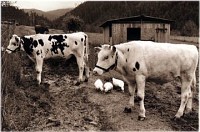
Where no oxen are, the trough is clean;
But much increase comes by the strength of an ox.

A long line of tightwads

      I have a disclaimer, everybody:  I come from a long line of tightwads.  When my parents became engaged, a mutual friend quipped that their engagement was an excellent match:  “Jim & Maryanne gettin’ married?  That’s good. They can pinch pennies together.”

In 1982, my parents took me and my two older brothers to visit the World’s Fair in Knoxville, Tennessee.  If you visited the Fair in mid-July of that year, you probably remember us.  We were the teenage boys carrying wilted cheese sandwiches in satchels dangling from our belts (in 92 degree heat and 98% humidity) to avoid the high cost of fairground fare for lunch.

That is to say, I “get it honest”.

I was 20 years old before I bought my first car, a 1973 Plymouth Scamp for which I paid $850. It came complete with a shredded and flapping vinyl top and fenders so rusted out from the salt on the winter highways of Southwest Virginia that I dared not drive the car through a car wash for fear of leaving too many parts behind.  When driving in the rain, water would pour in under the dashboard, soaking shoes, socks, and pants legs. I’m not exaggerating!

Early in our marriage, I can remember having discussions with my new wife concerning the threshold of excessive toilet paper usage.  (Just use your imagination.)  As I type these words, I examine my current attire:  a striped, button-down, long-sleeve shirt which came to me second hand from America’s Thrift Store, a worn pair of khaki pants purchased on sale in a discount clothing store three years ago for around $20, and socks and underwear that are, let’s just say, of mature age.  Only my shoes are of a brand name which you might possibly recognize, a brand and style I am medically required to purchase to give support to my very flat feet.

So today’s proverb is really for me and for others of the dying breed of folk who are allergic to the spending of money.

Expensive critters

Let’s face it:  Oxen are expensive critters to keep around.  It has been scientifically proven that they have to be fed a certain amount to survive.  Oxen require a ready supply of drinking water.  Oxen need routine preventative and maintenance veterinary care.  They need strong fences to contain them.  They need barns for shelter in severe weather.

Thus if you have no oxen in the stall, the trough is “clean”, or perhaps a better rendering would be, “the granary is empty”.  You don’t have to fill the barn with hay, or purchase corn for the crib, if you have no oxen to feed.  It’s much cheaper to own no oxen.

Wise capital investment

However, seen as a capital investment, oxen can bring the wise farmer great financial reward.  Of course the proverb harkens from a pre-industrial age, but the point is obvious.  Oxen drag the plow to cut the sod so that crops can be sown.  Oxen pull the carts and wagons when bringing in the harvest from the fields, and then they haul the harvest to market.  Indeed, “much increase comes by the strength of an ox.”

Investment is risky business.  By its very definition, invested money may be totally lost.  Otherwise healthy-looking oxen drop dead of heart attacks on occasion, I suppose.  But wise, intentional investments create the possibility for wonderful profits.  To interpret the biblical proverb with a proverb from our popular culture, “Nothing ventured, nothing gained.”

Two gospel passages

In light of Proverbs 14:4, two New Testament texts come to mind.  The first is the Lord’s parable of the sower (Mark 4:1-20).  Without recounting the parable’s details, I conclude that the Lord’s primary point is to emphasize the miraculous increase of the seed that fell on good ground (verses 8 & 20).  When it comes to our stewardship of the gospel, invest heavily!  Throw caution to the wind!  Proclaim the gospel of the Kingdom everywhere, and although three-fourths of the time it won’t amount to much, we can count on an astonishing, miraculous, God-given increase when the seed of God’s Word does hit the “pay dirt”.  There are so many Christian congregations which have the clean troughs of playing it safe in the ministry.  Our proverb would say, “Go big for the gospel of Jesus Christ!”

The second text is found in Matthew 25:14-30, the parable of the talents.  Space does not permit me to retell the passage, but the connection with our proverb is clear enough:  Invest for the master!  Don’t be a scrooge and hide heaven’s riches in a hole in the ground.  Take a chance!  Do something big and bold and risky for the Master!

Father God, make us to be wise and bold investors of all which you have entrusted to us, blessings both temporal and spiritual.  Forgive us when we fail, not for our sake, but for the sake of your own dear Son.  Through Christ our Lord: Amen. 


A Fool and His “Switch”

Proverbs 14:3

“In the mouth of the foolish is a rod of pride: but the lips of the wise shall preserve them.”
“A fool’s talk brings a rod to his back, but the lips of the wise protect them.” – NIV

Pick Your Own

If the typical Child Protective Services agent of today had been around when I was a wee heathen, my parents, grandparents, and great-grandparents would have been hauled off to jail. My parents, especially my paternal grandmother, would have wound up on the front page of the newspaper. They would have made the evening news on television. The story would have read something like this…

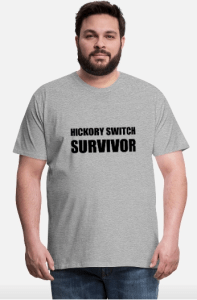
Click on the picture. I’m sure the company won’t mind me doing a little advertising in return for using their t-shirt pic 😉

APNews. Mary Baker, the half-Cherokee grandmother of sweet little Anthony Baker, was arrested for gross child abuse, today. Mrs. Baker, widow of the late William Baker (saw mill owner; moonshine runner), was found to have left marks on cute little Anthony’s backside and buttocks with a “hickory switch.”

Left-wing, pot-smoking, tree-hugging, liberal, hippie neighbors who somehow snuck into the neighborhood heard little Anthony screaming bloody murder and went to investigate. They reported seeing darling little Anthony bent over his grandmother’s knee as she mercilessly assaulted him with the large tree branch previously growing in the front yard.

According to the angelic little Anthony, his grandmother, upon hearing him backtalk her, told him to exit the house in order to retrieve said “switch.” When he didn’t return with the prescribed tool of abuse, Mrs. Baker sought him out, hewed down her own tree, then preceded to “wear him out.

Yes, when I was a child, you did not talk disrespectfully to your grandmother. If your mouth was bad enough you might even be made to pick your own tool of discipline – and it was wise to pick a big enough switch the first time.

A Fool’s Talk

Whenever I was about to get into serious trouble, my dad used to say, “Son, you’re cruising for a bruising.” Whenever I talked back (disrespectfully) to my parents, I was in danger of seeing stars (without a telescope). Therefore, it did not take long for me to learn how to control my tongue.

According to this proverb, though, a fool is pictured as having a rod (switch, branch, vine) growing out of his mouth. Because of his pride, the fool never learns from the consequences of his words. Every thing he says seems to come back and beat him.

The one who knows how to keep his mouth shut, however, is much more likely to be able to sit down without pain. At least that’s the way it used to be.

A Note for the Shocked

Please don’t misunderstand today’s proverb, nor my attempt at humor. No one here, especially myself, would advocate abusing a child. Corporal punishment should be administered in love, not anger, and only as a last resort.

The problem is that much of our society promotes “the mouth of the foolish.” Remember, “God is not mocked,” so the fool that runs off at the mouth today is still in danger of suffering from his words – one way or another.


Got Fleas?

Proverbs 13:20

“He that walketh with wise men shall be wise: but a companion of fools shall be destroyed.”

Just about everyone has heard the old English proverb, “He that lies down with dogs shall rise up with fleas.” If not, let me explain. This proverb involves two things: a person and a dog. What is the action that is involved? They are very close to each other. So close, in fact (“lies down with”), that the fleas that are on the dog would move to the person.

So what does Proverbs 13:20 have to do with fleas? Answer: Association.

If the person was not associated with the dog, then there would be no possible way for that person to get fleas from the dog.

Solomon is explaining to us that we must be careful with whom we associate. He is telling us that we need to be very careful who we have as our friends and those we depend on.

This verse is simply saying that we need to make sure that we associate with wise men and not with foolish companions.

As I was preparing for this post, I came across this saying,

“Your friends are like the buttons on an elevator. They will either take you up or they will take you down” – Author Unknown

I am asking you today, based on Proverbs 13:20, are the people that you associate with bringing you closer to God or taking you further away from Him?

I love the way the New Living Translation says this verse, “Walk with the wise and become wise; associate with fools and get in trouble.”

Psalms 1:1 says, “Blessed is the man that walketh not in the counsel of the ungodly…”

So, do you have fleas? Are you associating with people that are getting you into trouble? If so, it’s time to “de-bug or de-fool” your life and seek out people of wisdom. Just as the verse says, “walk with the wise and become wise”!

Lord, help us to be careful who we associate with in our lives. We know that we are to be salt and light in this world, but help us to make sure we seek the counsel of wise men and women and not those who will lead us into trouble. Give us wisdom each day to seek out those who give wisdom based on your Word.

Folk Wisdom:

  • “Tell me your companions, and I will tell you what you are.”
  • “He that lives with cripples learns to limp” (Dutch Proverb)
  • “He that goes with wolves learns to howl” (Spanish Proverb)

Attaining Dreams

Proverbs 13:19

“The desire accomplished is sweet to the soul: but it is abomination to fools to depart from evil.” (KJV).

If I Believe It, I Can Achieve It?

There was a popular song by R&B singer R Kelly from 1996 called “I believe I can fly.” It hit the number two spot on the Billboard Hot 100. The song boasted, “If I can see it, then I can do it, if I just believe it, there’s nothing to it… I believe I can fly.” Really? If I can see something then I can do it? All I have to do is believe it and I can achieve it? I don’t think so!

Now don’t misunderstand what I’m saying here. I’m all for being positive, but just because you want something doesn’t mean it’s going to happen. I can have a desire to be the best basketball player in the history of the world – rival to that of Michael Jordan – but that doesn’t mean it’s going to happen.

Think about it for a minute: What kid hasn’t dreamed of being able to fly like Superman? As a child, I remember donning a red cape and leaping off of the diving board into the swimming pool, but the end result was always the same: I got wet. (Fortunately, unlike some foolish daredevils, I never tried this feat off of the top of a roof!).

Put Your Dream to the Test:

A couple of years ago I was preparing to write my first non-fiction book Supernatural: Contending for Signs and Wonders Today. When I sat down to accomplish my goal of writing and publishing my first book, I came across an excellent book by John Maxwell called Put Your Dream to the Test. John Maxwell says that the difference between a dreamer and someone who achieves a dream lies in answering ten powerful questions.

One of Maxwell’s questions included The Cost Question: “Am I willing to pay the price for my dream?” That question made me think of our Scripture in Proverb 13:19: “It is pleasant to see dreams come true, but fools will not turn from evil to attain them.” (NLT). When your desire is accomplished, it is sweet to the soul. But a fool isn’t willing to pay the price – turn from evil – to achieve his dreams.

To Accomplish Your Dreams:

The Bible says God “is able to do exceeding abundantly above all that we ask or think, according to the power that works in us.” (Ephesians 3:20). God wants us to dream big dreams! But, if we want to see those dreams come true, we must be willing to do what it takes to accomplish them.

When I wanted to finish writing and publishing my first book, I set a goal for myself to write a minimum of 15 minutes a day until I was finished. Quite often, those 15 minutes ended up being much longer, but I had a goal and I stuck with it, and saw my dream become a reality. If you’re willing to put God first in your life, you can see your dreams realized, too.


Dream Big!

Proverbs 13:12

“Hope deferred maketh the heart sick: but when the desire cometh, it is a tree of life.” (KJV).
“Hope deferred makes the heart sick, but when dreams come true, there is life and joy.” (NLT).

When Hope is Deferred

Have you ever wanted something really bad or prayed about something for a very long time, but it never happened? Everyone has stories that they could share about disappointment and grief over things that they hoped for that never happened. When hope is deferred – when something you want doesn’t happen, or it doesn’t happen as quickly as you want it to – your heart gets sick. Hope deferred can cause you to stop hoping, stop dreaming, and even stop praying.

About ten years ago, my step-father lost his battle with cancer and he died. When that happened, my mom stopped praying. For many years, she refused to pray for circumstances to change, because she feared that they would only get worse. I am thankful that things have changed, and that she’s praying again today. Too many Christians allow themselves to get heart sick and then they lose courage, give up, and eventually they die.

“But”

The key to understanding God’s purpose in this Proverb is found in the small but important little word “But.” When I was an adjunct professor at Pacific Life Bible College in Surrey, BC, I always taught my Bible Research students to look for those key connective words. There is an example of this in Ephesians chapter two where the Apostle Paul talks about how we “were by nature children of wrath… But God, who is rich in mercy, because of His great love with which He loved us (has) made us alive together with Christ.” (v. 3-5).

So, although it is true that hope deferred can make our hearts sick – But God – His desire is that we would dream, and dream big. For when those dreams are finally realized, there is life and joy. Thank God for the big “buts” in the Bible!

When Dreams Come True

Also in Ephesians, Paul tells us that God “is able to do exceeding abundantly above all that we ask or think, according to the power that works in us.” (Ephesians 3:20). Our God is a good God, and He loves His children very much. He longs to bless us, to care for us, and meet all of our needs. But so often, we never ask. I wish we as Christians would believe the Bible more than we do!

Jesus Christ Himself taught, “Therefore I say to you, whatever things you ask when you pray, believe that you receive them, and you will have them” (Mark 11:24). Do you believe the promise? If you do, then pray! If you are in trouble, call upon the name of the Lord, for He is mighty to save! And when the Lord answers your prayers, make sure you praise Him. “to Him be glory in the church by Christ Jesus to all generations, forever and ever. Amen.” (Eph. 3:21).


Navigate Wisely

Proverbs 13:6

“Righteousness keepeth [him that is] upright in the way: but wickedness overthroweth the sinner.”

Choices

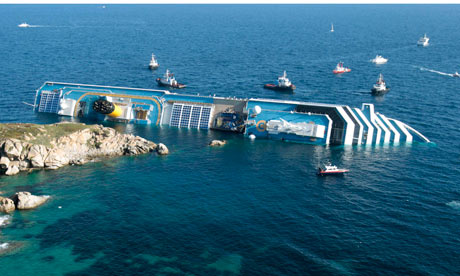
On the night of 13 January 2012 the captain of the cruise ship Costa Concordia chose to deviate from the agreed course for his ship to bring the ship close to the island of Isola del Giglio. He should have known better. The ship hit a reef. The hull was breached and the ship began to take on water, eventually listing to starboard and running completely aground. If the captain had chosen instead to remain on the right course the ship would have remained upright and lives would not have been lost.

Life presents us with many choices. From an early age we learn that some choices are better than others. Some choices make life easier, some make life more difficult. Some choices bring us praise, while other choices bring us trouble. The captain of the Costa Concordia may have thought that giving his passengers a treat by sailing close to shore would bring him praise. Instead it brought him trouble, and continues to do so.

Righteousness or Wickedness?

Righteousness is a word that is commonly associated with religion. It is defined by Merriam-Webster as ‘acting in accord with divine or moral law: free from guilt or sin.’ Deliberately seeking to be righteous in the way that we think, speak and live out our lives provides a level of protection against bad choices, defined in Proverbs 13:6 as ‘wickedness.’ The attraction of sin is sometimes overpowering and we need to be able to defend ourselves against the bad choices that mislead us and misdirect us. Make the wrong choice and it will eventually, if not immediately, cause us harm.

Which Way?

The Hebrew word for way used in this verse may be translated as a road, or a course as in the case of a ship. We are all on a journey. We are free to choose which road or course we follow, but to maintain the right course requires effort and commitment. For a ship’s officer it is necessary to make regular course adjustments to counter the effects of currents and wind. Course alterations may be required to avoid dangerous reefs and shallow water. It is essential to make frequent checks on the ship’s position to ensure that it is still on course.

A good navigator is always alert to dangers and will not sail too close to them. A good navigator aims to bring the ship safely home to harbor, not end up aground on some foreign reef.

Photo/news story: http://www.guardian.co.uk/commentisfree/2012/jan/15/costa-concordia-disaster-transport-titanic


Listen Like a Wise Son

Proverbs 13:1

“A wise son heareth his father’s instruction: but a scorner heareth not rebuke.”

The Hot Pot and Life

When I was a child, my parents warned me not to touch a pot sitting on the stove. “It is hot, and it will burn you,” they told me. (To test this, I waited until a few minutes after they shut off the burner under the pot, then I touched it. It was very, very warm!)

When my sister was told this same bit of information, she still reached for that hot pot. She was burned, because she did not listen.

As we grew older, our parents continued to give us advice and warnings about things. Sometimes it meant they had to punish us for not listening to them (such as taking a cookie after being told to wait until after dinner).

Many times, I avoided some things that would have caused pain or grief, because my parents warned me of the dangers, such as doing drugs, avoiding certain “goods” or services, and hanging out with certain crowds. (It does not mean I always listened, and it led to grief. Remember my examples with a young woman.)

A Loving Father

God is our Heavenly Father who has sent us warnings and guidance (Prophets, Jesus of Nazareth, Jesus’ Disciples, the Bible) about who we are by nature and the consequences of following our nature (sin) over Him.

If we are wise, we will listen to the Father’s instructions and live well.

If we scorn His teachings, we must deal His rebuke. Often times, His rebukes come about as the natural consequences of our sinful choices. Sometimes He denies us things we want, such as jobs, promotions, transportation, time with loved ones, and on and on.

Too many times we default to “God is punishing me! He must hate me!” The truth is that He is allowing us to live with our choices, because He loves us enough to give us what we want: Not Him.

Because that is what we are really choosing when we rebel.

Choose wisdom. Choose God.

Merciful God, thank You for Your Word and guidance. Give us the wisdom to choose You, and help us hear Your rebuke when we fail. Help us to live wisely with each other.


All Hands On Deck!

Proverbs 12:24

“The hand of the diligent shall bear rule: but the slothful shall be under tribute.”

Hard Work Never Hurt Anyone!

Ever had a lazy day? Did you feel better afterwards? Perhaps you did. Perhaps you followed one lazy day with another. We are told that there are people in society who live like this. Certain elements of the media in the UK regularly feature stories of large lazy families who spend their lives doing nothing, apparently encouraged and supported by the welfare state. It is wrong to condemn those who may have to rely on welfare in difficult economic times, but it is hard to understand those individuals who just don’t want to work.

Working for God

Scripture tells us to do everything as if we were doing it for God (Colossians 3:23). This instruction should apply equally to every aspect of our daily lives whether we are at work, at home, at church, or socializing with friends, etc. Nowhere in Scripture are we told that laziness is acceptable. So why are there so many passengers in church?

All Hands on Deck

Think of church as a working ship. If the church is the body of Christ then there can be no passengers. We are called to work together for the advancement of God’s kingdom. If all we do is occupy a seat every Sunday morning then the warning about slothfulness contained in this proverb needs to be heeded. In a working ship there is no room for the slothful. Every person has a job. Every job is important. While the captain is ultimately in command he cannot sail without a crew. A ship needs watch-keeping officers and engineers, deckhands and catering staff. It is vital that the right skills are exercised in the correct places, and it is important that all members of the crew are diligent in their work. Is your church a working ship or a passenger liner where half the people on board are on permanent vacation?


Just Zip It

Proverbs 12:23

“A prudent man concealeth knowledge: but the heart of fools proclaimeth foolishness.”

My wife has an expression for the person whose mouth opens and gushes forth streams of idiocy which should have remained locked away in the reservoir of the heart.  She calls it, “a case of diarrhea of the mouth.”   Mark Twain must have had the same idea in mind when he famously quipped, “It is better to have people to think you a fool, than to open your mouth and remove all doubt.”

WHAT IS IT ABOUT US? 

What is it about us, that we think we have to speak even when we have nothing of value to say?  Is it that hearing the sound of our own voice makes us feel important?  Is it that we want to be perceived as intelligent, wise and knowledgeable, able to speak authoritatively concerning any and every subject?  Or is it that we are threatened by silence, as if we must fill the space between us and the others around us with words, lest a moment’s silence should become an awkward void?

A PERSONAL ISSUE FOR PREACHER-TYPES

I submit that the issue of Proverbs 12:23 is of tremendous significance for myself and my fellow “preacher-types.”  We are absolutely the worst when it comes to feeling obligated to fill the air with words.  I have just come away from a Sunday afternoon, pastoral visit with a senior citizen, a widow in my congregation.  She, like many women of her age and station in life, is lonely and doesn’t have company in her home very often.  Therefore when I visit, she enjoys the chance simply to chat away about loved ones, some of whom I know, most of whom I do not.  As she reminisced this afternoon, there was a moment in which I could hear my own voice, rising above hers, commenting on something she had just said.  Maybe I was simply trying to let her know that I was listening, that I was engaged in what she had to say.  But probably not.  It’s more likely that I just couldn’t stand being out-talked for even a few minutes.  I thought to myself, “If I were listening in on this conversation, I would conclude that guy (me!) is quite a jerk.”

IN THE PULPIT

Oh, and how about in the pulpit?!  I once had a seminary professor who warned my class that the greatest danger for preachers in the pulpit is that we’ll be tempted to say things that simply aren’t true—treating biblical principles as promises, projecting guaranteed outcomes, and so forth.  Is that anything other than “proclaiming foolishness”?  I had another seminary prof who often remarked, “Anyone who makes his living from his religion will eventually lose one or the other.”  How many “hireling” preachers have absolutely prostituted their faith in the pulpit, proclaiming foolishness, just to earn a paycheck?

ZIP IT UP

The proverb above tells us quite bluntly:  zip it up!  You don’t have to say everything you think. You don’t have to teach everything you know.  You don’t have to win every argument.  You don’t have to express every opinion.  You don’t have to weigh in on every debate.  If someone asks you for the time, you don’t have to lecture them in the craft of building a grandfather clock. It is far more prudent to keep a reservoir, a storehouse, of wisdom inside, from which you pull out treasures only when necessary (Matthew 13:52).  Knowing our propensity for gabbing when wisdom calls for silence, the great Peter Marshall prayed, “Great questions stand unanswered before us, and defy our best wisdom.  Though our ignorance is great, at least we know we do not know.  When we don’t know what to say, keep us quiet.”

WHAT A WISE MAN!

Twenty years ago I recall an elderly Presbyterian gentleman giving some tidbits of wisdom to me and several other young aspiring pastors.  He said, “Men, for your first year in ministry, at each meeting of Presbytery simply sit and do not say a word.  No matter how important the issue, no matter how heated the debate, no matter how much insight you might have about the subject, for your first year you are to say absolutely nothing on the floor of Presbytery.  After you have completed one year of silence, then you may make your first motion on the floor.  Your first motion should be, ‘I move that we break for coffee and doughnuts.’  Then the entire Presbytery will think of you, ‘What a wise man!’”


A wise old owl sat in an oak

The more he saw, the less he spoke

The less he spoke, the more he heard

Why aren’t we like that wise old bird?


  Father God:  Give us the grace of silence.  Through Christ our Lord:  Amen.